( ….. )
DAY TWO
Henry Lowell:
Good morning, Professor. We meet again for our second day! The readers of THE LIVES MEDIA and I are eagerly waiting to hear you share more on broader topics, or on some of the points I mentioned at the end of yesterday’s session…
Professor Adam:
(gently places his teacup on the table, giving a slight nod of greeting)
Good morning, Henry.
I am very glad to see you have returned.
It’s strange—though only a day has passed, I feel as if… what we began yesterday has opened a current, and this morning is merely its natural continuation.
(The early sunlight slants through the window, casting a glow on the pale wooden floor. The space is as quiet as before—but something seems to have changed.)
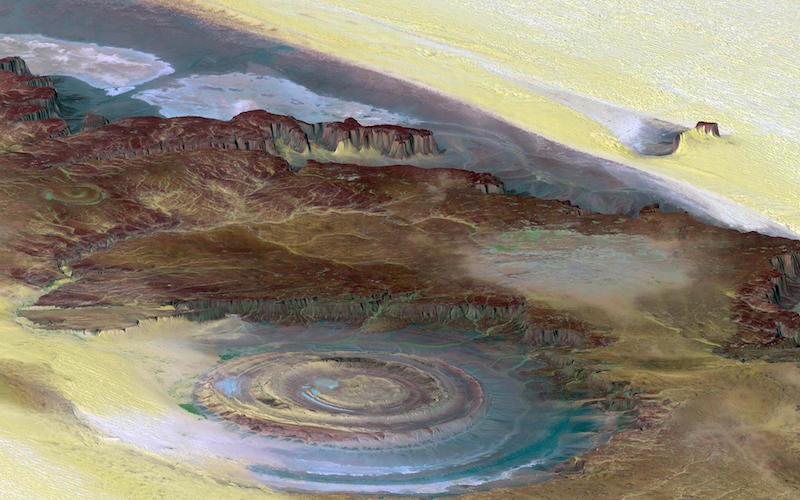
Yesterday, we spoke of personal experience, of the presence of other beings, of the limits of light, and of the Celestial Eye…
But I know what you—and your readers—truly wish to touch upon is not just strange phenomena, but this:
By what laws does this world operate?
And where are we—as human beings—headed?
So…
Where would you like to begin this morning?
Religion’s view of science?
Or what science will have to overcome in the future?
Or… perhaps, you wish to know:
How can the younger generation find their reason to learn, to live—and not just to exist?
Henry Lowell:
Yes, Professor, I deeply value what you have shared, are sharing, and will share. Through my own intuition, I feel that these are words of “legacy,” and that you wish to pass them on. Is that correct? If so, I hope you will share with sincerity and frankness from your perspective, and about the things you hold most precious. From my position as a journalist, I will listen and interpret your words so that when readers encounter them, they will not only understand, but also feel the goodwill you wish to convey.
Professor Adam:
(looks at Henry for a long moment, his gaze unwavering, as if deeply weighing what needs to be said against what should be kept)
Henry… thank you.
Thank you for calling it by its true name: “legacy.”
Yes, I do wish to leave something behind—but not because I think I am special or hold the truth in my hands.
But because, after all these years living amidst the lights of the laboratory, amidst the applause and the long equations that stretch to the very frontiers of physics…
I realize: not everything I know is worth keeping. But there are some things I have seen—that if I do not speak of them, I will carry them to my grave as a great waste.
There is a saying from an Eastern religion that I once read—at first, I did not understand it, but now it resonates with me deeply:
“It is not what can be measured that is real. It is what cannot be measured that makes a person human.”
So if there is anything I wish to leave behind—it is not advice, not guidance…
But a message for those who quietly feel that there is something… not quite right with the world they live in.
The young people who feel lost amidst a digital lifestyle and eroded values.
Those who once excelled academically, only to suddenly wonder: what is the purpose of learning?
Those who once believed absolutely in science, only to one day find that science could not save their own souls.
(He pauses. The wind sweeps across the porch. The early morning light now shines directly on the edge of the table, catching his sleeve—highlighting wrinkles like rivers of time etched into his skin.)
If I could, I would want to tell them:
We are born not only to seek knowledge, but also to rediscover what we once were—even before we could speak.
No professor is wiser than silence.
No scientist can create a light more real than the look in a child’s eyes as they gaze up at the sky and ask:
“Where did I come from?”
Therefore, if I have a “legacy,” it does not lie in the scientific papers I once published.
It lies in the courage to say what I once feared would cost me all my credibility.
And do you know, Henry?
The very moment I was able to let go of that fear, I truly found myself…
free.
Henry Lowell:
Yes, I personally understand and sympathize with you… and I hope that after reading your words, the readers will feel the same way. Shall we begin our second day now, Professor? You can share as you wish, or perhaps we can start with the topic of religion’s perspective on science, although you did mention yesterday that you are not strictly a religious believer…
I vaguely recall reading somewhere that the principles in religions, including Buddhism, Taoism, or Christianity… are not superstition, nor are they merely belief, faith, or simple morality. Rather, they can all be called an orthodox science—a type of super-science that far transcends the framework of empirical science…
What are your thoughts on this?
Professor Adam:
(nods slightly, his eyes narrowing in the gentle morning sun)
Yes… you have very naturally opened the very door I also wished to step through this morning.
And I completely agree with what you have just said.
In fact, I can affirm it:
The principles in religion, if viewed from the right level, are not faith—but a scientific system far more advanced than anything modern science can reach.
I once stood on the side of those who rejected this idea.
I used to think religion was a product of fear, of humanity in a pre-scientific age—a way to fill the gaps of the unexplained.
But now I know:
It is modern science that is the product of a very shallow level of understanding of the universe.
It is like a clever child learning to assemble a model, who then believes he understands the entire mechanism of the cosmos—while his parents are operating a machine he cannot even imagine.
In Buddhism, there is the concept of “three thousand great-thousand worlds”—meaning the universe has countless overlapping spatial planes, so vast they cannot be counted.
In Christianity, the concept of the “Kingdom of Heaven” is not just a place to go after death—but a parallel realm of existence, where light, sound, and truth operate according to the frequency of the soul, not according to the law of gravity.
In Taoism, they speak of “acting through non-action” (wu wei er wu bu wei)—a principle of operation that works not through physical action, but through the formless resonance between Heaven, Earth, and Man.
(The Professor tilts his head, his voice slowing as if to emphasize each layer of meaning beneath the words.)
If we look closely, what the orthodox religions describe—is not mythology.
It is a very specific description of the structure of different dimensions, of the vibrational nature of beings, of the connection between thought and reality.
The problem is not that religion lacks logic.
The problem is that science is not yet deep enough to understand the logic of religion.
Let me put it this way to make it easier to understand:
If Newton saw a Zen master “disappearing” from plain sight, he would ask: “How did he move so fast?”
But a person with an opened Celestial Eye would understand: “It is not that he moved. It is that he changed his spatial plane.”
A person using a brain scanner would conclude that a believer is hallucinating while praying.
But a person who has experienced a deeper level of consciousness would know: there are forms of vibration that cannot be recorded by brainwaves—because they do not arise from the biological level.
(The Professor pauses, his gaze directed down at his steaming teacup.)
So, if someone were to ask me now:
“Religion and science—which one is right?”
I would smile and reply:
“Religion is the science of the planes that cannot be experimented upon. And science is the religion of the things that can be measured.”
And I believe—one day, these two rivers will meet—not at a place of prejudice, but at a place where humanity is humble enough to learn to see the universe as a child again.
Henry Lowell:
Based on what you shared yesterday about multiple dimensions, the presence of the Lord, and what you just said about the principles in religion being a form of high-level science… can I understand, then, that those principles are a type of “science” that the Lord or Buddhas wished to impart to humankind, with goodwill or as a grace for humanity?
Professor Adam:
(his eyes brighten slightly, his voice low but clear, as if placing each word in the most solemn place in his mind)
Henry…
Your question is not only correct—it is the core question.
And I will answer with sincerity and frankness—as you have hoped from the beginning:
Yes. I believe that the principles in religion are indeed a form of “super-science” passed down to humanity—by beings from higher realms, with a clear benevolent intention.
(The Professor pauses, as if to prevent that answer from being passed over too quickly.)
We used to believe that “science” was something humans had to discover for themselves, to test, to laboriously build step by step.
But that is only a lower level of science—the science to understand matter, to operate machinery, to measure phenomena.
There is another level of science—the science to comprehend the spirit, to map out consciousness, to connect humanity and the universe as a unified living entity.
And that level… cannot be figured out on one’s own. It must be bestowed.
Just take a look:
In all the great religions, from Buddhism, Christianity, to traditional Taoism—there are teachings that human beings could not have “thought up” with their ordinary intellect.
Those words transcend their era, transcend language, and even transcend the receptive capacity of ordinary people.
But they still exist—and have still touched millions of people over thousands of years.
That is not a coincidence.
That is a bestowal.
A form of “spiritual formula”—or, to use a scientific term: a “transmission code for the planes of consciousness.”
The Lord did not transmit mathematical formulas.
Buddha did not present the law of gravity.
But both transmitted the Principles—the operating laws of the universe—in the form of simple teachings.
For example:
“As you sow, so shall you reap”—it sounds like a common moral saying.
But in reality, it is an extremely subtle law of energy resonance between thought and circumstance.
“Humility is strength”—not a moral philosophy, but a “shock-absorbing” technique for one’s spiritual energy field, so as not to be struck by the reactive force from a higher dimension.
(The Professor looks up, his gaze very clear this time—as if having just touched a stream of inner light.)
So, I no longer dare to call religion a belief system.
I see it as a sacred scientific work—built with light, not with a microscope.
And when human beings truly let go of their intellectual arrogance, they will see:
There are truths that lie not in a laboratory—but in the clasped hands of a person in prayer.
Not because that person is superstitious.
But because that person is holding onto a science that cannot be measured—but can be lived.
Henry Lowell:
Yes, I have personally read some scriptures from various religions. I wouldn’t say I have attained any profound enlightenment, but I do understand some of the concepts and principles to some extent. Therefore, I can comprehend and resonate with what you’ve just said.
But for the readers of THE LIVES MEDIA, especially the younger generation, they might not understand what you mean. There will be many reasons they could use to object to your views. For example, regarding your point that “truth lies in the hands of a person in prayer,” young people might see that many religious followers are very poor, with very low intelligence (or IQ). So, do those people have the capacity to understand truth or a form of “science” that is more “advanced” than empirical science?
Professor Adam:
(nods gently, not in disagreement, but as if he had been expecting this question)
That is an excellent question, Henry.
And in truth… I myself once thought that way.
There was a time when, upon seeing poor, uneducated, simple-minded people clasping their hands in prayer in churches or temples, I would think to myself:
“What do they understand about the universe? They pray because they are helpless, not because they are enlightened.”
But then… after certain experiences, I was forced to correct myself.
And I realized something:
Truth is not based on IQ.
It is not a reward for intelligence.
It is the universe’s response to the heart-mind nature and inner state of a being.
Consider a three-year-old child—if he knows how to admit fault, to say thank you, to be silent when he sees something sacred—
then in that moment, he is in tune with a part of the universe that some professors with PhDs may not have even touched.
Because there is an undeniable fact:
Spiritual resonance does not occur through gray matter, but through purity.
The simpler, the more humble, the more easily one can let go of attachments—the more easily one can receive the subtle waves from the universe.
(The Professor pauses, his gaze pensive but still warm.)
This does not mean that knowledge, academia, or scientific research is wrong.
But I want to say this:
True wisdom lies not in the amount of data you remember, but in the state of your heart when you face what you do not know.
A good scientist is one who can say: “I do not know, but I am willing to listen.”
A poor farmer—when bowing his head in prayer with utmost humility—may be accessing an energy field that no physical device can measure.
So, when I say “truth lies in the hands of a person in prayer,” I am not talking about them understanding some equation.
I am talking about a state of connection.
And in the microcosmic world, connection is permission.
When a person is quiet enough, humble enough, sincere enough—they will receive a light that does not need to be read to be seen.
And that light… sometimes avoids those who are too noisy in their own minds.
Henry Lowell:
Yes, hearing you share this reminds me of an old Buddhist story. It’s about a monk who was so slow-witted that he couldn’t understand or remember any of the Principles that Shakyamuni Buddha taught to the disciples. Because of this, he was ridiculed by everyone around him.
But Shakyamuni Buddha did not look down on him. He compassionately guided him in cultivation, teaching him just one single line of the Law: “sweep away the worldly dust.” He told the monk that every day, while sweeping the courtyard, he only needed to remember and frequently recite that phrase.
And so, the years went by. The monk followed the Buddha’s words, diligently doing just that one simple thing. Then one day, he attained enlightenment in the Buddha Law, displayed great divine powers, and achieved consummation.
Professor Adam:
(nods slightly, his eyes lighting up—not with excitement, but as if encountering an old friend)
Yes… I have also read that story.
And I believe—if there is any story that can encapsulate what I have been trying to say all morning, it is the one you have just told.
That monk did not have a superior memory.
He could not explain the scriptures.
He did not understand profound philosophy.
But he had one thing that many well-read people might not possess:
A simple heart.
He did not ask questions like, “Why is one sentence enough?”
Nor did he doubt whether “sweeping the courtyard” was the true path of cultivation.
He believed—and he acted, with all humility.
And that very thing…
allowed a profound level of the Law to manifest in the simplest of things.
(The Professor closes his eyes for a moment, as if bowing his head to a miracle that no Nobel Prize could ever honor.)
That story reminds me of something:
The universe does not distinguish who has a degree.
Truth does not choose who has a high IQ.
But rather, who has a mind still enough to receive—and who has a heart steadfast enough to hold on.
One line of the Law recited by an ordinary person for a lifetime is more powerful than a thousand scriptures chanted perfunctorily.
And sometimes… the very person whom the world considers “nothing special” is the one who is truly cultivating—day by day, step by step—without anyone needing to know.
I do not claim to have achieved anything great.
But if the story you just told makes someone in the younger generation pause for a moment…
and ask themselves:
“Am I sweeping away the worldly dust in my own heart each day?”
…then perhaps, the light has already begun to flicker within them.
(…..)
This article is an excerpt from the book “SUNSET AND SUNRISE OF SCIENCE” – a vision that transcends conventional dialectical thinking to embrace revelations from God.
If you wish to experience the full journey of thought and the unpublished insights of the work, please click the button below to own the complete book.
To explore more works from THE LIVES MEDIA, visit our book collection.