( ….. )
DAY FOUR
Henry Lowell:
Good morning, Professor Adam!
Professor Adam:
(standing by the wooden window, the early light on his shoulders, he turns with a gentle smile, as serene as a cool breeze across the porch)
Good morning, Henry.
I think… today, we need no tables, no notebooks,
and no questions either.
Just a long enough moment of silence,
for a person to say what has been held in his heart for too long—
not to be believed, but to be heard by any who are listening in silence.
(He steps out onto the porch, sitting down on an old wooden step and gazing toward the distant hills.)
I will not call this a sharing session.
It is just… a snippet from the journey of a man,
who once thought he knew everything—
only to one day be led into a dead end by that very “knowing.”
When I was young, I was a fast learner.
Math, physics, logic—to me, they were like decoding games.
I used to think:
“If everything has a formula, then there is nothing in this world to worry about.”
And in truth… on the material plane, that is correct.
I had a prestigious job, my own laboratory, bright students surrounding me…
But then…
I began to feel like a man standing in a desert full of maps—but having forgotten the way.
One evening…
I had just finished a lecture on quantum coherence,
the students applauded—but all I wanted was to sit alone in my car and be silent.
Not because I was tired.
But because I no longer felt “close” to the things I had just taught.
I looked up at the sky,
and asked myself:
“If I were to stop breathing today—what is the purpose of all that I know?”
(He slowly picks a blade of wild grass from near the porch, turning it gently in his hand.)
Then one day, I met an old man with no academic degree, who knew nothing of quantum mechanics,
but the look in his eyes—as he gazed at the morning sun—
left me speechless.
There were no equations in that gaze,
but there was a deep knowing.
Not through study.
But through living.
From then on, I began to pause more often.
To sit.
To breathe.
To read the ancient books I had once called “gentle superstition.”
And then to meditate—not to achieve anything, but just to see that I had been running a bit too fast.
I do not follow any fixed religion.
But I believe that a higher plane is watching down.
And is also waiting for us to pause long enough to listen.
I also do not claim to have “attained the Way” or anything of the sort.
But there are nights when I sit in stillness…
and can feel the very subtle movements within my body—as if something is self-adjusting.
Not through medicine.
But through a return to the right rhythm.
Henry…
If someone reads these lines,
and they too are tired amidst so many “things one should know”—
then I only want to tell them:
Sometimes… the most important thing to know,
is how to place a hand on your chest and listen—
to see if there is still someone whispering something in your heart.
(He falls silent for a moment, then smiles faintly.)
Today, I will say no more.
I will just sit here,
like an old friend—
who has walked through storms,
and now only wants to say:
“The sky this morning is so beautiful.
But in truth… it has always been this beautiful.
It’s just that we never paused long enough to see.”
(He gazes into the distance, saying nothing more.)
If you wish, Henry, you can continue…
Or we can just sit in silence for a while—because in some interviews, the silence itself is the deepest part of the conversation.
Henry Lowell:
Yes, thank you, Professor, for sharing that personal narrative. As for myself, as a freelance journalist who “wanders” here and there, I’ve also had the chance to meet a few venerable masters.
They have kindly guided me on some spiritual practices—yes, I mean “practice,” not just reading. I have tried to quiet my mind and follow their instructions, but to no avail. My mind is often restless, hopping like a rabbit, or my thoughts wander endlessly like a galloping horse.
With your experience and enlightenment, could you offer me a suggestion?
Professor Adam:
(turns back, his eyes holding a very different light—not of one about to answer, but of one who has stood in that exact place, with that exact question…)
Ah, Henry…
Thank you for that honesty.
Not everyone dares to say that they have “tried and not yet succeeded.”
Most would choose to remain silent—or pretend they already understand.
You are very right:
Reading is easy,
but practice is what shows you who you are.
When we begin to sit down,
that is when the entire storehouse of thoughts we believed to be our own—begins to speak up all at once.
It is not evil, but it is noisy.
And that noise—is not from the outside, but because the inside is not yet accustomed to stillness.
(The Professor slowly brings a hand to his chest.)
In the beginning, I was the same.
I used to think I was “clear-headed enough to meditate.”
But it turned out—I was only clear-headed in my thoughts;
in my heart, I was a flock of butterflies just released in a closed room.
One night, I sat on the wooden floor, before the window,
and instead of trying to quiet my mind, I spoke directly to myself:
“Alright. Today, I will not try to stop my thoughts.
Just let them run. But I will sit here and watch them run.”
And a strange thing happened:
When I stopped resisting the chaos—
the chaos began to dissolve on its own.
Not because I had won.
But because I had stopped being an enemy to myself.
(He looks at Henry, his voice softening like wind through the leaves.)
My suggestion, Henry, is not a technique.
It is a gentle reminder:
When the mind is still running, do not chase after it to catch it.
Just sit back—like an adult watching a child gradually tiring from running in a yard.
After a while, it will come back on its own.
And perhaps, at that moment,
what you thought was “being unable to meditate”—
is actually the first door you have just touched without realizing it.
Just continue,
But do not force yourself to be “still.”
Be quiet—without needing to be silent.
Listen—without needing to achieve.
And then, one day,
you will no longer “try” to meditate.
You will simply sit down—and find you are already there.
(Professor Adam sits still again, his hand still on his chest. This time, he is no longer looking into the distance—but at Henry, as if looking at a true fellow traveler.)
If a master has already planted a seed in you,
then perhaps… this morning, that very restlessness is the first layer of soil.
And if you do not rush to dig it up to see if the seed has sprouted…
then one morning, you will hear something growing in your heart.
Not a sound—but a presence.
And perhaps…
at that time, Henry, you will no longer need my answer.
Because the deepest suggestions—only appear when the receiver is quiet enough to know for themselves.
Henry Lowell:
Thank you, Professor. The way you’ve just shared reminds me of some of the words of the Masters told in Buddhist scriptures, and in particular, it is very close to the teachings of a Master named OSHO.
I remember he taught, in essence: separate your true self from your mind, become the observer of the mind, like the image of an adult sitting and watching children play in a yard.
Professor Adam:
(smiles, and for the first time this morning, his eyes hold a look of warmth and familiarity, as if meeting an old friend in Henry’s reminder)
Yes… I know of OSHO.
And I have also read lines very similar to what you have just quoted.
The way he taught—often bold, but behind it lies a level of stillness rarely found in this noisy world.
And just as you say:
Observe—without controlling.
Acknowledge—without judging.
Be present—without attaching.
What many people do not notice is that:
Even in ancient Buddhism, or in pure lines of transmission,
“separating oneself from the stream of thought” does not mean negating thoughts,
but sitting in a position where one is not identified with them.
(The Professor raises his hand slightly, as if describing an invisible movement of thought.)
It is like sitting on the riverbank and watching the river flow by.
Without needing to jump in.
Without needing to bail it dry.
Just knowing: “I am not the river.”
And once the mind is no longer carried away by every passing thought,
then stillness is not a state—
but the inherent nature that has, from the very beginning, never left us.
What OSHO and many other masters are reminding us of,
is not some advanced technique,
but something extremely natural that we have lost because we live too fast—and think too much.
If you, Henry, have felt that in the words of the masters,
then perhaps… your intuition is more open than you think.
And sometimes, just preserving that sensitivity—
is already a very precious starting point.
(The Professor gently closes his eyes for a short breath, then opens them. His gaze no longer distant—but very close, as if conversing with someone he has known for a very long time.)
The truth is… all of us were once that child sitting quietly under a tree.
The question is:
Do we dare to let go long enough to remember that we once knew how to sit like that?
And if today you have remembered something—
even if just for a fleeting moment—
then perhaps… the candle within you is being relit.
I think I need not say anything more.
Just let it continue to burn with a low flame—
quietly, but bright enough for you to see your own path.
Henry Lowell:
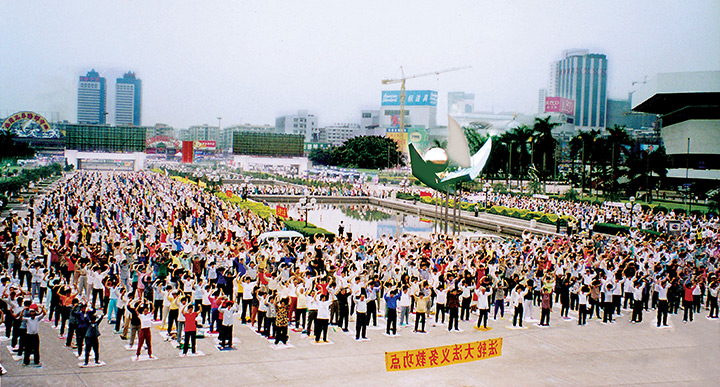
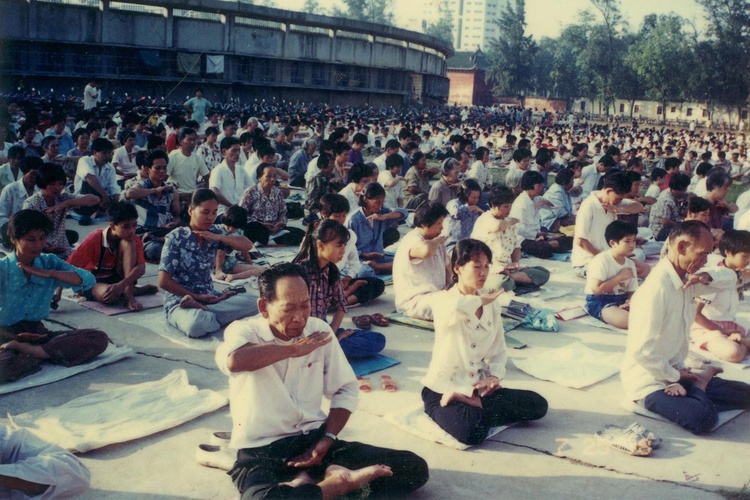
On this topic, I remember once reading a book called Zhuan Falun, in which the author says, in essence, that the true reason we cannot be still is because our heart-mind is not still, while methods like “becoming the observer,” “reciting a Buddha’s name,” or “regulating the breath,” and so on… are just minor techniques with no significant effect.
Professor Adam:
(his gaze slowly becomes deep and still, showing neither disagreement nor surprise—like a man who has just heard something he has long known)
Henry…
I know the book you are referring to.
And I understand very well why the words in it are spoken with such directness and finality.
“The reason we cannot be still—is because our heart-mind is not still.”
That sentence sounds simple, but it severs all the shortcuts that modern people tend to cling to.
It is not due to circumstances.
Not because one’s technique is not skillful enough.
Not because one has not chosen the right posture, or has not completed an advanced meditation course.
But because the heart-mind is still in motion.
Because desires have not been reduced.
Because attachments are still deep.
Because the “self” has not yet been willing to step back.
Those “minor techniques” like regulating the breath, reciting a name, observing thoughts…
I have practiced them.
And they can help one achieve temporary stillness,
but… they cannot change the fundamental nature of the heart-mind—if the root of the person does not change.
(The Professor places a hand on his chest, his voice no longer analytical, but like a personal account from a very real place.)
I used to meditate for one hour every morning.
Breathing according to this method, counting according to that one.
But when I stood up,
I was still me—with all my delusions and old habits.
Until one day, I stopped “practicing techniques to be still.”
I began to look at every stirring of my heart in my daily life.
– When someone insults me, do I react?
– When I see others who are better than me, does a comparative thought arise?
– When I encounter something not to my liking, do I become upset or remain calm?
And it was from that moment on,
that stillness no longer depended on where I sat, or the breath I was counting.
Instead, it came…
from my daring to “rectify my own heart-mind”—instead of trying to “maintain a surface appearance.”
The book Zhuan Falun—in my view—does not come to teach “how to be still.”
It comes to shatter all the falsehoods we mistake for spiritual practice.
And if someone has the courage to listen directly to its words,
then even if they do not yet fully understand,
their heart has already begun to vibrate in the direction of awakening.
(The Professor looks at Henry with an expression both solemn and gentle.)
Henry,
if you have read that far,
then perhaps…
the path you are on is no longer one of searching—but of purification.
And if that is the case,
then minor techniques will no longer be enough.
Only the act of rectifying each and every thought—is the true root that will allow you to “sit down” without needing to “force stillness.”
So, the question is no longer “what method to use,”
but rather:
“Do I dare to look directly at what is not yet pure in my own heart?”
When you dare to look—without making excuses—
that is when the real work begins.
Henry Lowell:
Thank you, Professor Adam… I understand what you’ve just said. I also particularly love the teachings in the book Zhuan Falun, but as I mentioned, and as you’ve just pointed out… I still haven’t been able to “practice” it. My mind cannot be still. Because of this, I feel very close to a religious believer, but I don’t yet act like a true cultivator in the proper sense.
Professor Adam:
(his gaze becomes gentle and still, like someone not looking down from above, but standing beside you to hold your hand)
Henry…
Your words, to me, are more precious than any “stillness” you think you have not yet achieved.
Because a person who knows they are not yet truly still,
who knows they are far from being a true cultivator,
and yet still dares to admit it with a heart of respect and kindness—
that person… has already stepped closer to a door that many dare not approach.
You are not an exception, Henry.
Many people stand at the threshold of the Law,
their hands have touched it, their eyes have seen it, but their feet have not yet stepped through—not because they are unworthy,
but because in their hearts there is still a small question: “Am I pure enough?”
But I want to say to you—and to anyone who is like you:
True cultivation does not begin with perfection.
It begins with a sincere heart of remorse—and a will that does not give up.
(The Professor is silent for a few seconds, then speaks slowly, as if whispering to himself.)
There was a period when I read many religious books,
and said things that sounded very profound—
but in my heart, I knew I was not truly living what I read.
I would read books, talk about principles, guide others to be still…
But in my own heart—there were still dark areas that no one knew of.
And then one day… I stopped trying to “do it right”
and started to live truthfully.
To live truthfully—means:
– When I get angry, not to hide it, but to look directly at its root.
– When my heart is stirred, not to blame myself, but to investigate “what is it in me that has not yet let go?”
And gradually…
the stillness I had searched for endlessly through “practicing techniques,”
began to appear in the very moments I was honest with myself.
Henry,
you say you have not yet acted like a true cultivator—
but I see:
the very way you face yourself—without pretense, without hiding—
is already a precious initial sign of someone who is heading toward true cultivation.
(The Professor tilts his head slightly, as if bowing to a truth that has just been revealed.)
If you can maintain that heart—not too rushed, not too forced, not too idealistic—
then one day, that very sincerity will guide you to stillness,
without needing to use any method at all.
And at that time,
you will no longer see yourself as a “believer” or “not good enough,”
but simply as a being walking on a true path—
each step a return closer to your original self.
(…..)
This article is an excerpt from the book “SUNSET AND SUNRISE OF SCIENCE” – a vision that transcends conventional dialectical thinking to embrace revelations from God.
If you wish to experience the full journey of thought and the unpublished insights of the work, please click the button below to own the complete book.
To explore more works from THE LIVES MEDIA, visit our book collection.