Preparations and the Journey to a New Place
Before we left Tongren, Mr. Zhang Feng had mentioned that our journey had really only just begun. He didn’t provide a specific itinerary, but he did suggest a few people we “should meet,” if we had the fated connection. Among them, the nearest was a monastic said to be living as a recluse on a small mountain, about thirty kilometers from Tongren. It wasn’t a famous scenic spot or a pilgrimage site that attracted tourists, and the local people rarely seemed to mention it—but from the way Mr. Zhang Feng spoke, I had a feeling the place held something special, an opportunity for further exploration.
Our days in Tongren thus concluded like a gentle prelude to a longer journey. Through two meetings and conversations with Mr. Zhang Feng, I truly felt that this land of China, with its profound ancient culture, still concealed countless secrets—enough to spark a strong interest in me, compelling me to continue this journey, even though I honestly had no idea where it would lead.
We decided to stay in Tongren for a few more days to prepare for the trip up the mountain. Qing Ling tried to ask for opinions from a few locals in the neighboring villages. Most people knew of the mountain area—a place with vast bamboo forests, a few small year-round waterfalls, and some old trails leading to higher ground. Some said they had gone there to pick mushrooms or bamboo shoots. Others had vaguely heard about a potential eco-tourism project being surveyed by the government. But when Qing Ling tactfully inquired about someone living as a recluse on the mountain, almost everyone shook their heads: “If there’s someone up there, they must be deep in the forest. We only ever go around the foot of the mountain.”
No one expressed doubt or outright denial. It was just that… the matter seemed never to have truly captured their attention.
We went to the town market to buy a few necessities for the trip: a better pair of hiking boots to replace my sneakers, a lighter backpack, some easy-to-carry dried food, and a few sets of light clothing in case of sudden rain or sun. I still tried to maintain regular contact with my associates in the US, checking emails daily and joining a few short online meetings in the evening—work could not be completely set aside, especially with important projects underway. But outside those fixed work hours, I deliberately let my mind be more at ease, to think less.
I don’t know when it started, but I began to notice myself paying more attention to the small, simple things happening around me—a sudden cool breeze slipping past my cuffs, a pristine ray of early morning sun slanting across the wooden eaves of the inn, or the solemn tolling of a temple bell from some distant mountain monastery, echoing through the morning mist. Though I couldn’t completely shed my old habits, I felt I was gradually learning to live more slowly, to temporarily let go of the need to control everything—and to try letting the natural flow of life guide me.
We left Tongren in the early morning, when white mist still lingered around the mountain peaks. A local car we had hired beforehand took us along fairly smooth paved roads. It was only when we turned onto a smaller road leading towards the foot of the mountain that the surface became rough with gravel—stretches of red basalt soil, some quite rugged and slippery, but still manageable enough for the car to move slowly. The sparse fields of rice and corn gradually gave way to gentle hills and dense patches of forest.
After more than an hour, the car could go no further. We got out, put on our backpacks, and looked at a narrow trail, almost lost beneath overgrown weeds and forest vegetation. Not a single signpost. Not a trace of modern intervention.
“Are you sure we’re going in the right direction?” Qing Ling asked, her voice a bit hesitant, her eyes looking at the trail with doubt. “It looks… a bit like a scene from an adventure movie.”
I chuckled softly, though I was no more certain than she was. “To be honest, I don’t know either, Ling. But for some reason, I have a feeling… this is the right way. Not for any logical reason, but purely… a kind of feeling.”
“A feeling?” she looked at me, her expression as if she had just heard the strangest thing all day. “Have you forgotten you’re a medical professor? We’re not professional hikers, we have no experience.”
“I know. But do you remember what Mr. Zhang Feng said? That sometimes we need to follow nature, to listen to the voice of our hearts. Perhaps, right now, that’s all I’m trying to do.”
Qing Ling said nothing more. She looked at the trail silently for a long moment, then nodded slightly.
We began to step into the forest. Each step felt like advancing a little further into another world—not a world of detailed maps or pre-planned routes, but a world of inviting ambiguity. The trail was at times steep and precarious, at others slippery with the thick green moss covering the rocks. I felt my body begin to ache, but my mind, conversely, was unusually clear and alert. A very different kind of wakefulness, not from strong coffee or an adrenaline rush—but seemingly from the vast silence of the forest itself.
We walked on, sometimes making small talk, other times just silently listening to the rustling wind in the canopy above. On difficult stretches, we stopped to rest by a small, gurgling stream. The water was crystal clear and as cold as if it had just melted from ice.
“I still don’t really understand why you’re so drawn to all of this,” Qing Ling said suddenly, while resting on a large rock by the stream, her finger idly drawing circles on the water’s surface. “It’s not at all like the pragmatic, rational person you were before.”
I sat down beside her, taking a deep breath of the fresh mountain air.
“Perhaps… it’s because I feel I’ve lived for too long, too accustomed to things that can be measured, calculated, and controlled by reason. But here—it’s the very things I can’t explain, the things beyond my control, that make me feel… more at ease. Not because I’ve understood them, but perhaps, for the first time in my life, I feel I don’t have to understand everything completely to accept its existence.”
Qing Ling turned to look at me, her gaze softened, a look of understanding appearing in her eyes. “I understand that feeling. It’s not like being convinced by someone’s logic, but more like standing before something so vast, so different—that even if you can’t grasp or define it, you can’t possibly ignore it.”
I smiled faintly. Perhaps, though we did not yet completely share the same belief, we were beginning to share the same perspective, the same openness to new things.
We continued on, with no map in hand, no clear path ahead. Only the trail that appeared and disappeared, and a feeling that we needed to slow down, to look more closely, and to listen more—both to the sounds of the surrounding forest, and perhaps, to the silent voices from deep within.
The Journey to the Mountaintop
We continued along the trail, which led us deeper and deeper into the dense mountain slopes. The path wasn’t exactly treacherous, but it was by no means easy. Some sections seemed to have been long forgotten—green moss covered the rock faces, layers of thick, decaying leaves were piled up, and weeds grew nearly knee-high. The previous night’s rain had left the ground slippery and damp, forcing us to pay close attention and be more cautious with every step. At times, we both had to cling to trees along the path to keep our balance on gentle slopes, or use sticks to push aside the thick bushes that obscured the way. This wasn’t exactly a high-stakes, adventurous climb, but it was enough to leave both Qing Ling and me silently exhausted after several hours of steady walking in the near-absolute silence of the forest.
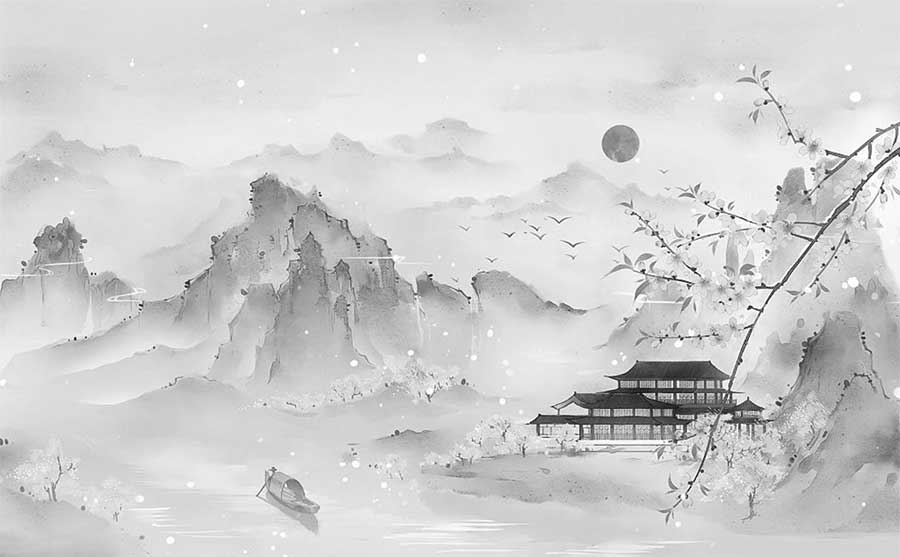
As the sun rose higher, dispelling the lingering mist, the forest gradually revealed scenes that I had probably never truly seen on my previous business trips or vacations—not because they were exceptionally special or magnificent, but perhaps because this was the first time I had actually allowed my mind to pause and observe. Ancient trees reached high, forming a canopy of green shade; a few bushes of violet wildflowers bloomed quietly beside patches of lush grass; the incessant chirping of insects mingled with the sound of the wind rustling through the leaves… all of these things, in themselves, were perhaps not splendidly beautiful, but strangely, they seemed to be whispering something incredibly peaceful.
We stopped to rest on a large boulder, its surface cool and mossy under the shade of an old tree. Qing Ling sat down, quietly shrugging off her small backpack, then gently rubbed her ankle—she had probably twisted it slightly earlier. She didn’t complain. She just looked around silently, her gaze lingering for a long time on the misty valley in the distance, before a faint smile touched her lips, a gentle smile as if she had just re-encountered something deeply familiar from memory.
I was about to say something, but then decided against it. The surrounding space was so quiet that I felt any words would be superfluous. A yellow leaf detached from its branch, twirled a few times in the wind, and then gently landed right next to my foot—and in that brief moment, a fleeting thought crossed my mind: I had never been so fully “present” in the small details of life like this.
We resumed our journey. The path grew steeper, winding its way along the rocky slopes. The higher we climbed, the stronger the wind blew, carrying the earthy, damp smell of the soil, the scent of decaying leaves, mixed with the light fragrance of some wildflower hidden in the bushes. I could feel my breathing become heavier, my heart beat faster, but my mind, conversely, was unusually clear and alert—no more wandering thoughts, no more daily worries swirling around as before, only the pure presence of each footstep, of my beating heart, and of the rustling leaves somewhere ahead.
At one point, Qing Ling suddenly stopped before a large, precariously perched boulder by the path. She gently touched its surface, where a natural, winding curve made the entire rock resemble a large dragon, coiled and resting. Without a word, she just turned to look at me, her gaze a bit distant, then looked back towards the deep forest ahead. Something in her eyes made me feel as if she, too, was being drawn into the special atmosphere of this place.
Along the way, we came across many other strangely shaped rocks—one looked like a person in silent meditation, another resembled a small stone gate, all lying still and silent in the deep, ancient forest. There was no trace of human intervention—it was purely the hand of nature, which, whether by chance or by design, had created these unique forms, causing passersby to pause and admire them.
I wasn’t sure if these were the “traces of the ancients” that Mr. Zhang Feng had alluded to, but one thing I felt with growing clarity: this place possessed a very different kind of stillness. It was not the desolation of an uninhabited wilderness. It was a special kind of silence, one with weight, that naturally quieted the mind, making one no longer wish to speak or think of superfluous, useless things.
After several hours of continuous climbing, as the sun began to set in the west, we finally reached a relatively flat area near the summit. As I was looking for a place to rest, I suddenly saw, not far ahead, a small lean-to made of bamboo and leaves, nestled on a large, flat rock by the path. Under the shelter, a young couple—probably locals up here for the view or a picnic—were sitting, drinking water, and chatting. Beside them, a silver-haired old man with a graceful demeanor was engrossed in a small game of Go.
We cautiously approached. The young woman smiled and greeted us warmly, while the young man remained absorbed in the game, his face full of fascination. The old man sat there, unusually calm, his eyes never looking up at us, seemingly completely undisturbed by the arrival of two strangers.
I didn’t know much about Go, so I only glanced at it for a few minutes before deciding to leave so as not to disturb them. I had just turned and taken a few steps when a deep, clear voice came from behind:
“You are Wang Ming, are you not?”
I froze, my heart suddenly beating faster. Turning my head, I saw the old man still had not looked at me; his hand had just lightly placed a black stone on the board.
I tried to keep my voice steady and replied slowly, “Yes, that is me.”
I was about to ask what he wanted, but he spoke again, his voice still even, unchanged:
“Someone asked me to stay here for a while… to give you directions.”
He still did not look up, his hand gently lifting a white stone and placing it on the board.
A moment later, after making his move, he continued, his voice unhurried, as if reciting something he had been carefully instructed on beforehand:
“Just keep following this trail. When you reach a fork in the road, where there are some large bamboo groves, turn to the right. Walk for about another hour, and you will come to another fork—then, turn to the left and just go straight. At the end of that path, you will find the place you are looking for.”
I tried to memorize his every word. The directions were not long, but in the way he paused and emphasized each word, I had the feeling that everything had been pre-arranged—not forced, but not entirely coincidental either.
A thought flashed through my mind: Could Mr. Zhang Feng have notified this old man of our arrival by phone? But I immediately remembered—ever since we had entered this mountain region, my cell phone had lost all signal. I had checked several times as we passed through the small villages at the foot of the mountain, but there wasn’t even a single weak bar of signal. Qing Ling had also mentioned that, as far as she knew, this mountain area was not yet fully covered by telecommunications, although there were rumors of the local government planning to develop eco-tourism here in the future.
Thinking of this, I suddenly felt a cold chill run down my spine. If it wasn’t through prior contact… then how could this old man know my name, and the reason I had come to this place?
Qing Ling looked at me, her eyes also filled with surprise and unconcealed confusion. We said nothing, but I knew we were both thinking the same thing: this journey seemed to be leading us into something that far exceeded our initial expectations.
Meeting the Hermit
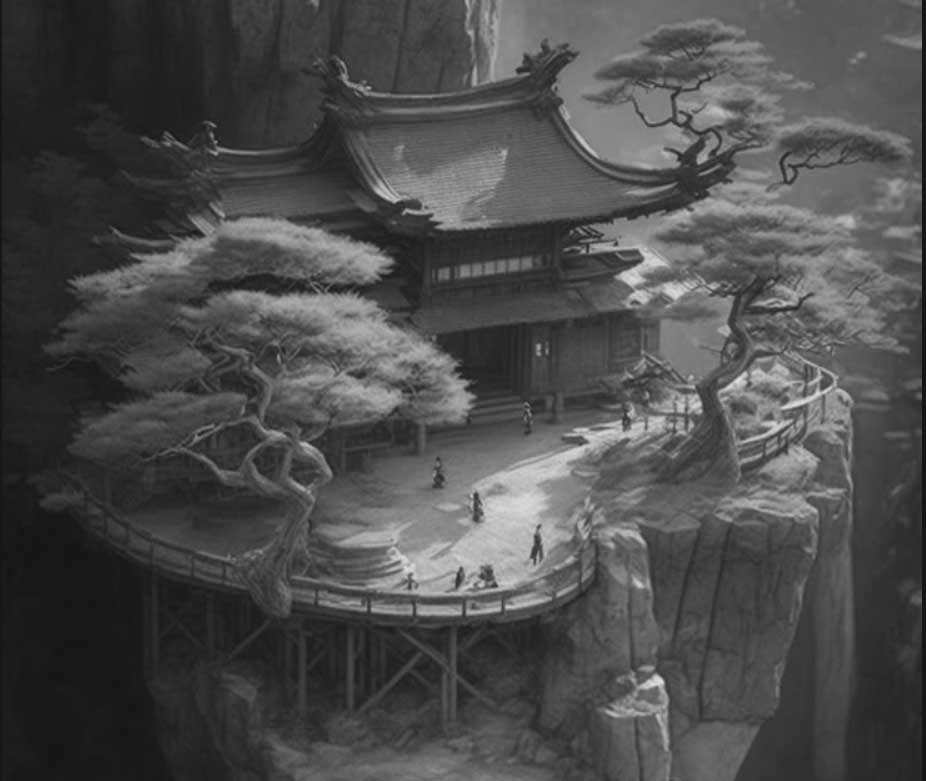
We carefully followed the concise directions of the old Go player. Past the fork with the large bamboo groves, we turned right, then followed a gentle, slippery slope of green moss, which took us nearly an hour. After that, we turned left at a narrow path next to a thicket of old bamboo. As the last rays of the afternoon sun turned golden, filtering through the leaves, we suddenly saw a small thatched hut, appearing and disappearing behind a thin veil of mist and a row of lush green bamboo—it was so simple and rustic that had we not been paying close attention, we might have walked right past it.
A small, packed-earth yard in front of the porch was swept very neat and clean. There were a few beds of fresh green vegetables, a star fruit tree heavy with fruit, and a small, ancient stone well nestled humbly under the canopy of an unnamed old tree. The space was unusually quiet, so quiet that we could distinctly hear the evening wind gently rustling through the bamboo leaves.
On the porch steps, a man was in deep meditation. He wore a coarse, earth-brown cloth robe, worn and faded, his silver-white hair falling to his shoulders, a silver beard reaching his chest. He looked thin, but there was no sense of withering or frailty—on the contrary, a vibrant inner strength, a solemn dignity emanated from his half-closed eyes and his steady, gentle breathing. He sat with his back straight on a simple straw mat, his hands resting lightly on his knees, in a posture so stable and serene it was as if time and all the world’s vicissitudes no longer existed, no longer flowed.
We instinctively stopped, keeping a natural distance. Neither of us spoke. Perhaps there was no need to say anything at this moment, for his very presence, the tranquil atmosphere that enveloped him, made the entire space feel different—not a solemnity that inspired fear, but a profound peace that naturally quieted the heart.
A moment later, as if sensing our presence, he slowly opened his eyes.
Those eyes—bright, clear, and tranquil, without the ‘look’ of scrutiny or judgment with which people usually regard one another. They were more like a mirror, reflecting and then gently letting go—as placid and deep as an autumn pool at the bottom of a ravine.
He looked at me, and a very slight, almost imperceptible smile touched his lips:
“You are Wang Ming, aren’t you.” It was a statement, not a question.
Before I could react, he continued, his voice even and unsurprised:
“I knew you two would come. Someone sent word ahead. But in truth, even without the message, I already knew.”
His words made both Qing Ling and me freeze.
It was that familiar feeling again—the feeling I had when Mr. Zhang Feng first called my name in a crowded Tokyo teahouse, the feeling that all my calculations and preparations had become utterly superfluous. But this time, I no longer felt the same startling shock. I just nodded slowly—as if, deep down, I too had vaguely known this meeting would happen, just not when.
“Greetings, sir,” I said, trying to keep my voice respectful enough. “My name is Wang Ming. This is my wife, Qing Ling. We were… referred here by a friend, Mr. Zhang Feng.”
The man nodded again, his gaze briefly sweeping over Qing Ling. He asked nothing more, only said in a calm voice:
“If there were no fated connection, it would be difficult to sit and talk, even if you met by chance. That you two were able to find your way to this place is because you have something you are seeking in your hearts, and also because there is some root between us that has connected us before.”
He made a gentle gesture of invitation with his hand.
“Well, please come inside for a cup of water. It has been a long journey; you must be tired. If you have questions, we can speak of them slowly.”
We followed him into the small hut. The floor was made of packed clay, very flat and clean. There were only a few straw mats on the floor, a low tea table made of plain wood, and a few old books neatly arranged on a simple bamboo shelf. No electricity. No modern conveniences. Not a single trace of the industrial age we had just left behind. But strangely, I felt no sense of lack or inconvenience. Everything here seemed just enough, and was so clean and tidy that I hesitated to set foot inside.
He poured us water himself. The water came from the stone well outside, held in an old, dark earthenware jug. The spring water was crystal clear and cool, with no discernible taste, but as I swallowed, I felt as if something that had been weighing on me was being washed away.
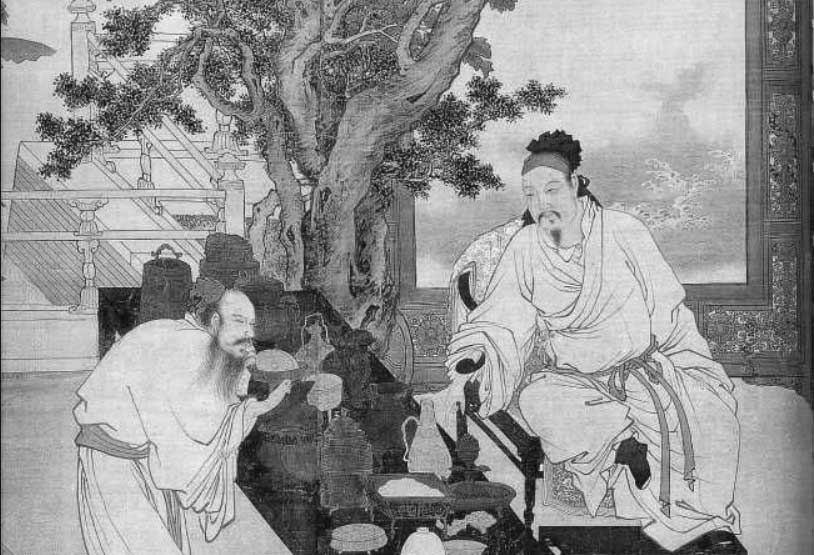
“Not many people come to this place of mine,” he said, after we were seated. “It’s not because the path is difficult or treacherous. Perhaps it’s because few people think a remote, secluded place like this has anything worth seeking. Some have come, but they only stood in the yard for a moment before turning back. Others have made it to the porch, but then found themselves unable to utter a word.”
He looked at me, a profound gaze:
“You have a fated connection, which is why you were able to take this step. Your friend Zhang Feng saw that long ago. As for me… I only receive those I feel I should receive.”
I was silent. Something was shifting very gently within my mind, like a heavy door being pushed slightly ajar. It wasn’t so much because of the specific words he said, but perhaps because of the way he said them, the way he made no attempt to persuade or prove anything. Every sentence he spoke was gentle, calm, yet like drops of water landing precisely in the deepest, quietest part of my soul.
Qing Ling sat beside me, her hands clasped lightly in her lap, her eyes quietly observing every corner of the hut, then resting on the window frame that looked out onto the silent yard. She said nothing, but I saw a different kind of pensiveness on her face.
A moment later, when our cups were nearly empty, he spoke, his voice as light as the wind rustling through the bamboo grove:
“You two have just arrived after a long journey. Please rest for a while to regain your strength. Let me brew a pot of tea for you.”
He stood up, his steps light and slow, and walked to a corner of the hut where a small fire still glowed with embers. He calmly poured water from another earthenware pot set on the fire. A rustic, pure scent of tea began to spread gently in the fresh, cool mountain air of the afternoon.
We sat quietly, unspokenly, neither of us wanting to speak at this moment. It seemed that something in his calm, unhurried rhythm had caused all the thoughts and disturbances in my mind to temporarily recede.
When he brought the steaming cups of tea and set them before me, he looked at me once more and said:
“If you two are not too busy with your work… feel free to stay here for a few days. I believe a quiet place like this will be good for those who are so used to a noisy, busy life.”
I was about to thank him or ask something more, but I stopped myself. The space and time at this moment seemed too peaceful, too still. I just sat there, with Qing Ling, and quietly waited for him to refill my teacup.
A Dialogue with the Hermit
Evening began to fall. The last streaks of light from a beautiful, sunny day were gradually fading over the lush green bamboo grove in front of the hut. The hermit leisurely added more oil to an old lamp, then placed a new kettle of water on the fire. We remained seated around the small wooden table, inside the simple hut that held a strange warmth. The space was completely silent, save for the chirping of insects starting up somewhere in the garden and the steady crackle of boiling water in the time-worn earthenware kettle.
Neither Qing Ling nor I rushed to ask any more questions. It seemed the still, solemn atmosphere of this place was telling us that all questions would be addressed… at the right time.
After a long silence, punctuated only by the soft sound of tea being poured, I spoke, trying to keep my voice as natural as possible:
“Sir, I come from a world where empirical science is considered the foundation of all understanding, all truth. But what I chanced upon in Tokyo, and the things Mr. Zhang Feng alluded to… along with the very special atmosphere of this place… all of it is truly making me reconsider many things. I very much want to understand better—what was the path of cultivation of the ancients, and what made some people willing to commit themselves, to dedicate their entire lives to that path?”
The hermit smiled faintly, a benevolent smile, his hand still gently turning the warm teacup. “Cultivation is not something so new or foreign, Mr. Wang,” he said. “It has existed in this world since very ancient times—not just here in Asia, but in many other civilizations that have appeared and vanished on this Earth. Though the outward forms may differ, the core of all true paths of cultivation is the same: it is the journey of returning to one’s kindest, most original nature, to gradually transcend the delusions and sufferings of human existence.”
He spoke slowly about the different paths the ancients chose to cultivate themselves: some sought the stillness of temples or deep mountains, while others chose to temper their minds amidst the turmoil of worldly life. He said that each person might have their own way, but what mattered was whether their heart truly strove for kindness and nobility.
“The universe we live in is not as simple as what the naked eye can see. There are countless different levels of space, like layers of invisible energy waves, overlapping and interpenetrating one another. Our human existence is the same—it is not just this physical body, but also other parts, more subtle parts: one could call it the spirit, the soul, or the Primordial Spirit—the names may vary according to the understanding of each person, each culture. Your modern science, as I see it, is only observing and studying a very shallow portion on the surface of these things.”
He turned to me slightly, his gaze still gentle but with an indescribable depth:
“You are a researcher of medicine. Have you ever wondered—emotions like fear, love, or a word of sincere comfort… where do they actually reside in a person’s body?”
I was taken aback by the unexpected question.
He did not seem to wait for a specific answer from me, but continued:
“The heart is not where feelings are stored. The brain does not get any heavier after a new thought. But it is these invisible, intangible, immeasurable things that are in control, that govern the entire physical body.”
He poured more tea into my cup, his voice still even, unchanged.
“People today tend to only believe in what can be seen, what can be measured by machines. But what truly creates life, what creates a being… is always hidden, always beyond all the formulas and laws that humans try to establish.”
I stared silently at the steaming cup in my hand, the wisp of vapor rising from it, tilting slightly with a very faint tremor in my fingers, a tremor whose reason I did not know.
He continued, his voice still warm:
“In ancient methods of cultivation, people often spoke of a concept called ‘karmic force.’ It is not merely a moral concept of good and evil—but in fact, a type of subtle, invisible matter. It is formed and accumulated by what people have done over countless past lifetimes—through every action, every thought, every word. This matter exists in other dimensions, invisible to the naked eye, but it can cause illness, misfortune, unhappiness, and even create negative personality traits and spiritual deviations. The purpose of true cultivation, an important part of it, is precisely to eliminate this karmic force, to make one’s soul increasingly pure and light.”
“Mr. Zhang Feng in Tokyo also briefly mentioned that to me…” I muttered, as if trying to piece together the scattered fragments.
The hermit nodded slightly.
“You truly have a fated connection. Not everyone who hears these things can understand them right away, and not everyone who understands can immediately believe. But if a person truly knows how to live for nobility, always striving for kindness in every thought and action, then even if they have never known the word ‘cultivation,’ their life has in fact already begun to change for the better.”
Qing Ling sat quietly beside me, her gaze lowered to the old wooden table. She listened intently, without interrupting. From time to time, I saw her give a very gentle nod—as if trying to balance her mind in the face of what she had just heard, things that were perhaps very new, yet also very familiar to her.
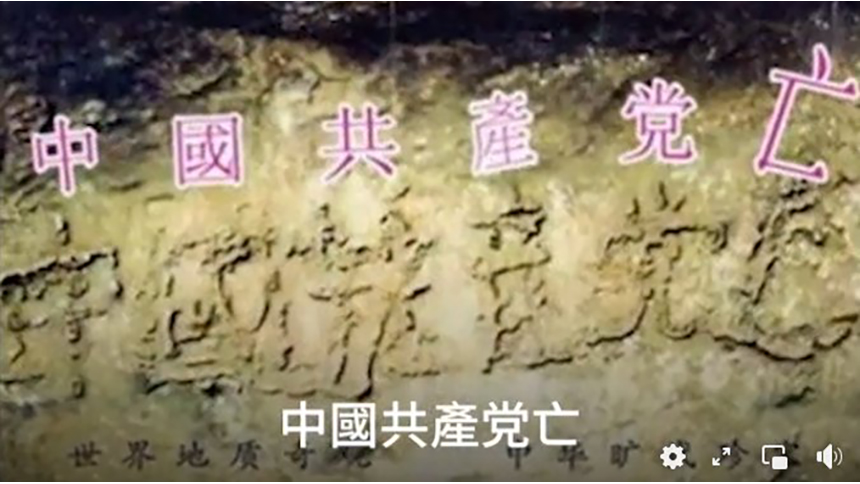
“What about the traces we saw on the way up here—the strangely shaped rocks, the faint carvings… do they have anything to do with the cultivation methods of the ancients, sir?” I asked, suddenly recalling the unusual rock formations we had seen on the mountainside.
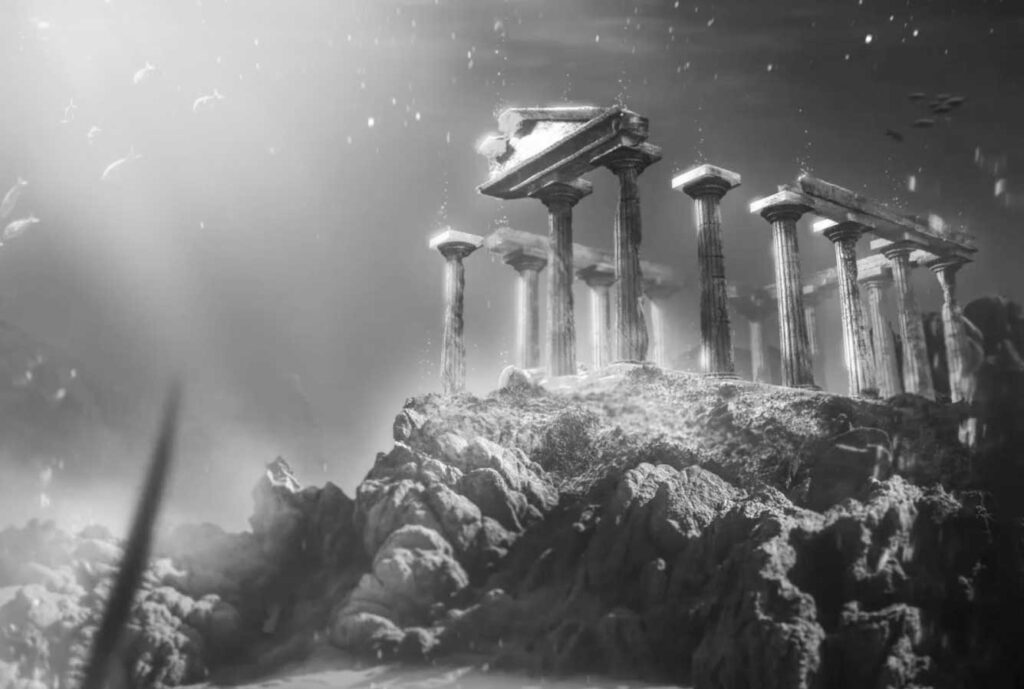
“That is very possible,” he replied, his voice calm. “There were very ancient times when people still retained their purity and simplicity, when they could sense the subtle energy flows of heaven and earth, of the universe. They tried to record what they had enlightened to, their understanding of this world. But as the years passed, that true understanding gradually faded, forgotten by later generations. Now, when people look at those rocks, they usually just see stones—few can still sense the profound things once hidden within them.”
There was no definite confirmation, no absolute answer.
I said nothing more. In my mind, many thoughts and concepts were colliding—not a debate of right and wrong, but as if they were trying to find some crack, some foothold, so they could slowly settle and sink in.
Outside, the wind from the bamboo grove blew again, carrying the chill of the mountain night. The flame of the oil lamp on the table flickered. The hermit calmly stood up, walked to the hearth, and added a few more dry logs to the fire.
“The air is getting cold,” he said, his voice still gentle. “The moon in the mountains will probably be very bright tonight.”
The Moonlit Night and the Strange Visitor
The moon had risen high. The night sky over the mountain was crystal clear, without a single cloud. The ethereal, silvery moonlight cast a gentle glow over the small earthen yard in front of the hut.
The hermit placed another small oil lamp on the tea table, its warm yellow light mingling with the moonlight from outside. He calmly poured another round of fresh tea, then said softly, his voice placid:
“On these mountains, it is usually just me. If you and your wife have no pressing matters, feel free to stay here a few more days to quiet your souls. There is no binding schedule up here, and I have no urgent business.”
He smiled faintly, then turned to me.
“I wonder if Mr. Wang would be interested in a few games of chess tonight? Whether it’s Chinese chess or Go, I can play a little of both.”
Before I could even respond, he suddenly paused, his gaze lifting toward the bamboo forest rustling in the night wind.
“Oh, a fellow Taoist friend… seems to be coming for a visit.”
Before Qing Ling or I could fully understand what he meant, a tall, slender figure suddenly emerged from the trail hidden behind the bamboo grove. The figure had short, neat hair, and his steps were unusually light. There was something very different about the way he moved, an elegance I had never seen before.
As the person drew closer, about a dozen paces away, I was suddenly struck by an unbelievable sight: the man appeared to be flying!
He wasn’t soaring high, but gliding smoothly about a hand’s breadth above the ground. It was clearly a glide through the air. His heels never touched the rustling dry leaves on the ground, and his shadow did not cast a distinct shape like ours did under the moonlight. Everything happened right before my eyes, so real, so clear, yet at the same time so irrational, so far beyond my conventional understanding.
Qing Ling instinctively gripped my arm. I could feel that we were both holding our breath, trying not to miss a single detail of this incredible scene.
The hermit calmly stood up, clasping his hands together in a very ancient gesture:
“Fellow Taoist Liu Yun has arrived.”
The strange visitor also clas инноваed his hands in greeting, then stepped closer. Now, his steps were completely normal, touching the ground like anyone else. He was a man of about forty, dressed in a simple, light-gray cloth garment and soft-soled cloth shoes. He had a very lithe, sturdy build, the tanned skin of someone who often worked outdoors, and his eyes were piercingly bright and sharp.
The hermit turned to us and introduced him naturally:
“This is Liu Yun, a friend of mine. He usually lives down in the town and works as a freelance merchant. He comes up to visit me from time to time. This time… he must have brought something for me.”
Liu Yun smiled, nodded a greeting to us, and then placed a small, carefully wrapped cloth parcel on the tea table.
“Yes, venerable brother. A few brothers down below have just pooled their efforts to reprint some books. I thought you might like one, so I brought one up for you.”
My attention was no longer on the parcel of books; my mind was still reeling from the way he had appeared. After a few brief, gentle exchanges among the three of them, I could no longer contain my curiosity and ventured to ask:
“Mr. Liu Yun… may I be so bold as to ask a question? Were you… were you actually flying just now?… And if so, do you often travel that way for your daily work, or do you only do so in special, deserted places like this?”
Liu Yun burst out laughing, a hearty laugh without any attempt to hide anything.
“I have to drive a car or ride a motorbike every day, just like everyone else, Mr. Wang. As for this…” he shook his head slightly, “…it cannot be used casually. Heavenly principles do not permit it. Only in truly quiet places, with no ordinary people around, where it won’t disturb the social order, can one display a little of it on rare occasions.”
He took a sip of tea, then calmly stood up.
“Well, I should probably leave tonight. There’s still some business to attend to down in the town. When we are not busy, we will surely have a chance to meet again.”
He gave a slight bow to the hermit and us, then quietly departed, his figure quickly blending into the darkness of the mountain forest, as light and mysterious as when he had arrived.
The atmosphere in the small hut returned to its inherent quiet. The flame in the oil lamp on the table flickered, illuminating our pensive faces.
Qing Ling whispered, as if afraid to shatter something:
“I… I have never seen anyone… actually fly like that.”
I could only remain silent. We both sat there, stunned, trying to digest what we had just witnessed, not knowing where to place it in our consciousness.
The hermit gently closed the book Liu Yun had brought and set it aside on the table.
“One cannot see the true reality just by searching for it in the outside world,” he said, his voice still soft and distant. “Sometimes, if one can just sit quietly, allowing the mind to settle, other doors will naturally open.”
We stayed at the hermit’s home for three more days. Those days passed simply. In the mornings, we sometimes went with him to the nearby hills to pick medicinal herbs. In the afternoons, we would sit together in the yard, basking in the sun. In the evenings, we would gather around the warm teapot, silently watching the moon rise. He didn’t say much, nor did he lecture on anything profound. But every story he told, every word he spoke, though very simple, often left me pondering for a whole afternoon, or even for days afterward. Some days, the three of us would just sit in silence for hours, no one asking anything, he saying nothing. But strangely, it was in those moments of stillness that the things I had desperately wanted to ask, the questions that had troubled me, gradually became unimportant, no longer in need of a specific answer.
On the third day, as I was packing my few personal belongings to go down the mountain, he said to me softly, his voice like a breeze:
“There is someone else waiting for you down there. The next door on this journey… it will open on its own when you set foot there.”
I did not fully understand his meaning, but I didn’t ask further. At that moment, I only knew one thing—that the few short days here, spent mostly in silence, had truly opened something new, something different within me. Like the bright moonlight on the night we first arrived—not loud, not dazzling—but enough to illuminate a path ahead, even if that path was still faint and full of the unknown.
Conclusion of the Wondrous Encounter and the Journey Onward
It was still early. Thin wisps of clouds drifted lazily across the distant mountain peaks. The pure morning light cast a soft, silvery-gray hue over the earthen yard in front of the hut. From the small kitchen, the soft, steady sound of water boiling on the hearth could be heard. The hermit, as on every other morning, was leisurely stoking the fire, preparing a new pot of tea. There was no formal send-off, no words of farewell were spoken.
Qing Ling and I quietly packed our few belongings. We had, in a flash, stayed for three days. Initially, we had only planned to visit him for an afternoon, but then neither of us mentioned leaving—and so the days passed in a strange stillness and peace. Each day, the hermit only did very simple, ordinary things: sometimes he would go to the nearby hills to pick some wild herbs, other times he would be seen diligently decocting medicine by the fire, or he would just quietly tend the fire and brew tea. He hardly explained anything, nor did he proactively share any stories with us. But strangely, it was in that near-absolute silence that we perceived so many things that perhaps no words could ever fully express.
One afternoon, as I was helping him spread some trays of medicinal herbs to dry in the backyard, he suddenly asked, his voice even, without looking at me:
“In your land now, do people still believe that humans truly have a soul?”
I paused for a moment, looking up at him. He still did not look back, merely continuing to meticulously arrange each small bunch of herbs on the bamboo tray. I replied, my voice a bit hesitant:
“Sir, I think… perhaps many people still do, but they often don’t know what a soul truly is, and few genuinely pay it any mind.”
He said nothing more. But from that afternoon on, I began to pay more attention to the small things, the very ordinary sounds happening around me. The moments when the wind suddenly blew, rustling the bamboo eaves; the soft simmering of the teapot; or the shifting colors of the sunlight on the earthen yard whenever a cloud passed over… All of it seemed to be telling me something—something very old, very familiar, that I had perhaps inadvertently missed for a very long time.
This morning, when we had finished packing everything to go down the mountain, the hermit came out of the hut and handed me a small parcel wrapped in rice paper. Inside were some dried wild herbs that gave off a pure fragrance, and a small, handwritten note with a few words:
“Not for healing. Just to remember the scent of the mountains.”
I accepted it reverently, then bowed to him. He only gave a slight nod in return. No more words were exchanged.
We quietly left the small, simple hut. The familiar trail through the bamboo forest leading down to the foot of the mountain was the same one from days before, but for some reason, our steps today seemed somehow different. No one spoke a word for the entire way down. The early morning mountain wind carried a slight, cool dampness and the earthy scent of wild grass. Qing Ling walked beside me, occasionally reaching out to gently brush a bare branch along the path, like a silent farewell.
As we neared the foot of the mountain, I instinctively glanced back. The hermit’s small thatched hut was now completely hidden behind the dense layers of green trees. But deep in my heart, the image of his quiet, clear eyes—and the familiar scent of cooking smoke mingling with the drifting mountain mist of the early mornings—was still vividly preserved.
The wind blew up from the valley below, seeping softly through my collar, carrying the breath of ordinary life. I adjusted the straps of my backpack on my shoulders, and without another backward glance, I walked on.
This article is an excerpt from the book “RED DUST, GOLDEN LIGHT” – which tells the story of Professor Wang Ming and his wife’s journey to uncover spiritual mysteries and many hidden truths in China.
If you wish to experience the full journey of thought and the unpublished insights of the work, please click the button below to own the complete book.
To explore more works from THE LIVES MEDIA, visit our book collection.