Huanglongxi Ancient Town and the Old Woman by the River
Leaving the Wangyou valley, we carried with us a feeling of having shed an invisible burden, yet also a sense of wistful reluctance. The outside world, with its familiar rhythm of time, now felt somewhat alien after our days in that special place, especially after the strange thirteen-day sleep. We decided not to rush back to the noisy, bustling big cities, but to continue our journey of exploring the lands that still preserved much of China’s ancient culture.
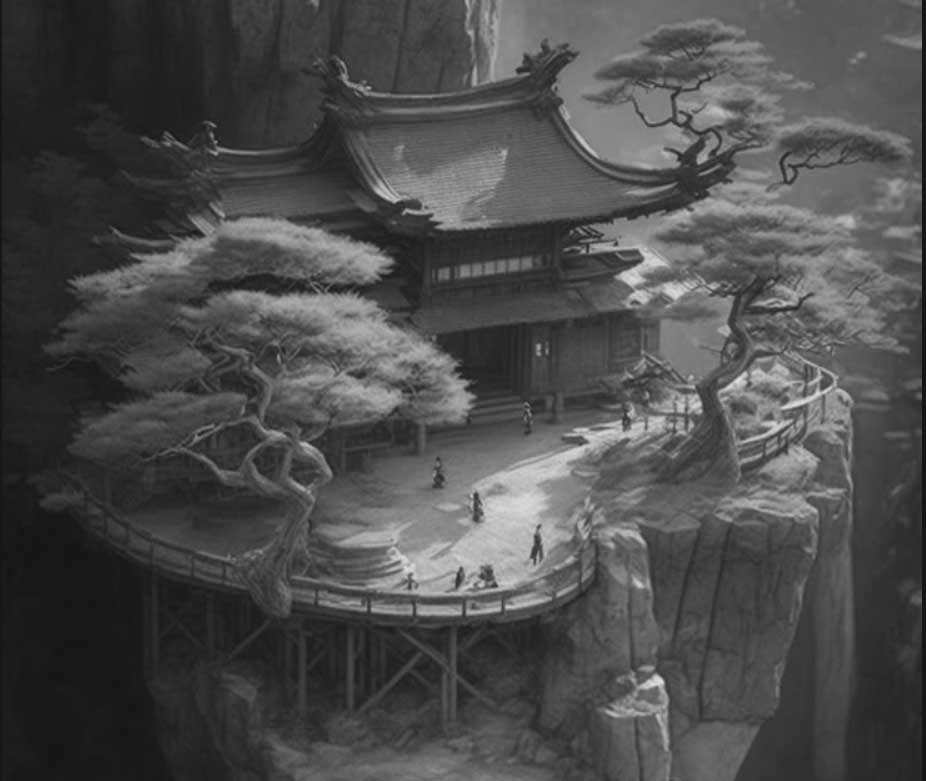
On the way from Wangyou back to the small town at the foot of the mountain, where we could catch a ride, our guide from the previous day pointed out an old temple perched on a nearby mountainside. He said it was a very sacred temple, not very large but with a history of several hundred years, and that pilgrims from afar still occasionally came to visit. With our recent spiritual experiences, both Qing Ling and I felt an urge to visit.
The temple was indeed not large, hidden amidst groves of old pine trees, the atmosphere incredibly serene. We met the abbot, a rather elderly monk with a benevolent face and kind eyes. After learning that we were visitors from afar, hoping to understand the culture and sacred places, the monk spoke with us cheerfully. He told us about the temple’s history and the eminent monks who had cultivated there.
When he learned that we planned to continue our journey of exploration, the monk pondered for a moment and then said, “If you two truly have the heart to understand more deeply about spiritual values and traditional culture, then perhaps you should not miss Sichuan. That land not only has majestic scenery but is also a convergence point for many famous Taoist and Buddhist temples, like the sacred Mount Emei or the majestic Leshan Giant Buddha. The ancients used to say, one goes to Sichuan to feel the soul of the land and the wonder of the Buddhist Law.”
The monk’s recommendation, though merely informational as it would be for any other tourist, unexpectedly struck a chord within me. Sichuan. I had read about this region, but had never seriously considered going there. Qing Ling also showed great interest. “Sichuan? I’ve also heard a lot about the cultural relics and cultivation schools there,” she said to me, her eyes gleaming with curiosity. “Since we have the fated connection to be recommended, why don’t we give it a try?”
And so, very naturally, our next destination was set. From the old temple, we returned to the small town, then took a bus to Guiyang. From Guiyang, we easily bought high-speed train tickets to Chengdu, the capital of Sichuan province. The journey on the modern train, gliding past plains and rolling mountains, once again showed me the astonishing development of this country.
Upon arriving in Chengdu, we did not linger in the big city for long. After resting for a night to regain our strength and gather some necessary information, we decided to hire a private car with a driver to head south, with the intention of seeing the Leshan Giant Buddha, one of the world’s most famous Buddhist wonders I had long heard of. Along the way, we learned of an ancient town called Huanglongxi, situated peacefully by a river, said to still preserve much of its old architecture and a very serene atmosphere. We decided to stop there for a few days to rest before continuing on to Leshan.
The comfortable car took us away from the noise and bustle of Chengdu. The urban landscape of towering buildings and heavy traffic quickly receded, giving way to vast rice paddies and the prosperous, tranquil villages of the Sichuan plain. The driver, a middle-aged local man, was quite enthusiastic and open, occasionally pointing out scenic spots or telling interesting stories about the places we passed.
When we arrived at Huanglongxi Ancient Town, it truly possessed a very different kind of beauty. Small stone-paved streets ran alongside a gentle river, with ancient, curved stone bridges and wooden houses with moss-covered yin-yang tiles packed closely together. Although there were some signs of tourism, the general atmosphere still retained a rustic, simple charm, making us feel much more relaxed and relieved after the rather mentally taxing experiences we had just been through.
We found a small, rather simple inn with a balcony overlooking the river, planning to stay for a day or two. In the afternoon, after stowing our luggage, we took a leisurely stroll along the riverbank, breathing in the fresh air and observing the simple, slow-paced life of the local people.
As we were walking, Qing Ling’s gaze suddenly fell upon a small earthen yard in front of a house that looked quite old but still very clean and neat. Under the shade of a loofah trellis heavy with fruit, an old woman sat on a low bamboo chair, her back slightly stooped, her hands moving nimbly with colorful balls of yarn and a pair of bamboo knitting needles. She wore a faded brown homespun garment, her silver-white hair tied neatly in a bun at the nape of her neck. Her face was deeply etched with the wrinkles of time, but her eyes were unusually bright and kind. She sat knitting with such focus and placidity that she seemed oblivious to the world around her.
Qing Ling, who loved handicrafts and was always curious about local cultures, was very intrigued. She gently pulled my arm, and we both walked closer. We stood silently for a moment, watching the old woman work. Her aged but still very nimble hands moved the bamboo needles swiftly, each stitch perfectly even, gradually creating a rather complex pattern on the garment she was making. It was a very strange pattern, one I had never seen before, seemingly a combination of many small motifs, overlapping and intertwining into a very harmonious and unique whole.

As if sensing someone watching, the old woman looked up, her kind eyes meeting ours, and she offered a faint, unspoken smile. The smile was so warm that we instantly felt a sense of closeness and friendliness.
“Greetings, ma’am,” Qing Ling said politely in perfect standard Mandarin. “Your knitting is beautiful. This pattern is very special.”
The old woman looked at Qing Ling, a flicker of pleasant surprise in her eyes upon hearing her voice. “Thank you, miss,” she replied, her voice as deep and gentle as her eyes. “This is just an old pattern from our village. Few of the young people nowadays want to take the trouble to learn how to knit such complex patterns anymore.”
“I love knitting at home, but I’ve truly never seen a pattern like this,” Qing Ling said, stepping a little closer to get a better look at the sweater she was knitting. “It looks so intricate, as if many threads of different colors are meeting and blending together.”
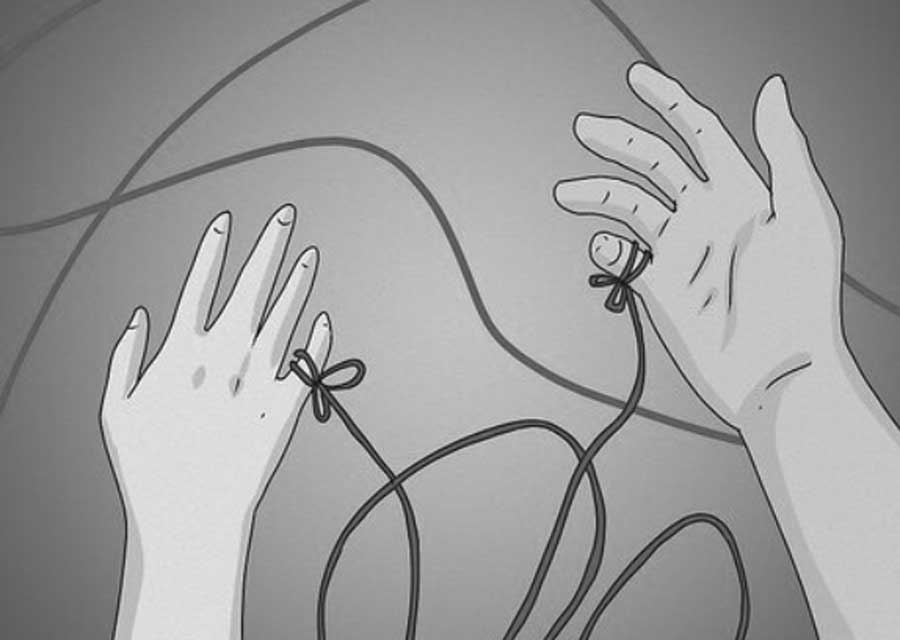
The old woman smiled again, this smile seemingly deeper than before. She looked at the yarn entwined in her hands, then looked up at both of us. “That’s right, miss,” she said slowly. “Each of these threads has its own path, its own color, its own thickness. But once they meet on these knitting needles, the one that goes before, the one that follows, the one on the inside, the one on the outside, they all blend together to become a warm garment. It is just like the fated connections of people in this world. No one can know in advance whom they will meet, how they will be woven together with them, but each of those connections, whether happy or sad, has its own meaning.”
The old woman’s seemingly simple words felt like a cool breeze suddenly weaving through the dense layers of my thoughts, gently opening up things I had never before put into words. Her analogy touched something very deep within me, evoking rambling thoughts about the words “fated connection,” about the invisible links that both Qing Ling and I had begun to vaguely sense throughout this journey. I looked at the old woman more closely. Her appearance was very ordinary, her work simple, but her words contained a life philosophy that was anything but common.
The old woman gestured for us to sit on the empty bamboo chair beside her. “You must be visitors from afar, right? You don’t look like you’re from around here.”
“Yes, ma’am. We’re from the US,” I replied, sitting down next to Qing Ling. “We’re on our way to Leshan and stopped here to rest and learn more about the culture and life in ancient towns like Huanglongxi.”
“Ah, so you’re on your way to the Leshan Giant Buddha,” the old woman nodded slightly, her eyes never leaving her knitting. “Then it must be fate that you stopped here in Huanglongxi. Our ancient town may be small, but it has many interesting things, and the people here are gentle and simple. Feel free to stay for a few days to regain your strength before you continue.”
We sat there, chatting a little longer with the old woman. At first, it was just polite inquiries about daily life, about her family, about the ancient town. But then, very naturally, our conversation began to drift toward deeper matters, as if the old woman had somehow vaguely sensed that we were searching for something beyond ordinary scenery or tourist experiences.
Sitting by the riverbank, under the loofah trellis heavy with fruit, listening to the simple yet profound words of the knitting woman, I suddenly had the feeling that this chance encounter was not at all random. Something new, another door, was slowly opening before us in this land of Sichuan.
A Tale of Reincarnation and Predestined Connections
We sat beside the old woman, in a space so quiet that the only sounds were the rhythmic clack-clack of knitting needles, mingling with the endless, murmuring whisper of the Fuhe River in the distance. The late afternoon sun had cast a golden glow, gently blanketing the small earthen yard in front of the porch, creating a scene of serene warmth.
Qing Ling, after carefully examining the intricate patterns on the sweater the old woman was knitting, asked, her voice filled with admiration, “Ma’am, I see these yarns have very different colors and thicknesses, yet I don’t understand how you can combine them so harmoniously. What is your secret?”
The old woman paused her knitting for a moment, admired her work, and then smiled kindly. “It is not because I am skillful, miss. It is because these yarns themselves are fated to be together. This thread needs to go with that one; a dark thread needs a light one to enhance its beauty. They just find their way to each other, entwine, and become a warm garment.”
She resumed her knitting as she spoke, her voice still slow and deliberate. “People in this world are much the same. Each of us is like a thread; everyone has their own color, their own path. But then, somehow, we meet—as parents, children, spouses, friends, or even as people we dislike… none of these encounters are random. It is because some invisible fated connections have linked them together long before.”
“Fated connections…” Qing Ling softly repeated the words, her gaze as if touching some distant memory, a feeling that was at once deeply familiar and yet somehow strange, indescribable. She had encountered this concept, read it, and even lectured on it countless times in classic literary works, in the allusions of Chinese culture. But today, hearing it spoken so simply, so mundanely, by this old woman, it carried a completely different weight. “…Is it like what is often said in the books of the ancients, ma’am?”
The old woman nodded slightly, a look of satisfaction in her eyes. “That’s right, my child. That is a fated connection. It is like invisible threads, woven together long ago, perhaps even from past lifetimes.”
“Past lives?” I blurted out, the inherent skepticism of a scientist suddenly surfacing. But Qing Ling had a completely different reaction. She lifted her head slightly, a flash of surprise mixed with a strange familiarity on her face. Past lives?—the concept was indeed all too familiar to her from countless fairy tales, myths, and the doctrines of Buddhism and Taoism she had studied. It was an almost indispensable part of the culture she taught every day. But today, hearing it from the lips of an old woman leisurely knitting by a small river, as if she were recounting a self-evident truth rather than a fantastical fairy tale, made her suddenly feel the thin line between ‘fiction’ and ‘reality’ seem to be blurring. The familiarity of the concept and the strangeness of confronting it as an objective reality seemed to be unfolding right before her eyes.
The old woman seemed to notice the difference in our reactions. She smiled magnanimously at me before turning to Qing Ling. “It feels very familiar to you, doesn’t it? You must have read many books.”
“Yes… yes, ma’am,” Qing Ling replied, her voice a little hesitant. “I have read about these things in old stories and scriptures. But… I always thought they were just symbols, metaphorical expressions of moral principles. Hearing you speak today, I have a very different feeling.” She was truly curious to know the “source” of this belief in the practical, daily life of the local people.
The old woman nodded gently, her eyes still kind and warm. “Books can only record so much; the real experiences of people’s lives are another matter entirely. Well then, let me tell you a story of our Huanglongxi Ancient Town, a story about my own grandparents.”
She gently placed her knitting needles in the bamboo basket beside her, her distant gaze fixed on the languidly flowing river, and slowly began to weave the tragic tale of a young couple named A Sheng and Lian—a thread of sadness suddenly weaving its way into the space filled with the warm glow of sunset.
Qing Ling listened intently, her delicate brows slightly furrowed. She knew these motifs well—the star-crossed love stories that had to overcome societal prejudice, the tragic fates that were the familiar fabric of folk literature. She felt moved, pained by the fate of the characters in the story, but at the same time, the rational part of her, the researcher, was still trying to analyze the structure of the narrative.
“What a sad story, ma’am,” she said softly when the old woman paused after the first part.
“It is sad, my child,” the old woman agreed. “But it is not over.” And she continued, telling of the birth of a boy named Chang and a girl named An to different families in the town, some decades later. She told of the strange marks on their bodies and in their dreams, of their irrational fear of deep ravines and swift-flowing rivers, and finally, of the blessed fate that naturally brought them together to live happily ever after in marriage.
When the old woman mentioned the detail that the boy Chang had a birthmark in the shape of a lotus flower, very similar to the tattoo on Lian’s shoulder, and that the girl An had a faint scar on her wrist identical to A Sheng’s, Qing Ling instinctively shivered. These details were no longer just literary motifs. They were too specific, too “real” to be dismissed.
“The old folks here in Huanglongxi,” the old woman concluded, her voice full of conviction, “all believe that Chang and An were A Sheng and Lian, returned to continue the unfinished love from their past. The marks left on their bodies, along with those fears, are the traces of the wheel of reincarnation. And the fact that they finally found each other and were joined in marriage was the arrangement of a predestined connection from a past life.”
The story ended, leaving a long silence. Qing Ling sat still, her eyes gazing distantly at the river. I saw an indescribable turmoil on her face. The elements of reincarnation and fated debts in this story were probably not foreign to her extensive cultural knowledge. But I had a feeling that the way the old woman told it, with an unshakeable faith shining in her eyes, combined with the strange phenomena we had experienced on our journey, was making her re-evaluate everything.
She turned to look at me, her eyes holding both the emotion of someone who had just heard a moving story and the clear confusion of a scholar facing a phenomenon that seemed to challenge both her knowledge and her beliefs. “Do you see?” she whispered, her voice very low. “It’s like what we’ve read in books… but at the same time, it’s not just in books anymore.”
I looked at Qing Ling, and in her astonished eyes, it seemed something was cracking, melting away. The familiar concepts from the books she often studied now carried a very different weight. On the bank of the Fuhe River, under the setting sun, the old knitting woman’s story seemed to have sowed in both our hearts the seeds of contemplation about the invisible threads of fate and the mysterious cycles of human life.
Karmic Force as an Invisible Thread Connecting All Things
After the old woman finished the story of A Sheng, Lian, Chang, and An, both Qing Ling and I fell silent for a moment. Their sorrows and reunion still seemed to linger in the air. We sat together in silence, our eyes gazing at the sunset descending over the distant river.
“Ma’am,” Qing Ling spoke, her voice still carrying a trace of the story’s echo, but her eyes now shone with the inquiry of someone wanting to get to the very root of the matter. “So, was it what the ancients called ‘karmic force’ that created those fated connections, that guided A Sheng and Lian to find each other again in their next life?” When Qing Ling mentioned the words “karmic force,” I suddenly remembered. That’s right, Master Mo in Qingxi had also spoken of this, of the law of cause and effect that governs a being’s life. But to be honest, at that time, amidst so many strange things and concepts beyond my comprehension, I had just listened without giving it much deep thought. Now, after the old woman’s story, the term “karmic force” suddenly carried more weight.
The knitting woman nodded slightly, a kind and understanding smile on her lips. She picked up her knitting needles from the bamboo basket, her slender, skillful fingers beginning to work again. “This young lady understands so quickly,” she said, her voice still even and warm. “Fated connections are like the ties that bind people together, sometimes near, sometimes far. And karmic force, that is the very force that creates those ties, that pulls people along on the endless wheel of reincarnation.”
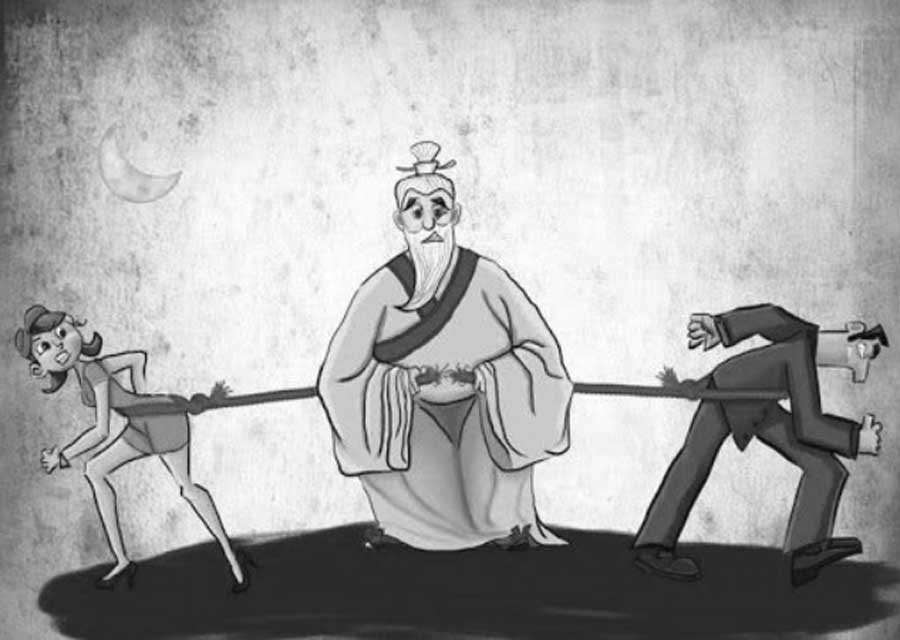
She gently lifted the sweater she was making, as if to let us see its patterns more clearly. “Look here,” she said slowly, “on this sweater, there are beautiful, smooth yarns with bright colors, but there are also coarse, dark ones that seem more likely to break. Karmic force is like the material of the invisible threads that make up the garment of each person’s life. The kind thoughts, truthful words, and benevolent actions we perform are like handcrafting fine, strong, bright threads. And the selfish, evil thoughts, the hurtful words, the actions that harm people or things, are like creating for oneself coarse, dark, rotten threads.”
She paused for a moment, her gaze distant as she looked out at the languidly flowing river, then returned to the sweater in her hands. “The ancients had a saying, ‘you reap what you sow,’ and that is the reason. Those good and bad threads do not just disappear. They quietly accumulate, wrapping tightly around one’s soul, or what people call the spirit.” Hearing this, Qing Ling and I instinctively looked at each other. Master Mo in Qingxi had also spoken of a “true self” that transcends the physical body, though he used terms like “consciousness” or “spiritual body” that had sounded strange to me at the time. Now, hearing this old woman speak of the “soul” or “spirit,” I felt that though the terms were different, they seemed to be pointing to the same core, unchanging essence of a person.
“Then, when a person leaves this world,” she continued, her voice as calm as if telling an everyday story, “their soul will carry all those threads of good and bad karmic force into a new journey. All that karmic force will determine where they are reborn, what circumstances they will face, whether they will have happiness or suffering, health or illness, whether they will meet good people or have to face evil ones…”
She looked at us, her kind eyes as deep as if they held an entire river of time. “Like A Sheng and Lian in the story. In their past life, though they were poor and faced many hardships, their love was sincere, their hearts were kind. Perhaps they had created good karma and a very strong vow. Therefore, in this life, it was that very karmic force that guided them to meet again in better circumstances, so they could repay the debt of love left unfinished, to enjoy the blessings they had sown before.”
“So is karmic force something that is predetermined and unchangeable, ma’am?” I blurted out, trying to find clarity with my scientific way of thinking. “If someone is born to suffer, is it because the karmic force from a past life has already ordained it, and they must endure it forever?” This question contained a persistent doubt of mine: if everything is predetermined, what is the meaning of effort, of human will, in this current life?
The old woman shook her head slightly, a flicker of contemplation on her time-worn face. Her knitting needles continued to move steadily, without pause. “It is not quite like that, young man,” she said, her voice still gentle. “Karmic force indeed has great power; it influences the circumstances we are born into, the people we meet, the events we experience. But it is not a sealed verdict that cannot be changed.” She emphasized this.
“It is like the ‘capital’ and ‘debt’ that we carry with us from past lives. The family we are born into in this life, the state of our health, that is due to the initial ‘capital’ of karmic force. But what is most important is how we live in this life, how we act with what we have.” She looked directly at me, then at Qing Ling, her eyes encouraging. “If we know to do good and kind things, to help others when we can, to cultivate our moral character to be better each day, then we are creating new, good karma. Our ‘good capital’ will increase, which can be used to gradually pay off the old ‘bad debts,’ and thus, our future will also gradually become better. Conversely, if we continue to do bad things, creating more bad karma, then the ‘debt’ will only pile up, suffering will beget more suffering, affecting not only this life but also future lives.”
The old woman paused for a moment, as if to give us time to absorb her words. Then she continued: “So, knowing about karmic force is not so we can use it to blame fate or give up and resign ourselves. It is so we can understand that everything that happens to us has its reason; nothing is random. And more importantly, it is so we can take responsibility for every thought, every word, every action in this present moment. Because it is these things, no matter how small, that are quietly weaving our own future, and the future of those with whom we have fated connections.”
The old woman’s explanations, though very simple and rustic, were like raindrops seeping deep into the soil of a soul that had been parched by doubt. The concept of cause and effect and personal responsibility was expressed so vividly and relatably. It did not deny the role of the past, of what had been, but it especially emphasized the power of the present, of every moment we are living, in shaping and transforming the future. Karmic force, as she told it, was no longer a fated verdict or a lottery ticket drawn in advance, but a continuous flow of energy, constantly being created and changed by the actions and moral character of each individual.
I sat in silence, trying to imagine that invisible network of karmic force. It seemed much more complex than the laws of physics I had learned and taught—it was not just a mechanical action and reaction, but an accumulation of thoughts, of intentions, of invisible connections woven over countless lifetimes. An invisible web, both tight and flexible, encompassing everything.
Qing Ling also seemed deeply captivated. I saw her nod slightly, her eyes pensive. This concept of karmic force, though she had known it from Buddhist texts, seemed to have left the cold pages of books when explained so vividly by this old woman, with such simple, everyday images, and seeped deep into her consciousness like an underground stream, silent but powerful. It was like a key that could help her decipher some of the injustices, the sufferings, and even the seemingly random joys that occur in life. The scattered pieces of book knowledge seemed to be being arranged by an invisible hand, creating a more meaningful, more profound picture.
The encounter with the knitting woman by the Huanglongxi river, which began with curiosity about an unusual pattern on a sweater, had inadvertently led us to a deeper understanding of the invisible laws that seemed to quietly govern both the universe and human life. Reincarnation, fated connections, and now, karmic force—these concepts were no longer just dry, foreign words in books. They were gradually becoming manifest, as vivid as multicolored threads, silently weaving the incredibly complex fabric of reality that Qing Ling and I were experiencing, step by step, on this journey of discovery in the East. The late sunset still gilded the river’s surface, and the threads of karmic force, it seemed, were still quietly weaving the endless tapestry of human existence, right before our eyes.
Reflecting on Our Lives Through the Lens of Fated Connections
Night began to fall. The old knitting woman paused her work. Her kind eyes gazed into the space before her, as if still listening to the echo of the stories and insights she had just shared. We sat there, in the twilight stillness, each lost in our own thoughts, yet seemingly all directed toward one great question: what would our own lives look like, if viewed through the lens of reincarnation, fated connections, and karmic force?
I instinctively looked over at Qing Ling. She was also looking at me, her gaze deep, at once familiar and yet holding something new, something just discovered. All the years we had been together, from our university days to our married life, I had always seen it as a choice we both made, a result of love and compatibility. But now, after what the old woman had said, a question arose in my mind: Was our meeting truly just a coincidence, or had it been linked by some invisible threads long ago? Was there a thread of destiny that had skillfully drawn us together, a fated connection predestined from ancient lifetimes, like the story of Chang and An she had just told? The thought did not diminish the love I had for her; on the contrary, it seemed to add a deeper layer of meaning to our relationship, a bond that felt more sacred and enduring.
Then, other images from my past slowly came to mind. My career path as a medical professor and entrepreneur, at times seemingly smooth, with successes that sometimes came unexpectedly, but also with stumbles, with business partnerships that looked promising but suddenly fell apart for no clear reason. The people I had met in my life, those who helped me, those who caused me difficulties… Were they all links in a chain, connected to me by some fated connections and karmic force operating silently, without my knowledge? Was everything I had experienced, the joys and sorrows, all an arrangement of karmic force, the result of the “good and bad threads” that I myself had created in the past, perhaps from lifetimes I no longer remembered? The thought sent a slight shiver down my spine, but at the same time, it brought a sense of a certain order, explaining in part the things I had previously attributed only to luck or chance.
I saw Qing Ling sigh softly, her hand gently brushing her hair. I guessed she was thinking, too. Her life, from her days in Shanghai, to the major turning point of moving to the US with her family, the years of study to become a professor. On that journey, we met in college, then built a family together, with children who were now nearly grown. All of it, viewed through the lens of fated connections, must surely contain so many predestined links, so much guidance from karmic force. And her coming back to China with me on this trip, to listen to these stories, was that also part of that arrangement?
The old woman gave a soft cough, as if to bring us back. She had finished packing up her things. “It’s completely dark now; I must go home for dinner. I wish you both a pleasant journey… Oh, by the way, the end of this road leads to a small food court. If you wish to have dinner, that would be a good place.”
We stood up and bowed to her once more. “Thank you so much, ma’am, for your time and for sharing such meaningful stories with us,” Qing Ling said, her voice sincere.
The old woman just waved her hand, smiling kindly. “It’s just some old stories passed down by the elders. For you to listen to for pleasure.” But in her eyes, I had the feeling she knew those stories meant much more to us.
We walked slowly back to the inn on the cobblestone path. Along the way, red, traditional-style lanterns (perhaps with electric bulbs inside) hung from the eaves of a few houses and at some intersections, casting warm patches of light on the road, mingling with the light of the crescent moon high above, creating a nighttime scene of the ancient town that was both sparkling and serene. No one spoke, but I understood we were both reflecting, silently examining our own lives from a new perspective—the perspective of fated connections and karmic force.
The people, the events, the relationships of the past were no longer just scattered dots. They seemed to be strung together by invisible threads, some intentional, some unintentional, but all seemingly part of a complex web of cause and effect. This perspective did not make me feel bound by fate; on the contrary, it made me more keenly aware of my own responsibility for every thought, word, and action in the present. Because I vaguely sensed that it was these very things that were continuing to silently weave the tapestry of our lives, and the lives of those around us, not just in this lifetime but possibly for future journeys as well, if what the old woman said was true.
The chance encounter with the knitting woman by the Huanglongxi river had not only brought interesting stories. More importantly, it had sown in our hearts a new and profound way of looking at life and relationships. We began to reflect on ourselves, no longer as just separate individuals, but as small links in a great chain of cause and effect and fated connections, both subject to its influence and at the same time contributing to the flow of karmic force.
This article is an excerpt from the book “RED DUST, GOLDEN LIGHT” – which tells the story of Professor Wang Ming and his wife’s journey to uncover spiritual mysteries and many hidden truths in China.
If you wish to experience the full journey of thought and the unpublished insights of the work, please click the button below to own the complete book.
To explore more works from THE LIVES MEDIA, visit our book collection.