Julian Lee:
I had thought that the journey of discovery with the former president had come to an end after our fourth dialogue. I completed the manuscript of those four historic days with deep emotion and sent it to THE LIVES MEDIA, believing the story was complete.
But just when I believed everything was concluded, an unexpected email arrived on a quiet morning, about a month after our final meeting.
The email was from the former president, and its content was also very brief:
“Hello, Julian.
Our dialogue has made me reflect a great deal. I realize that beyond the stories of the past and reflections on the present, I have a responsibility to leave for future generations a more concrete sketch of the path ahead.
Please consider the attached text not as a part of the interview, but as an independent legacy. You will know what to do with it.
A friend.”
The sole attachment in that email was the “Testament on a Moral Republic” that you are about to read below.
After reading it, I understood that this was the missing piece, the bridge connecting the analyses of a world facing crisis with a feasible vision of a world that could be built. It was not only the answer to the issues that had troubled him, but also a detailed blueprint for hope.
And so, with his permission, I respectfully place it hereafter, as a special part and also the most important legacy of this entire dialogue.
* * *
Testament on a Moral Republic
To Julian Lee
Part I: Introduction
Dear Julian,
Our four-day dialogue not only sparked reflections on politics but also reinforced in me a profound realization: to solve the world’s problems, we must view them from a completely different perspective.

The modern world is accustomed to seeing everything through the lens of empirical science and material reason. But my contemplative journey has led me to a different frame of reference—a perspective from metaphysical spirituality and ancient moral values. From this viewpoint, history is no longer a chain of random events, but a grand drama arranged by Divine Will and operating according to the Law of Cause and Effect.
It was this lens that helped me understand why humanity’s great institutions, despite starting with good intentions, all eventually ended up in a dead end. We have seen democracy perverted by money and factions, communism turn its promised paradise into an earthly prison, and capitalism, while creating extraordinary prosperity, erode human dignity. They all share a common weakness: they were built on a foundation that had lost faith in the Divine and in universal values.
Is it not time for us to seek a new path, a path that is not about patching up old systems, but about returning to eternal truths?
Today, I am sending you this draft. Please do not see it merely as a dry political plan, but receive it as a ‘heartfelt letter’ and also the beginning of a ‘Thesis on a Moral Republic’.
These are the reflections I wish to entrust, a vision of a nation built on simple principles that I believe are steadfast.
I believe that when humanity grows weary of artificial institutions, they will naturally find their way back to the source: taking the Dao as the root, taking Virtue as the focus, and taking the Wise and Talented as the pillars.
The following lines will explain this model in detail.
* * *
Part II: Thesis on the Foundation of a Moral Society
We recognize an evident truth: The Creator has granted humankind the free will to decide their own path in life. And above all, He has bestowed upon humanity a sacred and inviolable privilege: the opportunity to walk the path of spiritual cultivation.
Before every person, there always exist three paths in life:
- First, to follow the Heavenly principle, living a life of integrity and peace.
- Second, to turn one’s back on the Heavenly principle, allowing sin to reign, and then to face judgment in hell or eternal destruction.
- And the third path—the noblest path of all—is to embark on spiritual cultivation to cleanse the soul and transcend the mortal realm.
Therefore, the right to freely choose whether or not to walk the path of spiritual cultivation is one of the most natural and sacred rights of humankind.
History has painfully proven that a government built on an atheistic and materialistic foundation will inevitably deny these sacred rights. It will seek every means to extinguish the flame of faith, persecute spiritual cultivators, and establish a dictatorial regime in the name of progress. Such acts are not merely oppression against human beings; they are a challenge to the Heavenly principle and a trampling upon the grace of the Creator.
For these reasons, the creation of a new model of state is a legitimate necessity. Its ultimate purpose is not power or material wealth, but to build a society that cherishes morality, fosters spiritual abundance, and above all, protects the freedom of each citizen to choose their own path in life—wherein the right to walk the journey of spiritual cultivation must be considered the most precious.
We call it the Moral Republic. This republic will be designed in accordance with the light of the Creator, taking
Truthfulness – Compassion – Forbearance as its foundational principle, guiding all thoughts and actions of the nation, to create a just, compassionate, and harmonious society, worthy of the grace He has bestowed.
* * *
Part III: Philosophical Foundation and Principles of Creation
A. Introduction: From the Failures of History to the Necessity of a New Foundation
Before creating a structure for the future, a wise architect must reflect deeply on the foundations that have collapsed in the past. The history of humanity is a grand tragedy of mankind’s endless efforts to find an ideal social order. Every model, whether glorious or dark, whether of the East or the West, is an invaluable lesson on the nature of power, helping us to more clearly identify the foundational errors to avoid repeating the mistakes of history.
1. The Ancient Sage King Model
Advantages: This is the most ideal state of society ever recorded, where the leader was a Sage whose morality was almost Divine. They used virtue to inspire the populace, causing society to function harmoniously on its own without the need for harsh laws.
Disadvantages: It was not a “system” that could be sustainably maintained, but depended entirely on the extraordinary qualities of a single individual. That quality could not be reliably replicated or inherited, leaving this model as merely a distant golden memory.
2. The Feudal Monarchy & Theocracy Model
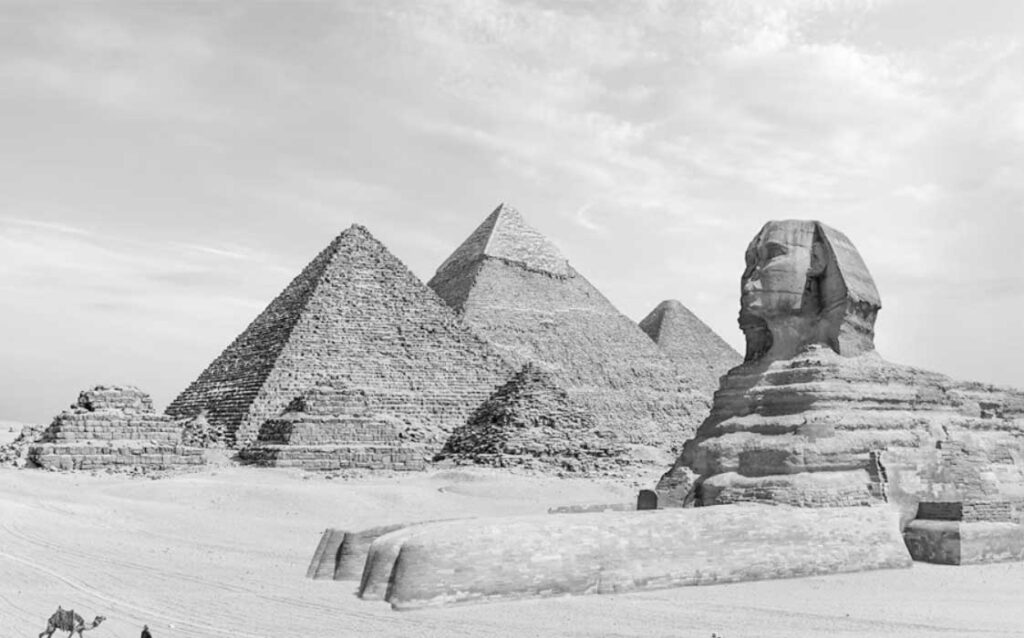
Advantages: When led by a wise monarch, this model could create long-term stability and a superior strategic vision, as the king was not pressured by short-term re-elections. Especially in ancient civilizations like Egypt, where the power of the Pharaoh (king) merged with the divine authority of the high priests, it created a phenomenal social stability that lasted for thousands of years, based on a common faith.
Disadvantages: Its fatal flaw was that it granted the individual monarch too much power while lacking an effective mechanism for oversight and checks. When power fell into the hands of a foolish monarch, or when the clergy became corrupt, abusing the name of the Divine to serve worldly interests, it became a disaster. History has recorded countless tragedies where a cruel king could massacre without limit, ordering the extermination of nine generations of a family over a slight offense, plunging the entire nation into fear and calamity.
3. The Ancient Democracy Model (Greece)
Advantages: The democracy in ancient Athens was a great experiment that gave birth to the concept of the “citizen” and laid the foundation for Western political philosophy. It allowed for the direct participation of citizens in policymaking and created a free environment for sages like Socrates and Plato to develop their ideas.
Disadvantages: This model demonstrated the danger of entrusting power to a crowd lacking the guidance of morality and wisdom. It was easily manipulated by demagogues, leading to erroneous and chaotic decisions, the greatest tragedy of which was the Athenian citizens voting to execute the great sage Socrates himself.
4. The Modern Representative Democracy Model (Capitalist)
Advantages: Its original intention was very noble: to overcome the tyranny and chaos of the old models by giving the people the power to choose their leaders through universal suffrage, creating a mechanism for a peaceful and legitimate transfer of power.
Disadvantages: This model reveals its foundational flaws when operating in a morally decayed society:
- Corruption by Money and Factions: Elections are no longer a process of seeking talented and virtuous individuals, but have turned into contests of advertising, fundraising, and rhetoric. The leader chosen is often the one skilled at pleasing financial interest groups and factions, rather than serving the common good of the nation.
- The Vicious Cycle of Moral Decay: This is the deepest weakness. When the moral foundation of society itself has deteriorated, the people will tend to vote for candidates whose ideas align with their own decay. A candidate who declares support for lifestyles considered contrary to traditional morality may win more votes than one who defends old values. Thus, the more a candidate engages in demagoguery and caters to the base moral tastes of the crowd, the more easily they are elected, creating a downward spiral that drags the entire nation down.
5. The Modern Totalitarian Model
a. The Classic Phase (Pure Communism):
Advantages (outwardly): It can create an absolute social order and be highly effective in concentrating national resources to achieve major goals.
Disadvantages: That order is built on a foundation of atheism, materialism, and fear. It completely destroys human dignity, suppresses religious freedom, extinguishes the flame of spiritual cultivation, and turns society into an invisible prison. This is the model that most directly and arrogantly confronts and challenges the Heavenly principle.
b. The “Improved” Phase (State Capitalism in VN and China):
Advantages: This model is very pragmatic, has created miraculous economic growth, and improved the material lives of hundreds of millions of people. It combines the centralized power of a totalitarian state with the dynamism of a market economy.
Disadvantages: The economic success comes at a very high price. The atheistic foundation and political monopoly remain unchanged, leading to a society that pursues materialism without restraint, a decline in social morality, environmental destruction, and corruption that has become a national scourge, spreading from high-ranking officials in discreet offices to blatant abuses of power in broad daylight, creating injustice and deeply eroding the people’s trust in justice.
All of these great efforts, despite starting with good intentions, ultimately ended in a dead end for a common reason: they were all built on a foundation that had lost faith in the Divine and in universal moral values. This systemic failure of history has shown an evident truth: patching up old systems is futile. It is time to find a new path, a path that begins with re-establishing a completely different philosophical foundation.
All of these models, though different in form, share a common blind spot: they all try to solve the problems of ‘man’ with the mechanisms of ‘man’, forgetting that man is only a small part of the relationship with Heaven and Earth.
B. Philosophical Foundation: The Heart of the Moral Republic
After identifying the failures of historical models, we see that the solution cannot come from merely changing power structures, but must originate from establishing a completely new philosophical foundation. This foundation is the heart, the operating system that shapes all thoughts and actions of the Moral Republic. It is built upon a worldview and a core value system that replaces the decayed materialist frame of reference.
1. The “Heaven – Earth – Humankind” Frame of Reference
This republic does not view humanity as a separate creature that dominates nature, but places humankind in a harmonious and humble relationship with Heaven and Earth. All policies and guidelines must be viewed through this lens:
- Following Heaven: “Heaven” is not just the blue sky, but the invisible yet immutable laws of the universe, the “Heavenly principle”. Following Heaven means acting in accordance with these laws, especially the Law of Cause and Effect, and always humbly relying on the Divine Will in major decisions.
- Nurturing the Earth: “Earth” is not an inanimate resource for humans to exploit at will. The Earth, nature, rivers, mountains, and plants are all living beings, living entities that must be respected and nurtured. A policy that looks only at short-term economic benefits while destroying the living environment and going against the natural flow is an immoral act. A prime example is the construction of giant hydroelectric dams that block the life of an entire river. While it may bring the short-term benefit of flood control, the long-term “Consequence” to be paid is the depletion of the ecosystem, the disappearance of fish and shrimp, and the disruption of an order that has operated for tens of thousands of years.
- Securing Humankind: “Humankind” – the human being – is the center of all policies, but not to satisfy limitless material desires, but to create a peaceful environment for the development of morality and the soul.
2. The “Dao – Virtue – Wisdom” Value System
From the above frame of reference, three pillars of national values are established, serving as the “DNA” of the republic:
- Taking the Dao as the Root: The “Dao” is the path, the concretization of the Heavenly principle in life. The foundation of the Dao that this nation takes as its guiding principle is “Truthfulness – Compassion – Forbearance”. All national policies, guidelines, and behaviors must be viewed through these three pillars:
- Truthfulness: Demands absolute honesty and transparency. Policies must be built on truth and natural laws, rather than on ideology or political interests.
- Compassion: Is the guiding star for all social policies. The noble goal of the system is to awaken and nurture compassion in every person, encouraging communities to support and rely on one another.
- Forbearance: Shapes the nation’s long-term vision and steadfastness. It requires the patience to pursue sustainable goals, overcoming the temptations of short-term economic benefits, much like the patience required to plant a forest instead of just constructing a building.
- Taking Virtue as the Focus: “Virtue” is morality, integrity, and kindness. If the “Dao” is the foundation, then “Virtue” is the goal of construction. The purpose of the republic is not material wealth, but the cultivation of morality and spiritual abundance for the people.
- Taking Wisdom as the Guiding Star: “Wisdom” is profound insight and clarity, the ability to recognize the truth and comprehend the “Dao”. A state with the “Dao” as its root and “Virtue” as its goal must be led and guided by “Wisdom”. Therefore, the mechanisms for selecting leaders must aim to find the most exceptionally wise individuals to serve the country.
C. Principles of Creation: Realizing the Philosophy
From the established philosophical foundation and value system, we will create a model of national governance called
Governance by the Wise Ruler: a system that places morality and wisdom above power and interests. This model is realized through the following foundational principles of creation:
1. Supreme Goal: Protecting the Space for the Path of Life
The highest and sole purpose of the state’s existence is to create and protect a safe, free social space where each citizen can walk their own path in life. Herein, the right to walk the journey of spiritual cultivation to cleanse the soul must be regarded as the most sacred and inviolable right, and all activities of the state must prioritize the protection of this right.
2. Principle of Property Rights: Inviolability of the Fruits of Labor and Blessings
The state recognizes that the material rewards an individual obtains through righteous labor, wisdom, and their blessings and virtue are part of the operation of the Law of Cause and Effect. Therefore, the right to private ownership of these rewards is inviolable. The state has no right to confiscate or redistribute the lawful property of its citizens for any reason, and tax policies must be kept to a minimum so as not to violate this principle.
3. Principle of Social Demarcation: Clear Division of Responsibilities between State and People
Power and responsibility in society are demarcated into two distinct domains. The domain of the
State is limited to the role of protecting order and security, enacting foundational laws, and maintaining a just judicial system. All remaining domains – economy, education, health, culture, science, social welfare – belong to the freedom and responsibility of the
People and social organizations. The state does not act on their behalf, does not interfere, but only protects the free operation of society.
4. Principle of State Governance: Minimalism and Service
Because the responsibilities of the state have been radically limited, its form must correspond accordingly. This principle requires an extremely lean state apparatus, comprising only the essential core functions. The entire civil service must operate in the spirit of seriously executing its assigned responsibilities, to protect a free and safe living environment for the people, rather than interfering with or ruling their lives.
5. Principle of Justice: Rule of Law that Venerates the Heavenly Principle
The republic shall not be governed by the will of any individual, but by the principles of Justice. The supreme source of Justice does not come from laws created by man, but from the Heavenly principle – that is, the universal laws of morality and the cosmos.
All laws established by man, which will be kept to a minimum, are merely interpretations of and must absolutely comply with the Heavenly principle. More specifically, no individual or organization, including the Wise Ruler, is permitted to trample upon the supreme moral principles of “Truthfulness – Compassion – Forbearance”. This is the absolute limit of power.
6. Principle of Sustainability: Wisdom as a Self-Correcting Mechanism
The strength and sustainability of the system do not lie in a detailed and rigid set of laws, as no law can foresee all future events. Instead, its sustainability lies in the mechanism for selecting people of outstanding wisdom (the Wise Ruler and the Council of Sages). It is their wisdom that serves as a living mechanism to try to interpret the Heavenly principle, identify new issues, and adjust the national course to suit the times, helping the system to be self-repairing and adaptive.
* * *
Part IV: Thesis on the Selection Mechanism for the Supreme Leader
The soul of every political institution lies in how it selects its highest leader. A flawed mechanism can elevate a demagogue or a tyrant to the pinnacle of power, plunging an entire nation into disaster. The history of humankind is an epic of endless efforts, and also tragic failures, in the search for a correct selection mechanism.
If ‘Dao’ is the foundation and ‘Virtue’ is the goal of construction, then ‘Wisdom’ is the torch that lights the way. But Wisdom (慧) here is not merely intelligence (智) or vast knowledge. It is the sagacity born from a soul that possesses Dao and Virtue, the ability to see through the nature of things, to perceive the Heavenly principle, and to make decisions based on compassion rather than on calculations of gain and loss. Therefore, the entire selection mechanism below is designed with a single purpose: to find the brightest torch, a person with enough Wisdom and Virtue to lead the entire nation.
To achieve this, we must first reflect more deeply on the lessons from the past.
A. Analysis of Selection Models in History
- Succession by Bloodline (Monarchy): This is the most ancient and enduring mechanism, creating a stable and clear transfer of power. As mentioned above, this king-subject model was originally an imitation of the order in the Heavenly Kingdom, and “father-to-son succession” was once part of the arrangement of the Heavens. However, in the context of the modern era, assuming that God has taken a step back to grant people in this mortal world more self-determination over their own destiny, we need to re-evaluate this mechanism. From a secular perspective, it depends entirely on the “lottery of the bloodline”. Talent and virtue cannot be inherited. A wise monarch can be succeeded by a foolish one, and in that case, the people have no way to change their fate.
- Theocracy (Parallel Religious Authority): In many civilizations, the secular power of the king was deeply influenced, even dominated, by the power of the clergy. In some places, these two powers merged into one, with the king also serving as the high priest. Elsewhere, they existed in parallel as two pillars of society. In its pure form, this model places society on a solid moral foundation, as all laws must follow the teachings of God. However, history also shows a bitter lesson: when the clergy becomes corrupt, they can abuse their sacred authority to serve power and worldly interests, turning religion into a tool for thought control and the oppression of those with different beliefs.
- Universal Suffrage (Democracy): This mechanism was created to return the right of choice to the people, creating legitimacy for the leader. In theory, it is superior. But in practice, as I have witnessed myself, it has been deeply corrupted. This is because when the moral foundation of society has eroded, the votes of the masses are no longer directed toward wisdom, but toward immediate material benefits and the promises of demagogues. Elections are no longer a process of seeking talented and virtuous individuals, but have turned into contests of advertising, fundraising, and rhetoric. It selects for people who are skilled at pleasing the crowd in the short term, not those who have long-term vision and dare to make difficult decisions.
- Internal Appointment (Totalitarian Regime): This model can select people with long experience in the system and loyalty to it. But it is a “black box” process, completely non-transparent. It creates fierce factional struggles, selecting for those who are skilled at political infighting and eliminating rivals, rather than those with the talent to serve the country. This is the mechanism that creates tyrants and courts that are rotten from within.
- Reincarnation (Some Spiritual Traditions): In its purest form, this is a mechanism that transcends all worldly ambitions, seeking a succession in the spiritual sense. However, it has inherent limitations.
First, it can only operate in very particular societies where the entire populace shares a deep, common metaphysical belief, which is almost impossible to implement widely in the modern age.
Second, the process of identifying the reincarnated person can itself be politicized and exploited.
And most importantly, a truly noble soul will always strive for cultivation to reach a higher realm, rather than clinging to worldly power to be continuously reincarnated to maintain a position.
B. Proposed Selection Model for the Wise Ruler: A Synthesis of Elites
After contemplating the failures of historical models, we can see that a correct selection mechanism must be a natural filtering process, combining the wisdom of the elite, the trust of the populace, and the validation of an entire lifetime. It is not a mechanical procedure, but an effort to find a person who truly possesses sufficient Virtue and Wisdom.
Therefore, the sole and core standard for evaluating a candidate for the position of Wise Ruler is these two qualities, demonstrated through an entire life journey rather than through a few speeches or a short-term election campaign.
It must be clarified that “Wisdom” here will be assessed through tangible evidence such as the quality of past policy decisions, the depth of published texts or works, and the ability to solve complex problems, not through superficial skills. The ability to give speeches or social grace is not a mandatory standard. This system is designed to find a brilliant mind and a compassionate heart, not a charismatic orator. Therefore, even a person with a physical disability, such as being unable to speak, is still a completely worthy candidate if their wisdom is transcendent, demonstrated through extraordinary writings and actions.
To realize this, a mechanism for selecting and ensuring the succession of the Wise Ruler will be established based on the following foundational principles:
1. Open and Diverse Sources of Nomination:
The process of searching for the wise and talented cannot begin from a limited source. The Council of Sages will be the central hub for receiving nominations from every corner of society: from professional communities, from public recognition, from the searches of the Council members themselves, etc.. This initial phase of gathering and screening will be initiated quietly at least 5 years in advance and will not limit the number of preliminary candidates.
2. Vetting of Moral Conduct and Finalizing the Candidate List:
This vetting is the internal and core task of the Council of Sages. They will review the candidate’s entire life journey comprehensively and thoroughly. In the spirit of acknowledging that ‘no man is perfect’, a past mistake that has been sincerely rectified will be seen as proof of moral growth, not as an indelible stain.
After the long-term screening phase, to finalize the list of candidates entering the public round, a vote will be conducted by the Council of Sages (holding a 2/3 weight) and the incumbent Wise Ruler (holding a 1/3 weight).
- Flexible Voting Mechanism: Each voter has the right to support one or more candidates they deem worthy, but no more than 10 people. They also have the right to vote for no one (an empty ballot) if they feel no candidate meets the standard.
- Candidates who receive over 50% of the total support votes will officially advance to the final public round.
- After the initial confidence vote results, the Wise Ruler and the Council of Sages will discuss together to finalize an ideal list of candidates, with a suggested number of around 5 to 7 people, to ensure focus and quality for the national assessment process. In all cases, the number of final candidates will not be less than 3 and not more than 10. If too many candidates exceed the confidence threshold, the Wise Ruler and the Council of Sages have the responsibility to deliberate and select the truly most outstanding ones.
After the list is finalized, about 1 year before the election, the Council will conduct private meetings with each candidate to extend the invitation and confirm their consent.
3. Multi-tiered Confidence, Not Based Solely on the Populace:
A minimum of 6 months before the election day, the final list of candidates (from 3 to 10 people) will be widely publicized. This is the period for the Multi-tiered Confidence process to be implemented, where confidence is a synthesis from four main component groups:
- The incumbent Wise Ruler
- The Council of Sages
- Provincial Leaders and heads of Large Organizations
- The Entire Populace
A candidate can only be elected upon receiving relatively balanced support from these groups, with the hope that the chosen person will possess wisdom, practical ability, and also enjoy the favor of the people. To ensure objectivity and avoid influencing public opinion, the incumbent Wise Ruler and all members of the Council of Sages are strictly prohibited from publicly expressing support for any candidate during this period. They exercise their choice silently through the ballot but are not permitted to use their personal prestige to campaign, in order to help other voter groups make their decisions independently.
(The voting mechanism and the method for calculating the weight of each group will be described in detail in the Appendix at the end of this testament).
4. Stable Succession and Flexible Term of Office:
A long term of office is necessary for stability. The maximum term is 25 years, but there will be periodic confidence votes. More importantly, the initial term of a Wise Ruler can be flexibly adjusted based on the level of confidence at the time of their election. This compels the leader to strive continuously to prove their worthiness.
(…..)
This article is an excerpt from the book “AFTER POWER: THE LEGACY” – which includes the complete exclusive interview by journalist Julian Lee with a former US President.
If you wish to experience the full journey of thought and the unpublished insights of the work, please click the button below to own the complete book.
To explore more works from THE LIVES MEDIA, visit our book collection.