( ….. )
Part VII: Relations with the Outside World
A moral nation cannot be an isolated island, but neither can it be drawn into the power games of the world. Foreign policy must be a reflection of domestic philosophy: respectful, humble, and steadfast.
A. Diplomatic Policy: Amicability and the Line of Non-Interference
This nation will be ready to establish diplomatic relations and cooperate with all countries, regardless of political system or ideology. The foundation of all relationships is absolute respect for each other’s beliefs, cultures, and sovereign independence.
However, the principle of “non-interference in internal affairs” needs to be clearly defined:
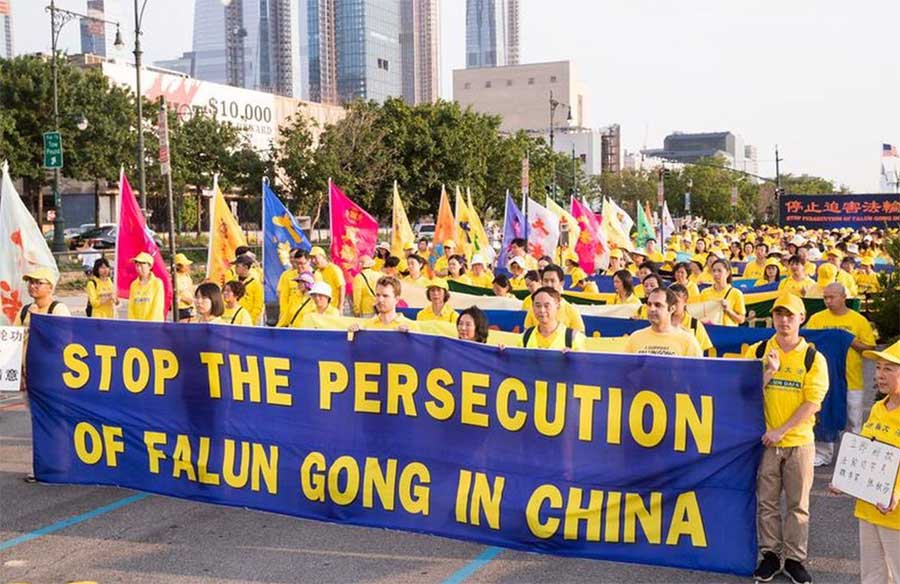
- In Word – The Responsibility of a Moral Lighthouse: When a regime commits atrocious acts that violate universal moral values – such as persecuting beliefs or committing genocide – speaking out to point out the truth is not interference. To be silent in the face of evil is to be complicit with evil. Our role is to shine a light into dark places, not to be an invading army.
- In Deed – Absolute Respect for Sovereignty: True interference only occurs when a nation uses coercive measures (economic, military) to force another nation to change its internal policies. But when one nation invades another sovereign nation, that is no longer an “internal affair”. In that case, we have the right to take specific actions such as economic sanctions, not to interfere in the internal affairs of the aggressor nation, but to protect international order and peace.
B. Military: The “Neutral Defense” Doctrine
With a national defense aimed solely at self-defense, this nation will not join any military alliances in peacetime. Military alliances often come with commitments that can drag a country into conflicts that are not its own, contrary to the spirit of amicability. Only in the event that the nation’s independence and survival are truly threatened will the formation of a temporary alliance for a legitimate defensive purpose be considered.
C. International Trade: Absolute Freedom and the Abolition of “Smuggling”
Our domestic economic philosophy is to respect the market mechanism. International trade policy must be an extension of that philosophy. The state will not impose any import or export tariffs.
A natural consequence of this policy is that the concept of “smuggling” for most goods will no longer exist. All citizens will be allowed to freely buy, sell, and transport assets such as gold, foreign currency, or digital currency across national borders. The only exception is a very narrow list of products that are absolutely banned because they are clearly harmful to society, such as narcotics or weapons of mass destruction.
D. Global Organizations: The Role of “Observer with a Voice”
This nation will participate in most major international organizations, but in a special role: as an “Observer with a Voice”. We will be present in discussions to listen and share perspectives, but we will not participate in legally binding votes or international military activities. This ensures the absolute independence of the nation. However, we will always be ready to voluntarily contribute finances and manpower to international humanitarian relief efforts.
E. Immigration and Citizenship: Welcoming the Self-Reliant, Filtered by the Community
Our philosophy is that of an open nation. The state will not play the role of a “moral judge” to pass judgment on a person’s soul.
- Naturalization Criteria: There will be only two objective criteria:
- Economic Self-Reliance: Proving stable employment (e.g., 1 year for an individual, 3 years to sponsor a family).
- Judicial Record: We apply the principle of “Atonement and Protection of Conscience”. A person with a common criminal record is still allowed entry but will be monitored. For internationally wanted criminals, the state will cooperate with international judicial organizations based on the principles of justice, clear evidence, and respect for sovereignty, ensuring the nation does not become a haven for criminals. In particular, “prisoners of conscience” who are convicted by other regimes for reasons of belief or opinion will be given every opportunity to be naturalized and will be protected as a citizen in the true sense.
- Natural Filtering Mechanism: We do not have a “morality test”. Instead, a society with a high moral foundation will naturally be an unsuitable environment for those with a deceitful heart. They will feel out of place and will automatically leave.
F. Transcending the Question of National Scale
This model does not depend on scale; rather, it makes the question of scale no longer important. Because real power has been returned to the local communities, a nation can operate well whether it is large or small. This will help even a nation of enormous scale like the U.S. or China to no longer be “fearsome and arrogant,” because the motive for expansionism has been eliminated at its root.
* * *
Part VIII: Crisis Management and the Transition Phase
A. National Crisis Response Mechanism: Self-Reflection First, Damage Control Later
In the modern world, when a disaster strikes – whether a pandemic, a superstorm, or an earthquake – people tend to call it a “natural disaster” and immediately rush into technical solutions. But a moral republic must have a more profound view.
We must understand that nothing is coincidental. A disaster of national scale is not merely a deviation in the workings of nature. It is the sternest warning from the Heavens, a mirror reflecting the moral errors that both society and its leaders have accumulated.
Therefore, the roles of leaders at all levels in a crisis are very clearly defined:
- The Role of Provincial Leaders: The responsibility for “damage control” – evacuating people, providing relief, overcoming the material consequences – belongs to the local leaders. They are the ones who must act most swiftly and effectively to minimize the damage to the people. The central government at this time plays a coordinating role, opening the national reserves and creating conditions for provinces to support one another.
- The Role of the Wise Ruler and the Council of Sages: Their duty is not to run about directing subordinates, nor is it to appear at heavily damaged sites to show superficial concern. Their noblest task at this moment is Self-reflection. When the Heavens have sent down a warning, the head of the nation must be the first to listen. The Wise Ruler and the Council of Sages need to calmly sit down, sincerely turn inward to examine themselves, to see what policies and paths have been taken that harmed the people and the country, damaged social morality, and went against the Heavenly principle.
The true action of the Wise Ruler is not to stand in the middle of the storm, but to point out the path of correction from the root, so that such storms no longer occur.
B. The Transition Path: The Natural Awakening of History
Many people, after reading to this point, will ask the most practical question: How do we get from our chaotic world to such a republic? What are the specific steps?
To be honest, I do not have and will not offer a detailed roadmap. Any specific transition plan drawn up today would be an act of arrogance and shortsightedness. Because this model cannot be imposed by a political revolution or a top-down decree. It is not a piece of software that can be “installed” into a society. It must be a natural “sprouting” from within.
The transition will not begin with politicians, but with ordinary individuals – when enough of them feel too weary of the falsehood, and begin the journey back to their own truthfulness. It will begin in families, in small communities, before spreading into a society-wide wave of awakening.
The conclusion for an open future, therefore, is not a plan, but an ironclad faith:
“I do not hope to see this dream become a reality in my lifetime, but I believe that when humanity grows weary of artificial institutions, they will find their way back to the simple truths: taking the Dao as the root, taking the heart as the master, and taking the wise and talented as the pillars.”
History has its own laws. Our task is not to draw the map for the future, but to sow the seeds of morality in the present.
* * *
Part IX: Appendix on Illustrative Figures
Dear Julian, the numbers and procedures below are not immutable laws, but merely my initial sketches of how the above principles could be realized. The final detailed design must belong to the wisdom and consensus of the wise and talented of that era, based on their actual circumstances.
Appendix A: Principles for the Supreme Leader and Core Institutions
1. Property Rights and Freedoms of the Wise Ruler’s Family
Principle 1: Respect for Personal Property Before and After the Term of OfficePreservation of Personal Property Rights: An individual assuming the position of Wise Ruler is an act of service to the nation, not a renunciation of civil rights. Therefore, all legal assets that the Wise Ruler and his family acquired before he took office, as well as assets lawfully formed from his salary and personal activities during and after his term, are recognized as private and inviolable property, just like that of any other citizen.
Principle 2: The Right to Freedom of Labor and Business for the FamilyThe Right to Career Development for Relatives: Members of the Wise Ruler’s family have the complete freedom to study, work, do business, and pursue their own careers like any other citizen. The state respects and does not interfere in their personal development paths. However, to ensure absolute fairness and prevent conflicts of interest, the business activities or positions held by the Wise Ruler’s relatives must comply with special transparency and oversight rules. For example, their companies will not be allowed to participate in government procurement contracts. Any act of exploiting the Wise Ruler’s influence for personal gain will be considered a serious crime and will be severely punished.
- Compensation:
- Compensation is calculated according to the formula in the following section, to ensure the financial independence and dignity of this position.
- The Wise Ruler will be provided with a public residence. The construction of a new palace, if necessary, must also have the approval of the Council of Sages, ensuring it is both cost-effective and befitting the stature of a supreme head of state, avoiding being either too simple or too extravagant.
- The state also provides for the Wise Ruler’s relatives, including: Grandparents, Parents, Spouse, Children, and Grandchildren. This provision package includes free education, housing, and travel, with a standard for each person equivalent to 5 times the national per capita income.
Salary Formula for the Wise Ruler:
Wise Ruler’s Salary = (Per Capita Income) x (Base Factor) x (Responsibility Factor)
Wherein:
Base Factor: This is the basic multiplication level, suggested to be in the range of 15 to 25 times. It ensures the Wise Ruler has a prosperous standard of living, commensurate with successful talent compensation models around the world.
Responsibility Factor: This factor is calculated based on the nation’s population size, on a logarithmic scale to prevent the figure from increasing too sharply.
Example:
- Nation with under 10 million people: Factor = 1.0
- Nation with 10 – 50 million people: Factor = 1.2
- Nation with 50 – 200 million people: Factor = 1.5
- Nation with over 200 million people: Factor = 2.0
Illustration of application:
- Case 1: A nation like Singapore (Population < 10 million, GDP/capita ~$88,000)
- Salary = 88,000 x (15 to 25) x 1.0 = $1.32M ~ $2.2M
- Case 2: A nation like the U.S. (Population > 200 million, GDP/capita ~$85,000)
- Salary = 85,000 x (15 to 25) x 2.0 = $2.55M ~ $4.25M
2. Compensation System for High-Ranking Positions (Including members of the the Council of Sages, Legislative Advisory Council, Education Advisory Council, Supreme Court Justices, Government Members…)
- For members of the the Council of Sages: The salary of an official member will range from 15 to 25 times, and a reserve member from 8 to 12 times the national average income.
- For members of the other groups: The salary of an official member will range from 8 to 18 times, and a reserve member from 5 to 10 times the national average income.
Note: Depending on the context of each country and in different eras, an appropriate figure should be considered.
3. Special Conditions on Term of Office
To prevent an individual from holding the highest positions of power for too long, special regulations on the term of office will be applied:
- If an incumbent member of the Council of Sages is chosen as the Wise Ruler, his maximum term as Wise Ruler will be 15 years.
- Conversely, if a Wise Ruler, after stepping down, is trusted and elected to the Council of Sages, his maximum term as a Council member will also be 15 years (instead of the default 25 years).
4. Detailed Election Process for the Wise Ruler
- Four voting blocs:
- The incumbent Wise Ruler (25%),
- The Council of Sages (25%),
- The National Electoral College (Leaders of various sectors) (25%),
- The Entire Populace (25%).
- Condition for election: Must achieve the highest number of votes and a minimum of 40% of the total vote. If not, the top two candidates will proceed to a second round.
- Emergency case: If the incumbent Wise Ruler is unable to vote, his voting power will be reallocated in a reasonable manner.
THESIS ON THE VOTING MECHANISM OF THE CONFIDENCE BLOCS
For a Wise Ruler to be elected, the confidence placed in him must not come from a single source alone. It must be a synthesis of the people’s heart (confidence from the social foundation) and the wisdom of the talented (confidence from competence and virtue). Therefore, the voting mechanisms of the two important electoral blocs, the National Populace Bloc and the Electoral College of the Talented, are designed separately as follows:
A. The National Populace Bloc (25% Weight)
This bloc represents the voice and approval of the entire populace. The vote of each citizen will be weighted solely based on age, in order to recognize life experience and maturity in judgment. This mechanism is built on a bell curve, ensuring fairness and respect for all generations.
Vote Weighting Scale by Age:
- From 18 ~ 28 years old: 1 vote
- From 28 ~ 38 years old: 2 votes
- From 38 ~ 48 years old: 3 votes
- From 48 ~ 58 years old: 4 votes
- From 58 ~ 68 years old: 5 votes (the peak of experience and sagacity)
- From 68 ~ 78 years old: 4 votes
- From 78 ~ 88 years old: 3 votes
- From 88 ~ 98 years old: 2 votes
- Over 98 years old: 1 vote
Note: Apart from the weighting by age, no other form of weighting will be applied to the popular vote of the people, in order to ensure the equality and simplicity of the system.
B. The National Electoral College (25% Weight)
This is not a standing council that needs to convene. It is a collection of about 2,500 special electors, representing the most outstanding minds and talents in every field of the nation. They exercise their right to vote independently to cast a judgment from the perspective of their professional expertise and social responsibility.
B.1. Compositional Structure:
The list of members is determined based on their incumbent role and position in the following blocs:
- Executive & Public Service (20%): Senior leaders of the central government and the provinces.
- Economy (20%): Leaders and senior experts from the nation’s largest enterprises.
- Religion & Spirit (15%): Delegates chosen by the major religious organizations themselves.
- Culture & Arts (10%): Artists, writers, directors… of great influence, nominated by professional guilds.
- Education & Science (15%): Leaders and leading scholars from prestigious universities and research institutes.
- Civil Society (10%): Leaders of political parties and social organizations with substantial contributions.
- Policy Advisory (10%): Incumbent members of the Legislative and Education Advisory Councils.
B.2. Vote Calculation Mechanism:
- General Principle: Each member of the Electoral College of the Talented has one vote of fundamentally equal value.
- Moral Weighting: To affirm the philosophy of “taking the Dao as the root,” the votes of the delegates from the Religion & Spirit bloc will have a particularly higher weight (e.g., 1.5 or 2.0 times) compared to the votes of members from other blocs. This is to ensure that the voice of conscience and morality always has a position of priority in the selection of the supreme leader.
The aggregated result from these thousands of independent votes will determine the support of this entire 25% bloc for the candidates.
The “Dynamic Confidence” Mechanism of the Incumbent Wise Ruler:
- Periodic Oversight: The Wise Ruler will face 2 mandatory confidence votes in the 10th and 20th years of his term.
- Determining Influence: About 6 months before the end of the term, a final confidence vote will be held to decide the weight of the Wise Ruler’s vote in the election of his successor. This vote will be conducted swiftly via an electronic application, with the votes of the Council of Sages carrying the highest weight, in order to evaluate the contributions over the entire 25 years.
- Vote Weighting Framework:
- Very High Confidence (>85%): Vote weight increases to a maximum of 40%.
- High Confidence (70-85%): Remains at the default level of 25%.
- Medium Confidence (50-70%): Vote weight is reduced to 15%.
- Low Confidence (<50%): Vote weight has only an honorary value of 5%.
Structure of the Council of Sages:
- Voting Rights: In national votes, each official member represents 1% of the total weight. Reserve members have the right to participate in all activities, but may only vote as a substitute when an official member is absent, and the total number of substitute votes may not exceed the number of votes of the absent member.
5. Structure and Succession Cycle of the Councils (the Council of Sages, Supreme Court, Advisory Councils)
Principle of Synchronized “Staggered” Succession
To ensure the smooth operation of the institutions and to create a unified “Election Season,” all of the nation’s core council-based institutions will operate on a synchronized succession cycle of once every 5 years. Specifically:
- Council of Sages: Consists of 25 official members, 25-year term. Every 5 years, the 5 members with the longest tenure will be replaced by election.
- Supreme Court: Consists of 15 justices, 15-year term. Every 5 years, the 5 justices with the longest tenure will be replaced by election.
- Advisory Councils (Legislative, Education…): Consists of 25 official members, 25-year term. Every 5 years, the 5 members with the longest tenure will be replaced by election.
Appendix B: Detailed Operational Rules
1. Rules for the Judicial Branch:
1.1. Election and Appointment Process for Judges (Supreme and Provincial Levels).
1.1.1. Election Process for Supreme Court Justices:
- Professional Screening: The Legislative Advisory Council is the hub for receiving nominations from the professional community and is responsible for vetting the competence and legal experience to finalize a shortlist of candidates (e.g., about 15 people for 5 positions to be replaced).
- Multi-tiered Election: 5 new Justices will be selected from the shortlist through a weighted vote, with 4 confidence blocs, each accounting for 25% of the weight:
- The Wise Ruler: Representing the confidence of the executive branch.
- The Council of Sages: Representing the endorsement of morality and wisdom.
- The Legislative Advisory Council: Representing the recognition of top legal experts.
- Representatives of the Judiciary (about 100 people): Representing the confidence from within the judicial sector itself. This process ensures that a Supreme Court Justice, when selected, will possess sufficient prestige in politics, morality, and expertise, and will be respected by their colleagues.
1.1.2. Appointment Process for Provincial-Level Judges: The appointment process for Provincial-Level Judges will be carried out in 3 steps, ensuring decentralization and a mechanism for checks and balances:
- Step 1: Local Screening: Each province will establish a “Provincial Judicial Selection Council” (comprising the most reputable judges and lawyers in the locality). This council is responsible for vetting and nominating a shortlist of candidates who meet the standards of competence and morality.
- Step 2: Central Ratification: This shortlist will be submitted to the Supreme Court. The Supreme Court has the role of reviewing and ratifying the list, ensuring the candidates meet the general standards of the nation.
- Step 3: Local Appointment: After being ratified by the Supreme Court, the list will be sent back to the Provincial Governor. The Provincial Governor (the head of the provincial executive branch) will be the one to make the final decision, selecting and appointing the judges from this list.
1.2. Limits on the Court’s Jurisdiction (Not to judge policy). To ensure a clear separation of powers, the Court has absolute jurisdiction in the judicial field but is strictly limited in other areas:
- No Judgment on Policy: The Court has no authority to judge the political, economic, or foreign policy decisions of the Wise Ruler and the Government. The oversight of these policies belongs to the political oversight mechanism of the Council of Sages.
- Judgment Only on Citizen Status: The Court only has the authority to judge an official, including the Wise Ruler, when that person commits a crime in their capacity as a private citizen (e.g., corruption, criminal acts). The Court has no authority to judge the actions that the official performs within the framework of their authority to govern the country.
1.3. Private Arbitration Mechanism for Civil & Economic Cases.
- Principle: The state encourages the resolution of civil and economic disputes through private arbitration centers to ensure speed, flexibility, and high expertise.
- Role of the State: The state will not directly operate these centers. Instead, the state will create a clear legal framework for the establishment and operation of private arbitration organizations.
- Legal Status: The rulings of private arbitrators are recognized as legally binding. The state court system has the responsibility and power to enforce these rulings, ensuring the rigor of the law.
2. Rules for Security Forces and Civil Order: 2.1. Principles of Organization and Equipment:
- Force Minimization: The military will be maintained at the minimum level necessary for defense (e.g., at 1/10th of the usual size), and the police force will also be very lean, appropriate for a society with a high moral foundation and a low crime rate.
- Absolute Ban on Weapons in Civilian Hands: The state absolutely prohibits all citizens from owning, storing, and using lethal weapons such as firearms, explosives, and poisons. The state maintains a complete monopoly on the use of force.
- Control of Police Weaponry:
- Civil police forces that interact frequently with the public (such as traffic police) will absolutely not be equipped with firearms.
- Only criminal investigation police, when carrying out particularly dangerous missions and with direct permission from a superior through a specific order, will be allowed to carry firearms.
2.2. Principles on Role and Limits of Power:
- Absolute Non-Interference of the Military in Politics: The military is absolutely forbidden from participating in political activities, power struggles, or carrying out coups. The Wise Ruler is also not permitted to use the military to protect his position for political purposes. The loyalty of the military is to the Constitution and the nation, not to any individual.
- Rule for Deploying the Military to Combat: Only the Wise Ruler has the authority to order the military into combat, and only after receiving the support of a majority of the members of the Council of Sages.
- Rules of Engagement during Demonstrations:
- The military is absolutely forbidden from intervening in citizen demonstrations.
- The police are present to protect order and prevent violent acts from extremist elements, but they are absolutely not to use force to suppress a peaceful demonstration.
- Citizens participating in demonstrations are also forbidden from carrying any type of weapon (guns, knives, gasoline bombs…).
- Inviolable Right to Housing: The police may not enter a citizen’s home arbitrarily or by force without the homeowner’s consent or a court order. The only exception applies to emergency situations to save a person’s life (e.g., a fire, a victim whose life is in danger inside).
3. Rules for the Market and Anti-Monopoly: 3.1. General Anti-Monopoly Principle and Prohibition of “Tying”
- Distinguishing Success from Abuse: The state does not interfere with companies that achieve a dominant market position through competence and creativity. However, the state will use the law and the court system to severely punish acts that abuse a dominant position to eliminate competition, such as colluding to fix prices, malicious predatory pricing, or acquisitions aimed at destroying rivals.
- Absolute Prohibition of “Tying”: All acts of forced selling (tying) are prohibited. The practice of a company forcing a customer to buy an ancillary product (A) as a condition of being able to buy the main product (B) is an illegal act, applicable to all sectors, from banking and real estate to retail.
3.2. Oversight and Competition Mechanism for Natural Monopolies (Electricity, Petroleum…) For industries with an infrastructure that constitutes a natural monopoly (such as the national power grid, petroleum pipeline systems), the state will apply a separation model to both ensure infrastructure efficiency and create competition at the retail level.
a. Separation of Infrastructure and Retail:
There will be a single private company (“Holding Company”) responsible for operating the common infrastructure (power grid, pipelines…). However, the distribution and direct retail to the people will be divided into multiple regions and will be publicly tendered to different private companies.
b. Competition and Elimination Mechanism:
* The right to distribute and sell at retail in each region will be tendered periodically. This cycle can be flexible, suggested to be in the range of 1 to 3 years, depending on the context of each country and time period, in order to balance stability for investors with regular accountability to customers.
* After each cycle, the renewal of the contract or the organization of a new tender will depend on a customer satisfaction rating index in that region.
* If a company’s rating score from the people falls below a certain threshold (e.g., 5/10), that company will automatically lose its right to do business in the region, and a new tender will be opened to competitors.
c. Role of the Independent Oversight Commission:
The state will only maintain a lean, independent Oversight Commission for these industries. The Commission’s role is to:
* Organize transparent tenders.
* Collect and publish the people’s rating scores.
* Set general rules to protect consumers (such as prohibiting forced purchase of equipment, ensuring transparency of tariffs and fees).
3.3. Principles for the Auction of Public Assets (Resources, Real Estate)
All activities involving the auction of public assets will adhere to the following strict principles:
a. General Principles:
* Appraisal and Floor Price: Before each auction, the state will hire one or more independent appraisal firms to publicly assess the value of the asset. Based on this result, a “floor price” (minimum tax or minimum starting bid) will be established to protect the national interest.
* Penalties for Withdrawing a Bid: Arbitrarily withdrawing after winning a bid is prohibited and will face extremely severe financial penalties.
b. Specific Rules for the Auction of Resource Extraction Rights:
* Dual Criteria: The winning company will be selected based on a combination of two factors: (1) The highest proposed tax rate and (2) The commitment to the best environmental protection measures.
* Penalties for Withdrawing a Bid: If the company abandons the project after winning the bid, it will be fined an amount equivalent to a very large percentage (e.g., 70%) of the projected investment costs for the first year.
c. Specific Rules for the Auction of Real Estate:
* Penalties for Withdrawing a Bid: To combat speculative market manipulation, if a company wins an auction but fails to pay on time according to the strict published schedule, they will be fined 50% of the winning bid value and the asset will be confiscated.
3.4. Mechanism to Combat Short-Term Speculation (“Wave Surfing”)
To encourage long-term investment and combat behaviors that create “artificial market fevers,” regulations on minimum holding periods will be applied to asset transactions. The purpose is not to interfere with property rights, but to orient investment activities toward the creation of sustainable value.
- For Real Estate: An individual or organization, after purchasing a property, will not be allowed to resell it at a higher price than the purchase price within 1 year.
- For Securities:
- Similarly, an investor will not be allowed to resell stocks at a higher price than the purchase price within 6 months.
- After the 6-month period, to continue to limit high-frequency trading, a transaction fee of 0.1% will be collected on the profit portion (collected only if the selling price is higher than the buying price).
3.5. Rules for Consumer Protection (Right to Record, Cooling-off Period…)
To balance power in transactions and protect the people, the following rules will be applied to all service industries:
a. Mandatory Transparency Principle:
All companies, credit institutions, etc., are required to publicly, officially, and in detail disclose all product packages, services, and associated conditions on their websites. Any act of “verbal coercion” that differs from the published policy is illegal.
b. Right to Record:
All citizens have the legal right to record the entire consultation and transaction process with a service provider. The service provider is obligated to inform the customer of this right.
c. “Cooling-off Period” for Ancillary Products:
For any ancillary product/service sold along with a main product/service (e.g., insurance sold with a loan, an accessory package sold with a car), the customer will have a “cooling-off period” (e.g., 14 days). During this time, they have the right to cancel the ancillary product and receive a full refund without needing to state a reason, and this cancellation must absolutely not affect the contract for the main product.
3.6. Sanction Framework for Economic Violations For economic violations involving fraud or coercion of customers (e.g., forcing the purchase of an insurance package to approve a loan), a multi-tiered sanction framework will be applied to ensure absolute deterrence:
a. Sanctions on the Transaction: Any transaction determined to be in violation will be nullified. The violating party (company, bank) must not only refund the entire amount wrongfully collected but must also adequately compensate the customer (e.g., in the case of a coerced loan, the bank may be ruled to lose the entire principal amount it lent).
b. Sanctions on Individuals: The individuals who directly committed the violation and the managers and leaders responsible for that policy will be dismissed and banned from practicing in the corresponding field for a long period of time (e.g., 5 years, 10 years, or permanently, depending on the severity).
c. Sanctions on the Organization: In addition to compensation, the violating organization will face an extremely heavy financial penalty, for example, the confiscation of the entire profit for the fiscal year in which the violation occurred, to be contributed to the public treasury.
* * *
Part X: Concluding Words of the Letter
A. Message and Entrustment
To you, Julian, who has patiently listened and inspired these lines of thought.
I dare not dream that this model will be implemented tomorrow. It requires a society willing to renounce illusions of power and interest, willing to believe in wisdom and morality. But if one day, when humanity is weary of power games and decayed institutions, I hope these words will be a brick, a seed for a better world.
I believe you will know how to sow this seed in the soil of awakening souls, through your pen. Help me pose the questions for the future generation: Can we choose leaders by virtue instead of by votes? Can a council of sages guide us through the darkness?
B. A Vision of an Inauguration Day
You know, Julian, sometimes during long nights of contemplation, I often envision a day of celebration that this model could truly bring. It is not a part of the mechanism, but the most beautiful spiritual reward it aims for.
On the day a new Wise Ruler is chosen, there will be no military parades showing off power. Instead, the great bells of the most ancient temples and cathedrals will ring out in unison, like an announcement of peace for the people’s hearts.
On every street, people will not pour out to shout slogans. They will open the doors of their homes, bring out pots of fragrant tea, and invite their neighbors to celebrate together. The burden of an uncertain future will seem to have been lifted. The elders will tell their grandchildren stories of the new Wise Ruler’s virtue, while the younger generation will celebrate with acts of community service.
And perhaps, the most beautiful, most sacred image, will not be a grand inauguration speech before millions. Instead, within the solemn space of the Temple of Heavenly Offerings, an inauguration ceremony will be held in the presence of a select few: the former Wise Ruler, the entire Council of Sages, and about a few hundred of the nation’s most distinguished delegates.
An elder representing the Council of Sages will preside over the ceremony, not to bestow power, but to attest to the Heavenly Mandate before Heaven and Earth. And then, in absolute silence, the new Wise Ruler will personally light a stick of incense before the altar, as a plea for wisdom from the Heavens and a humble, wordless promise that he has come to serve, not to rule.
This act, taking place before the elders of the nation, carries an even deeper meaning: it is a witnessed succession, a transfer of responsibility in honor and harmony.
It is a day of celebration where the people do not celebrate an individual, but celebrate the very future of their children. They are happy, not because they have a powerful king, but because they have found a respectable elder to follow.
Signed
I leave these thoughts to you and to future generations.
A friend on the journey to find the Truth.
( The End )
This article is an excerpt from the book “AFTER POWER: THE LEGACY” – which includes the complete exclusive interview by journalist Julian Lee with a former US President.
If you wish to experience the full journey of thought and the unpublished insights of the work, please click the button below to own the complete book.
To explore more works from THE LIVES MEDIA, visit our book collection.