DAY ONE
THE START OF MR. MOHAN’S SHARING
Jack Voss:
Good evening, Mr. Mohan!
As we arranged the other day, I’ve come today to hear you share some things about the present and the past history of Earth that you have seen through your third eye or received as revelations from Gods and Buddhas…
Mr. Mohan:
(Smiling gently, Mr. Mohan’s voice is warm and unhurried. He pours tea for Jack, an herbal blend fragrant with the mountains of Nepal.)
Welcome, Jack, please have a seat. I’ve just brewed some tea. The evenings in Kathmandu are often tranquil like this, very suitable for stories that require a quiet mind, don’t you think?
You are right. What I am about to share is not knowledge from books or purely personal speculation. These are things I have been fortunate enough to ‘see’ and ‘witness’ during my spiritual cultivation—images and streams of information that appear naturally through what people often call the third eye, or at times when the mind reaches a certain level of stillness, this understanding reveals itself, as if ‘enlightened.’
[ Mohan pauses for a moment, looking at Jack with sincere eyes. ]
As I have told you before, I have no intention of convincing anyone of anything, nor do I aim to debate right or wrong with any theory. I only wish to share what I know, like a person recounting a story he has lived or a painting he has seen. How you perceive and contemplate it is entirely up to each individual.
So, Jack, where would you like us to begin in this long and broad story of Earth and the universe?
* * *
Jack Voss:
Yes, perhaps we could start with the most general perspective on Earth’s history. How long is its “lifespan”? Is it about 4.5 billion years, as modern science currently believes?
Mr. Mohan:
(Taking a sip of tea, Mr. Mohan’s gaze is distant, as if turning the invisible pages of history.)
Yes, that is a very interesting question to start with, Jack. The figure of 4.5 billion years proposed by modern science, from what I have been shown, is the age of the mass of matter that forms this planet—the raw ‘materials’ that have existed for a very long time in the universe, having gone through many cycles of formation, stasis, degeneration, and destruction in different cosmic levels before. It is like the age of ancient bricks and wooden beams that can be used to build a new house.
[ Mr. Mohan pauses, searching for an easy-to-understand analogy. ]
However, if we speak of the current “life program” of Earth—that is, a period where Earth was shaped with a clear purpose, with life possessing spirit and intelligence, with the involvement and arrangement of divine beings, and with the operation of specific laws for sentient beings—then that period is much shorter. According to what I ‘see’, the ‘life program’ we are currently experiencing on this Earth began about 200 million years ago.
You can imagine it this way, Jack: this vast universe has countless levels, and each level has its own cycle of existence. After an old cosmic cycle ends, the Gods, under the guidance of an even greater will that we can temporarily call the Creator, use the ‘materials’ left over from that old universe—particles of matter that are 4.5 billion years old or even older—to ‘clean up,’ ‘recreate,’ and start a new cycle for a new space, which includes our Earth.
Therefore, 4.5 billion years is the age of the ‘foundational matter,’ while 200 million years is the period in which this Earth was ‘activated’ with a specific mission and script, with life possessing souls as we know it. This is a special period, a stage prepared for important cosmic events.
[ Mr. Mohan smiles lightly. ]
You see, the history we learn in textbooks, whether it’s a few thousand or tens of thousands of years, is actually a very, very brief moment in this 200-million-year flow.
* * *
Jack Voss:
So according to what you ‘see,’ Earth’s ‘life program’ only began about 200 million years ago, and it’s not that the entire 4.5-billion-year history has had life as we know it? And the Earth was created by the Gods from many different sources of “materials,” rather than forming naturally according to natural conditions…
Mr. Mohan:
(Listening attentively, he gives a slight nod.)
You’ve summarized it very accurately, Jack. There is just one small point I would like to clarify to avoid misunderstanding.
It is not that I completely deny the 4.5-billion-year figure. That number still has its significance, as I have explained; it is the age of the fundamental particles of matter, the ancient ‘bricks’ that were used by the Gods. It’s like when we talk about the age of the wood in an ancient temple; the wood might have been hundreds of years old before it was used to build the temple.
What I want to emphasize is that the current “life program” of Earth, this “stage” with a specific purpose and arrangement for beings with souls, only truly began about 200 million years ago. This was when the Earth was “restructured” and “infused with spirit” by the Gods, under the guidance of a supreme and more compassionate Will, from ancient cosmic “materials.”
As for the Earth being created rather than forming randomly through natural conditions, you understand correctly; that is what I ‘see.’ The formation of a planet with all the complex conditions for life, especially intelligent life, is not a coincidence. It is part of a larger plan, a sophisticated arrangement by the Creators.
[ Mr. Mohan pauses, looking at his half-empty teacup. ]
Of course, these are still things I have ‘witnessed’ from my realm. Science may yet discover many more things, and each path of discovery has its own value.
* * *
Jack Voss:
So after the Earth was created 200 million years ago, were humans, animals, and plants also created at the same time?
Mr. Mohan:
(Smiling, he sets his teacup down on the table.)
This question of yours, Jack, touches upon a very deep and complex aspect of the “life program” on Earth.
It is not quite that all the species of humans, animals, and plants we know today were created at the same time, right at that 200-million-year mark, and have remained unchanged since. The process is much more sophisticated and dynamic.
[ Mr. Mohan reflects for a moment, choosing his words. ]
Imagine those 200 million years being divided into many great cycles, and within each great cycle are countless smaller civilizational sub-cycles. In each period, each cycle, the Gods would arrange and create life forms suited to the environmental conditions, the specific purpose of that period, and the moral level and consciousness of the dominant beings on Earth at that time.
Regarding plants and animals: They were created first, gradually, to form a balanced ecosystem, a suitable living environment. Species also changed; some appeared and then vanished, depending on the transformations of the Earth and the arrangements of the Gods. Not all the giant dinosaurs or strange creatures of ancient times existed at once, nor were they the result of “random evolution” in the way many people understand it.
As for “humans”: This is a point to note. The concept of “human” is not a single, fixed form like we are today. Throughout those 200 million years, many different races of humans have existed on Earth, with very different appearances, sizes, lifespans, and abilities. There were periods of giants, of little people, and of races with characteristics that we might consider “superhuman” today. Each of these human races was also created by the Gods at specific times, for specific purposes, and also went through processes of development, flourishing, and then decline and destruction, making way for a new cycle.
Therefore, it can be said that after the Earth was “recreated” and its “life program was initiated” 200 million years ago, life, including various forms of “humans” and flora and fauna, was sequentially seeded and developed in stages, layer by layer, rather than appearing all at once and remaining static. It is like a vast cosmic garden, where the Creators continually sow, tend, and harvest through many different seasons.
The first sentient beings may have been very different from us, and the history of life on Earth is an incredibly rich and diverse tapestry, with many chapters that have been completely forgotten.
* * *
Jack Voss:
Are you saying that the 200 million years was not a continuous process, but went through many different cycles, each with its own diversity and ups and downs?! Can you give a general overview of these cycles?
Mr. Mohan:
(Nodding, his eyes showing clear agreement with Jack Voss’s understanding. He pauses for a moment, his gaze distant, as if turning over the invisible pages of the universe’s history. A fleeting contemplative look crosses his face before he begins to share.)
“Yes, Jack, you have grasped my meaning perfectly. The 200-million-year history of Earth’s ‘life program’ is not a monotonous, continuous flow from a single starting point to the present day. Instead, it is an incredibly complex tapestry, woven from many large and small successive cycles, each with its own ebbs and flows, its own characteristics, and its own unique life forms.
When the images of that historical flow come to me, the first thing I feel is a breathtaking magnificence, but at the same time, a heart-wrenching tragedy. It is like standing before an endless ocean, witnessing countless waves rise and then break, each wave a civilization, a life form, a story…
To make it easier to visualize, we can tentatively divide those 200 million years into two main Great Cycles, each lasting about 100 million years, like two major chapters, two extremely important acts in this epic of Earth.
The First Great Cycle was a more primordial period, after the Earth was recreated by the Gods from ancient cosmic ‘materials.’ The Earth back then, Jack, had a very different appearance from today. The atmosphere might have had a different composition, the continents might not have been shaped as they are now, and the life forms also had characteristics that we today would probably find strange, even fantastical. I ‘see’ primeval forests with giant plants, and enormous creatures that we only know through fragmented fossils, but they were not just mindless beasts; they also had their own forms of intelligence.
During that First Great Cycle, civilizations of different ‘human’ races also appeared, developed to glorious peaks, and then declined. There were periods when their science and technology, based on principles completely different from ours, reached achievements that we today probably still cannot dream of. But then, as is the eternal law, when morality was no longer valued, when selfishness and ambition overshadowed the initial good values, destruction arrived. That First Great Cycle ended with an incredibly thorough ‘great cleansing,’ an almost complete purification, to prepare for a completely new beginning. Witnessing destruction on that scale, I could not help but feel the smallness of life before the power of the universe, and the strict yet compassionate nature of the laws that govern all things.
[ Mr. Mohan pauses for a moment, as if to let the emotions settle, then continues. ]
Then came the Second Great Cycle, which is the one we are living in, also lasting about 100 million years. After the destruction of the First Great Cycle, the Gods, under the guidance of an even greater will that we can call the Creator, once again brought life back to Earth. A new ‘life program’ was initiated, with new life forms, new ‘human’ races, and new historical scripts.
In this Second Great Cycle, there have also been countless successive sub-cycles of civilization, flourishing and then withering, like the changing leaves of an ancient tree. Every civilization, no matter how magnificent, no matter how long it existed, ultimately could not escape the law of impermanence. When I ‘see’ these things, I understand more deeply the fragility of all that is material, and the importance of spiritual and moral values, because those are what can help a civilization truly endure, or at least leave behind beautiful legacies.
[ Mr. Mohan pauses for a moment, to give Jack Voss time to process. ]
As for these sub-cycles of civilization, they were truly myriad. Most of them, as I have shared with you before, usually lasted between 5,000 to 10,000 years, but there were also civilizations that existed for shorter or much longer periods, depending on the moral level and reverence for Gods and Buddhas of the beings within them.
A general pattern I have observed in most of these sub-cycles is:
First is enlightenment: It begins with simplicity, when humans or intelligent life forms are guided and taught by Gods or true cultivators about moral principles and understandings of the universe.
Then comes gradual development: Based on that moral foundation, society develops splendidly in culture, art, and science and technology (in their own way, not necessarily like ours).
After that, there will be gradual corruption: Over time, as material wealth increases, people gradually stray from the original teachings, morality declines, and selfishness, greed, and conflict arise.
And finally comes the stage of destruction: When morality has degenerated to an irredeemable point, disasters strike—be they natural catastrophes, wars, or other cosmic events—leading to the end of that civilization. Afterward, the Earth is “cleansed” to some degree to prepare for a new sub-cycle.
And so it goes, one layer of civilization after another, appearing and then disappearing, like waves on the ocean of time. Each civilization leaves behind some traces, whether material or non-material, but most have been buried or lost.
We, the current human civilization, are just one of these countless sub-cycles, and we are in the final stages of this Second Great Cycle.
[ Mr. Mohan looks at Jack, as if to see if he has any more questions about this general overview. ]
* * *
Jack Voss:
If each civilization cycle typically only lasts for 5,000 to 10,000 years before being “reset” by the Gods, does that also explain why we currently feel that human history has only really been recorded for about the last 5,000 years?!
Mr. Mohan:
(Nodding, a light smile plays on his lips.)
You are indeed very good at connecting events, Jack. Yes, what you just said is one of the logical consequences when we view history in this way.
The fact that most sub-cycles of civilization only last for about 5,000 to 10,000 years before undergoing a “reset”—whether on a large or small scale, whether complete destruction or just the collapse of a dominant civilization to make way for a new beginning—is one of the key reasons why our human historical memory seems to be “severed” and has only been preserved with relative clarity for the last 5,000 years or so.
[ Mr. Mohan explains further. ]
Let’s imagine:
Regarding material destruction: Each time a civilization ends, especially if it is a major catastrophe, most of its architectural structures, writings, artifacts, and so on are destroyed, buried, or lost. Only a very few may survive, usually in remote places, or are miraculously preserved.
Regarding the rupture of knowledge transmission: The survivors of a major event often have to start over from scratch, focusing on survival. The knowledge, skills, and even the history of the old civilization can be largely lost. What remains are often just legends, myths, or vague memories passed down orally through many generations, gradually becoming distorted.
Regarding the arrangement of the Gods: There are also cases where the “erasure” of part of the memory of the previous cycle is part of the Gods’ arrangement, to give the beings in the new cycle a “blank slate,” free from the heavy influence of the successes or failures of the past, so they can freely choose and develop in a new direction.
And regarding the limits of current research methods: Our current archaeological and historical methods, though highly developed, still have certain limitations in discovering and deciphering what is too ancient, especially when material traces are scarce or very difficult to access.
Therefore, the fact that our written history seems to only begin clearly about 5,000 years ago does not mean there was nothing before then, but simply that we lack the tools or the karmic opportunity to “read” those chapters of history that have been erased.
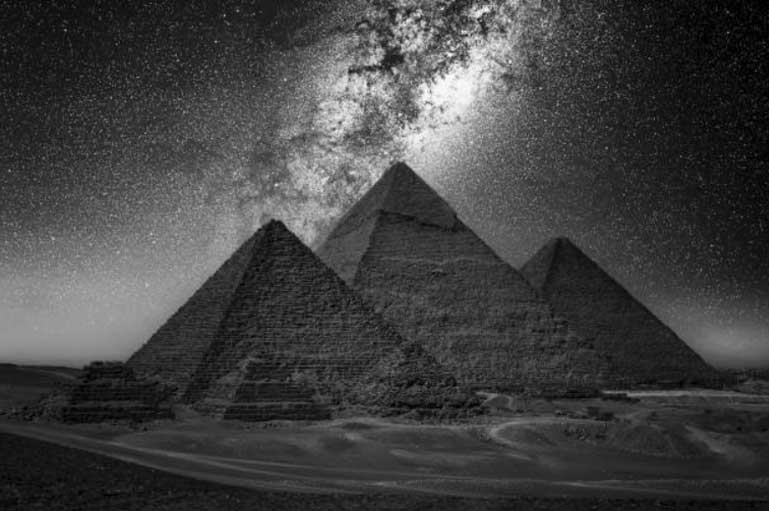
In fact, throughout the 200 million years, there have been countless civilizations far more magnificent than ours, with scientific, technological, and spiritual achievements that we today can hardly imagine. It is just that after each “reset,” the curtain of the past is drawn.
[ Mr. Mohan looks out the window, where the moonlight is beginning to show. ]
That moon up there, Jack, is also a silent witness to so many such cycles. Perhaps it, too, holds many secrets of the Earth that we do not yet know.
* * *
Jack Voss:
In that case, is the event of the Great Flood with the story of Noah’s Ark in the Bible true, and was that a way to end the previous cycle and open the current one?
Mr. Mohan:
(Mr. Mohan’s gaze becomes a bit more distant, as if reviewing ancient footage.)
Yes, Jack. The story of the Great Flood and Noah’s Ark recorded in the Bible, as well as similar legends of a global flood in the mythology of many different ancient cultures around the world—from Sumer, Greece, India, and China to the indigenous tribes of the Americas and Australia—are not mere works of fiction.
According to what I “see,” they are indeed the remaining memories of a real event, a global catastrophe that occurred, marking the end of a major previous civilization cycle and opening a new phase in Earth’s history.
[ Mr. Mohan explains in more detail. ]
It must be understood that in Earth’s long 200-million-year history, there have been many large-scale destructive disasters, not just floods. There may have been powerful geological upheavals, shifts in the Earth’s axis, asteroid impacts, or great wars between different forces… Each time, it was a form of “purification” and “reset.” The Great Flood mentioned in Noah’s story is one such event, and perhaps the major event closest to our current civilization cycle, which is why the memory of it is still relatively clearly preserved in many cultures.
These great calamities are not random or cruel punishments of nature. They usually occur when the morality of humans (or the dominant beings on Earth at the time) has degenerated to an irredeemable point, when they have strayed too far from the teachings of the Gods, steeped in sin and mutual destruction. At that time, to preserve the remaining good seeds and to create an opportunity for a new beginning, the Gods would arrange for a “great cleansing.”
The story of Noah and his family being chosen by God to survive was not random. They represented those who still maintained kindness, faith, and reverence for God in a decadent world. That ark, in a sense, is a symbol of choice—only those who still maintained a good heart had the chance to step into a new cycle. The animals brought onto the ark were also to preserve the gene pool, the “seeds” for new life after the calamity.
After that Great Flood, the Earth entered a phase of regeneration. The survivors became the ancestors of the peoples of the new civilization cycle—the very cycle we are living in. The roughly 5,000 years of written history that we know can be considered to have begun after this major “reset” event.
Therefore, the story in the Bible, though it may have been interpreted or embellished over many generations, reflects at its core an important historical truth, a major turning point in the flow of civilizations on Earth. It is a reminder of the law of prosperity and decline, of the importance of morality, and of the intervention of the Gods in human history.
* * *
Jack Voss:
So, is the site of Noah’s Ark near the summit of Mount Ararat in Turkey real?
Mr. Mohan:
(Mr. Mohan gives a slight nod, his voice remaining calm and measured, yet with an underlying certainty.)
Jack, what is written in ancient texts, the legends that seem fantastical, sometimes hold historical truths that are difficult for us to verify with conventional scientific methods today.
Regarding the site purported to be Noah’s Ark in the Mount Ararat region of Turkey, from what I have “seen” and sensed, yes, there is a very close connection to that Great Flood event.
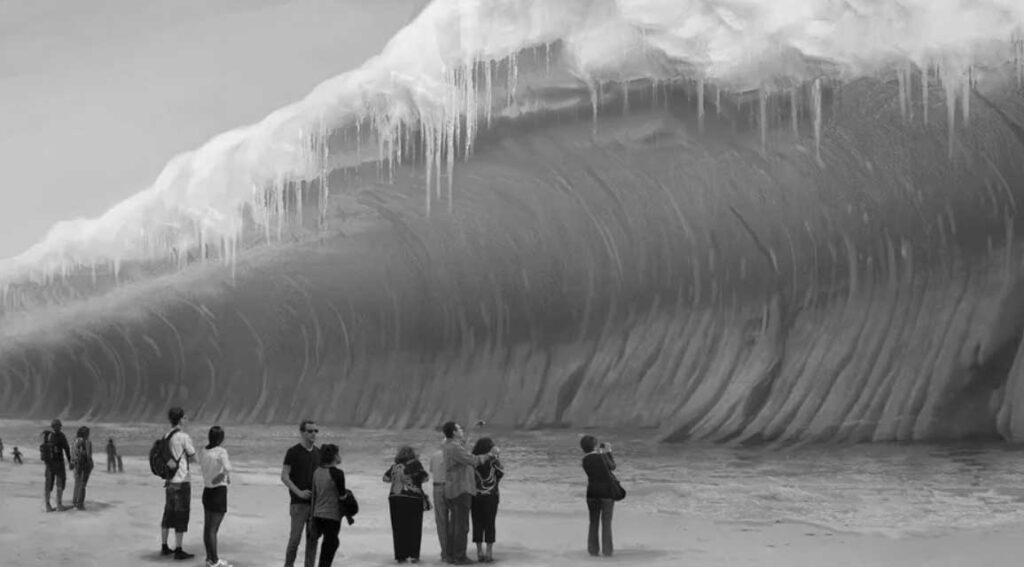
In the cataclysmic flood that the story of Noah describes, the water level rose very high, submerging almost the entire surface of the land. The tsunamis at that time, according to the images that have appeared to me, could reach terrifying heights, perhaps around two thousand meters, or even more, washing away and destroying everything in their path. Only the highest mountain peaks could emerge from the vast expanse of water.
When the waters began to recede, that great vessel, after drifting for many days, came to rest on one of these high mountain ranges. The Ararat region, with its altitude, is perfectly consistent with what is described in the ancient records.
Of course, over thousands of years, with the erosion of time, geological shifts, and the covering of perpetual ice and snow, finding clear and intact physical evidence of a giant wooden ark is extremely difficult. What people might find or photograph from a distance may only be traces, fragments, or distorted structures that have been partially fossilized.
But the very existence of these traces, along with the records in many different cultures, are all important clues, suggesting a past that once took place. It is not merely a legend, but a historical memory, an event that reshaped the face of the Earth and the history of humanity in this cycle. The fact that explorers and researchers continue to relentlessly search for evidence in that area is, I think, no coincidence. Something profound is urging them on.
* * *
Jack Voss:
Let me use my iPad to search for images of this site again… Here it is, an image that looks very much like a boat on Mount Ararat in Turkey…
Mr. Mohan:
(Mr. Mohan glances at the images Jack Voss shows him, his face showing no surprise, but rather a contemplative expression.)
Yes, I understand what you mean. These images, this structure with a shape resembling a giant boat lying on the mountainside, have attracted the attention of many people for many years.
[ Mr. Mohan pauses for a moment, as if to connect what he “sees” with these specific images. ]
As I have shared, when that great vessel came ashore after the Great Flood, it was left on a high mountainous region. Over a very long period, thousands of years, with the shifts of the Earth’s crust, earthquakes, the erosion of ice, snow, wind, and rain, and even the possibility of it being partially buried and then exposed again, it is entirely possible that its original shape was altered, or that what remains is only part of the core structure.
The peculiar shape we see in these pictures, with lines reminiscent of a large ship’s hull, could very well be the remaining imprint of that ark, or a significant part of it, which has been transformed and blended into the terrain over millennia. It is no longer an intact wooden boat as it was originally, but may have been partially fossilized, or its constituent materials may have been replaced by minerals over time, yet its core energetic “frame” and physical imprint remain, enough to create a distinct shape that we can recognize.
Science may propose different hypotheses for the formation of this geological structure. But from my “seeing” perspective, there is a very strong connection between this location, this shape, and the story of the ark that survived the Great Flood. It is like a silent reminder, evidence faded by time, of a momentous event in Earth’s past.
The fact that it is located there, on a high mountainous region, is also perfectly consistent with the scenario of a global flood with water levels rising by thousands of meters.
[ Mr. Mohan looks at Jack, his voice remaining calm. ]
Of course, to confirm this absolutely by the standards of empirical science would require much more evidence. But in the world of spiritual “seeing and knowing,” sometimes the signs, the residual energies, and the connection to ancient records provide their own kind of certainty.
* * *
Jack Voss:
Yes, let’s set aside the story of Noah’s Ark for now… Looking further back into the past, if each civilization cycle lasts five or ten thousand years, could one of the recent cycles be the legendary Atlantis?!
Mr. Mohan:
(Smiling, a smile tinged with nostalgia, as if the name Atlantis evoked familiar images within him.)
Jack, you have once again touched upon one of the greatest mysteries and one of the deepest memories of humanity about a bygone era. Yes, the legendary Atlantis, or similar names mentioned in various legends, is not just a product of imagination.
In the countless sub-cycles of civilization that I have “seen” on this Earth, there truly existed an incredibly developed and magnificent civilization, which we today often call Atlantis. It was one of the peaks of this Second Great Cycle, a civilization that achieved astonishing feats in science and technology, in energy, and in a certain understanding of the laws of the universe.
[ Mr. Mohan pauses, his gaze fixed on a distant point in space, as if recreating those scenes. ]
I “see” their splendid cities, with complex architecture and exquisite beauty. They made extensive use of energy from various types of giant, precious crystals, not only for illumination and powering machines, but also for healing, communication, and even applications that we today probably cannot fully conceive. They had vehicles that moved through the air and under the sea with ease, vessels that could glide at incredible speeds.
The Atlanteans initially also had a certain understanding of spirituality, of the connection between man and the universe. However, over time, it was the overly rapid development of material things, the complacency in their outstanding technological achievements, and gradually, a severe moral decline, the abuse of power for selfish purposes, power struggles, and arrogance, that pushed them onto the path of self-destruction.
The civilization of Atlantis, too, could not escape the general law: enlightenment, development, corruption, and then destruction. When their morality had declined to an irredeemable point, when arrogance and ambition had obscured the initial teachings of the Gods, a terrifying geological event, possibly a series of extremely large earthquakes and tsunamis, occurred, submerging their entire continent or main islands into the depths of the sea in a very short time.
The memory of Atlantis, though vague, has been passed down through many generations and cultures, as a tragic warning of what can happen when a society, no matter how materially advanced, loses its moral foundation and reverence for the divine. The stories of disappearing islands, of cities sunken deep beneath the ocean, are all fragments of a much larger historical truth. Atlantis is a prime example, a tragic chapter and a profound lesson in the long epic of Earth.
The event of Atlantis may not have been the civilization immediately preceding Noah’s Great Flood, but one of the brilliant yet tragic cycles that came even before that, within the longer historical flow of the Earth. The memory of it, though vague, has still been passed down through many generations and cultures, as a warning of what can happen when a society, no matter how materially advanced, loses its moral foundation and reverence for the divine.
The stories of disappearing islands, of cities sunken deep beneath the ocean, are all fragments of a much larger historical truth. Atlantis is a prime example, a tragic chapter in the long epic of Earth.
* * *
Jack Voss:
Yes, I just took out my iPad to do a quick calculation. If you take 200 million years and divide it by an average of 7,000 years, the result is about 28,600 civilization cycles that have passed…
Can you give a general overview of these civilizations?
Mr. Mohan:
(Mr. Mohan smiles gently at the number Jack Voss has just calculated. His smile is not one of mockery, but of understanding for humanity’s effort to grasp the infinite with finite numbers.)
The number you’ve just calculated, Jack, nearly thirty thousand cycles, is indeed a way for us to imagine the vastness of time and the countless ups and downs this Earth has been through. Of course, as we have said, the length of each cycle is not uniform; some are very short, while others last much longer than that average figure. The history of the universe and of life does not always follow our simple, linear calculations.
[ Mr. Mohan pauses for a moment, looking out the window, where the Kathmandu night has fallen. His voice becomes deeper, as if reminiscing. ]
In that long flow of history, there have indeed been countless civilizations that existed, each with its own characteristics, achievements, and lessons. It would probably take a very long time to recount them all, but I can share with you a few images, a few typical examples that I have “seen,” civilizations that have left a deep impression on me.
For instance, there was a time when giants truly walked this Earth. They were not deformed creatures or monsters, but a race of people with enormous stature, possibly many times taller than we are now. They had their own civilization, with colossal architectural works befitting their size. The large dinosaurs whose fossils paleontologists find today, Jack, in that era, some of them were merely pets or even mounts for these giants. Their civilization was also based on an understanding of energy and natural laws that we today have perhaps forgotten.
Then there was another civilization, which did not focus on building massive material structures, but instead developed the ability to use sound and frequency to its peak. They could use sound to heal, to move heavy objects, to communicate over great distances, and even to affect the structure of matter. Their structures, if any, were often built by using frequency to shape stone or natural materials, creating architecture in absolute harmony with the surrounding environment.
And there were also the mysterious civilizations under the ocean, like that of the merfolk, which we may have a chance to discuss in more detail…
And of course, we cannot fail to mention civilizations like Atlantis, which we just spoke of, with their technologies based on crystals and light energy, but which then self-destructed due to the loss of morality.
There were also periods when many different human races, with different appearances, skin colors, and abilities, coexisted peacefully on a vast land, creating a diverse and rich society. Each race had its own strengths, contributing to the overall development of the community.
[ Mr. Mohan pauses, smiling lightly. ]
Each of those civilizations, Jack, was a chapter in the great history book of Earth. They appeared, shone brightly, and then faded, leaving behind lessons and imprints that sometimes we, those who come after, can only rediscover and decipher with great difficulty. What I have told you are just a few brief sketches, because the richness and diversity of those civilizations truly exceed our normal imagination.
* * *
Jack Voss:
You just mentioned giants, little people, and even merfolk under the sea… So, these might not be mere products of imagination from fairy tales…
Mr. Mohan:
(Mr. Mohan listens attentively, then nods slightly with a deep understanding. His eyes seem to peer through the veil of time.)
Yes, Jack. When we are young, we often hear fairy tales about giants, little people, or beautiful mermaids living at the bottom of the sea. Growing up, many of us tend to assume that these are just products of the rich imagination of the ancients, stories woven for entertainment or moral instruction.
But according to what I “see” and have been “revealed,” the truth is not quite like that. Many of those images, those characters that seem to exist only in fairy tales, actually have a real origin from past civilization cycles on this Earth.
[ Mr. Mohan’s voice becomes more assertive, yet remains calm. ]
So that you can better envision that diversity, Jack, I would like to share a few sketches of some special human races that once existed and left a deep mark in previous civilization cycles.
Regarding giants:
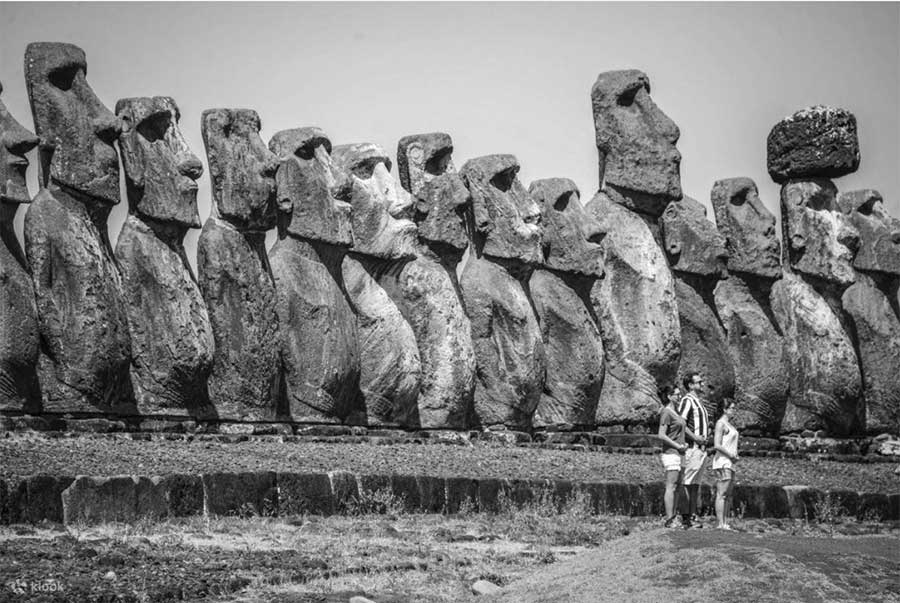
They were not deformed creatures or mere legends. In many periods of Earth’s history, especially in the First Great Cycle and even in the early stages of the Second Great Cycle, giants were truly a dominant race, a powerful civilization. Their stature, Jack, could be very diverse depending on the race and the era, but commonly they were three or four times, and some races were even five or six times, our average height today.
Their civilization was also incredibly developed, but in a different direction. They had massive architectural works, cities built with giant stone blocks that make it hard for us to imagine today how they could have moved and assembled them without special abilities or technology. The large dinosaurs, the creatures whose fossils paleontologists find today, during the golden age of the giants, some of them were just like pets, domestic animals, or even means of transport, their mounts. You can imagine a giant riding on the back of a Brontosaurus or a Tyrannosaurus Rex just as we ride horses.
They had a profound understanding of natural laws, of the energies of the Earth and the universe, not necessarily through complex machinery like ours. Their extraordinary physical strength was also accompanied by a very long lifespan, which could reach hundreds, even thousands of years in periods when morality was still pure. However, like other civilizations, when arrogance, complacency, and moral decay appeared, they too could not escape the law of formation-stasis-degeneration-destruction. Traces of them today may remain in the form of rare giant skeletons found in some places, or mysterious megalithic structures that science has yet to fully explain.
Regarding little people:
Just like giants, little people are not just products of imagination in fairy tales. They were a real race, existing concurrently or in different civilization cycles from giants and races of our size. Their size was also varied; some races were only a few dozen centimeters tall, while others were the height of a small child.
They often lived hidden, in harmony with nature, in dense forests, deep caves, or secluded valleys, places that larger-sized humans could hardly access or would not notice. They had their own world, their own way of life, with special skills to survive and thrive in their environment. They may have had the ability to communicate with animals and plants, knowledge of various herbs, and possessed subtle spiritual abilities that we have lost.
The civilization of the little people often did not leave behind massive material structures, but focused mainly on the development of spiritual life and harmony with nature. The stories of “sprites,” “forest elves,” or “dwarves” in the mythology of many peoples may be the vague memories left of this race. And as I have once revealed, even in recent times, there have been reports and accounts of the appearance of little people in some remote parts of the world, though very rare and difficult to verify.
As for “merfolk” or beings living underwater, the story is more complex:
According to what I “see,” they were indeed a race, or several different races, that existed and developed unique civilizations under the oceans of this Earth through many historical cycles.
THE MYSTERIOUS WORLD OF MERFOLK BENEATH THE OCEAN
The origin and differences of merfolk races:
The existence of merfolk is not a singular phenomenon; there are many different types, appearing at different times, and they may have different origins.
There are races of merfolk that are the result of the gradual adaptation of a portion of land-dwelling humans to the aquatic environment over thousands, even tens of thousands of years, possibly due to geological changes that submerged the land, or because they actively sought a new life under the sea.
There are also races of merfolk that were specially created by the Gods, with physical characteristics and abilities suited from the beginning to live and develop a civilization underwater. They were entrusted with special missions, perhaps to protect the ecological balance of the ocean, or to preserve some ancient knowledge.
What is their appearance?
Their appearance is also very diverse, not limited to the image of half-human, half-fish with a scaly tail that we usually imagine.
The most common type, closest to the descriptions in legends, are those with an upper body like a human—with a face, hands, and long hair often in special colors like moss green, sea blue, or even metallic sheens—but from the hips down is a powerful, flexible fish tail, covered in shimmering scales of various colors. They might have webbing between their fingers and toes (if any) and gills on the sides of their neck or behind their ears to breathe underwater.
Some other races may have a more human-like appearance, but their skin has a special structure, smooth and capable of direct gas exchange with the water. They may not have a distinct fish tail, but their legs could transform into large fins when swimming, or they might use special assistive tools to move.
There are also records of marine beings with high intelligence but with a form more similar to marine animals than humans, for example, forms of dolphins or whales with the ability for complex communication and building societies.
The civilization of the merfolk is often very different from land-based civilizations.
They build magnificent cities at the bottom of the ocean, often using natural materials like coral, luminous stone, or special minerals found only in the deep sea. These cities might be designed in harmony with the surrounding environment, using natural light from bioluminescent organisms or geothermal energy sources.
They can harness energy from ocean currents, from the temperature differences in seawater, or use a form of crystal energy similar to the Atlanteans but adapted for the aquatic environment. Their technology may not focus on heavy mechanical machinery, but rather on biotechnology, the ability to control sound, frequency, and natural energy flows. They can “cultivate” tools, building materials, or even vehicles from marine organisms or plants.
Many merfolk races possess subtle spiritual abilities, the ability to communicate via telepathy, the ability to heal with energy, or the ability to sense and predict changes in the marine environment. They have a very close connection with other marine creatures and can communicate and cooperate with them.
In history, there have been periods when merfolk and land-dwellers had exchanges, even cooperation. However, there were also times of conflict or misunderstanding. In general, merfolk tend to stay away from the noise and turmoil of the land world, especially when they notice the moral decline or environmentally destructive actions of humans. They cherish the peace and beauty of the ocean.
Like other civilizations, merfolk also go through cycles of formation-stasis-degeneration-destruction. There have been merfolk civilizations that were once very magnificent and then declined. Merfolk, like humans on land, also have souls and undergo reincarnation.
I “see” moving stories, such as “The Mermaid’s Wish,” which tells of a mermaid who carries a deep vow from many past lives, related to searching for something or waiting for someone from the land world, and their soul continues to reincarnate in the form of a mermaid until that wish is fulfilled.
This may surprise many, but from what I know, even in the present era, there are still communities of merfolk living hidden in the deep seas, in areas that we humans have not yet fully explored. Their numbers may not be as large as before, perhaps only around ten thousand people worldwide, and they are very cautious about avoiding contact with our modern civilization, as they are aware of the risks and the vast differences in life philosophies.
The world beneath the ocean, Jack, also holds countless secrets and wondrous life forms that we have only touched a very small part of. Merfolk are part of that diverse and rich tapestry.
[ Mr. Mohan looks at Jack with a profound gaze. ]
You see, human imagination is sometimes not an entirely new creation, but a recollection, vague memories, images left in the collective subconscious of humanity about what once existed, what once took place. Fairy tales, myths, if we look at them from a different perspective, may be the very doors that open up for us a part of the truth about the diverse and miraculous history of life on this Earth.
The Creator, in His infinite creativity, has created all manner of beings, and our history is much richer than we often think.
(…..)
This article is an excerpt from the book “BEFORE US“, revealing many mysterious secrets about advanced ancient civilizations on Earth.
If you wish to experience the full journey of thought and the unpublished insights of the work, please click the button below to own the complete book.
To explore more works from THE LIVES MEDIA, visit our book collection.