( ….. )
DAY TWO
Henry Lowell:
Good morning, Professor Solomon!
It’s a pleasure to see you again today to continue our unfinished discussion from yesterday.
Professor Solomon:
Good morning, Henry. I’m also very glad you’re back. Please, have a seat.
(The Professor gestures for Henry to sit in the chair opposite his desk, where a pot of hot tea is already waiting.)
Yesterday’s conversation truly touched upon many core issues, and I see you’ve had some very deep thoughts. Today, we will delve deeper into the “echoes” from the glorious civilizations that once existed and the turning-point events in Earth’s history.
Are you ready?
Henry Lowell:
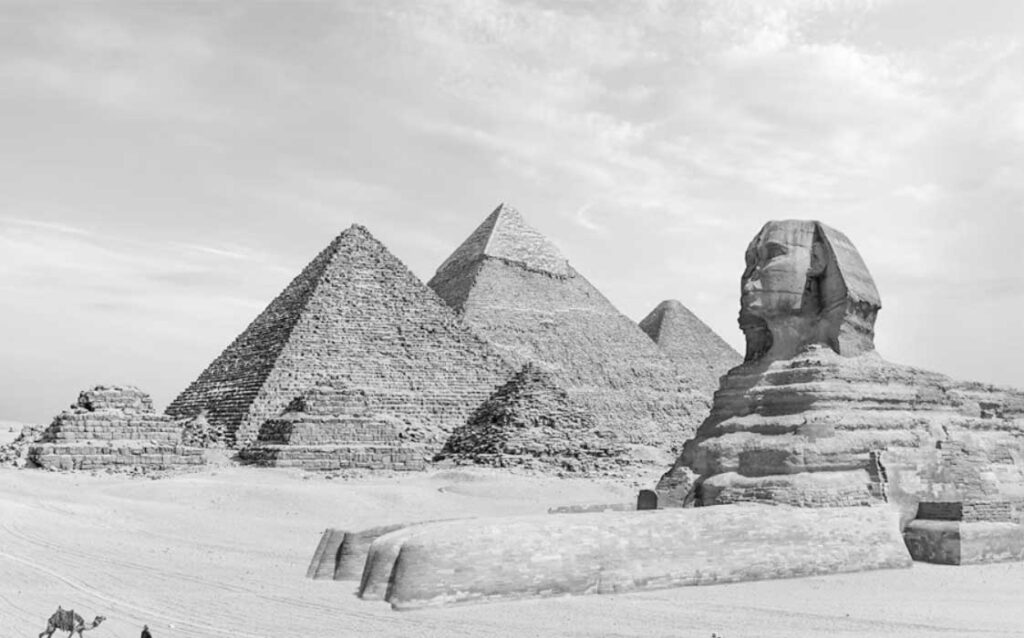
Yes, Professor. Yesterday’s talk really opened my eyes to many things. The evidence of prehistoric civilizations, and especially your analysis of the Giza Pyramids and what your daughter Laura shared from her observations through her Celestial Eye, were truly impressive…
Yesterday we began to touch upon the Maya and the ruins throughout South America… Today, could you start by talking about the Maya?
Professor Solomon:
(Smiling, he pours tea for Henry and himself.)
Yes, Henry. Your impression is a common feeling for many who first approach this information with an open mind. Laura’s ability, while at times providing very unexpected perspectives, like missing pieces of a puzzle, it’s also important to understand that what she “sees” is not always crystal clear. Often, they are somewhat vague images and feelings that require further cross-referencing and contemplation.
(He pauses for a moment, takes a sip of tea.)
Very well, Henry. The Maya, the keepers of cosmic time as I often call them, are indeed an incredibly profound and mysterious subject. What they left behind, from their architecture to their calendar, are all great challenges to our current understanding, and also clear proof of the existence of civilizational cycles of a very high level.
Broadly speaking, what makes the Maya so special is not just their magnificent architectural works in the middle of the jungle, but the depth of their knowledge of the cosmos. They seemed to possess an understanding that far exceeds what we typically imagine for an ancient civilization. Their calendar, with its extremely long and precise time cycles, shows a profound interest in the operating laws of the universe, surpassing the needs of ordinary agriculture. Their legends of creation and destruction eras also reveal a very different perspective on the flow of history, a cyclical one.
And when it comes to their origins, there are also interesting clues, not just simple in-situ development. There are possibilities that their ancestors brought a legacy of knowledge with them from somewhere very far away, on a special mission. This very thing could have shaped the unique development of the Mayan civilization, a civilization that seemed to focus more on developing consciousness and spiritual connection than on material technology as we understand it today.
Henry Lowell:
Yes, my first question:
From what I know, many researchers believe the Mayan Pyramids were built about 1,500 years ago, but I personally doubt that… It’s very possible they are the product of a much more ancient civilization… What is your view on this?
Professor Solomon:
(Nodding in agreement.)
A very sharp question, Henry. And your skepticism, I must say, is entirely justified. Indeed, the date of around 1,500 years ago that many researchers propose for the great works of the Maya, such as the pyramids at Tikal or Palenque, may only be the tip of a giant historical iceberg.
I personally share that feeling. It’s very possible that what we see today, or the dates determined by current methods, only reflect the final period of use, or a phase of additional construction by the Maya we know from history. The foundations themselves, the core structures of many of those monuments, very likely existed from a much earlier period, perhaps as the legacy of one or more preceding civilizational cycles.
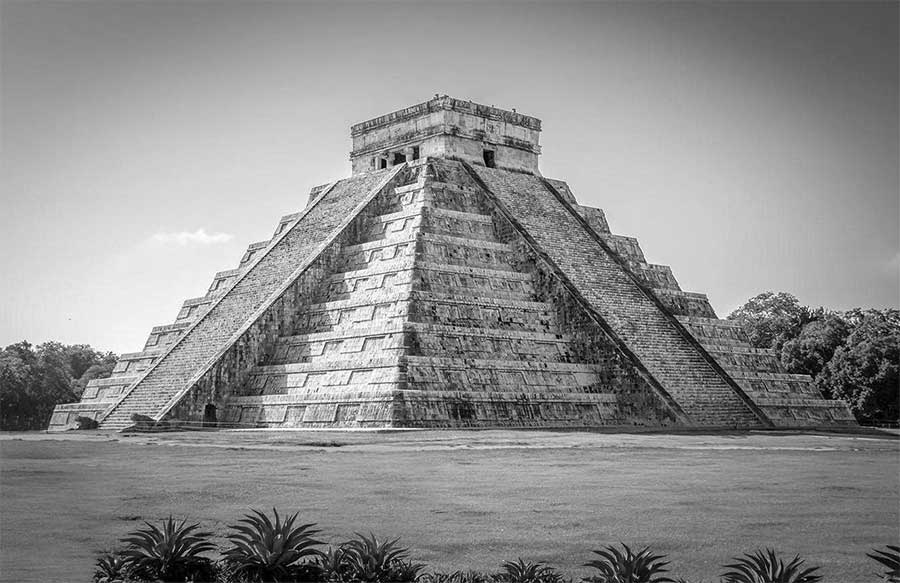
Let’s imagine it this way: an ancient, advanced civilization built those structures with a superior purpose and technique. After that civilization declined or disappeared, thousands, even tens of thousands of years passed, and the later Maya, perhaps descendants or migrant groups, found and rediscovered those structures. They might have repaired them, built additions, or simply continued to use them according to their own understanding and for their own purposes. When modern archaeologists excavate, the organic material samples they find for carbon dating may only belong to this later period of use by the Maya, not to the original builders.
On the other hand, the level of architecture, the complexity of urban planning, and especially the astronomical knowledge encoded in those structures, seem disproportionate for a civilization that only “began” a few centuries before Christ and then reached its peak a few centuries later. We see a “leap” in knowledge, which often suggests an inheritance, or a “revelation” from a deeper source.
Laura, when “perceiving” some ancient Mayan sites, has also occasionally shared that she gets an impression of ‘many layers of time’ stacked on top of each other. In some places, she feels a ‘very ancient energy,’ a ‘memory’ that doesn’t seem to belong to the Maya we know, but to a much more obscure era. Of course, these are only suggestive perceptions, but they add another perspective to our questioning.
So, my view is that it is very likely that many of the famous Mayan pyramids and structures are the products of a civilization far more ancient than the 1,500-year figure. The Maya recorded in history may have been the custodians, the inheritors, or the builders upon the foundation of a greater legacy.
Henry Lowell:
So, what specific evidence do you have to prove that it is a timeless structure and holds many mysteries… For example, their calendar, or other drawings or signs?
Professor Solomon:
(Nodding, his eyes lit with excitement.)
It’s very timely that you ask for specific evidence, Henry. Because it is precisely these things that have led many researchers, including myself, to question the age and true nature of the Mayan civilization.
First, let’s talk about their calendar. It is truly one of the most astonishing intellectual achievements of the ancient world, and also one of its greatest mysteries.
The Maya had not just one, but multiple complex, interlocking calendar systems. The most famous are perhaps the Tzolkin calendar (260 days) and the Haab’ calendar (365 days), which combine to form a 52-year Calendar Round. But beyond that, they also had the Long Count calendar, a system for calculating time in extremely large cycles, spanning thousands, even millions of years.
The question is, why would an agricultural civilization, in the conventional sense, need such a complex calendar system, calculating periods of time that far exceed a human lifespan, far beyond the practical needs of planting seasons or festivals? They calculated the cycle of Venus with astonishing accuracy, with an error of only a few hours over 500 years—an achievement that European astronomers took centuries later to match, with the help of telescopes. They also had a deep understanding of other astronomical cycles, constellations, and perhaps even the movements of the galaxy.
Where did this knowledge come from? Was it the result of thousands of years of persistent observation, or was it a legacy inherited from a previous civilization, one that had tools and methods unknown to us? Laura, when I shared with her the complexity of the Mayan calendar, once said that she “felt” it wasn’t just numbers, but a “cosmic rhythm,” a “huge flow of energy” that the ancient Maya tried to grasp and record.
Then there are the drawings and carvings they left behind. This is also a treasure trove full of mysteries.
One of the most famous and also most controversial examples is the sarcophagus lid of King Pakal in Palenque. When you look at it, what do you see? Many people, including researchers with an open mind, have pointed out very strange details: a figure seemingly sitting in a complex machine, his hands on something like a control panel, his foot on a pedal, and behind him are images suggestive of fire or a jet engine. The figure’s nose seems to have a breathing tube. The entire posture and surrounding structure are reminiscent of an astronaut piloting a spacecraft.
Of course, mainstream archaeology has symbolic explanations, linking it to Mayan mythology, the tree of life, or the journey to the underworld. But are those explanations truly satisfactory for all the details? Or are we trying to force a complex image into a pre-existing framework?
When I showed Laura the image of this sarcophagus lid, she didn’t say it was an “astronaut,” as those concepts are too modern. But she said she “felt a very strong movement, a concentrated energy, and a sense of ‘going far,’ transcending ordinary limits.”
Besides Pakal’s sarcophagus lid, there are other carvings, small terracotta figurines at many Mayan sites, depicting human-like figures in strange attire, wearing complex helmets, or unidentified flying objects. There are carvings in Quiriguá or Copán depicting gods or powerful figures with attributes that do not seem to belong to ordinary humans.
All of these things—the transcendent calendar, the mysterious carvings—are powerful “echoes,” suggesting that the Maya, or at least an elite part of their society, possessed or were exposed to knowledge and technology far beyond what we usually attribute to them. They are not merely products of a rich imagination, but very likely reflections, whether indirect or stylized, of historical truths or profound understandings of the universe that they once held.
Henry Lowell:
To be able to create such a calendar, I think there are two most plausible scenarios:
One, they had a deeper understanding of astronomy than modern science;
Two, they had monks or priests with special abilities, like the case of your daughter Laura, whose Celestial Eye was opened.
For the first scenario, we see no trace to prove that the natives there 1,500 years ago had this ability; as for the second scenario, I don’t see a developed cultivation system there like Buddhism, Taoism, or Catholicism… So, it’s highly likely that the owner of that calendar was from a previous civilizational cycle…
Professor Solomon:
(Nodding slowly, with a pensive look.)
Your analysis is very logical, Henry. The two scenarios you’ve presented both touch upon important aspects. And I agree with your conclusion that it is most likely that this profound knowledge, especially the calendar, originated from a previous civilizational cycle.
Let’s look more closely at each scenario you raised:
Regarding the first scenario, that the Maya possessed an astronomical understanding deeper than modern science in some respects—if we limit ourselves to the 1,500-year timeframe and see them as a civilization that developed “from scratch,” then, as you said, we don’t find evidence of a continuous development process, corresponding sophisticated observation tools, or a systematically recorded scientific theoretical system that would lead to such achievements. It’s like a “leap” in knowledge without the necessary stepping stones. This further strengthens the hypothesis of an inheritance, rather than a completely independent development.
Regarding the second scenario, the existence of individuals with special abilities, like monks or priests who could “see” or “perceive” the laws of the universe—I believe this is entirely possible. In many ancient cultures, such people often played an important role in spiritual guidance and the preservation of knowledge. Laura’s ability, while special, is perhaps not unique in human history. However, as you pointed out, we don’t see a “cultivation” system that is as clearly defined and widespread as the major religions we know. That said, it doesn’t mean they didn’t have their own methods for developing consciousness and spiritual connection. Perhaps those methods were esoteric, passed down only within a small group of priests, astronomers, or chosen individuals. The rituals and customs we see may only be the external manifestations of a deeper system of knowledge and spiritual practice that we have not yet fully deciphered.
Laura, when “perceiving” the ancient Mayan priests, often says that they had a “very strong connection to the stars and to the Earth,” and that they performed “rituals with a very high level of mental concentration,” seemingly to “open other doors of perception.” This suggests they may have had their own methods, different from what we are familiar with.
But even with such outstanding individuals, building an entire calendar system as complex, precise, and vast as the Mayan one would still require a foundation of knowledge accumulated and verified over a long period of time, or a revelation on a massive scale.
Therefore, I lean towards the hypothesis that there was likely a combination of both factors. That is, there may have been individuals with special abilities in Mayan society, and these individuals were able to receive and interpret ancient knowledge, knowledge that was the legacy of one or more previous civilizational cycles. This knowledge could have been preserved in many forms—through oral tradition, ancient texts (like the bark-paper books, many of which were destroyed), or even “encoded” in the very structure of the architectural works they inherited.
Thus, the Mayan calendar is not just the product of the Maya we know, but an “echo” of precursor civilizations, received, interpreted, and further developed by the Maya in their own way. This is a classic example showing that history is not a straight line of progress, but a series of cycles, where knowledge can be lost and then found again, inherited and renewed.
Henry Lowell:
Yes, what you say makes sense, Professor. It’s not necessarily a system of cultivation like Buddhism; it could be a transmission within a small group to a few select individuals…
Speaking of the Mayan calendar, I remember that about ten years ago, Hollywood made a very famous movie called “2012,” which told a story that the Mayan calendar had accurately predicted a certain day (I don’t remember exactly when) in 2012 when a great event, like an apocalypse, would occur, and Hollywood took inspiration from this to make the film…
What is your view on the “2012” detail?
Professor Solomon:
(Smiling, with a hint of amusement.)
Ah, the movie “2012”! It certainly created a wave of interest, even panic, around the globe about December 21, 2012. Hollywood has its own way of telling stories, often dramatizing everything.
Regarding the “2012” detail and the so-called “doomsday” according to the Mayan calendar, my view is somewhat different from what the film portrayed. In fact, the Maya never predicted an “apocalypse” in the sense of total destruction. That date, December 21, 2012, marked the end of a very large cycle in their Long Count calendar, specifically the end of the 13th Baktun. A Baktun lasts about 394 years, and 13 Baktuns form a Great Cycle of about 5,125 years.
For the Maya, the end of such a large cycle did not mean a complete termination, but a transition, a rebirth, the beginning of a new cycle. It’s like one day ending for a new day to begin, or an old year passing for a new year to come. It was an important time of change, of transformation, possibly in terms of cosmic energy or human consciousness, not necessarily a global physical catastrophe as depicted in the movies.
Many researchers and those who study Mayan culture deeply believe that this was a time for a potential “awakening,” an opportunity for humanity to move into a new stage of development, spiritually and consciously. It’s like a door opening, and whether we step through it, and how we step through, depends on our own choices and preparation.
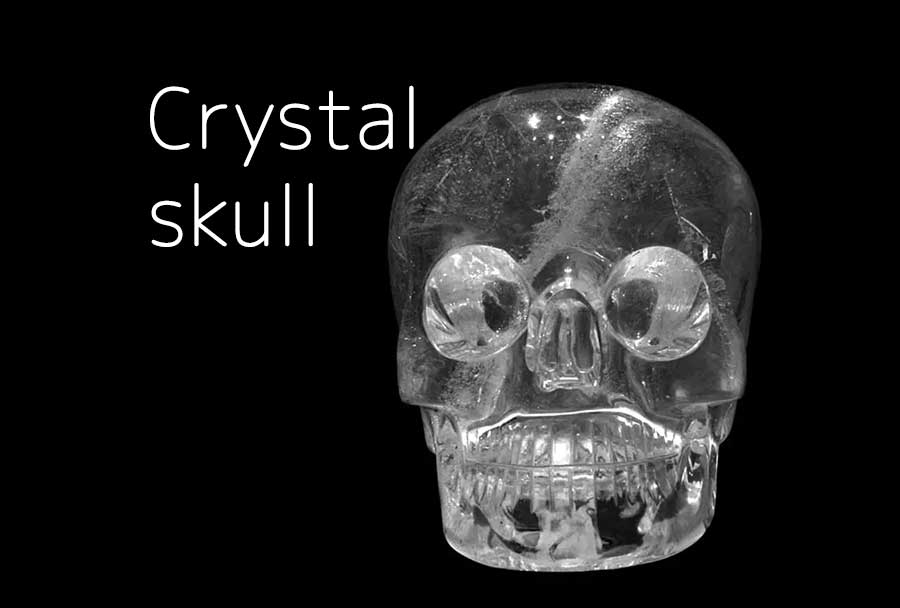
Speaking of this transition, I am also reminded of mysterious artifacts like the Crystal Skulls, which we might discuss later. There are hypotheses that they are tools for storing knowledge or energy, and could play a role in such important cyclical transitions, perhaps as “keys” to help people connect with higher levels of consciousness or with the legacy of knowledge from previous civilizations.
Laura, around that time, she was still quite young, but I remember her talking about “feeling something different in the air,” a “slight disturbance in the surrounding energy,” not a fear of disaster. It was just the personal perception of a particularly sensitive child, but it made me think.
So, “2012” according to the Mayan calendar, in my view, should be understood as a reminder of the cyclical nature of all things, of the constant change in the universe, and perhaps as a call for us to turn inward, to elevate our consciousness, to be ready for great transformations, rather than just seeing it as an omen of destruction. It is an “echo” from the past, warning of the end of an old paradigm and the possibility of a new future opening up.
Henry Lowell:
I believe that when a calendar system is created so elaborately, and perhaps not by just one person, but by the collective wisdom of a group and over many generations of a civilizational cycle… then it was not created simply for the fun of counting days…
I know a monk who once shared with me that it’s not that their calendar was wrong, but that a supreme Creator postponed a great event, meaning the event that was supposed to happen on December 21, 2012, was postponed… If this is true, then I feel the wisdom of the people who built the Mayan Pyramids and that calendar is truly extraordinary…
Regarding the crystal skulls you just mentioned, I vaguely recall reading about them somewhere… Could you please tell me more specifically?
Professor Solomon:
(Nodding pensively, his eyes filled with a deep appreciation.)
You’ve put it very profoundly, Henry. “Not created simply for the fun of counting days”—that is precisely it. A great intellectual work like the Mayan calendar, if it is truly the fruit of a collective, over many generations, or even of an entire civilizational cycle, then it must certainly contain meanings and purposes far beyond what we can easily perceive.
Regarding the sharing from the monk you know, that a great event was “postponed” by a Supreme Creator… well, this is a very interesting perspective and not without basis in some schools of spiritual thought. If that were true, it would only increase our admiration for the extraordinary wisdom of those who created that calendar. They not only calculated astronomical cycles, but perhaps also perceived, or were revealed, the important “nodes” in the flow of cosmic time, moments when great events could occur according to a pre-arranged “script.” The “postponement” of such an event, if it happened, would demonstrate the immense compassion and power of Divine Beings, as well as the role of the Earth and humanity in a larger plan.
(The Professor pauses for a moment, as if to let those ideas settle.)
And just as you remembered, the Crystal Skulls are artifacts often associated with the mysteries of ancient civilizations, especially the Maya and possibly even Atlantis. They are truly strange and captivating creations.
From what I have researched and from Laura’s “perceptions,” it seems there are not just one or a few, but possibly many different Crystal Skulls, created by various groups of people, in different civilizational cycles, and for very diverse purposes. Not all of them share the same origin or function.
Some in-depth studies and Laura’s “perceptions” suggest that most of them may have been created for the purpose of storing information, knowledge, and even a form of consciousness. Some believe they are places where the “souls of ancient sages were sealed,” or that they are a form of energy, a subtle structure that our current science cannot yet explain, but which has the ability to remember and transmit messages across the ages.
Laura, when she focuses her mind on images of some of the famous Crystal Skulls, or when she has the opportunity to be near high-quality replicas, often describes that she “perceives” very strong energy fields from them. Sometimes, they are streams of consciousness, memories that seem still vivid, fleeting images of scenes and people from bygone eras. She says that each one seems to have its own “personality,” its own “frequency,” and not everyone can “read” or “connect” with them. Some give a feeling of being ancient and wise, others hold a deep sorrow, or an almost compellingly powerful energy.
This suggests that they are not just inert objects, but could be “living libraries,” “storage devices” of information using a technology that we have lost.
Henry Lowell:
Oh, if there are many crystal skulls, and they were created not just in one period, but possibly in many cycles…. If this is true, then it would also be concrete evidence to prove that the earth has had many different civilizations.
Professor Solomon:
(Nodding, his eyes lighting up.)
Exactly, Henry! You have grasped a very important point. If there are indeed many Crystal Skulls, and they were created by different cultures, in separate time periods, or even belong to entirely different civilizational cycles, then that is indirect but incredibly powerful evidence that Earth’s history is not a simple, linear progression.
It suggests that there have been many times when civilizations reached certain levels of development, creating exquisite artifacts with profound purposes, and then, for some reason, they declined or disappeared, leaving behind relics like silent “echoes.” Each Crystal Skull, if its age and origin were different, would be like a “milestone” of a past chapter in the immense history book of this planet.
When Laura “perceives” them, she doesn’t give specific dates; that is beyond her ability. But the diversity in “personality” and “energy” that she perceives from different ones also lends some support to the idea that they are not uniform, not from a single source or a single era. Some have a “feeling” of being very ancient, much more ancient than what we usually associate with the Maya or Aztecs.
This is also consistent with what we have discussed about OOPArts—out-of-place artifacts. Each Crystal Skull, if proven to be ancient and of superior craftsmanship, could also be considered a form of OOPArt, challenging our conventional understanding of the past.
So, just as you said, their diverse existence, if viewed with an open mind, would be an important piece in the puzzle of civilizational cycles.
Henry Lowell:
As you mentioned above, if these skulls were created to contain information, then it’s very likely they hold messages and knowledge that their creators wanted to convey to their distant future generations, and it’s also possible that this “future” is our current era.
Professor Solomon:
(Smiling, a look of deep satisfaction in his eyes.)
A very sharp and logical deduction, Henry. “Messages and knowledge for distant future generations, and that ‘future’ is our current era”—I completely resonate with that assessment. It is also one of the possibilities that I and many other open-minded researchers often ponder.
If the Crystal Skulls are indeed “information archives,” then it’s entirely possible that they were created with the purpose of surviving the ravages of time, overcoming the upheavals of civilizational cycles, to reach a certain “moment” in the future. And why couldn’t that “moment” be the very era we are living in now, an era where humanity stands at a critical crossroads, an era where we are yearning for answers to the big questions about our origin and purpose?
Perhaps their creators, with their timeless vision, foresaw the challenges, crises, or opportunities that their descendants would face. They wanted to leave behind keys, hints, pieces of knowledge that could help us better understand ourselves, the universe, and perhaps even the operating laws of history.
The problem is, how to “read” those messages? It’s not as simple as reading a book.
According to what Laura “perceives,” “connecting” with a Crystal Skull seems to require a certain “compatibility” in energy “frequency,” or a special state of consciousness. Not everyone can “hear” what they “say.” What she “sees” are usually not clear lines of text or words, but fleeting images, strong waves of emotion, streams of consciousness that seem to flow. It’s like trying to catch an invisible wave, requiring stillness, sensitivity, and perhaps a certain “openness of heart.”
It’s also possible that not all Crystal Skulls carry messages intended for our current civilization. Some may have been created for other purposes, or for other times in the future. But if there are some that truly contain a “legacy” for us, then finding a way to access and decipher them would be an immense discovery.
And this also suggests another possibility: are they merely passive storage devices, or can they “interact” with us, or with the surrounding environment in ways we don’t yet understand? Some researchers suggest that when placed in certain conditions, for example, at locations with strong energy fields like inside pyramids, or during special rituals, they could act as consciousness amplifiers, or tools to connect with cosmic energy sources, or even with other dimensions or timelines. Of course, these are just hypotheses, but they open up very interesting lines of thought.
The fact that we are paying more attention to them in this era is perhaps not a coincidence. Who knows, maybe this is the very time when those “messages” need to be heard.
Henry Lowell:
Yes, I think that for things like the Mayan calendar, the crystal skulls, or even the Giza Pyramids, their true purpose of existence is still hidden, perhaps waiting for a certain time to be revealed in some way…
Professor Solomon:
(Nodding, his gaze distant, his voice softening slightly.)
You are very right, Henry. That is a feeling I believe many of us can sense when we face these great and mysterious legacies. It seems the Mayan calendar, the Crystal Skulls, or the Giza Pyramids are not merely relics of the past. They carry a meaningful “silence,” an intentional “waiting.”
Perhaps their creators, with a wisdom and vision far beyond ours, knew that the messages and knowledge they entrusted would not be understood immediately. They “encoded” them, not just with language or symbols, but perhaps with the very structure, materials, and even the “energy” of those creations. And they are waiting, waiting for an “opportune time,” a certain “karmic destiny,” when the consciousness of humanity, or at least a part of it, is mature enough, open enough, to be able to “decipher” and receive them.
That revelation, perhaps, will not come just from new archaeological excavations or purely scientific analyses. It may come from a change in our own consciousness, from our courage to ask questions beyond the current frameworks, and from our ability to “perceive” deeper layers of meaning.
And it’s possible they are “tools” designed for the future; I think that is very likely. Besides being “libraries” for storing information, some Crystal Skulls, or the pyramids themselves, may have been designed to interact with energy, with consciousness.
Some hypotheses suggest that the pyramids are not just tombs or astronomical observatories, but also giant energy machines, capable of receiving, concentrating, and amplifying various types of energy from the cosmos or from within the earth. And if a Crystal Skull, which is also believed to have its own energy properties, were placed in a strategic position inside a pyramid, or at an intersection of ley lines, could they together create some special effect? It could be an amplification of consciousness, a connection to cosmic information networks, or even a way to “tune” or “harmonize” with the energy flows of the Earth.
This is not a “stargate” in the science fiction sense, but perhaps more subtle tools, operating on principles of energy and consciousness that we are only just beginning to understand.
Laura, when “perceiving” the combination of some pyramids and objects like the Crystal Skulls, once described a feeling of “resonance,” a “directed energy flow,” and an “expanded space of consciousness.” This further strengthens the hypothesis that they are not just static objects.
All of these things, though still mysterious, suggest a very different understanding and technology of the ancients, a technology that was perhaps closer to the laws of nature and spirituality.
Henry Lowell:
The specific purpose for their existence remains a great mystery waiting to be solved…
So, what about the ruins throughout South America, Professor? Have you studied them in depth? Do they have any connection to the Mayan Pyramids in Mexico?
Professor Solomon:
(Nodding, his gaze turns towards an ancient map hanging on the wall, on which many famous archaeological sites are marked.)
You are right, Henry. Their true purpose remains a veil of mystery, and perhaps we are only standing at the edge of that veil.
And your question about the other ruins in South America, and their connection to the Mayan civilization in Mexico, is a very natural direction. It is true that the Americas, from north to south, are scattered with countless magnificent ancient structures, and each one raises big questions. I have also spent much time studying them.
Is there a direct link between the Mayan civilization and the civilizations of the Andes like the Inca, or even older cultures like Tiahuanaco, Chavín, Nazca? This is a complex question. Geographically, they were far apart, separated by dense jungles and treacherous mountains. However, we cannot entirely rule out the possibility of contact, cultural exchange, or even ancient waves of migration that we are not yet aware of.
We see some remarkable similarities. For example, the construction technique using giant stone blocks, cut and fitted together perfectly without mortar, appears in both Mayan structures and is particularly prominent at sites like Sacsayhuamán near Cusco of the Incas, or at Ollantaytambo, and most astonishingly perhaps, at Puma Punku and Tiahuanaco near Lake Titicaca in Bolivia. The stones at Puma Punku are worked with an unbelievable precision, with perfectly straight cuts, flawless right angles, and sophisticated drill holes that seem only possible with modern tools.
Then there are the legends of founding gods, those who brought knowledge from the sea or from the stars, which also appear in many different cultures across the Americas. Is there some common origin for these stories?
When I shared with Laura about the diversity of ancient sites in the Americas, she once said that she “perceived” an “invisible thread connecting them,” a “sad memory of a bygone glorious era” that seemed to envelop the entire continent. She didn’t speak specifically about one civilization influencing another, but more like they were all different “branches” of an older “root,” or had once shared a common “space of knowledge” in the distant past.
However, it must also be emphasized that each of these cultures has its own very distinct characteristics, its unique achievements. The Maya are noted for their complex hieroglyphic writing system and astronomical calendar, while the Inca excelled in state organization, road building, and managing agriculture in high-altitude terrain. The Nazca Lines in Peru are another complete mystery, with giant geoglyphs that can only be seen from above.
So, instead of looking for a direct, simple connection like “the Maya influenced the Inca,” perhaps we should see the Americas as a place that witnessed the rise and fall of many high-level civilizations, possibly independent, possibly with some interactions, and very possibly, some of them inherited or were inspired by one or more common prehistoric civilizational cycles, an “Atlantis” or “Mu” of the Americas, if we wish to use such symbolic names.
All of these ruins, whether in Mexico, Peru, or Bolivia, are pieces of a larger puzzle, a picture of a past far richer and more complex than what we are taught in textbooks. Together, they raise an “echo” of the extraordinary capabilities of human beings and the cycles of rise and fall in history.
(…..)
This article is an excerpt from the book “ECHOES BEFORE TIME,” recording a profound dialogue between journalist Henry and Professor Solomon, an archaeologist.
If you wish to experience the full journey of thought and the unpublished insights of the work, please click the button below to own the complete book.
To explore more works from THE LIVES MEDIA, visit our book collection.