DAY ONE
Avery Lin:
Hello, Uncle Ma. I’m really happy to see you again today!
As we talked about last time, I’m here today to listen to your story — your life journey, your search for the Way, what it’s like to practice cultivation in everyday life, and maybe… some of your personal reflections or understandings.
Ma Changsheng:
(Uncle Ma looks at Avery with a warm smile and gentle eyes.)
Hello, Avery. I’m happy to see you too. Alright then, just as we said — have a seat, let’s chat.
My story’s nothing grand, really. It’s just the things I’ve been through… the things I’ve seen and thought about along this long road. If you want to hear, I’m happy to tell.
(He takes a small sip of tea and gently sets the cup down. The sound of porcelain tapping the saucer is soft, barely audible in the stillness of the little house.)
If we’re talking about roots, we’ve got to go back quite a bit, Avery.
I was born in 1949, in Guangdong. Back then, the country was still in turmoil. My parents were devoted Communist Party members — very passionate, very firm believers in the revolution. They took part in all sorts of political activities, and naturally, they raised me with that same idealism.
From a young age, all those songs and slogans about a bright future under Party leadership were just part of my life — they soaked into my thinking.
But even in that very household, there was another stream running quietly.
My grandfather… he was completely different. He lived almost in seclusion, loving a quiet, peaceful life. He was obsessed with the Dao De Jing and Confucian classics.
My name — Ma Changsheng — he gave it to me himself. There must’ve been some hope behind it, though I was too young to understand what that was.
He never openly challenged my parents or argued about current events. But his way of life, his quiet wisdom… it was like a slow, steady rain soaking into the soil — it left a mark on me over time.
Then the years rolled by. In 1966, I was seventeen when the Cultural Revolution broke out in full force.
And when you’re young… it’s easy to get swept up by all that grand talk, all that fiery chanting. I was no exception. I eagerly joined the Communist Youth League and took part in all those “Destroy the Four Olds” campaigns — tearing down anything deemed old, outdated, or superstitious.
Back then, I truly believed I was helping to build a better world.
Ah… youth. So impulsive, so shallow in thought.
(He sighs softly, his gaze drifting to the window, where the golden light of dusk begins to tint the tree branches.)
Avery Lin:
Yes… I’ve read about that time in history — the Cultural Revolution. It really was… horrifying.
Did you… as a Youth League member, ever do anything that later made you feel regret?
Ma Changsheng:
(Uncle Ma falls silent for a while, his eyes distant — clearly wandering through some painful memories. The lines on his face seem to carry the weight of time.)
Yes, I did. There are things that — even now — when I think back, I still feel a heavy weight inside.
It was that blind passion, that innocent belief in all the flashy slogans that pushed me — and really, a whole generation — into making mistakes.
(He pauses; his voice drops a little.)
Back then, the “Destroy the Four Olds” movement had a huge momentum.
Temples, shrines, cultural relics from our ancestors — people saw them as trash. Superstition. They had to be torn down to make way for the new.
And I… I got pulled into that current.
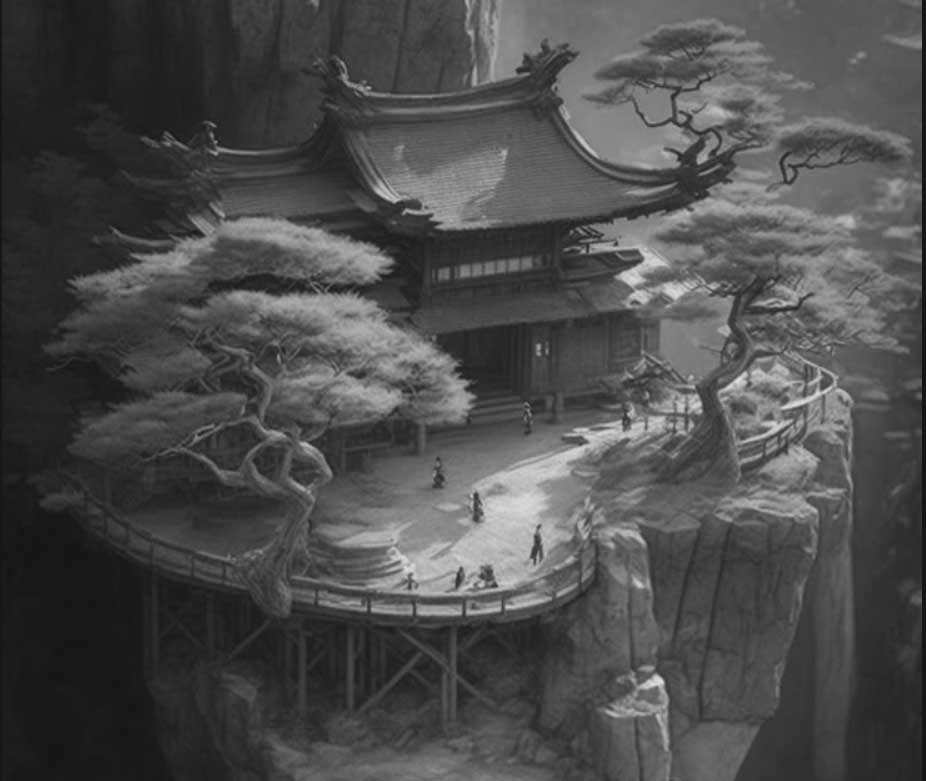
There was one time — a group of us from the Youth League were sent to “handle” an old temple at the base of a mountain not far from our village.
It was ancient. You could tell just by the architecture — moss-covered, weathered by time. But in my head back then, all I could think was: this is feudal garbage — destroy it!
We shouted, smashed Buddha statues, knocked over altars.
The sound of breaking wood, of incense burners shattering — I still remember how fired up I felt, like I was doing something so “revolutionary,” so “progressive.”
(His voice catches a little. He closes his eyes for a moment, as if trying to drive away the images.)
And then… something happened.
I was climbing up the roof to pull down the last tiles, still full of adrenaline — when a large, rotted wooden beam broke off and came crashing down.
It hit me right on the head. All I felt was a sudden, sharp pain — then everything went black.
Looking back… maybe that was instant retribution, Avery.
You do something wrong, eventually, the consequences come.
That moment — destroying that temple — it left a scar on me. Not just on the body… but inside. A scar on the soul, really. A reminder of a time when I was so… lost.
Avery Lin:
Those scenes… they must have been heartbreaking — not just for your generation, but for all the ones that came after. When traditional values are torn away like that, the impact runs deep.
And the way you passed out from that falling beam — if we look at it from a cultivation perspective, from a spiritual lens… that really does sound like immediate karmic retribution.
Did you realize something right away after that? Did it make you stop?
Ma Changsheng:
(Uncle Ma nods slowly, his face thoughtful.)
You’re right. That fall… that wooden beam… it wasn’t just some random accident.
Looking back, I came to understand — that moment was a turning point. A kind of intervention from a world I had never believed in, never even imagined.
I was unconscious for three days, Avery. My family and friends must’ve been very worried. I had no idea what was going on in the outside world. But during that coma… I had the strangest experience. A dream, or something beyond a dream. It was vivid, long, and so real that even now, I can still recall every detail.
(He looks toward the distance, his eyes seeming to pierce through the walls of the small house, as if staring into another realm.)
In that state, I found myself in a dark, cold place.
Then, out of nowhere, a soft light appeared. And in that light… stood a high monk. He wore a deep golden robe. His face was gentle, yet commanding.
He looked at me — and somehow, that gaze went straight into the depths of my soul.
He didn’t say much. But every word was like a bell striking through my delusions.
He pointed out clearly what I’d done — the destruction of temples, the desecration of sacred places — it was a grave sin. He said it was heavy karma.
Temples, he said, are sacred grounds where divine beings dwell. To destroy them was to offend the divine.
And if I didn’t sincerely repent, I’d suffer in hell — the pain would be unimaginable.
Hearing those words… I was terrified, Avery.
Utterly terrified. My whole being was consumed by fear.
Not just of hell itself, but of the punishments he described.
But even more than fear… I felt deep remorse.
I realized just how wrong I’d been — how foolish I was to believe those radical slogans, to take part in such destruction.
I cried. I cried a lot in that dream. I kept bowing and begging the high monk — asking for mercy, asking for a way to atone.
(His voice trembles a bit as he recalls that moment.)
Seeing how sincere my repentance was, the high monk finally softened.
He told me — because I still had a bit of goodness left in me, because I knew to regret — he would show me a path.
He gave very clear instructions:
“You must immediately abandon the wrong path — the path you’ve been walking under the Communist Party.
You must leave the secular world and seek the Way — find the True Law to dissolve your karma.
But listen carefully: you cannot settle down in one temple.
You must travel far and wide, search for the Law across all lands.
This journey will be long and filled with hardship. It will help you repay your karma and test your sincerity and perseverance on the path of cultivation.”
Once he said that, his image faded away and disappeared.
I woke up slowly — after three full days in a coma.
I opened my eyes, found myself lying on a hospital bed, surrounded by family.
And I knew… that dream wasn’t just a dream.
It was a warning. A message.
And I knew… my life could never go back to what it was.
Avery Lin:
Wow… from a cultivator’s point of view, that sounds like an unmistakable sign — a divine awakening.
Did you act on it right away? How did your family react?
Ma Changsheng:
(Uncle Ma nods again, his gaze steady, firm.)
Yes, absolutely. That wasn’t just a dream — it was a calling I couldn’t ignore.
After I came to, those words from the high monk kept echoing in my head — clear and powerful.
All the pain from my injury faded away, replaced by a single, unshakable resolve.
I knew what I had to do.
As soon as I was strong enough, I told my parents: I was going to leave that path — I would become a monk.
(He sighs, a shadow of sorrow crossing his face.)
Their reaction… was intense.
They couldn’t accept it.
To them — people who had devoted their lives to the Communist ideal — hearing their only son say he wanted to renounce it all and believe in what they saw as “superstition”…
It felt like betrayal. An insult.
They thought the injury had messed up my mind. Or that someone had brainwashed me.
They scolded me, threatened me, even beat me — hoping I’d change my mind.
They said if I insisted on going down that path, then I should no longer consider them my parents. I should leave, and never come back.
Deep down, I knew they still loved me.
But their belief in that ideology… it had become larger than love itself. It blinded them.
It was painful.
But my resolve didn’t waver.
The monk’s words… the image of that shattered temple… the karma I’d brought on myself…
They all pushed me forward.
During that whole ordeal, only my grandfather stood quietly by my side.
He looked at me with understanding — gentle, wise.
He didn’t say much.
He just went into his room, came back with an old, worn copy of the Dao De Jing, and placed it in my hands.
He said,
“This is all I have to give you. Keep it well.”
That book — I’ve kept it ever since. It’s a keepsake. A silent blessing from him.
And so…
One early morning in 1967, before the sun had even risen, I left home.
I had nothing but the Dao De Jing and a few old clothes.
I found a small, remote temple.
I told the abbot everything — my mistakes, the dream, my decision to leave it all behind.
He looked at me with eyes full of compassion.
Seeing my sincerity, he agreed to perform the head-shaving ceremony.
Because I’d vowed to travel far and wide, never settling, he gave me a Dharma name: Shi Changxing (釋長行) — the One Who Journeys Long.
They gave me an old brown robe. And from that day on, I became a wandering monk, bound by a vow to seek the Way.
That old identity — Ma Changsheng — he was gone.
In his place was a drifter with a vow.
A path lay ahead, uncertain and endless.
I never dared face my parents again. I didn’t want to hurt them further… and I didn’t want my resolve to falter.
Avery Lin:
That was such a decisive and bold move… Honestly, I’m not sure I would’ve had the courage to do the same if I were in your shoes — especially back then, not even knowing what cultivation really meant.
So after shaving your head and becoming a monk… did you face a lot of difficulties in those early days? I imagine some people might have mocked you — maybe even the authorities gave you a hard time?
Ma Changsheng:
(Uncle Ma gently shakes his head, a faint, wistful smile crossing his lips.)
The decision was firm, Avery, but the road ahead… it was so dark, so uncertain.
At that time, I only had this vague sense — this inner urge that I had to go, that I had to seek out the True Law the high monk had pointed me toward.
But as for what cultivation actually was, or how to go about it… I didn’t really know.
All I had was a promise, and a strong feeling deep inside.
Those first days after leaving home — wearing that simple brown robe — they were tough.
The first hurdle was loneliness.
I’d gone from being a young man with family, friends, and a purpose that was cheered on by many… to being completely alone.
No one to rely on.
No place to call home.
At night, curled up under a temple eave or in a corner of some unfamiliar marketplace, the homesickness would come rushing in.
I missed my parents, missed the comfort of routine — even missed the misguided days when I still had friends around me.
And then there were the stares.
That was still the height of the Cultural Revolution.
A young man like me — instead of working the fields or joining the “revolutionary cause” — suddenly shaving his head and begging for food?
People looked at me with suspicion. Some sneered. Others looked at me like I was insane.
They whispered, they pointed. Some flat-out called me lazy — a slacker trying to dodge labor. A “reactionary” in monk’s robes.
Old friends — the ones I used to march and chant slogans with — avoided me like the plague.
Some even mocked me to my face. Said I’d lost my mind, gone “demonic” or “possessed.”
At first, those words hurt. I won’t lie — they stung.
But then I’d remember the monk’s warning.
Remember the karma I had to pay.
So I learned to swallow it.
I treated it like another test of my resolve.
As for the authorities… luckily, in those first days, I didn’t face any direct trouble.
Maybe because I was just one person, drifting through quiet rural places — not stirring up attention.
Or maybe they just saw me as some lunatic — not worth bothering with.
Still, the whole atmosphere back then was tense.
Anyone who didn’t follow the “revolutionary path” was viewed with suspicion.
So I had to be careful — watch my words, avoid crowds, steer clear of any gatherings that could cause misunderstandings.
But you know…
The hardest thing wasn’t any of that.
The hardest part… was facing myself.
Doubt creeps in.
Questions start to gnaw at you.
Am I on the right path?
Do I have what it takes to walk it to the end?
Those questions — they came at me strongest during the cold, hungry nights.
Or when I was sick.
But every time, the image of that monk would come back.
His voice. His warning.
And that old Dao De Jing from my grandfather — it became my companion.
The words in it… they calmed me.
They reminded me why I was doing this.
And so — step by step, one foot in front of the other — I began my journey in search of the Way.
A journey I had no idea how long it would last… or where it would lead.
All I had was faith — and the will to see it through.
(…..)
This article is an excerpt from the book “ENTERING THE WORLD“, which tells the story of a Chinese monk’s more than 60-year journey of seeking and practicing the Dharma.
If you wish to experience the full journey of thought and the unpublished insights of the work, please click the button below to own the complete book.
To explore more works from THE LIVES MEDIA, visit our book collection.