( ….. )
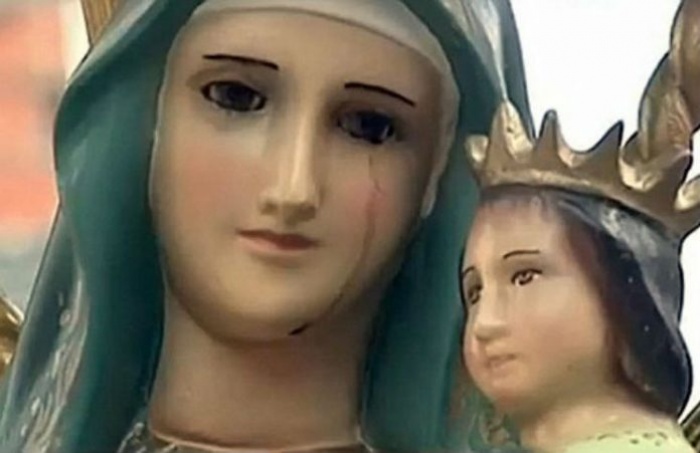
I sat by my laptop, staring at the screen. The draft of “The Sickness of the Age” was complete. But my mind couldn’t escape the image of the weeping Virgin Mary statue.
The dark red drop of blood from the white porcelain eye.
It was like an imprint, a wordless question. Was it just a coincidence? Or a sign?
I couldn’t dismiss it. The urge grew stronger. As if a voice whispered within me, constantly questioning:
“Is the Mother’s tear an isolated phenomenon?”
“Or is it just one of many other ‘cries’ echoing across the world?”
“And are they all pointing to a common pain, a common crime?”
I knew I couldn’t return to normal life. Not now. I had to find out. A new investigation began, not for John’s deadline, not for the newsroom, but because of my own obsession.
I started by systematizing. Focusing on the most tragic anomalies. The most symbolic signs.
I typed keywords. Searched. Delved into reports.
And I found…
* * *
Phase 1: Collecting Tragic Signs
FILE #1: THE TEARS OF THE DIVINE
A series of seemingly disconnected incidents, spanning continents, across decades. But they shared one characteristic: all were statues — symbols of faith, of sacredness — suddenly weeping.
Syracuse, Italy, 1953. A small plaster statue of the Virgin Mary in a young couple’s home began to shed tears. News spread rapidly. Thousands flocked to see it. Some brought handkerchiefs, hoping to absorb a few drops of those tears. The press buzzed. Church officials intervened. They tested the tears — they were real. They examined the statue’s structure — no pipes or technical holes. Finally, the Vatican confirmed: the phenomenon was “scientifically inexplicable.”
Twenty years later, in Akita, Japan. A statue of the Virgin Mary in a small convent shed blood and tears more than a hundred times. A nun named Agnes Sasagawa said she heard messages from the Virgin Mary: if humanity did not repent, a terrible punishment would descend. The story was ignored by the Japanese press for a long time, until the Vatican quietly verified and recognized it in 1988.
Then more recently — Thailand, Taiwan, Brazil, Canada. No longer rumors. There were videos, photos. Some were censored quickly. But traces remained on forums, on unofficial networks. A Guanyin Buddha statue shedding tears in a small temple in Kaohsiung. A wooden Jesus statue in São Paulo shedding bloody tears during an Easter service. A Virgin Mary statue in Toronto dripping whenever devotees knelt in prayer.
Where were the authorities in these incidents?
Usually silent. Or denying. Or quickly labeling it a “capillary phenomenon” or “unusual dampness.”
Scientists were cautious. Some proposed technical hypotheses – porous plaster absorbing moisture, thermal expansion and contraction, or cracks channeling water… But on-site investigators — including believers and independent reporters — countered with practical checks: no water inside, no pipes, and the drops had biological characteristics like… real tears.
What about the people?
Wherever the phenomenon occurred, pilgrims gathered. Some mothers brought their children seeking healing. Some knelt in the rain for hours. Some said they abandoned suicide attempts after seeing the statue.
Religious circles were divided. Some priests, monks, and nuns considered it a miracle, a warning from the Heavens. Others remained silent, fearing being called superstitious, fearing being “lumped in with the spiritual common folk.”
I noted down each case. Each face. Each tear. But deep down, I knew I was collecting not data. But cries.
* * *
FILE #2: RIVERS TURNING RED
If tears symbolize divine pain, then rivers red as blood are perhaps a warning to all humanity.
I found dozens of cases since 2010 where rivers, canals, and even lakes unexpectedly turned dark red for a few hours or days — without prior warning, without clear sources of pollution, and most ended with a question mark.
In China, the Yangtze River — a living symbol of Eastern civilization — once turned blood-red in the section flowing through Chongqing in 2012. Residents were bewildered. State media reassured them: due to unusually large amounts of silt. But no one explained why only a specific section, while the upstream and downstream remained clear.
In Beirut, Lebanon, the Beirut River suddenly turned blood-red in 2011. The government said it might be due to discharge from a slaughterhouse, but local residents refuted it: there was no slaughterhouse nearby. Many claimed it was “the blood of the earth,” a divine warning.
In Indonesia, the Deli River in Medan turned bright red overnight in 2017. Videos spread rapidly on social media. The government blamed a factory but refused to name it. Independent media later discovered — no production facility had changed its process at that time.
Even in the U.S., a stretch of river in Texas once turned deep red in the summer of 2021. EPA officials said it could be red algae or mineral reactions — but when a group of citizens took samples for independent testing, the results showed no signs of algae, no heavy metals, no logical technical cause whatsoever.
With a different eye, I saw those rivers as damaged blood vessels. The Earth was bleeding, each red wound spreading as if signaling an unconfessed sin.
* * *
FILE #3: SNOW IN SUMMER
If tears are symbols of sorrow, if red rivers are portents, then snow in summer is an unspeakable lament.
I traced news sources about abnormal snowfall — not just under extreme weather conditions, but at entirely illogical times and places.
Northwest India, June 2019 — outdoor temperature 38 degrees Celsius, cloudless sky, and light snow fell for 15 minutes. Residents filmed it, the government said “white dust phenomenon due to chemical reactions in the atmosphere.” But why did it melt in their hands like real snow?
Sahara Desert, Algeria — July 2021, a thin layer of snow covered scorching hot sand dunes. The measured temperature was 40 degrees Celsius. Scientists attributed it to atmospheric disturbances, but no one explained why there were no similar signs in neighboring areas.
In China, snow has not only fallen in winter. In recent years, many heavy snowfalls have been recorded in April, May – and even June – when the lunar calendar had already entered summer.
In Hebei, Inner Mongolia, or Changbai Mountain, thick layers of white snow covered the streets, while many other places were struggling under scorching heat.
The press called it “climate change.” Netizens called it “anomalies.”
As for me, I only felt one thing: Heaven was saying something – but no one was listening.
But what chilled me most was encountering the phrase “六月飛霜” – “Lù Yuè Fēi Shuāng” – in an ancient Chinese forum. A user wrote: “Snow falling in June can only be because an injustice has reached a level that shakes heaven and earth.” I saved that phrase. A strange feeling surged — as if I was about to uncover an ancient code.
* * *
OTHER SIGNS
It’s not just tears. Not just blood or snow.
I found scattered news reports: schools of fish leaping onto shore and dying en masse for no clear reason. Migratory birds flying off course, crashing into cities, mass suicides. Two or three suns appearing at once — a phenomenon called “sun dogs,” but with unusually high frequency. Thunder and lightning out of season, blue flashes of light in clear skies, rumbling sounds from underground sending residents into a panic.
There was one peculiar weather event that I myself witnessed: Lunar New Year in the Year of the Rat 2020, I was on a short vacation in northern Vietnam. On New Year’s Eve, I strolled through a tourist district, where the festive atmosphere was bustling. People jostled to take photos, buy Tết toys, counting down to the moment of the new year’s transition.
The sky was pitch black — like every moonless 30th night of the lunar year. Suddenly, around 10 PM, a downpour arrived. Heavy rain, big drops, and then — I froze — icy pellets began to hammer down on the road, tin roofs, and vehicles.
Children screamed, adults covered their heads and ran for cover. Everyone was bewildered: in the northern winter, drizzle was normal — but a downpour with hail was unheard of.
The next morning, I read the newspaper and saw: hail had occurred simultaneously in many northern provinces of Vietnam on New Year’s Eve. Hanoi, Thai Nguyen, Phu Tho, Tuyen Quang… all reported similar phenomena.
I remember some elderly people saying at the time: “In seventy years, I’ve never seen a Tet like this.”
And even more frightening: that was also when the first news reports about a strange virus named “Corona” began to appear on international news.
At that time, no one knew there would be a global pandemic. But many went silent. As if a door had just opened — leading to an unprecedented dark era.
Such strange weather phenomena are usually vaguely explained by authorities and scientists. But I felt that Heaven was sending “signals” to the human world…
* * *
CONTEMPLATION
I leaned back in my chair. On the screen were weeping statues, blood-red rivers, layers of snow covering desert sands.
I thought of the old verse: “Heaven weeps. Earth groans. Mountains howl. Rivers turn red.”
Tears of stone. Blood of rivers. Summer snow. Winter hail. The chaos of the stars. The despair of living creatures.
All seemed to be joining in a sorrowful symphony.
What are they trying to tell us?
I knew I was close to finding out. But first, I needed to trace that phrase — “Lù Yuè Fēi Shuāng.”
* * *
Phase 2: The Decoding Key – “Snow in June”
I sat motionless before the screen. The weeping statues, the blood-red rivers, the silent layers of snow falling in the scorching summer… All swirled into a vortex in my mind. But then my gaze stopped at a phrase I had saved earlier: “Snow in June.”
In ancient Chinese characters, it was isolated within a comment thread on an ancient language research forum. The writer had left only a brief line:
“Snow falling in June can only be because an injustice has reached a level that shakes heaven and earth.”
I read that sentence a second time. Then a third. A peculiar sensation spread through my chest, as if I had just touched an ancient code — not a code of language, but of morality.
“Lù Yuè Fēi Shuāng” – “Snow in June.”
In every culture I knew, June is the month of the summer solstice, when the sun’s light is highest and strongest (for the Northern Hemisphere). Snow cannot fall then – unless there is a reversal of the natural order. Heaven must react. The cosmic principles must be askew. And the only reason – is a monumental injustice.
I began to investigate more specifically. What is “六月飛霜” in East Asian culture? Is it a metaphor, or a true story?
The results led me to one of the most famous classical Chinese dramas in history: The Injustice to Dou E (竇娥冤) by Guan Hanqing.
* * *
Her name was Dou E.
A young woman born in chaotic times, she lost her mother early and lived with her father. When her father fell into destitution and had to sell himself into servitude to repay debts, Dou E was also sold into a poor family as a daughter-in-law. After her husband died young, she and her father-in-law lived desolate, relying on each other.
In a tragic injustice, a greedy landlord, plotting to seize property, falsely accused her of poisoning, while he himself was the true culprit. Despite the lack of evidence, despite her fervent pleas of innocence, the local official sentenced her to death – simply because he had been bribed.
Before her execution, Dou E stood before the execution ground, looked up at the sky, and earnestly prayed:
“If I am truly wronged, may Heaven witness three things:
One – my blood will not fall to the ground, but fly back up to the sky.
Two – in the middle of June, the sky will snow white.
Three – after my death, this region will suffer drought for three consecutive years.”
And then, according to legend – all came true.
Her blood spurted and flew upwards. The sky, in the middle of June, suddenly turned white with snow. And for three years thereafter, no rain fell, and the earth yielded no fruits.
That story – retold for centuries – was not just the tragedy of one woman. It became an eternal symbol of profound injustice and Heaven and Earth’s response to inequality. And from then on, “snow in June” became a shorthand for anything that goes against common sense – but aligns with Heavenly principles.
* * *
I paused, my heart constricting.
A woman, powerless, voiceless, unjustly killed. And Heaven shed tears for her. That was no longer just a tale. It was a reminder – that morality inherently has eyes.
I leaned back in my chair, looking at the ceiling. The images reappeared:
– Snow falling on the Sahara Desert, covering scorching sand dunes in white.
– A 15-minute snowfall in the middle of an Indian summer, while people were commemorating those who died in a disaster.
– Snow falling in various regions of China during summer.
I could not believe it was coincidental.
Impossible.
If it were merely extreme climate, why would it occur at such precise times, in such specific contexts, with reasons that so perfectly align with the concept of “unredressed grievance”?
I typed the three characters “六月飛霜” again, this time in simplified Chinese. A flurry of results appeared. Scholars called it a phenomenon of “sympathetic resonance” or “Heavenly response.” Some Eastern spiritual researchers even believed that when human hearts are unrighteous, when justice is overturned, the upright qi (vital energy) of heaven and earth becomes disordered. Abnormal natural phenomena – like summer snow – are not physical disturbances, but a form of moral feedback.
I sat up. A sudden surge of inspiration. I opened my notebook and wrote directly on the first line:
“If snow can fall in June because of an injustice, then snow falling across deserts, in seemingly barren lands – could it be the scream of Heaven and Earth for an injustice that cannot be silenced?”
I continued writing.
“If statues can weep, rivers can turn red, and Heaven can hail in winter and snow in summer… then there must be a monumental injustice screaming through the atmosphere, piercing through all barriers of religion, geography, and time.”
For the first time, phenomena I thought were disconnected began to link together.
— The weeping statues of Buddha and the Virgin Mary – a sympathetic response to human suffering.
— The blood-red rivers – the blood of injustice yet to be avenged.
— And snow in summer – the clearest sign: a monstrous crime is being concealed, and Heaven and Earth are speaking on behalf of those victims.
A line appeared in my mind – as if it no longer came from me:
“It’s not that Heaven is angry – but that Heaven is powerless in the face of human silence.”
I held my breath.
Then I turned on my computer, reopening old documents.
I was no longer searching for phenomena. I began to seek out forgotten incidents. Unreported persecutions. Injustices locked away in the shadows of the media.
One question now never left my mind:
“What injustice, in our era, is great enough to make Heaven snow in summer?”
That question… is the key.
And I had it in my hand.
* * *
Phase 3: Applying the Key and Solving the Case
“If snow can fall in June because of an injustice, then snow in the desert, snow in a clear sky, snow amidst the tears of stone and the blood-red flow of rivers — all must be pointing to an unspeakable, monumental injustice.”
I wrote that sentence in my notebook. My hand trembled slightly. Because I was beginning to understand: this was no longer about “anomalies.” This was a quest. A quest for the greatest injustice of our time.
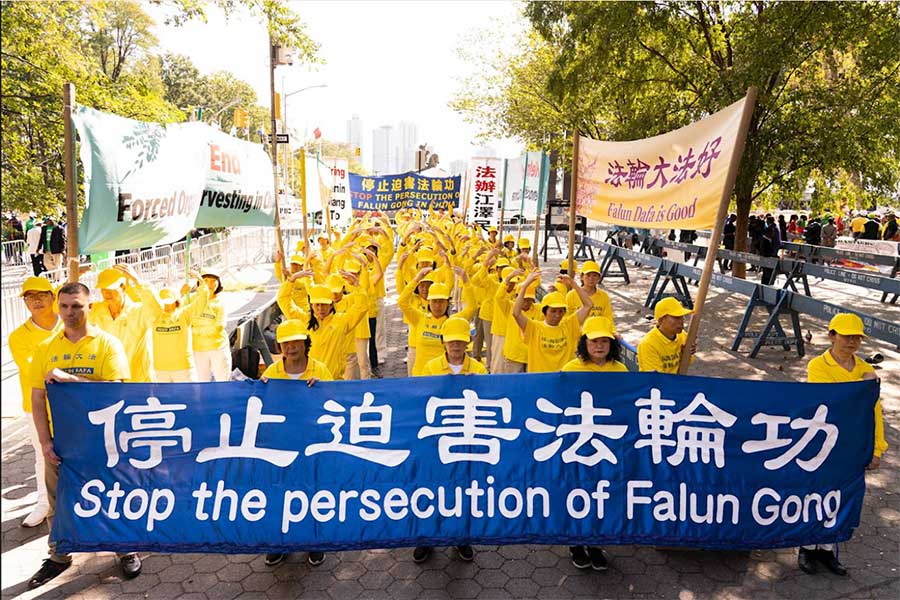
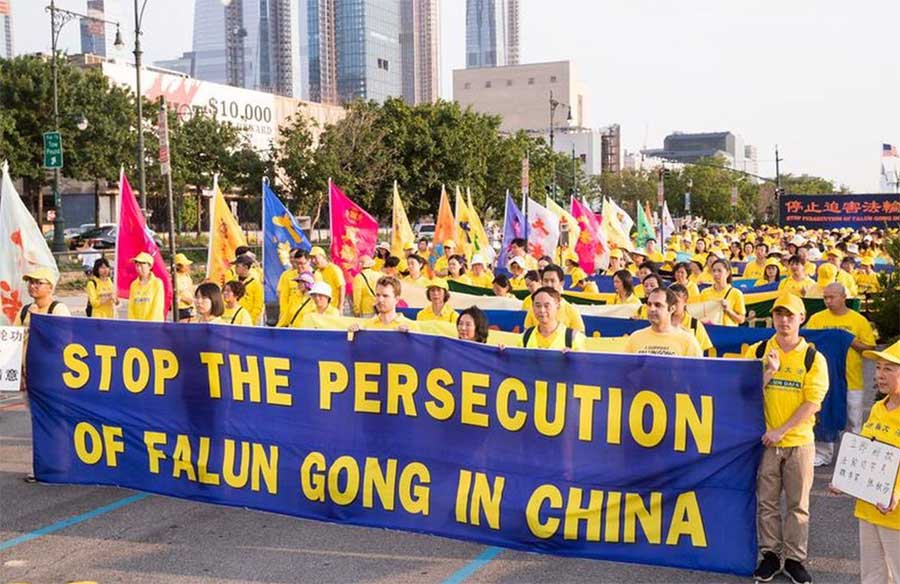
I reopened all my notes. Began to investigate in a deeper direction: keywords like “hidden persecution,” “prisoners of conscience,” “suppression of belief,” “unidentified bodies.” The initial results were chaotic — hundreds of names, thousands of incidents. But then, one phrase kept repeating: Falun Gong.
I froze.
I had read quite a bit about Falun Gong before, especially the spiritual and moral aspects of this practice. But this time, I decided to re-investigate from scratch — like a journalist reopening a major case that they once thought they fully understood.
Not to verify belief. But to piece together the entire truth.
What is Falun Gong?
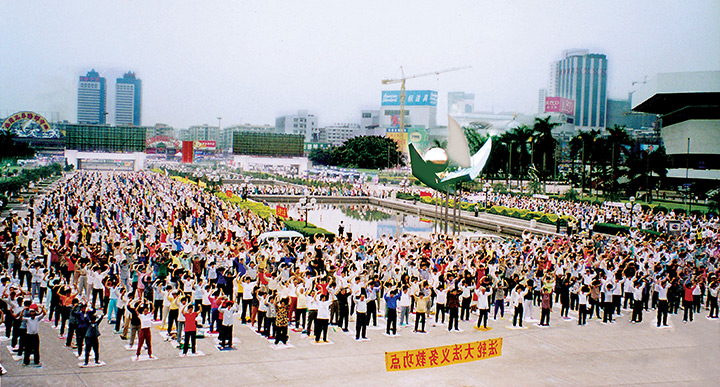
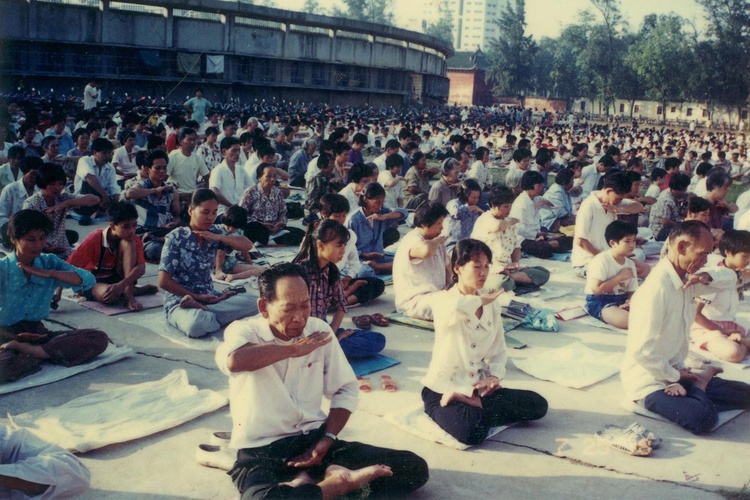
It’s not a “cult” as biased news reports once widely claimed. I had personally seen documentary footage: hundreds of people practicing in parks, meditating in silence, the morning light shining on their serene faces. No slogans, no politics. Only gentle movements and three emphasized principles: Truthfulness – Compassion – Forbearance.
Falun Gong began in China in the early 1990s, rapidly spreading due to the health and moral benefits it brought. By the late 1990s, an estimated 70 to 100 million people were practicing. A number too large. So large that the Chinese government began to worry.
And then, like a poisonous wind sweeping through, the persecution began in July 1999.
Shocking Questions
I wrote down:
— Why was a gentle qigong practice considered a “national threat”?
— Why were people who merely meditated tortured, imprisoned, and called “thought criminals”?
— And why, according to many witnesses and investigators, did they become a source for a “human organ industry”?
I continued reading international documents. A report by David Kilgour, former Canadian Secretary of State (Asia-Pacific), and human rights lawyer David Matas, compiled over 50,000 pages of investigative material on live organ harvesting in China. The report had a chilling conclusion: “An unprecedented evil on this planet.”
I was stunned.
Organ on Demand — and the Price of a Human Life
I began to fact-check. In Western countries, the waiting time for a kidney transplant is typically from 6 months to several years. For liver and heart – even longer. But in China, according to information promoted by underground medical organizations and medical tourism agencies, the waiting time is only a few days to a few weeks.
Why such a horrifying disparity?
A human rights doctor answered in an interview:
“Because in China, they have a live organ bank ready. When an ‘order’ comes in, they test pre-stored prisoner blood data, select a suitable person, and then kill them — to harvest the organs.”
I felt as if I had been slapped. A live organ bank? Could it be true?
Then I read a testimony:
“I used to be a nurse in a labor camp. They tested the blood of Falun Gong practitioners, but didn’t treat any illnesses. Only took organ information.”
“After that, some people ‘disappeared.’ No one knew where they went. Their families were not notified of their deaths. No bodies. No funerals.”
I closed my eyes. Images of the sacred statues weeping, of the blood of rivers, of snow in summer… now appeared as silent evidence of an unconventional genocide – not with bullets, but with surgery.
Human Body Exhibitions – and Commercialized Evil
Another haunting detail: the “plastinated” human body exhibitions.
In 2018, a journalist named Sophia Bell visited such an exhibition in Ho Chi Minh City. This exhibition was called “Mystery of Human Body.” She was shocked to see the dissected body of a pregnant woman, revealing a 7-8 month old fetus. There was no stated source of donation, no consent from relatives. Later, she discovered:
— All bodies originated from China. — Plastination factories were established after 1999 – coinciding with the beginning of the persecution of Falun Gong. — The founder was Gunther von Hagens, a German, but he located his factory in Dalian, where large-scale detention centers exist.
And then the pieces began to connect.
“Precious organs were forcibly removed and sold. The remaining bodies – plastinated, put on display.”
“The victims – after being murdered – continued to be humiliated once more, in the name of science and art.”
Unbelievable Numbers
I continued reading.
Ethan Gutmann, author of The Slaughter, estimated that 65,000 Falun Gong practitioners were killed for their organs between 2000 and 2008. This number could later rise to hundreds of thousands, when adding subsequent years and other ethnic and religious groups also targeted.
I could hardly believe it. But I couldn’t deny it.
I checked hospital data, transplant numbers, bed counts, doctor numbers… all showed: the officially reported number of transplants far exceeded the amount of legal organs they could have.
And I understood: the greatest injustice lies not in the courtroom – but within those silently dissected bodies.
Returning to the Sacred Statues, the Tears of Stone
I looked back at my old notes:
— The Virgin Mary statue in Akita wept blood 101 times. — The Guanyin statue in Kaohsiung shed tears on the full moon of the 7th lunar month. — Snow covered the memorial service for the Sichuan earthquake. — A small river in Texas turned blood-red — right after an investigator released a report on organ transplantation in China.
Could it be?
I dared not confirm. But I also couldn’t dismiss this feeling: nature is speaking on behalf of the victims who no longer have a voice.
The Silent Verdict
I remembered the words of Liu Siyuan – the father of a victim:
“When I learned my daughter’s organs were forcibly removed, I thought that was the ultimate inhumanity. But when I learned her body could be plastinated, displayed, commercialized… I realized their evil had no bottom.”
That statement sent shivers down my spine.
I used to be a journalist. I used to think I had seen all kinds of crimes. But today, I realized: there are things that cannot be named, cannot be written into reports, cannot be categorized under any legal definition. They can only be called: crimes against humanity.
The Final Words – But Not the End
I rose from my chair. Looked out the window. The sky was clear blue. No snow. But my heart was cold, as if ice had just fallen.
I knew I couldn’t go back.
I will write. Not just an article. But an indictment.
A conscience’s indictment — for those who remained silent. And for those who still want to live as if snow cannot fall in summer.
* * *
Stone Inscriptions and Heaven’s Judgment
If blood is not vindicated, the earth will speak. If cries are not heard, stone will write. If justice is not served, Heaven will act.
I once thought that what I had gathered – sacred statues weeping, rivers turning to blood, snow falling in summer – was the extreme. But then I came across another story. Something that didn’t fall from the sky. Nor did it melt with water. But emerged from stone. An ancient block of stone, lying silently for hundreds of millions of years, suddenly broke open to reveal… a verdict.
It’s called: The Hidden Word Stone.
A Landslide Reveals a Proclamation
In 2002, in Zhangbu Village, Pingtang County, Guizhou Province – southwestern China – a small rockslide occurred. Villagers went to investigate and found a large stone slab split in two. The strange thing was not the landslide, but the inner surface of the newly cracked stone: there was a line of six Chinese characters, deeply carved into the limestone:
「中國共產黨亡」
Zhōngguó Gòngchǎndǎng Wáng (Chinese Communist Party Perishes)
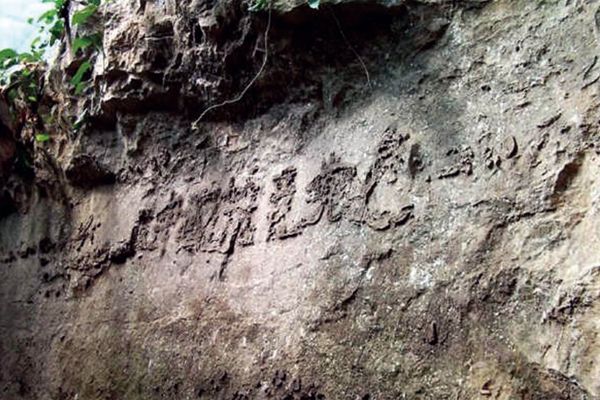
The characters were not carved by anyone. There were no signs of artificial manipulation. According to the research results of Chinese geologists, this rock formation has a geological age of about 270 million years – belonging to the Permian period.
An anomalous phenomenon. A timeless message.
At first, local officials seemed quite… excited. They called the rock “Tàng Zì Shí” (meaning “Stone Containing Characters”), allowed it to be displayed, made it a guide board, and even printed brochures. But then, something even stranger appeared: in official documents, they deliberately omitted the character “Wáng” (亡 – perishes/perish). That is, they only recorded: 「中國共產黨」– Chinese Communist Party. But those who came to the site clearly saw: the character “Wáng” was the clearest, deepest, and undeniable.
The authorities quietly stopped media coverage. Journalists were forbidden to report. But independent scholars, local residents, and even tourists managed to take photos, shoot videos, and report on international forums. And thus, one of the most magnificent and dangerous anomalies of modern times was revealed: Heaven writing a verdict in stone.
The Crack that Divides History
The stone broke into two: one side bearing “Chinese Communist Party,” the other “Perishes.” The crack structure resembled a laser cut, neat and decisive. To many, this was just an interesting geological phenomenon. But to me – having already gone through weeping statues, untimely snow, and rivers of blood – I no longer saw it as stone. I saw it as an indictment. A declaration from Heaven.
China – a nation that has existed for thousands of years with dynasties succeeding each other and passing away. But never before has there been a force that caused nature to speak out like this. The character “WÁNG” (亡) – in ancient Chinese culture – is not merely “perishing” in a political sense. But rather, it means loss of root, loss of virtue, loss of destiny – that is, the utter destruction of morality and fate.
Heaven Has Written – In a Language No One Can Twist
In human history, there have been prophecies in words, in paintings, in astronomy, in metaphors. But a 270-million-year-old rock, untouched by human hand, unwritten by anyone, uncensored by anyone, yet bearing six characters precise to every stroke, carrying a frighteningly clear meaning – that defies the ability of any theory of coincidence.
I sat before the screen, zooming in on each photo of the Hidden Word Stone. I cross-referenced the carvings, the degree of erosion, the rock structure. I even read counter-arguments from state geologists – but all avoided the main question: “Why those six characters? Why so clear, like a declaration?”
No one answered.
Heaven Executes Those Who Go Against the Dao
I began to search for quotes from ancient texts. Prophecies, predictions. And I found a coincidence so chilling.
“天生民以養道。逆道者,天誅之。”
(Tiān shēng mín yǐ yǎng Dào. Nì Dào zhě, Tiān zhū zhī.) (Heaven gives birth to people to nurture the Dao. Those who go against the Dao – Heaven will execute them.)
This saying is found in ancient Chinese teachings. I also found a passage in the Classic of History:
“天之見,如反之弱。”
(Tiān zhī jiàn, rú fǎn zhī ruò.) (Heaven’s sight – like an image reflected in water. No one can hide from it.)
I remembered hundreds of reports about forced organ harvesting. I remembered the plastinated bodies with no origin. I remembered the father named Liu Siyuan, clutching a photo of his daughter and saying choked with emotion: “I thought I understood evil. But I was wrong. I was too naive.”
And I remembered an ancient verse my grandmother used to read:
“Heaven’s net is vast, though its meshes are wide, nothing slips through.”
Not Everyone Sees Snow in Summer – But No One Can Deny the Stone
I imagined the scene: a tourist stands before the Hidden Word Stone. He reads the characters. “Chinese Communist Party… Perishes?” He takes a photo. Then the guide diverts him to another topic. Then he is asked to leave the area. Then… everyone returns to silence.
But the characters remain there. In the stone. In history. In the crack that divides the destiny of a nation.
Not everyone sees blood in the river. Not everyone believes in weeping Buddha statues. Not everyone stands under June snow. But no one can deny the Hidden Word Stone. No one can erase that carving. No one can “prosecute” Heaven.
Perish – Is It an End, or the Final Warning?
I wrote in my notebook:
“If crimes against humanity are not condemned by humans, then Heaven will condemn them. If Heaven’s verdicts are already carved – in blood, in snow, in stone – and we still turn a blind eye, then perhaps we have chosen to stand on the side of evil.”
The character “Wáng” (亡) in the Hidden Word Stone might be a declaration. But I want to believe – it is still a final warning. Like an arm raised before lightning strikes. Like the last admonition before heavenly fire sweeps through.
* * *
Conclusion for the Third Chapter
I called this chapter “Tears of Stone, Blood of Rivers” – because I have seen these things. Not with my eyes. But with my soul. With my conscience. I am not a fortune-teller. Nor am I a prophet. I am just a journalist – one who gathers what has been overlooked, denied, or buried beneath the surface of truth.
And I conclude this investigation with a question – a question I want to hurl directly at the sky:
“When Heaven has wept. When Stone has written. When Rivers have turned red.
Humanity – what more are you waiting for to awaken?”
* * * * *
(…..)
This article is an excerpt from the book “THE LAST BELLS“, which contains insightful notes and analyses by author Taylor Reed on the phenomenon of weeping statues of the Virgin Mary in many places around the world, as well as pointing out the mysterious coincidences of ancient and modern prophecies about the present day.
If you wish to experience the full journey of thought and the unpublished insights of the work, please click the button below to own the complete book.
To explore more works from THE LIVES MEDIA, visit our book collection.