The Decision to Go
That evening, I left Room 603 with a strange feeling, like someone waking from a brief, daytime dream. The main hall of the convention center was still brightly lit, the sound of microphones still echoing steadily from adjacent presentation rooms—but all those familiar sounds seemed to be pushed far away, becoming faded and less real. In my vest pocket was the small slip of paper Mr. Zhang Feng had given me. No company logo, not a single job title, nothing but a handwritten address in Guizhou province, a phone number, and an unnamable resonance left over from the unusual encounter.
Returning to the hotel, I entered the luxurious room as usual, but the feeling was no longer the same. The room—with its warm yellow lights, its neatly arranged wooden furniture, the fresh fruit tray on the table—felt unusually empty tonight. The usually comfortable silence now seemed only to amplify the vague, inexplicable things stirring within me.
I took the slip of paper from my pocket and placed it on the table. I turned it over and over. Just a few simple lines of text. And yet, my eyes were drawn to the unfamiliar place name, an indescribable feeling, as if it were a half-open door to a place I had never known.
I felt the need to share this with someone, if only to find some balance for my jumbled thoughts. I picked up the phone and called Qing Ling.
“Hello, my love. How was your conference today?” Her voice came from the other end of the line, as familiar, gentle, and full of warmth as ever.
“Everything is fine… but something rather strange just happened… and I think you should hear about it.”
I began to recount everything—slowly, trying to keep my voice calm, without embellishment or exaggeration. I told her about the unusual meeting room on the ground floor, about the silent people with their indescribably placid demeanor, about a man named Zhang Feng. I tried to describe his gaze, the “remote pulse reading” without any physical contact, and his words about my condition—things I believed no one else could possibly know, except for me, and perhaps, Qing Ling.
The other end of the line was silent for a long moment. I could picture her thoughtful expression.
“…Are you sure you didn’t imagine it, Ming?” she finally asked, her tone not one of sharp doubt, but more like a linguist trying to find a precise definition for a new concept. “Maybe you’re just a bit tired after several days of intense conferencing?”
“No, I was completely awake, Ling,” I replied, my voice firm. “And you know me—I’m not the type to easily believe in things without a scientific basis. But… this, it felt too real. And honestly, I don’t know where to file it within everything I’ve ever known or learned.”
I went on to tell her about the strange feeling of having a wordless communication with Mr. Zhang Feng—a connection that bypassed rational analysis and seemed to come from some deeper level of consciousness.
“And he invited me to China, perhaps this summer,” I said, trying to keep my voice as normal as possible. “A rather remote place, in Guizhou. He didn’t say specifically what I would do there, or whom I would meet, only that… if I truly wanted to better understand what I experienced, I should go there.”
Qing Ling fell silent again. This time, the silence lasted a little longer.
I knew she loved Chinese culture, was well-versed in ancient classics, and had even taught courses on Eastern philosophical schools. But concepts like qigong, spiritual cultivation, or unlocking latent abilities had, for her, always belonged mainly to the realm of literature, of the history of thought—never a reality to be experienced or a practical belief in daily life.
“Do you think… he’s some kind of cultivator?” Qing Ling asked, her voice a bit hesitant. “With no clear information, no verifiable background? What if… what if it was all just a cleverly staged performance? Some special kind of psychological influence?”
“I’ve considered all of those possibilities,” I admitted honestly. “But what makes it impossible for me to just dismiss it all is—what he said about my condition. No one could guess with such accuracy. And his eyes… they were truly unlike anyone I’ve ever met in my life.”
I did not try to convince her. I was still trying to understand it myself.
Qing Ling was a very cautious person. Her caution had saved me from unnecessary business risks more than once. But I also knew she was profound enough not to hastily dismiss something just because it fell outside conventional explanations.
“From what you’ve described,” she said after a long, pensive pause, “it does sound… strange. I don’t easily believe in mystical things, you know that. But I’m also curious. Guizhou? That region holds many mysteries in the old cultural stories… Alright,” her voice suddenly became more decisive, “if you really want to go that badly, I’ll make arrangements to go with you. We can consider it a field trip to learn more about cultural aspects that books might not have fully captured. But we need a careful plan, and perhaps we should only go during our summer break, alright?”
I smiled softly, a warm feeling spreading through my chest. With her by my side, I felt much more at ease.
“Thank you,” I said, my voice sincere.
“I just don’t want you fumbling around alone in a strange place with such vague things. Besides…”—on the other end, her voice lightened, with a hint of teasing—“I’m also really curious to know what mysterious man could leave the famously rational Professor Wang Ming so flustered.”
The call ended. Outside the large glass window of the hotel room, Tokyo was brilliantly lit up, but in my heart… it seemed another kind of light had just been lit—not dazzling or ostentatious, but smoldering, persistent, and warm enough to illuminate the next step.
I found myself gazing out the window, toward the distant horizon where the night sky of Tokyo blended with the faint stars.
A trip to Guizhou. With Qing Ling. The thought kept circling in my mind.
The Journey to Tongren
Though the scientist in me relentlessly posed a series of questions about the peculiar invitation and the mysterious man named Zhang Feng, a certain curiosity, a vague belief, had been quietly growing within me. Finally, after many restless nights, the decision to go to China was made. The trip was planned to last about three months, starting in the early days of summer. Qing Ling, with her fluency in Chinese and profound understanding of Eastern culture, was naturally an indispensable companion. She helped me a great deal with all the arrangements, and although she maintained a necessary caution, I could sense in her eyes a quiet eagerness, a desire to explore the cultural and spiritual aspects that books could never fully convey.
In early summer, as the characteristic humidity of the East began to spread, we took a long flight to Shanghai—the city where Qing Ling had spent her childhood years. It was my first time setting foot in mainland China, and though I had mentally prepared for a vast country with thousands of years of history, the modernity and scale of Shanghai still truly surprised me. The enormous, bustling international airport, the proud skyscrapers soaring in the city center, the complex yet smoothly running urban transport system… all testified to a remarkable development, an astonishing vitality.
“Shanghai has changed so much, hasn’t it?” Qing Ling said, her voice tinged with nostalgia as we sat in a taxi leaving the airport. “This is just a very small part of China today. This country is vast, and you will see many more differences, especially as we go deeper into the interior.”
What impressed me most, as someone with a background in technology, was the efficiency and modernity of China’s high-speed train system. From Shanghai, we boarded such a train to travel to Guizhou province. The train sped along, smooth and silent, gliding past endless green rice paddies and rolling tea hills. Gradually, the flat plains gave way to limestone mountains that began to appear on the distant horizon. I felt as if I were truly entering another land, a place where time seemed to slow down and the pace of life grew more unhurried.
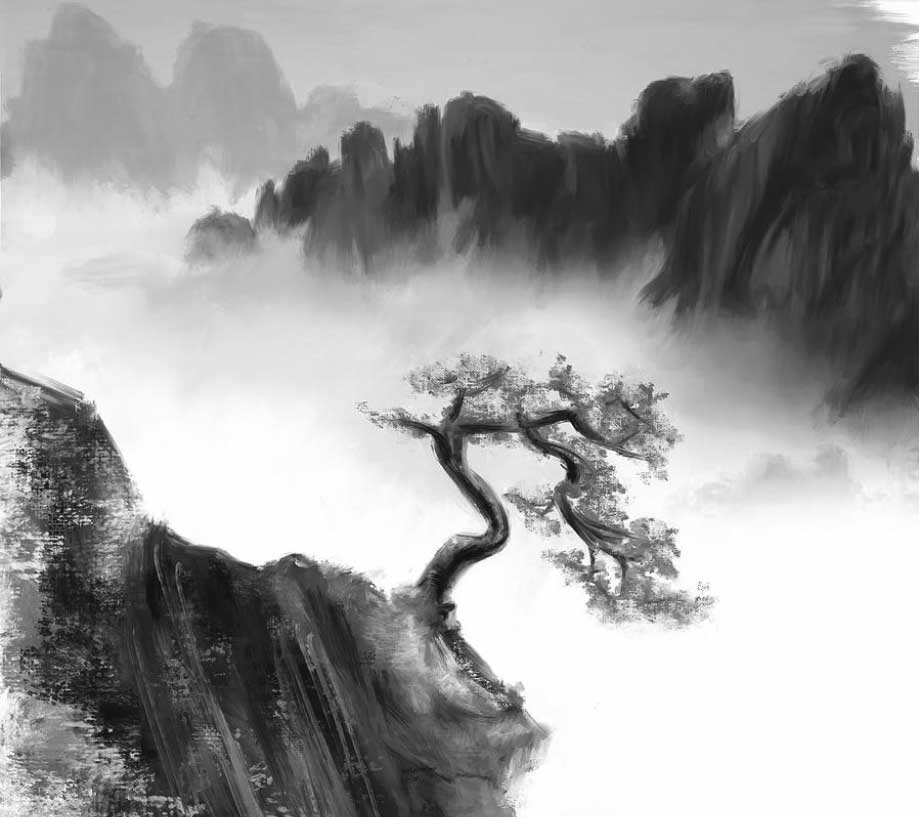
The deeper we went into Guizhou, the more majestic and indescribably pristine the scenery became. Endless ranges of limestone mountains, cloaked in a lush, green carpet of vegetation, often appeared faintly through layers of mist that drifted like soft white silk ribbons carelessly dropped by creation, painting a vast, living ink wash landscape. This was indeed a very different China from what one typically sees in modern metropolises.
After reaching a larger city in the province, we continued our journey by car to Tongren (铜仁)—the small town whose address was written on Mr. Zhang Feng’s slip of paper. This leg of the trip took us through winding mountain roads, through dense, untouched forests, and along cool, crystal-clear streams. The nature here truly astonished me with its majestic beauty. There were sheer, towering cliffs and deep, fathomless valleys that seemed to hold the secrets of millennia. At one point, from a great distance, we even caught a glimpse of the majestic peak of Mount Fanjing, partially hidden in the lingering mist—a sacred mountain local lore claimed was the abode of enlightened beings.
Along the way, the car occasionally passed through small villages where stilt houses made of wood or bamboo, with classic curved yin-yang roof tiles, nestled peacefully at the foot of the magnificent mountains. The smoke from evening cooking fires curled up from the simple roofs, and terraced fields, golden with ripe rice, stretched across the hillsides. The people here, with their sun-tanned skin and gentle smiles, had a rustic simplicity, a world away from the hustle and bustle common among city dwellers.
“It’s so quiet and peaceful here, isn’t it, Ming?” Qing Ling remarked softly, her eyes following a herd of buffalo grazing leisurely by the roadside. “I never expected Guizhou to have such rustic beauty and such fresh air.”
I nodded in agreement. Accustomed to the incessant noise and pressure of the modern world, I found the clean air, the tranquility of the mountains, and the somewhat slower pace of life here created a distinct feeling—both captivating and slightly alien. It made my mind quiet down, giving me space to think about things other than work or pending business projects.
Finally, we arrived in Tongren. It was a much smaller town than I had imagined, nestled peacefully in the embrace of rolling mountains. It was said to be not far from the famous Fenghuang Ancient Town, yet it possessed a quiet, profound stillness, as if untouched by the currents of mass tourism. Unlike the splendor and modernity of Shanghai, Tongren wore a classic, solemn beauty, imbued with the spirit of the mountains. Small flagstone streets, worn smooth by time, and houses with traditional architecture and moss-covered, curved tiles were interspersed with local markets that were bustling but not noisy or chaotic. The characteristic scent of dried herbs from traditional medicine shops, the aroma of rustic dishes from small roadside stalls, and the gentle dampness of the river and mountains mingled in the air, creating a unique atmosphere.
We got out of the car at an intersection near what was considered the town center, with little more than a few light backpacks and the slip of paper from Mr. Zhang Feng. Instead of heading straight for the address, Qing Ling and I decided to find a temporary place to stay first—partly because we needed rest after the long journey, and partly, to be honest, because I wanted more time to get a better sense of the rhythm of life, of the people here, before any meetings.
Qing Ling, with her language skills and dexterity, took the lead in talking to some locals to ask for directions and find a suitable inn. Though she had lived in Shanghai, Tongren was clearly a different world—a place where people still called to one another in warm, rustic local dialects, and greeted strangers like us with eyes that were at once gentle, curious, and a little reserved.
Eventually, we turned onto a small stone-paved street running alongside a river, where a few old-style inns with yellowed, whitewashed walls stood modestly under the shade of sprawling ancient trees. At that moment, I had a truly vague feeling—as if I were about to step into a story whose ending I could not possibly know.
The Atmosphere and People of Tongren
The car finally came to a stop in Tongren, the small town noted on Mr. Zhang Feng’s slip of paper. The moment I stepped out and took my first breath, I felt as if I had passed through an invisible threshold into a completely different world.
The air here was unusually pure.
There were no blaring car horns like in Shanghai, no flashing electronic billboards or brilliant neon lights sweeping across the glass facades of high-rises.
There were only narrow flagstone streets, a jumble of moss-covered roofs aged by time, and a distinctive damp scent of the mountains, of the earth, carried on the evening breeze.
Qing Ling took a deep breath, then turned to me, her voice tinged with surprise.
“The air here… it’s so different. It reminds me of places I’ve read about in classic novels. But this feeling… it’s strangely real.”
The small town was nestled peacefully amidst ranges of limestone mountains. Each small street here seemed to lead into a different layer of space—there were market streets that looked quite bustling but were not at all noisy or chaotic; the people on the streets seemed far less hurried; every small eatery, traditional medicine shop, and craft stall had a slow-paced, somewhat old-fashioned air but exuded a warmth and intimacy. The scent of star anise, the aroma of dried teas, the smell of old damp wood, and the familiar scent of cooking smoke wafted from the houses, mingling in the air. Nothing was spotlessly clean or gleamingly modern—but it was all incredibly authentic.
I found myself pausing countless times just to watch an old man diligently arranging medicinal herbs under an old wooden eave, or a group of students in faded uniforms happily cycling through a small, mossy alley.
Tongren made no attempt to “impress” visitors. But perhaps it was precisely this natural, unadorned appearance that touched something very real and very peaceful within me.
As planned, Qing Ling took the lead in finding an inn. Fluent in Chinese and with a certain understanding of the local culture, she quickly made inquiries with a few locals. Before long, she led me to a small stone-paved street running alongside a river, where a three-story inn with a wooden facade stood. It didn’t look new, but it was very tidy and seemed cozy.
The innkeeper was a stout woman of about forty with a kind, benevolent face. She welcomed us warmly, her manner eager but not at all pushy or insistent. When she learned that we were university professors of Chinese descent now living in the US, here to learn more about traditional culture, she just smiled knowingly.
“Our town has preserved many ancient things, esteemed guests. But not everyone who comes here has the fated connection to see them.”
Her words startled me. I wasn’t sure if it was because of the profound implication hidden in her words, or simply because of the utterly genuine, rustic tone of her voice.
The room we rented was on the second floor, with a small balcony overlooking a low, tree-covered hill in the distance. The doors and windows were the sliding wooden type. The furnishings were extremely simple—a sturdy wooden bed, a small bamboo tea set, an electric kettle, and a small bookshelf in the corner. There was no flat-screen TV. No multilingual rule signs.
I sat on the edge of the bed and looked out the open window. The pale yellow light of dusk fell on the eaves of a house across the way, where a silver-haired old man was unhurriedly using a ladle made from a coconut shell to water some potted flowers.
“I think this is a very suitable place for us to stay, Ming,” Qing Ling said softly, after having inspected the room.
I nodded slightly. Not just because of the adequate amenities or the reasonable price. More importantly, it was because here… I felt I could truly ‘settle’.
Not to write a scientific report. Nor to map out a detailed itinerary for the coming days. But to try and listen, to see what this simple and somewhat foreign world wanted to whisper to me.
That night, for the first time after many days of exhausting travel and mental turmoil, I had a truly deep sleep. No dreams. Not once did I wake.
There was only the sound of the night wind gently seeping through the cracks in the wooden door—and a very light, peaceful feeling… as if I were slowly, gradually stepping into something that could not be named.
The Simple Abode of Zhang Feng
After three days in Tongren, having grown accustomed to the slow pace and characteristic tranquility of the mountainous region, Qing Ling and I decided it was time to seek out the address Mr. Zhang Feng had written on the small slip of paper. I had hesitated for the past few days—not out of doubt, but perhaps because I wanted to give myself more time to truly settle, to prepare for an encounter that I sensed would be unlike any I had ever had. But the peaceful, serene atmosphere of this land only made me think more of him, of the impressions and unanswered questions left from our brief meeting in Tokyo.
We followed the directions into a small flagstone alley, where the moss-covered walls of ancient houses stood modestly under the shade of lush, old trees. The afternoons in Tongren always seemed deeper, quieter than other times of the day. The sound of our footsteps echoed softly on the stone, like stray sounds inadvertently awakening a space that had long been asleep.
Finally, a wooden gate appeared before us—a simple gate, darkened by sun and rain, covered in green vines, so old that it seemed a natural part of the landscape. I took a deep breath, then raised my hand and knocked lightly three times. The sound was not loud, but it was enough to make my chest vibrate with a slight tremor.
It was a Saturday. We had not called ahead, but we silently hoped he would be home.
A moment later, the wooden gate creaked open. A petite, elderly woman with silver-white hair tied neatly in a bun stepped out. Her face was kind, radiant with the countless wrinkles of time, and her eyes shone with a compassionate clarity, like a cool, fresh stream. She smiled at us—a warm smile, without a hint of formality or scrutiny.
“Please come in,” she said in a warm local dialect, after Qing Ling had greeted her and stated our names in standard Mandarin. “My husband is waiting for you in the tea room.”
We followed her through a small courtyard. The space within opened up like an entirely different world—not in a metaphysical or wondrous way, but in a manner that felt… very still. Very light. And full of life.
A lovely little garden appeared under the shade of leafy trees, with a small pond holding a few colorful koi, various kinds of wildflowers in bloom, and the gentle, gurgling sound of water from a small rockery made of pebbles. Nothing here seemed to follow any particular design school, nor did it look intentionally manicured. It was like a space that had formed itself, arranging itself according to the rhythm of its inhabitants over many years—a very natural, very real harmony.
The main house was a simple, traditional structure, with ironwood pillars that had gained a patina, whitewashed walls, and a reddish-brown terracotta-tiled corridor that wound around the garden. There were no modern technological gadgets on display. No luxurious, superfluous decorations. Only simple wooden furniture, polished to a sheen from long use, bearing the deep imprint of time and life.
Zhang Feng was sitting there, in a small room overlooking the garden, where the afternoon sunlight slanted through the window lattices, casting pale yellow streaks on the shoulders of the dark brown shirt he was wearing. He looked up as we entered, his eyes still bright and clear, his face retaining its placid, serene expression—as if he had known this moment would come for a very, very long time.
“Ah, the two professors have arrived,” he said, his voice still deep and calm, as he slowly stood up. “Welcome to my humble home.”
We bowed our heads slightly in return. There were no elaborate introductions. No polite pleasantries. Just a warm and surprisingly comfortable space, enough for us to feel we could sit down without needing to say another word.
He invited us for tea.
The elderly woman had discreetly withdrawn, leaving us to our privacy. Zhang Feng personally brought out a pristine white porcelain tea set, with tiny cups that fit perfectly in the palm of a hand. He unhurriedly rinsed the pot and cups with hot water, then opened a small wooden box containing curled, dark green dried tea leaves.
“This is Snow Shan tea,” he said, his voice gentle. “From ancient trees that grow naturally on the high slopes of Mount Fanjing.”
I silently watched his fingers as he carefully placed the tea leaves into the pot, then poured the water. His movements were slow, unhurried, without a trace of performative formality. It was simply the focus and naturalness of a person who had probably brewed tea thousands, tens of thousands of times—yet with each brew, he seemed to maintain a complete reverence, a full respect for the present moment.
Hot water was poured into the pot. A thin wisp of steam carrying the scent of tea began to spread—a very light, pure fragrance, not at all strong—like the smell of morning dew on leaves, or the scent of clouds on a mountaintop after a shower.
He methodically poured the tea into the small cups, then offered them to us. I carefully lifted my cup, brought it close to my nose to inhale the fragrance, and then took a small sip. The tea was not at all bitter as I had imagined. Nor did it have a strong, astringent taste. It was light, gentle, like a clear, perfectly warm stream, flowing slowly through my chest, bringing an unfamiliar sense of refreshment.
Qing Ling also drank her tea, then quietly gazed out at the small garden bathed in the afternoon sun. She said nothing. But I saw that her gaze was no longer the scrutinizing, analytical look of a professor observing a research subject. It was as if… she were truly listening to something from this silent space.
I set my cup down and asked softly, “Mr. Zhang, have you lived here for a long time?”
Zhang Feng smiled faintly. “I live. But perhaps, not only here.”
I waited for him to elaborate, but he said nothing more, just silently refilled his own cup.
A thought flickered in my mind, vague but persistent: Could it be that some people do not truly ‘live at’ a specific place, but rather ‘live in’ a certain state of being? And this place, this house, this garden… perhaps they were merely an external manifestation of that state?
I glanced around the simple tea room. There was nothing special to try to explain. Nor was there any mystery to be unveiled.
And perhaps—for the first time in my entire life, after so many years of pursuing logic and scientific evidence—I felt a strange sense of peace, without needing to understand why.
The First Deeper Dialogues
The conversation flowed naturally, without any pressure or attempt to guide it from anyone. I’m not sure when it happened, but our discussion had quietly slipped into a different current—slower, more profound, and seemingly far removed from what I was used to in everyday dialogues.
I looked at Zhang Feng—the man sitting calmly across from me. He had a somewhat frail build, his hair was streaked with silver, but his eyes were still bright and clear, not sharp, but holding an unusual warmth. Though I guessed he was over seventy, his face retained a bright, keen look, his skin not weighed down by the wrinkles common at that age. His eyes had a peculiar depth that made it difficult to guess his true age.
Sitting opposite him, I suddenly felt that the role of a medical professor I always carried with me no longer seemed fitting. There was an inner urge for me to temporarily set aside my knowledge, my ingrained preconceptions, and listen with an entirely open mind.
“Mr. Zhang,” I began, trying to keep my voice calm, “at the conference in Tokyo… you spoke of the intimate connection between the mind and body. And also… the way you ‘took my pulse’ that day… to be honest, I still cannot explain it.”
I paused for a beat, took a light breath, and continued:
“With the modern medical knowledge I have learned and taught, everything you said then seems to lie beyond the scope of measurement and empirical verification.”
Zhang Feng smiled faintly, a smile that held no refutation or ridicule.
“Your science is indeed very adept, truly extraordinary, at investigating and analyzing what can be seen with the naked eye, measured with machines, and replicated in a laboratory,” he said slowly, deliberately. “But this world—and we ourselves—do not exist on just that one tangible, physical level. There are more subtle things, belonging to the spirit, to energy, which modern science perhaps still lacks the proper tools to touch and perceive.”
He spoke as if recounting something utterly natural and familiar to him, with no intention of persuading or imposing anything on me.
He revisited the concept of “qi”—a wondrous form of energy said to constantly flow within and around each person’s body, heavily influenced by their thoughts, emotions, and entire mental disposition. When the mind is unsettled or anxious, the flow of qi can become blocked and chaotic. Conversely, when the heart is tranquil and harmonious, the qi will circulate gently and smoothly. I listened, and I recalled the moment in Tokyo—when his eyes met mine, and the sentence that had stunned me: “There is a knot in your heart.”
Qing Ling, who had been listening silently, leaned forward slightly. “Sir, what you’ve just said… it sounds quite similar to the foundational theories of traditional Chinese medicine, doesn’t it? And I believe I have read similar concepts in Taoist and Buddhist scriptures?”
Zhang Feng nodded at her. “Our people’s traditional culture once possessed an incredibly profound and complete system of knowledge. It wasn’t just medicine for curing physical ailments, but could be considered a holistic study of human life—helping people to understand the deep connection between their body, mind, and their very being.”
He did not use the language of an academic researcher or a mere theorist. Every word he spoke seemed distilled from deeply ingrained experiences, from a life of genuine contemplation and verification.
Then he began to tell a story, his voice even, without rising or falling intonation:
“Many years ago, I met a man. He worked in the medical field, had achieved some success, lived by strict principles, and shouldered many responsibilities. On the surface, everyone thought he had a stable life, with nothing to worry about—but deep down, his heart was always heavy with unnamable pressures, with feelings not easily expressed. At that time, a very small tumor was forming in his heart. Modern medical equipment probably could not have detected it, but I could sense its existence—not with my eyes, but through a very vague, very subtle sense…”
He did not look directly at me as he told the story. But every word, every phrase, seemed to be gently knocking on some secret door in my soul, a door whose existence I had never known, or had intentionally forgotten for a very long time.
I suddenly felt a cold chill run down my spine.
My heart skipped a beat—not from physical pain, but from a sudden, shockingly clear realization. I knew he was not just talking about “a man.” He was talking about me.
“You… you really… knew that?!” I blurted out, my voice trembling uncontrollably.
Only then did Zhang Feng look at me. There was no trace of smugness or showing off in his eyes, nor was he trying to create an air of mystery—only a strange compassion and placidity.
“It was just a small sense, Mr. Wang,” he said, his voice still gentle. “It’s not any special supernatural ability. It’s just that… when a person’s mind is sufficiently tranquil, they can sometimes see things that are difficult for the naked eye to perceive.”
“And you shouldn’t worry too much about it…” he continued, his voice like a word of comfort. “I sense that you and your wife have a great fated connection with the ancient teachings on cultivating the body and mind. That is the main reason I sincerely advised you to make time for this journey. A time will come, perhaps not too long from now… when someone else, another path, will help you both to truly heal your body and mind.”
I was completely silent, not knowing what to say…
He calmly poured more tea into our cups, then said softly, as if to himself:
“People seek out spiritual cultivation not primarily to gain supernatural abilities. More importantly, it is to find and return to the purest, most benevolent part that lies deep within them.”
He gazed out at the small garden, where the evening breeze gently stirred the green leaves.
“Fan ben gui zhen,” he softly chanted the four words, then explained. “It means to return to the root, to one’s original, true self, the most authentic origin of a being’s life.”
I listened, but I confess I could not immediately grasp the full meaning. Not because the words were too difficult or complex. But because… I felt that their true meaning did not lie merely on the surface of the text.
It was like the echo of a temple bell from a distant place—not too loud, not insistent—but its sound lingered, spreading, and resonating softly in my mind, refusing to fade.
Qing Ling also remained silent for a long time. I knew that as someone who researched and taught Chinese culture, she had read countless books on “cultivating the mind and nurturing one’s nature,” on the hermits and true cultivators of ages past. But perhaps, this was the first time in her life she had met a person—in the flesh, right before her eyes—who was living and embodying the very things she had previously only seen in ancient books.
I glanced over at Qing Ling and saw her eyes welling up with tears. She quickly turned away, as if to hide a sudden surge of emotion.
Our conversation continued until almost noon. The atmosphere in the tea room remained light and serene. No one tried to reach a final conclusion on anything. No “right answer” was asserted. It was simply one who had lived and experienced, sharing with two who were still on the path of seeking.
Zhang Feng had us stay for lunch. It was an incredibly simple meal—just white rice cooked from a fresh batch, a plate of verdant, boiled garden greens, and a bowl of tofu soup with shiitake mushrooms. There were no rich, complex spices. No formal, polite invitations to eat. But for some reason, I found it more delicious than most of the sumptuous banquets I had ever enjoyed in fine restaurants.
When we stood up to take our leave, the sun had begun to reach its zenith. Zhang Feng did not try to keep us longer, nor did he set a specific date for another meeting. He only walked us to the gate, then gave a slight bow—like a silent nod to a seed of fate that had just been sown.
Leaving that vine-covered wooden gate, stepping back into the small stone alley, neither Qing Ling nor I said a word to each other.
We both remained silent. As if our minds were still lingering in that quiet, warm space, with the lingering aroma of tea and words that had not yet cooled.
This article is an excerpt from the book “RED DUST, GOLDEN LIGHT” – which tells the story of Professor Wang Ming and his wife’s journey to uncover spiritual mysteries and many hidden truths in China.
If you wish to experience the full journey of thought and the unpublished insights of the work, please click the button below to own the complete book.
To explore more works from THE LIVES MEDIA, visit our book collection.