A Tale from the Brink of Life and Death
Leaving the mountaintop where the hermit lived in seclusion, my heart seemed to linger with the fragrance of forest leaves and morning dew, a mystical resonance that words could hardly capture. The fresh air and absolute tranquility of the mountains seemed to have temporarily washed away some of the worldly dust that had clung to my mind, but at the same time, it sowed countless new questions for which my repository of modern medical knowledge could offer no satisfactory answer. My wife, Qing Ling, though not a direct participant in all the deep dialogues with the hermit as I was, had nonetheless sensed the unusual atmosphere and the things that lay beyond our conventional understanding. I noticed she had also become quieter than usual, her gaze often distant, holding an unvoiced curiosity and a hint of doubt.
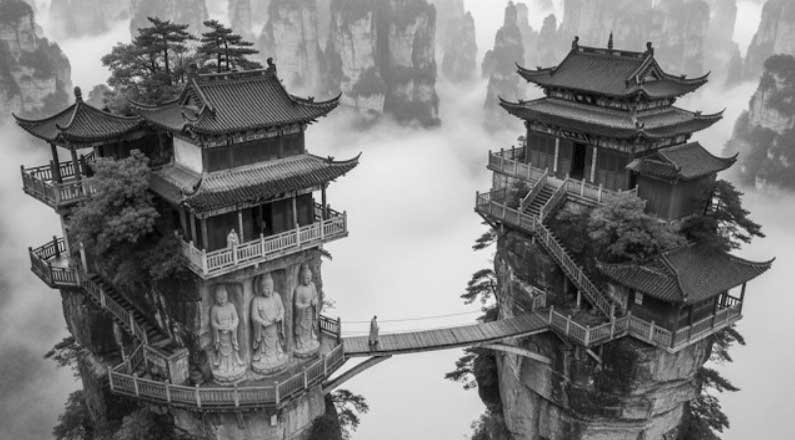
We decided not to rush back to the noisy, bustling cities. Instead, following a somewhat vague suggestion from the local guide we had hired before parting ways at the foot of the mountain, we found our way to a small town nestled peacefully at the base of another mountain range, named Qingxi. The town truly had nothing particularly elaborate or outstanding in terms of architecture or scenery, but it possessed a strange peace and stillness, as if the hurried wheel of time had gently stopped or intentionally forgotten this place. Classic, moss-covered yin-yang tiled roofs were interspersed with a few newly built houses still smelling of fresh plaster; small, winding honeycomb-stone alleys; and a stream—perhaps the very Qingxi stream of its name—with crystal-clear water, gently winding its way around a part of the town. The people here also seemed to live more slowly, more unhurriedly, a world away from the haste and rush common in other places.
We rented a small room in an inn with a balcony overlooking the stream, planning to stay for a few days to sort through our rich experiences and decide on the next leg of our journey. The innkeeper was an old man surnamed Chen, who looked very kind, benevolent, and seemed to be a man of few words. And it was from him, one late afternoon as the three of us sat drinking tea on a bamboo couch on the porch, that the first strange story of Qingxi found its way to us.
Initially, the story was just quiet whispers and small talk among a few of Mr. Chen’s neighbors who had stopped by for tea. They spoke of a funeral that had taken place in the town a few days prior, the funeral of Old Man Wang, a carpenter who had lived his whole life at the end of town. The matter would likely not have been worth mentioning if not for the extremely strange events that followed.
Old Man Chen, after his neighbors had left, seeing that my wife and I were quite attentive and curious, slowly poured more tea himself, then deliberately recounted the story from the beginning. Old Man Wang was over seventy this year, living alone in his old house after his wife had passed away, and his children were all working in distant big cities. A few days ago, one afternoon, he suddenly suffered a massive heart attack. The neighbors discovered him and rushed him to the town’s clinic, but it was too late. The young doctor at the clinic, said to be a recent graduate from a city medical school, after a thorough examination, confirmed that the old man’s heart had stopped, he had ceased breathing, his pupils were dilated, and he showed no reflexes whatsoever—all clear clinical signs of death. His family in the distant provinces had been notified and were rushing back to arrange the funeral.
Following local customs, Old Man Wang’s body was brought home by his family and neighbors, washed clean, dressed in new clothes, and laid on the wooden bed in the main room for relatives and neighbors to pay their last respects. The funeral was scheduled for the next day. Everything seemed to proceed in the sorrowful, mournful atmosphere typical of a funeral wake.
But the strangest thing happened around midnight that night, just before the day of the funeral procession. As the old man’s eldest son was keeping vigil by his father’s coffin, amidst the flickering oil lamps and curling incense smoke, he was startled to see his father’s chest seem to faintly rise and fall. At first, he thought his eyes were playing tricks on him from exhaustion and grief. But then, still under the dim lamplight and wafting smoke, the faint movement of the chest became undeniably clear. Not only that, but the old man stirred slightly, then slowly opened his eyes, and then bolted upright in bed, his eyes wide open, looking around in a daze, like someone waking from a very long, very deep sleep.
Needless to say, the son was terrified. He let out a piercing scream and ran out into the yard to call for everyone. The whole family and the few neighbors staying to help with the funeral rushed in, horrified. Everyone was stunned into silence, frozen in shock, as they saw Old Man Wang—the man who just the day before had been confirmed dead by the clinic’s doctor—now sitting there, plain as day, alive and well.
“This… this can’t be real!” I blurted out, the professional reflex of a long-time doctor suddenly taking over. “Could it be a case of apparent death? Or perhaps the young doctor at the clinic misdiagnosed?”
Old Man Chen slowly shook his head.
“At first, everyone thought so, Professor. Old Man Wang’s family hastily called the young doctor back to have a look. He arrived, his face pale as a sheet, utterly drained of color, when he saw Old Man Wang sitting there. Trembling, he checked the old man’s pulse, blood pressure, and breathing… all the vital signs were present, faint but clearly signs of life. The young doctor stammered, unable to explain, only insisting that when he had examined him earlier, the old man had truly stopped breathing and his heart had stopped completely, with no signs of life. He had even written out the death certificate for the old man.”
Qing Ling, who had been sitting silently beside me, gently took my hand. I knew she too was captivated by this incredible story. She asked Mr. Chen softly:
“So… sir, how was Old Man Wang after he ‘came back to life’? Does he remember anything? And how is his health?”
Old Man Chen sighed softly, his voice lowering, his gaze distant as he looked out at the yard.
“That is the strangest part of this whole story, miss. Although Old Man Wang did indeed come back to life, he was no longer the same person he was before. He didn’t recognize his own children and grandchildren, didn’t remember who he was, or where his home was. He would just sit there in a daze all day, or sometimes wander around the house, muttering things no one could understand. At times, he would speak with perfect clarity about events from ancient times, things that even the oldest people in this town had never heard of. His eyes were usually vacant, lifeless, but occasionally, for no reason, they would flash with a sharp glint that sent a chill down one’s spine.”
“Doesn’t recognize his family? Complete amnesia?” I muttered, trying to find a reasonable explanation. “Is it possible that prolonged cerebral hypoxia during the period of cardiac arrest could be the cause? It could lead to severe and irreversible brain damage.” This was probably the most logical explanation from a modern medical perspective.
“The young doctor at the clinic said the same thing,” Mr. Chen nodded. “But there were things that even he couldn’t explain. For example, Old Man Wang was a carpenter, who could barely read and could only write his own name. But these past few days, people have seen him holding a calligraphy brush, writing lines of beautiful, classical Chinese characters, which the literate folks in town said were poems about the Tao of immortal cultivation or something similar. Other times, he could just watch the rain fall and predict the exact time of the next downpour, or diagnose the hidden illnesses of his neighbors just by looking at their faces, illnesses they themselves were unaware of. If you say it’s just brain damage, how could that explain it all away?”
Old Man Chen’s story left me utterly bewildered. As a scientist, a medical professor with years of experience, I was trained to believe only in what could be observed, measured, and empirically proven. Death, to me, was a clear and definitive biological state: the cessation of blood circulation, respiration, and finally, brain death. The fact that a person confirmed clinically dead for nearly a day could “come back to life” was already an extremely rare event, possibly classified as a rare medical error or an extremely unusual case of apparent death. But the strange changes in mind, knowledge, and the sudden emergence of “prophetic” abilities in Old Man Wang afterward were what truly challenged every limit of my understanding. Brain damage typically leads to a decline in bodily functions; how could it possibly “unlock” such seemingly transcendent abilities?
Qing Ling listened silently from beginning to end, her delicate brows furrowed in thought. I guessed that as a professor of language and culture, she was likely drawing parallels to the mysterious tales of spirit possession or “a soul returning in another’s body” that were often passed down in the treasury of Chinese folklore. These were concepts that, previously, we both had regarded as mere products of a rich and somewhat superstitious imagination of the ancients.
“So… what is Old Man Wang’s situation now?” Qing Ling asked, her curiosity unconcealed.
“Still the same, nothing has changed,” Mr. Chen replied, a hint of concern in his voice. “His children and grandchildren are now both happy and worried. Happy because their father miraculously came back to life, but worried because he seems to have become a completely different person. They’ve invited several shaman priests and Taoist masters from somewhere to take a look, but no one could do anything. Some said the old man was possessed by a ghost, others said it was a great fated blessing, that the soul of some past cultivator had entered his body to continue unfinished work. There’s no way to know for sure.”
The old man paused for a moment, slowly poured more tea into our cups, and then continued, his voice more hesitant than before:
“In this small town of ours, whenever strange things happen, things where the line between life and death becomes as fragile as a spider’s thread, people often whisper about one person—that is Master Mo. It is rumored that he can see through things that our mortal eyes cannot. He is not a doctor, nor a shaman or a priest, but people say he has a special pair of eyes, able to perceive what ordinary people cannot, especially the mysterious matters related to the incredibly fragile boundary between life and death.”
The introduction of Master Mo came to us so naturally, almost as an inevitable consequence of the strange tale of Old Man Wang. A strong curiosity suddenly arose within me. Could this be the next piece of the mysterious puzzle that this journey was slowly revealing to us? A person who could see through life and death, beyond the scope of sharp scalpels and advanced microscopes? Although the scientific part of me was still full of doubt, my heart now urged me intensely to seek out this special person. I glanced at Qing Ling and saw in her eyes a similar anticipation, a similar longing. It seemed we both vaguely sensed that another door to the deeper mysteries of the wondrous East was about to open.
Meeting Master Mo
Early the next morning, my curiosity now irrepressible, Qing Ling and I decided to try to find the Master Mo whom Mr. Chen had mentioned the night before. Following the somewhat vague directions from the old innkeeper and a few other townspeople we carefully asked, we learned that the master’s residence was not in the usual bustling residential area, but on the very edge of town, near an old, long-unused cemetery, a place where the trees grew thick and the atmosphere was always more serene and deserted than elsewhere. The path leading there was a small, stone-paved alley, worn smooth by time, uneven and damp, like a separate passage leading away from the noisy, bustling world, winding between moss-covered stone walls, guiding us gradually into a space that felt quieter and more ancient.
Finally, after some searching, we stopped before a small wooden house. It looked quite old but was still very clean and sturdy, nestled modestly under the shade of a giant banyan tree, its gnarled roots clinging to the earth like great pythons. There was no sign, no indication that this was anyone’s place of work or practice, only a dark brown wooden door left ajar. The surrounding atmosphere was strangely silent, a silence unlike the desolate, somewhat gloomy feel of the nearby cemetery. It was a special kind of silence, seemingly filled with some invisible inner force, that made one instinctively lower one’s voice and walk more gently, more unhurriedly upon approach.
I raised my hand and knocked lightly on the wooden door three times. No immediate reply came from within. Qing Ling and I looked at each other, a hint of hesitation in our eyes. Should we just walk in? Or had we perhaps come to the wrong place? Just then, a deep, warm, and slightly hoarse voice suddenly came from inside the house:
“Come in, the door is unlocked. Guests from afar have arrived; no need to stand in the misty wind.”
The voice was not loud, but it had a strange penetrating power, as if its owner had known of our every step for a long time and was just waiting for this very moment to invite us in. We exchanged another glance, then I gently pushed the door open and stepped inside, with Qing Ling close behind.
The interior was not a conventional clinic, nor was it a Taoist temple for worshiping deities as I might have imagined. It resembled an ancient study strangely blended with a somewhat cluttered research laboratory. Natural light filtered through rice paper-covered windowpanes, gentle as threads of golden silk, suspended in a space so still that it seemed even time was holding its breath. The light illuminated bookshelves that reached nearly to the ceiling, filled with old cloth-bound books with frayed covers, carefully tied bamboo scrolls, and even modern printed documents. On the plain wooden tables were scattered all sorts of objects I could not immediately name: miniature bronze models of the human body, various stones of different colors and shapes, antique-style compasses, several magnifying glasses of different sizes, calligraphy brushes, rice paper, and notably, a rather out-of-place microscope in one corner. A faint scent of old paper, ink, and some dried herb mingled together, creating an atmosphere that was at once solemn and imbued with mystery.
Sitting behind the largest desk in the middle of the room, facing the door, was a man. He didn’t look exceptionally old, perhaps just over sixty, but his hair was as white as silk, tied neatly in a bun at the back of his head with a simple pin. He wore a simple indigo-colored garment of coarse cloth, its style plain but exuding an unusual, elegant air. He was not tall, even a bit small in stature, but his eyes were unusually bright and sharp. As we entered, he looked up, his gaze sweeping quickly over Qing Ling and me, a very deep look that seemed to see beyond our outward appearances.
“Are you two looking for me for some reason?” he asked, his voice still deep and a bit hoarse.
I cleared my throat, trying to maintain the calm composure of a scientist, though I couldn’t help but feel a bit overwhelmed by the man’s presence and the special atmosphere of the place.
“Yes, Master. My name is Wang Ming, and this is my wife, Qing Ling. We have come from the United States to travel and to learn more about traditional culture. We happened to hear the townspeople mention you…”
He smiled faintly, a gentle smile that seemed to already understand why we had come all this way.
“The townspeople just call me Master Mo. As for the title ‘Forensic Pathologist of the Mysterious,’ which you have probably heard, it is really just their playful way of referring to me whenever they encounter matters that are hard to explain by common sense. I am merely one who is fond of exploring the workings of a human being’s life, both when it manifests clearly on the outside, and when it recedes into the invisible realms.”
His use of the word “being” and his mention of it “receding” particularly caught my attention. It was not like a doctor’s usual talk of the body’s biological functions; it seemed to carry a deeper, more philosophical meaning.
“Master, when you say ‘recedes’… do you mean to speak of death?” Qing Ling suddenly asked, the inherent curiosity of a cultural and linguistic researcher seemingly overriding her initial skepticism.
Master Mo looked at Qing Ling, a hint of approval in his eyes.
“You are partly right. The world often calls it death. But is ‘death’ truly a complete end, a permanent disappearance? Or is it merely a transformation of a being’s state, another door opening or closing?” He paused for a moment, then looked directly into my eyes. “Professor Wang, you work in the medical field; you must have witnessed the passing of many people. So, with your experience, how would you define ‘death’?”
His unexpected and direct question made me pause for a second. I began to try to present the standard medical definitions I always taught: the cessation of heart function, respiration, brain death, the loss of basic life functions… But as I spoke, Master Mo’s eyes seemed to be looking right through all the scientific jargon, the professional terminology.
“Those are all outward manifestations, signs that your instruments and machines can measure on this tangible body,” he said slowly, after I had finished. “But what about the ‘something’ that actually made this body function, the ‘something’ that created consciousness, feelings, and the endless stream of thoughts within each of us… So when those biological manifestations cease, where has that ‘something’ gone? Does it truly vanish into thin air like smoke?”
I was completely silent. This was the core question, the chasm that our modern science was still struggling day and night to answer, the incredibly fragile boundary between matter and consciousness, between pure biology and what could be called spiritual life.
“I do not use scalpels or microscopes like you do, Professor,” Master Mo continued, his hand gesturing towards the strange-looking objects on his desk. “I have other tools, other methods to ‘see.’ To see the subtle energy flows, to see the imprints that the ancients called the ‘soul’ or ‘consciousness’ left behind after departing the body, to see the karmic connections that have quietly led to that event of birth or death for a person.”
“Energy? Soul?” I repeated the words, which were outside the scientific dictionary I was used to. “Master, do you truly believe in the existence of such things?”
He did not answer my question directly, but only smiled faintly, a somewhat mysterious smile.
“Whether I believe or not is actually less important than whether it truly exists and operates according to its own laws, Professor. It is like the wind outside; we cannot see its shape, but we can feel its coolness, we can see its powerful effects on the trees, on the water’s surface. There are things the naked eye cannot see, that machines cannot measure, but that does not mean they do not exist.”
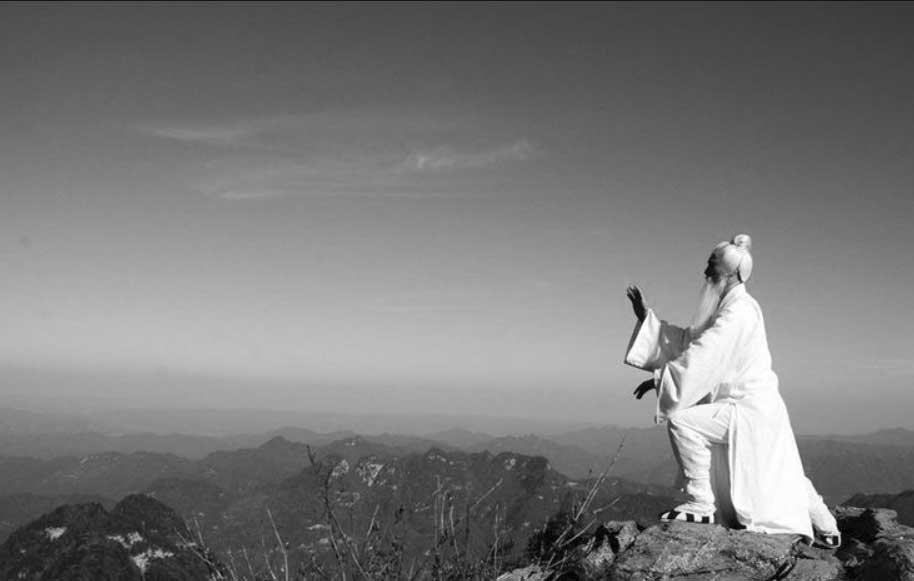
He stood up calmly, walked slowly to the window, and looked out at the quiet, hazy expanse of the old cemetery in the distance.
“You two came here because you heard the story of the old carpenter Wang at the end of town, did you not?”
His question did not really need an answer. Clearly, he knew everything.
“Yes, that’s right,” I admitted honestly. “We truly cannot explain what happened to him with conventional medical understanding. A man confirmed completely deceased by a doctor, yet he could come back to life, and then transform into a completely different person…”
Master Mo turned back, his gaze now seeming even more distant and profound.
“That is indeed a very interesting case,” he said softly. “A rather classic example to show us that the boundary between what people call ‘life’ and ‘death’ is sometimes more fragile and complex than we imagine. It is not as simple as an on-off switch. It is like a magical revolving door, where each being, depending on the weight of their karmic burden or the light of kindness they carry in their heart, will be led down a completely different path. It is like a revolving door that can lead to many different ways, depending on countless factors that ordinary people can hardly perceive.”
He gestured for us to sit on the simple wooden chairs near the tea table.
“If you two truly wish to learn more, I can share some of my own perspectives. But please remember, this is not knowledge you can find in modern science textbooks. It requires a more open mind, a listening with the heart and not just with analytical reason.”
Qing Ling and I looked at each other. The inherent skepticism of a scientist was still there within me, but at the same time, curiosity and the feeling that we were truly standing before a half-open door to a completely different world of knowledge had won. This man, Master Mo, with his simple appearance but possessing such a penetrating gaze and words full of profound implications, was clearly no ordinary person. He was not like a forensic pathologist who dissects corpses to find the cause of physical death; he seemed to be one who specialized in “dissecting” the deeper mysteries of life and death itself. We both nodded slightly, silent and ready to listen.
A Perspective Beyond the Physical Body
Master Mo calmly poured tea for us into small, jade-green ceramic cups. The pure, gentle fragrance of the tea filled the air, blending exquisitely with the scent of old paper and dried herbs characteristic of the room, creating a feeling that was both tranquil and somewhat solemn. He did not rush into an explanation, but only took a small sip of tea, his gaze seeming to drift with the thin wisp of steam rising from his cup, settling amidst deep layers of thought before condensing into calm words.
“To understand what happened to Old Man Wang,” he began, his voice still as deep and slow as before, “we perhaps need to temporarily set aside the perspective that focuses solely on the physical body, which your modern medicine is accustomed to.”
He placed his teacup on the wooden table, then looked directly at me. “Professor Wang, as I understand it, you often view the human body as a highly complex biological machine, is that correct? The heart is seen as a circulatory pump, the brain as a central processing unit controlling all activities, and other organs perform specialized functions. When an important part of that machine ceases to function, the machine is considered ‘broken’—that is, dead.”
I nodded slightly. That was indeed the very basic and common approach of modern medicine.
“But,” he continued, his eyes full of contemplation as he looked at me, “what made that ‘machine’ start in the first place? What truly created consciousness, feelings, the stream of memories, and the unique personality traits—all those invisible things that make up a real ‘person,’ and not just an assemblage of cells and organs? Your medicine might call these the complex functions of the brain, the result of countless chemical reactions and sophisticated neural impulses. But is that the whole story?”
He paused for a moment, letting the questions hang in the still air of the room.
“From the perspective of the ancients, and those today who are still on the path of understanding the true nature of a being’s life, beyond this tangible body, each of us carries a core spiritual self. It can be called by many different names, depending on the culture or school of thought. The most common and easily visualized term is probably the soul. Some who go deeper into the path of cultivation might call it the Primordial Spirit, referring to the true self, the most original part of a being. Sometimes people use the term ‘consciousness’ to describe its aspect of awareness and perception. Though the names may differ, they all refer to the invisible, subtle part that is not matter in the conventional sense, and cannot be weighed or measured by your scientific instruments. Yet it is the very core of life, the place that truly holds each person’s unique self, past memories, latent wisdom, and the deep imprints from very distant lifetimes.”
“Soul? Primordial Spirit?” Qing Ling softly repeated the words, her eyes lighting up with clear curiosity and interest. “I have also come across these concepts in books and cultural documents.”
Master Mo nodded gently. “That’s right. Although the term ‘soul’ in folklore has sometimes been cloaked by people in too many layers of superstition. Try to imagine it this way: our physical body is like a tangible horse-drawn carriage, and that soul (or you could call it the Primordial Spirit, or consciousness) is the invisible driver controlling the carriage. When the carriage becomes worn out, dilapidated, or has to stop for some reason, that driver can still continue to exist, waiting for a suitable opportunity to set out on new journeys, with other carriages.”
I tried to visualize what he was saying. The idea was not entirely foreign to me; it existed in many major religions and ancient philosophical schools around the world. But hearing it presented so calmly and coherently today by a man with such a profound and erudite appearance, it carried a very different weight, a different kind of persuasiveness.
“So, death… from this perspective, what is it, Master?” I asked.
“The death of the physical body,” he replied, his voice still even, “is the moment the soul has completely detached from that body. The connection between the ‘driver’ and the ‘carriage’ has been permanently severed. At that point, the physical body will begin the process of decomposition according to the laws of nature. But the soul does not ‘die’ in that sense. It will carry with it everything it has accumulated during the process of ‘driving the carriage’—and from even more ancient journeys—to enter another state of existence, to begin another journey.”
He looked at both of us intently and then continued, “And one of the most important things that every soul carries with it is karmic force.”
“Karmic force (Karma)?” I frowned slightly. I had heard this concept a few times, and it was often associated with Buddhist teachings.
“That’s right. Karmic force, in its simplest sense, is the invisible flow of the law of cause and effect, where every thought, every word, every action of ours in this life—and even in past lives—is quietly weaving the threads of fate that our mortal eyes cannot see. Kind and good actions create good karma (also called virtuous karma or blessings), while evil, wrongful actions create bad karma (or karmic debt). This karmic force never just disappears; it accumulates, attaches itself to each person’s soul, and largely determines their destiny, life circumstances, and what they will encounter in the future, even after they have left this current body.”
He explained with great clarity, showing no sign of proselytizing or imposing any belief on us.
“It is like an invisible river; every action, every thought of ours is like a drop of water added to it. That river flows on, carrying both the sweetness of good deeds and the bitterness of evil, and sooner or later, we will have to taste the very water we have contributed.”
Here, he paused for a moment before returning to the story of the old carpenter Wang.
“The case of the carpenter Wang that you heard about is indeed very special. When he suffered the sudden heart attack and was subsequently confirmed dead by the clinic’s doctor, it is very likely that his original soul, carrying all the karma of a lifetime as a carpenter, had indeed left the body according to the normal process of life and death.”
“Then why was he able to ‘come back to life’ afterward?” Qing Ling couldn’t help but ask immediately.
“This is the complex and rare point of the matter,” Master Mo said, his voice lowering slightly. “There are extremely rare cases where a body has just become ‘empty’ because the soul has departed, but the body itself has not yet begun to decompose. And at that very moment, under a highly sophisticated and complex convergence of fated factors, of time, space, and the invisible flows of karmic force, another soul—perhaps because of some unpaid karmic debt from a past life, or because of an ancient vow or mission—finds its way and takes over the newly vacated body.”
I was almost stunned. “You mean… the phenomenon that people in folklore call ‘a soul returning in another’s body’?”
“That is the folk term,” he nodded in confirmation. “But its deeper nature is likely still closely related to karmic force. It is very possible that this new soul is carrying a great karmic debt that needs to be repaid right here, or perhaps they have a special mission that was unfulfilled in a previous life. ‘Borrowing’ a body that has just been abandoned by its former owner is a possibility, though it is extremely rare and requires many complex fated factors to converge at once.”
“Could that explain why Old Man Wang seemed to have become a completely different person after coming back to life?” I asked, beginning to see a glimmer of logic in this seemingly irrational series of events.
“It is entirely possible,” Master Mo nodded. “The new soul, upon entering, would bring with it all of its own memories, knowledge, personality traits, and karma. It has no memory of the carpenter Wang’s former life, so its failure to recognize his children and grandchildren is understandable. It might also carry knowledge or special abilities from some distant past life—for example, knowing how to read and write classical Chinese, or being able to compose poems about the Tao of cultivation. It might also possess certain special abilities brought about by its karma or cultivation from previous lives, such as being able to sense things that are about to happen or see the hidden illnesses within others’ bodies.”
He sighed softly. “However, this ‘body borrowing’ is often never perfect. The connection between the new soul and the old body may not be entirely compatible, which can lead to states of daze, moments of lucidity and confusion, or other strange behaviors that are difficult for outsiders to understand. And more importantly, this soul will still be governed by all the karma it carries, as well as any residual karma related to the body itself.”
Master Mo’s explanation seemed to open a completely different door for me to re-examine the whole event. It did not deny the biological signs of death I was familiar with, but it added a whole deeper layer of meaning, another dimension of existence—that of the soul and karmic force. This explanation, though it seemed incredible, could explain the highly irrational points in the story of Old Man Wang that our modern medicine was completely at a loss to address: the miraculous “revival” and the complete change in personality, knowledge, and special abilities afterward.
Although the inherent rationalism of a scientist in me was still full of questions and doubts about the authenticity of these things, about what concrete evidence could be verified, I could not deny that this explanation seemed to touch upon aspects of the event that our modern medicine could not explain.
I glanced at Qing Ling. She was listening intently, her eyes wide, fixed on Master Mo. With her background in Eastern culture and philosophy, I guessed that these concepts of soul and karmic force were probably not too foreign to her, though this might be the first time she had heard them presented so vividly and connected to a specific case.
The room fell silent again, with only the soft simmering of the teapot and the light breathing of the three of us. Master Mo’s words still echoed in my mind, not as a complete explanation, but like the first sketches of an immense painting, a worldview I had never imagined before.
Between Skepticism and Enlightenment
Stepping out of Master Mo’s wooden house, I felt as if I had just returned from a very different world. The air outside, though still the familiar tranquility of the edge of Qingxi town, now seemed to cloak everything in a thin, invisible mist—something heavy that I could not name. The initial curiosity, even a touch of excitement, that we felt upon arriving here seemed to have completely vanished, replaced by an enveloping silence, so dense and indescribable, between Qing Ling and me. We walked side by side down the small, uneven stone alley, the crunch of gravel under our shoes sounding so distinct, as if it were the only sound left in an inner world that had just been completely upended.
I said nothing, and Qing Ling was also silent. We both needed our own space, needed more time to slowly digest everything we had just heard and felt in that small room filled with the scent of old paper and herbs. My mind was like an old documentary film, constantly rewinding and replaying Master Mo’s words and images, and each time the film replayed, it seemed to etch the nagging questions even deeper into my consciousness. Soul? Karmic force? A soul returning in another’s body? All these concepts, which for me had previously existed only in fantasy novels or in studies of folk beliefs, were now presented by a man with sharp eyes and an incredibly calm demeanor as self-evident truths, as invisible laws operating in parallel with the tangible, physical world I had always known.
Absurd! A stubborn, rational part of me—the part honed by years of rigorous scientific research—was still screaming in protest, trying to erect its final ramparts against the silent but powerful wave of doubt invading my consciousness. Where was the concrete evidence? Where was the verifiable data? How could I accept such vague, non-material things? Death, from what I had learned and witnessed, was a clear biological phenomenon, an irreversible cessation of basic life functions. I had witnessed it hundreds of times in my career, had signed countless death certificates, had had to explain it to patients’ relatives using specific and clear medical terms. That was the foundation of knowledge, a truth proven by generations of science.
But then, the image of the old carpenter Wang, with his strange changes after “coming back to life,” reappeared vividly in my mind, an undeniable challenge. A body that had been confirmed clinically dead by a professional doctor for nearly a day. A carpenter who had worked with his hands his whole life, who could barely read and write, suddenly “woke up” and transformed into a completely different person—with profound ancient knowledge, with the ability to see things that ordinary people could not. Brain damage? Prolonged cerebral hypoxia? All the familiar medical explanations I could think of now sounded feeble and weak, like a garment that was too tight being forced onto an oversized body. They could not fully explain the sudden emergence of that new knowledge and those new abilities.
And then there was Master Mo himself… He was nothing like the fortune-tellers or shaman priests I had always imagined. There was not a trace of contrived mystery, no enchanting, hollow, or obscure rhetoric. Only an extraordinary calmness, a penetrating insight in his eyes, and a frighteningly coherent logic in the way he connected these seemingly fantastical concepts to explain an anomalous phenomenon. He spoke of the soul, of karmic force, as naturally as if he were speaking of the flow of blood in the veins or the transmission of nerve impulses in the brain. It was that very placidity, that certainty without need for exaggeration or embellishment, that made me all the more bewildered and confused.
I instinctively raised a hand to rub my temples, feeling as if the very foundation of my thinking, which I had always prided myself on as scientific and objective, was actually being violently shaken. Could the worldview I had always considered complete and correct actually be too narrow, too one-sided? Was it that because our current research tools could only measure the tangible, physical world, we had hastily denied the existence of other layers of reality, of invisible laws that were quietly governing human destiny in ways we could not understand? The encounter with the hermit on the mountaintop a few days ago had planted the first seeds of doubt in my heart, and now, Master Mo seemed to have poured a powerful stream of water on them, causing those seeds to stir and sprout. I felt as if I were standing before a vast, mysterious ocean of knowledge, whose existence I had previously known only through a small, stagnant puddle.
I glanced over at Qing Ling. She was still walking slowly beside me, her eyes fixed on the ancient stones under her feet, but I knew for sure her mind was not there. Her delicate brows were slightly furrowed, her lips occasionally pressed together as if struggling with a complex train of thought. With her extensive knowledge of Eastern culture, would she find it easier to accept these things than I? Or was it precisely because of that knowledge that she found this matter even more complex and difficult to explain? I remembered her expression back in Master Mo’s house—first curiosity, then a touch of astonishment, and finally, a deep pensiveness. She wasn’t just listening with her ears; she seemed to be mobilizing all her knowledge and her most subtle perceptions to confront the concepts she had just heard.
“What are you thinking about, Ming?”
Qing Ling’s soft voice finally broke the long silence between us. It came out a bit hesitantly, as if she herself were not sure what kind of answer she wanted to hear.
I stopped and turned to look at her. The morning sun had begun to filter through the leaves, creating dancing patterns of light on her elegant face, but it seemed unable to dispel the pensive look in her eyes. I took a deep breath, trying to find words to describe the chaos in my heart.
“I… I honestly don’t know, Ling,” I replied truthfully, my voice a little weary. “It’s as if… as if the entire map of the world, whose accuracy I once had absolute faith in, has suddenly turned into a blank sheet of paper, and I am standing in completely unfamiliar lands, on horizons I had never dared to dream of before. There are new lands, new paths emerging that the old map never recorded.”
Qing Ling nodded gently, her eyes full of sympathy, but she couldn’t hide her own confusion. “I understand,” she said softly. “I have a similar feeling. The concepts of the soul, of karmic retribution… I’ve read about them many times in books before, and usually just saw them as part of folk beliefs or ancient philosophical schools. But hearing Master Mo explain them so thoroughly, and connecting them directly to the story of Old Man Wang… they no longer seem like empty theories. They become vivid, concrete, and… strangely frightening.” She paused for a moment, then continued, almost as if whispering to herself, “It makes me feel like I’ve just stepped through a mirror. Everything around me looks the same, but its essence seems to have changed a great deal.”
We fell silent again. But this time, the air between us no longer felt so heavy with separate doubts. There was a silent connection, as if we were both looking in the same direction, facing something immense that had just descended upon us.
As we neared the end of the alley, where the path widened and the familiar sounds of daily life in the town grew louder, my eyes happened to catch a small image. On an old, moss-covered stone wall, a slender but resilient wildflower was struggling to push its way through a cold, damp crack to reach a faint ray of sunlight—a silent testament to an undying life force, always striving to overcome adversity. The delicate violet of its tiny petals stood out against the gray stone, a powerful expression of life against all odds. I found myself staring at it for a long moment, a vague thought arising within me. This life… is it really just the result of complex chemical reactions and cell division? Or is it also some form of will, some invisible energy, always seeking to manifest, always seeking to exist, even in the most impossible circumstances, in ways we could never have expected?
I did not voice this sudden thought to Qing Ling, but I had a feeling that the image of that small wildflower, along with Master Mo’s profound words, would haunt my mind for a long time to come.
As the familiar sounds of the small town of Qingxi grew clearer, I knew we had returned to the everyday world. But something inside me, and perhaps inside Qing Ling as well, was no longer entirely the same. The inherent skepticism of a scientist was still there, strong and rational. But alongside it, a very narrow crack seemed to have truly opened, leading to a land of possibilities I had never dared to consider before. The questions about the nature of existence now seemed larger and deeper than ever.
This article is an excerpt from the book “RED DUST, GOLDEN LIGHT” – which tells the story of Professor Wang Ming and his wife’s journey to uncover spiritual mysteries and many hidden truths in China.
If you wish to experience the full journey of thought and the unpublished insights of the work, please click the button below to own the complete book.
To explore more works from THE LIVES MEDIA, visit our book collection.