DAY ONE
Mr. Liu Siyuan:
(Nods slightly, a faint, fleeting smile on his face. His voice is low and a little hesitant at first.)
Hello, Ms. Bell. Thank you for coming. This place isn’t the easiest to find, is it?
Sophia Bell:
Yes, good morning, Mr. Liu!
It’s a bit far from the city center, but for a journalist like me, finding a location isn’t a major issue…
I’m very grateful that you agreed to this interview… Oh, but I don’t want to call it an “interview,” that sounds too rigid. I’d rather call this a sharing of sentiments between you and the readers of THE LIVES MEDIA, and I am simply a small bridge…
Mr. Liu Siyuan:
(He listens intently, his eyes studying Sophia with a hint of initial scrutiny, which then softens as she speaks. He nods again, a thoughtful expression crossing his face.)
“A sharing of sentiments…” (He repeats the phrase softly, as if absorbing its meaning). Yes, Ms. Bell, that phrasing… I’m more at ease with it. “Interview” sounds as if I’m a subject to be examined, or an event to be dissected. But “sharing”… it implies willingness, sincerity.
(He takes a small sip of tea, his gaze drifting out the window for a moment before returning to Sophia.)
THE LIVES MEDIA… Yes, I’m familiar with your publication. They have done many commendable things, publishing information that many others don’t dare to, or don’t want to, speak of. Perhaps that’s why I… I found the courage to be here today.
(A brief silence falls as he seems to gather his scattered thoughts.)
So, Ms. Bell, where would you like to begin this “sharing of sentiments”? My life has had many turns, and some things are perhaps… not easy to speak of. But I will try. For An Ran… and for others like her.
Sophia Bell:
Yes, as I mentioned in the email I sent, we are an independent media organization with a network of journalists in many countries, targeting a global readership… We are dedicated to universal values such as truth, sincerity, and evoking the inherent goodness in every person…
That is why, when we were introduced to your story, we felt you could be a representative figure for the noble values THE LIVES MEDIA wishes to convey to its readers…
Well then, shall we officially begin?
I’ll start with a gentle question: After about a year in the US, how do you find the “atmosphere” here? Is it like a noisy, bustling marketplace where people scramble over the filthy dollars of “goddamn capitalists”?
Mr. Liu Siyuan:
(A faint, distant smile touches his lips as he hears Sophia’s question. He looks into his teacup for a moment before looking up, his gaze deep.)
“A bustling marketplace… the filthy dollars of goddamn capitalists?” (He repeats the last words, his tone not one of mockery, but of contemplation). Those are words… that I once heard, and was even indoctrinated with, in a different environment, Ms. Bell. When one is only allowed to see the world through a single lens, the reflection can only have that one color.
(He pauses to take a sip of tea.)
One year here… it’s not a very long time, but it’s been long enough for me to feel it. The “atmosphere” you speak of… it’s far more complex. It’s true, there’s a hustle, there’s competition, there are people preoccupied with material things, with what they call the “American Dream.” Sometimes, standing amid the bustling crowds in Manhattan, I too feel overwhelmed, I feel the powerful pull of that machine.
But the “bustle” you speak of, if it exists, is very different. It is not the scramble within a narrow cage, where people must trample over each other to climb up out of fear, because there is no other way. Here, I sense a… freedom. Freedom to pursue, freedom to fail, and more importantly, freedom to speak out, freedom to believe in what you hold to be right, even if it goes against the majority.
(His voice lowers slightly, a trace of sadness passing over him.)
One year here, what I’ve felt most keenly is not the “filthy dollars,” but the value of breathing freely. Something that, in my homeland, I and so many others, especially my daughter… An Ran… did not have.
(He looks directly at Sophia.)
Of course, no place is a paradise. Every society has its dark side, its injustices, its imperfections. But at least here, one can speak openly about those dark sides, can try to fix them, without fear of disappearing without a trace the next day.
It’s not merely a “marketplace,” Ms. Bell. It’s a much vaster space, where every person, good or bad, has the opportunity to express themselves with relative completeness. And that is something I am learning to get used to, and to cherish.
Sophia Bell:
Yes, I understand. American-style Western capitalism isn’t a perfect model; not everything is as radiant as the stars… it certainly has its own share of problems.
But let’s not focus on American society today. We are here to hear you share the stories, the fates of the people on the other side of the Pacific…
Mr. Liu Siyuan:
(He nods gently, his gaze dropping to the teacup on the table for a moment. He places his hands on his thighs, a gesture of drawing himself in, as if bracing for a more difficult journey.)
You’re right, Sophia. We are not here to discuss the pros and cons of American society. In any case, that is not the place where I have spent nearly my entire life.
(He looks up, his gaze now heavier as it meets Sophia’s. A soft, almost inaudible sigh escapes him.)
“Across the Pacific…” (He repeats, his voice turning distinctly somber). That place holds so much… the joy, hope, and ideals of youth… and then the shattered dreams, the pain, and the irreplaceable loss.
(He falls silent for a moment, as if searching for the right words, or perhaps trying to calm the emotions welling up inside him.)
The lives, the fates… as you said. That is what I want to share. Even if my account may be fragmented, and there may be moments when emotion makes it difficult for me to continue. But I will try, because I believe the truth needs to be known. Especially the truth about the people… the good, innocent people who have endured so much injustice simply because of their beliefs.
(He looks directly at Sophia, a sense of resolve appearing in his weary eyes.)
So, where would you like me to begin that long, sad story? With the days when I was a young man embracing my own version of the “Chinese dream,” or with the events that completely changed my life and my understanding of it?
Sophia Bell:
Yes, to help our readers follow the story, could you first briefly tell us about your background? About where you were born, your work, and why you came to the US?
Mr. Liu Siyuan:
(He nods gently, taking a deep breath as if to compose himself and organize his memories. He gazes out the window for a moment, then turns back, his eyes distant.)
Yes, Ms. Bell. So that everyone can better understand the path I have walked… I will share a brief summary.
(He hesitates for a moment, as if choosing his words.)
I was born in a small village in a coastal province in the East. My family was not well-off, but my parents placed great importance on education. From a young age, I showed an aptitude for my studies, always at the top of my school. Perhaps because of that, I was noticed early on by the local authorities, seen as a “sapling” to be nurtured. In those days, that was a great honor, not just for me but for my entire family.
My academic path was quite smooth. I was admitted to one of the country’s top universities in the capital. I studied subjects that I then believed could contribute to building a strong nation: political economy and philosophy. After graduating with excellent results, I was invited to stay on as a lecturer. Those were years I spent engrossed in research and writing, eventually earning my doctorate and then the title of professor.
(He pauses, a contemplative look on his face.)
When I was around thirty-five or thirty-six, my essays on China’s future development path, on a model that combined what I considered the best of different systems, made a certain impact in academic circles and even among some high-level leaders. That was likely the turning point that took me from the lecture hall into the political arena. I was invited to work at a central-level policy research agency, and then, as part of my “practical training,” I was transferred to a major city, a dynamic economic hub in the South. There, I worked hard and made certain advancements, reaching a position equivalent to a deputy mayor, in charge of planning and development.
(His voice drops, a deep sadness flashing in his eyes.)
As for why I came to the US… (He takes a very deep breath). That is a long story, the most painful and tragic turn of my life, Ms. Bell. It is tied to my only daughter, Liu An Ran… and to an event that caused my entire worldview, my beliefs, and my life to completely collapse. To put it as briefly as possible for now, I left for my own safety and, more importantly, so that I could preserve the last shred of my dignity and have a chance to speak the truth about what happened to my daughter, my family, and countless others… I had to leave my homeland. And fortunately, I received help from the U.S. Consulate in Guangzhou to be able to get here.
(He falls silent, looking down at his clasped hands on his lap. The atmosphere in the room seems to grow heavier.)
Those are the main points, Ms. Bell. The rest… will likely take much more time to tell.
Sophia Bell:
Yes, that is a picture of many colors… the ideals of a young man, the maturity of a thinker and a politician, the pain over family, over a daughter…
I apologize if I’ve brought up unhappy memories… I have heard about your daughter’s story, a sad story, a situation that, if it were me, I don’t know how I would face such a tragic circumstance… I deeply empathize with you, and with your daughter…
We are willing to listen to you share the specifics, if it helps you feel your heart is somewhat lighter…
But first, perhaps you could share about lighter topics, like the ideals of your youth… or the achievements you are most proud of?
Mr. Liu Siyuan:
(Hearing Sophia’s words, his eyes blink softly. A fleeting warmth crosses his weathered face. He nods slowly.)
Thank you, Ms. Bell… for your understanding. The matter of An Ran… it is indeed a wound too deep. There are times I don’t know how I got through it. Perhaps… it was thanks to a little remaining faith, a little hope that my voice, however small, could contribute in some way…
(He pauses for a moment, taking a gentle breath, as if trying to push back the heavy emotions.)
You are right. Perhaps we should start with things that are… lighter. So I can slowly piece together the fragments of memory.
(He smiles faintly, a sad but sincere smile. His gaze drifts into the distance, as if searching for a faraway past.)
The ideals of my youth… (He repeats, his voice holding a hint of nostalgia). In those days, like so many other young people, I was full of passion. Born and raised in a period when the country was still facing many difficulties after historical upheavals, we were taught that we must dedicate ourselves to building a new China, a strong and prosperous China that the world would respect.
I believed in that fervently. When I was in university, and later when I became a researcher and a lecturer, that flame within me burned brightly. I was passionate about studying economics, politics, philosophy… not just as abstract theories, but I always tried to find a practical path, a model best suited to lift the country out of poverty and backwardness, to rise and stand shoulder-to-shoulder with the great powers.
(He looks at Sophia, a flicker of pride in his eyes.)
The achievements I’m most proud of… Perhaps it would be the books, the essays into which I poured my heart and soul. In them, I sketched out a modern China, not only strong economically but also advanced in science and technology, a society with order, where people lived prosperous lives. I envisioned a nation that could learn the good things from the West, from other developed countries, yet still retain its own identity. I once dreamed of my own “Chinese dream,” where talent was valued, where the rule of law was supreme, and where the country would truly become a beacon.
(His smile fades, replaced by a somber expression.)
In those days, I believed that as long as we had the right path and dedicated people, all difficulties could be overcome. I poured all my intellectual energy into those ideas, into those writings. And when they were recognized by the elite, by some leaders, I thought… I was on the right track, that I could truly contribute my small part to that great cause.
(He falls silent for a moment, looking down at his teacup, which has now grown somewhat cold.)
Those were the days… when I felt my life was most meaningful, before the wheels of politics, and later, the brutal events, swept it all away.
Sophia Bell:
What you’ve shared about the “Chinese Dream,” it sounds to me like it’s very similar to the concept of the “Chinese Dream” in the political ideology of China’s current leadership?
Mr. Liu Siyuan:
(Hearing Sophia’s question, he raises his eyebrows slightly, a complex, thoughtful expression on his face. He is silent for a moment, appearing to weigh his words carefully.)
Ms. Bell, you have a very keen observation. “The Chinese Dream”… (He repeats, his voice contemplative). It’s true, in terms of wording, there is an undeniable similarity. And this, I must admit, is also one of the things that has troubled me greatly in later years.
(He pauses, his gaze fixed on a point in the distance, as if looking through the wall to a faraway place.)
Back then, when I and many other intellectuals were pondering the country’s future, that phrase, or similar ideas, was perhaps part of the general current of thought. Everyone wished for their country to be strong, for their nation to be glorious. My “dream” at the time, as I’ve shared, was of a comprehensively developed China, a civilized nation with the rule of law, with harmony between tradition and modernity, where people could maximize their potential in a relatively free and creative environment. I thought about learning from the best of the world, both East and West, to build a unique and superior model.
(He shakes his head slightly, a sad smile flashing across his face.)
But the “dream” I envisioned… it wasn’t just about impressive economic growth figures, skyscrapers, or advanced weaponry. It had to be built on a foundation of respect for human beings, of a genuine rule of law, where the voices of the people were heard, where moral values and conscience were not trampled upon. It was an all-encompassing dream, not just for one group, but for the entire nation.
As for the “Chinese Dream” that we see widely promoted later… (He hesitates, choosing his words carefully). I’m afraid it has been cloaked in a different guise, or perhaps, it has been interpreted and implemented in a very different way from what I and many of my contemporaries had once envisioned.
(His voice carries a hint of bitterness.)
Perhaps, people borrowed the beautiful linguistic veneer, but the substance inside… was something else, something that placed the interests of one party, of one group, above all else, at any cost. A “dream” for which, to achieve it, people were willing to sacrifice the freedom of the populace, willing to extinguish dissenting voices, willing to trample on core human values.
Sometimes I ask myself if my initial ideas, however pure, may have inadvertently contributed to creating an illusion, a slogan, that was then exploited. That is a question… for which I will probably never have a complete answer.
(He looks at Sophia, his eyes filled with a deep sadness.)
The “dream” I once pursued has been shattered, or at least, it has been distorted to the point that I no longer recognize it, Ms. Bell. And that shattering, it began when I realized just how ruthless people could be in order to build that so-called “strength.”
Sophia Bell:
Yes, I’m beginning to understand that, throughout your youth and your political career, you were always moving towards what was good for the country in general and for each family, each individual, in particular.
Could you elaborate on the core points of your “dream” system back then? Beyond major points like emphasizing private economic development, science and technology, or a society under the rule of law, did you touch upon other aspects like freedom of speech, freedom of religion or belief, degeneration and corruption, or whether the model you envisioned was based on any other in the world, such as the US, Singapore, Japan, or the Nordic countries, for example?
Mr. Liu Siyuan:
(He listens very intently, his eyes fixed on Sophia. When she finishes, he nods slowly, a sad smile appearing and then vanishing.)
Yes, Ms. Bell, you could say that. Throughout my youth, and even after entering the political arena, deep down I always believed that I had to do something useful for the country, for the people. Although, looking back, there were things I misunderstood, and paths I chose that did not lead to the destination I had hoped for.
(He takes a deep breath, collecting his thoughts.)
When you ask about the core points of my “dream” back then… beyond what has been said about the economy, science and technology, and the rule of law, there were indeed other aspects I contemplated, though perhaps my ideas were not yet fully mature or contained flawed perceptions.
Regarding freedom of speech, to be honest, I viewed it through a somewhat limited lens at the time. I envisioned a space where intellectuals and experts could contribute constructive opinions on national policies, where academic debates were encouraged to find the truth. But perhaps, I didn’t fully envision or didn’t dare to think of absolute freedom of speech for every citizen, where each person could express their political views without fear, even if they went against state policy. I was still preoccupied with “order” and “stability” as prerequisites for development.
Regarding freedom of religion or belief… (He hesitates, a look of torment on his face). This is a point where, looking back, I see my understanding was very limited, even mistaken. I was heavily influenced by dialectical materialism, trained in a system that regarded religion, belief, and even cultivation practices like Falun Gong later on, as things of the past, as “superstition,” and even as obstacles to scientific progress and rational thought. In my “dream” back then, there wasn’t much room for these things. I once naively thought that as society developed and material life became abundant, these “superstitions” would naturally disappear. A grave mistake, Ms. Bell.
Regarding degeneration and corruption, I recognized it as a plague, a cancer that could destroy all nation-building efforts. I believed that a strong rule of law, a streamlined and incorruptible state apparatus with strict sanctions, could solve this problem. But perhaps I focused too much on building the “structure” without sufficiently seeing the rot from within the “human system,” and the terrifying power of interest groups and the absence of fundamental moral values.
As for a specific model, just as you mentioned, I did study and was influenced by many countries.
Singapore was a model I paid close attention to: a centralized, efficient political system, an administration considered relatively clean, and an astonishing pace of economic development despite limited resources. I admired the decisiveness and long-term vision of its leadership.
From the United States, I learned about the dynamism of the market economy, its advanced science and technology, and the spirit of constant innovation.
I also looked to Japan for its discipline, work ethic, and miraculous post-war recovery, as well as its combination of tradition and modernity.
The Nordic countries with their welfare state models and relatively high social equality were also points I reflected on, though I found it difficult to apply them wholesale to China’s conditions.
My goal was to distill what I considered the essence from these models, combine it with China’s specific characteristics, to create a unique path. A kind of “strongly-guided state capitalism” or a “socialist market economy with Chinese characteristics” operated by an effective state under the rule of law, where the Communist Party would still maintain its leading role but must operate within a legal framework and be more attentive to the voices of experts and the people.
(He sighs softly.)
Looking back, my “dream” at the time, despite having aspects I still consider progressive, was still very flawed and somewhat naive. I focused too much on “efficiency,” on “strength,” on “order” through a certain lens, without sufficiently realizing the importance of fundamental human freedoms, especially freedom of thought and belief. And perhaps, that was one of the biggest shortcomings, a “blind spot” that prevented me from seeing the dangers lurking within the very system I once believed in and served.
Sophia Bell:
Yes, I can feel your passion and ambition for your country… Regarding the points you raised in your “dream,” it seems China has succeeded in many of them…? For example, in aerospace science, biotechnology, new energy… and especially, one specific example that I personally find extremely impressive for China’s economic and scientific development is its infrastructure and transportation system, with the brightest spot being the high-speed rail system that spreads across the entire country, connecting major cities!
Mr. Liu Siyuan:
(He listens to Sophia, a faint, somewhat bitter smile on his lips. He nods slightly, his gaze distant, as if comparing what Sophia said with his own experiences.)
You are not wrong, Sophia. Seen from the outside, and based on the numbers, the glamorous images that the state media relentlessly paints, it is true that China has achieved “accomplishments” that have astonished the world. Aerospace, biotechnology, new energy… and especially the high-speed rail system you mentioned. I too was once very proud as those plans gradually took shape; many of them were things that my generation, the policymakers, had once nurtured, once dreamed of.
(He pauses for a moment, his voice lowering.)
When the first high-speed trains sped along modern viaducts, connecting different regions, I used to imagine that those trains carried not just passengers, but also prosperity, connection, and hope. I thought that this was the concrete manifestation of a “dream” gradually becoming reality.
(A soft sigh escapes him.)
But then, when I had the chance to look deeper, or rather, when undeniable truths were laid bare before my eyes, I began to ask myself: What is the price paid for those “successes”?
To get those high-speed rail lines, how much land was taken from farmers for a paltry price, or even forcibly seized? How many homes were razed, how many lives were upended without adequate compensation? How many enormous kickbacks lined the pockets of corrupt officials during the implementation of those billion-dollar projects? How many dissenting voices, how many public grievances were brutally silenced to ensure “progress” and “image”?
(His voice catches slightly, but he quickly regains his composure.)
It’s just like many other “accomplishments” the world marvels at. Behind the modern factories, the giant industrial parks, lies a ruined environment, the health of the people threatened. Behind the impressive export figures are harsh labor conditions, the sweat and tears of millions of workers.
Back then, I, like many others, was perhaps too intoxicated with macro-level goals, with impressive numbers, and forgot that behind every project, every number, lies the fate of specific human beings, with their joys, sorrows, and their legitimate rights. We were taught, and perhaps we lulled ourselves into believing, that the sacrifice of some individuals was necessary for the greater good of the collective, of the nation.
(He looks directly at Sophia, his eyes filled with torment.)
The “bright spots” you speak of, it’s true, they exist. But they are also like brilliant spotlights on a grand stage, hiding the dark corners behind it, where the extras are suffering in silence. And what’s sadder is that, sometimes, those very “bright spots” are used as tools to legitimize, to justify that darkness.
I once believed that economic, scientific, and technological development would automatically bring about a better society. But now, I understand that without a moral foundation, without genuine respect for the rule of law, without listening to and protecting human rights, then all material “success,” no matter how glittering, is merely a glittering facade, easily shattered and incapable of bringing true happiness to the people.
Sophia Bell:
Yes, to this day, China has indeed made a strong impression on the world when looking at the statistics! But along with that, its product quality has also made the world wary, even fearful enough to stay away… In your “dream” back then, did you address this aspect?
If so, what did you think should be done to improve quality? In terms of processes? Applying high technology? Upgrading skills?… Do you think “ethics” has anything to do with product quality?
Mr. Liu Siyuan:
(Listening to Sophia’s comments on product quality, he nods gently, a look of concern on his face. He clasps his hands together on the table.)
You are very right, Sophia. The issue of “Made in China” product quality is a sad reality, a source of anguish not only for international consumers but also for conscientious Chinese people themselves. It’s like a stain that is hard to wash away, running counter to the national pride we are constantly reminded of.
(He is silent for a moment, as if reminiscing.)
In my “dream” back then, when I envisioned a China that was economically and technologically powerful, I also thought that the country must create products of quality, with a reputable standing in the international market. I did not envision a great power that relied solely on cheap labor and low-quality products to compete. I thought about transitioning from “Made in China” to “Created in China,” and even further, to “Trusted in China.”
To improve quality, I also envisioned the solutions you just mentioned:
Regarding processes: There must certainly be strict national standards, approaching international standards, and an independent, transparent system for quality supervision and inspection.
Regarding the application of high technology: I believed that investing in research and development, applying advanced technology in production, was the inevitable path to improving quality and productivity.
Regarding upgrading skills: Vocational education and training must be emphasized, so that workers not only have skills but also a sense of pride in the quality of the products they make.
(He pauses, looking directly at Sophia, his voice becoming more serious.)
But, Ms. Bell, all those technical solutions, while necessary, are merely treating the symptoms. The root of the problem, in my view, lies in a concept you just mentioned, a concept whose importance in this field I perhaps did not fully recognize at the time: and that is ethics.
(He emphasizes the word “ethics.”)
Why are there milk products tainted with melamine, contaminated food, fake medicine, toxic toys…? Is it because we lack technology, lack processes? Yes, but that is not the main reason. The main reason is the decay of business ethics, the bottomless greed of some people, who are willing to disregard the health, even the lives, of their fellow human beings for profit.
In a society where money is placed above all else, where the pursuit of profit blinds people, where good traditional moral values are downplayed, even mocked, how can one expect quality, safe products to be made sustainably?
When the legal system is not strict enough to punish deceitful businesses, when corruption is so rampant that “backdoor deals” and “bribes” to bypass inspection agencies become common, how can processes and standards be implemented seriously?
When workers are exploited, disrespected, seen only as tools of production, how can they have passion and pride to create good products?
(His voice is tinged with bitterness.)
Back then, perhaps I put too much faith in the power of “mechanisms,” “policies,” and “technology.” I failed to see or deliberately ignored the fact that without a solid moral foundation for the entire society—from the leaders, the managers, to the producers and the workers—all efforts to improve quality are like building a house on sand.
The decay of morality, in my opinion, is one of the most chronic diseases, the source of many problems that China is facing, not just in product quality. And to cure this disease, one cannot rely on administrative orders or empty slogans. It requires an awakening of conscience, a restoration of core human values.
That is something that, back then, in my “dream,” I did not fully see, or did not dare to look at directly, Ms. Bell.
Sophia Bell:
Yes, that “dream” was indeed a dream, and it quickly vanished into thin air when we “awakened”… So, could you share with our readers how you awakened? What caused you to awaken, and is it connected to your sad story?
Mr. Liu Siyuan:
(Hearing Sophia’s question, he closes his eyes for a moment. When he opens them, a deep pain is visible, yet mingled with a strange calmness. He exhales very slowly.)
“A dream… vanished into thin air when we awakened…” (He repeats, his voice low and hoarse). You are right, Sophia. Painfully right. It truly was a dream, a dream I was immersed in for far too long. And when I woke up, the reality laid bare before me was so naked and brutal that… no words can fully describe it.
(He falls silent for a moment, looking down at his own hands, his fingers trembling slightly.)
My “awakening” was not a sudden moment like flipping a light switch. It was a process, slow, painful, with small cracks at first, which gradually widened until the entire illusory castle I had built in my mind collapsed completely.
When I was still in the machine, I would occasionally see unsettling things, injustices, words that did not match actions. But at that time, I often justified it to myself, reassured myself that they were just “a few bad apples spoiling the barrel,” localized problems in a large, functioning system. I tried to believe that the grand goals we were pursuing would justify the minor flaws. Or perhaps, I was too focused on plans, on figures on paper, that I lacked the courage, the sensitivity, to look directly at the pain of flesh-and-blood human beings.
(His voice begins to tremble slightly; he clears his throat lightly.)
But the real “awakening,” the final shock that brought everything crashing down, just as you sensed… it is tied to my daughter, An Ran.
(He pauses, his eyes welling up with tears. He quickly wipes them away, then tries to keep his voice steady.)
When my daughter, an outstanding student, a pure soul, was arrested and imprisoned simply for her belief in Falun Gong, a peaceful cultivation practice for self-improvement… that’s when the cracks within me began to grow. I tried to use my connections, the little status I had left after being sidelined in political infighting, to find out, to intervene. But it was all in vain. All I received was silence, evasion, or empty promises.
I saw the coldness, the callousness of a state apparatus that was supposed to be “of the people, by the people, for the people.” I saw how lies were elaborately woven to cover up the truth. I saw old colleagues, people who once shook my hand warmly, turn their backs on me as if I were a leper.
(The pain in his voice becomes more and more apparent.)
And then… when I received the terrible news about An Ran… the news that she had been… had her organs harvested while she was still alive… (He cannot continue, his voice chokes up. He bows his head, his shoulders shaking).
(After a long moment, he looks up, his eyes red but his gaze holding a frightening determination.)
That moment, Sophia, was no longer an “awakening.” It was a complete shattering. All my ideals, all my belief in the so-called “righteousness” and “justice” of the system I had once served, turned to dust. I saw clearly its evil, inhumane, and utterly deceitful nature. It wasn’t just a few “bad apples”; the entire barrel was poisoned to the core.
The “Chinese Dream” I once cherished now appeared as a tragic farce, a painted cake decorated with the blood and tears of innocent people like my daughter.
Painful, yes, painful to the extreme. But it was in that extreme pain that I truly “awoke.” Awoke to see that I had been wrong, had been blind, had inadvertently abetted an inhuman machine. And awoke to understand that to be silent in the face of evil is to be complicit with evil.
hat is why I am sitting here today, Ms. Bell. Though it is late, I must speak the truth. For An Ran, and for the millions of other An Rans who are suffering in silence.
Sophia Bell:
Yes, before meeting you, I had also heard about your daughter’s case, and as an independent journalist, I have heard about many similar heartbreaking cases… The crime of organ harvesting targeting “political prisoners” and “prisoners of conscience” is truly painful… It demonstrates the absolute evil of a tyrannical regime…
I understand that the pain of losing a child in such a situation is indescribable… I’m sure that now that you have awakened, you must have many regrets, many things you wish you could do over…
But when you were still in office as a politician specializing in ideology, what was your stance on religion in general and Falun Gong in particular?
Mr. Liu Siyuan:
(Listening to Sophia’s words, he nods gently, his gaze distant and heavy with sorrow. When Sophia mentions “political prisoners,” “prisoners of conscience,” and the crime of organ harvesting, a look of indignation and pain flashes across his face, but he quickly suppresses it.)
Yes, Ms. Bell… “Absolute evil,” you used the right words. When that crime happens to your own dearest loved one, the truth is laid bare, more raw and horrific than any words can describe.
(He takes a deep breath, trying to keep his voice steady.)
The pain of losing An Ran… it will indeed follow me for the rest of my life. And just as you said, there are so many things I regret, so many things I wish I could do over, say over, think over… If only I had realized sooner, if only I hadn’t believed so readily in what I was taught, if only I had listened more to my daughter… Perhaps… (His voice chokes up a bit).
But the past cannot be changed. The only thing I can do now is to face it, and try to do what is right in the time I have left.
(He pauses, arranging his memories of a distant time, a time when his perception was very different.)
When you ask about my stance on religion and Falun Gong while I was in office, while I was a worker in “ideology”… to be honest, that was a period when I, like many of my colleagues, was heavily influenced by prejudice and one-sided propaganda.
Regarding religion in general, I was educated to believe, and I myself believed, that it was a product of a certain historical stage, the “opiate of the masses” as Marx said. I viewed religion as something of the past, perhaps having certain cultural and moral values, but fundamentally incompatible with a modern, scientific, materialistic society. I believed that as people’s material lives improved and their education level rose, the influence of religion would naturally decline. In the development plans and projects I helped formulate, religion was often seen as an element to be “managed” and “guided” so as not to hinder overall development, rarely as a legitimate spiritual need of human beings, or a positive resource for society.
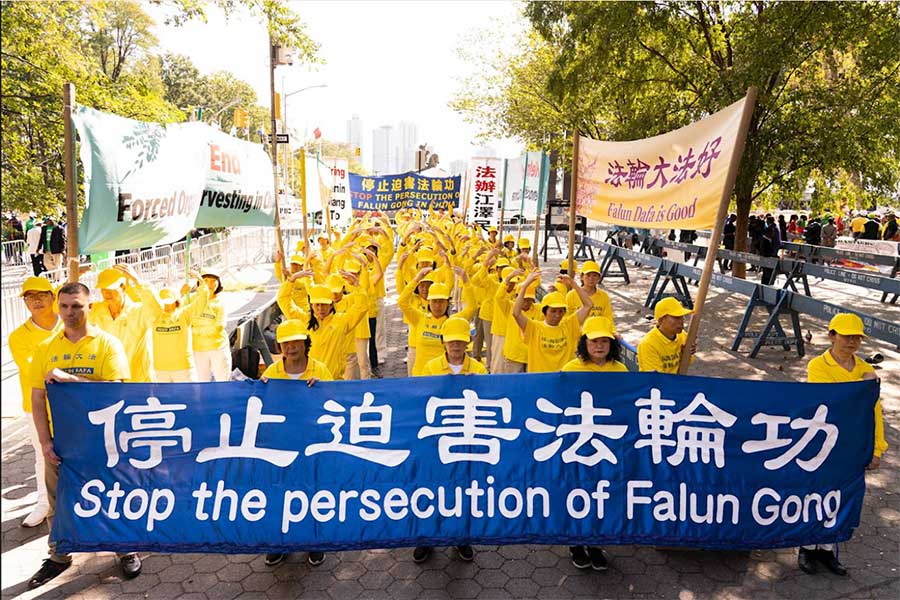
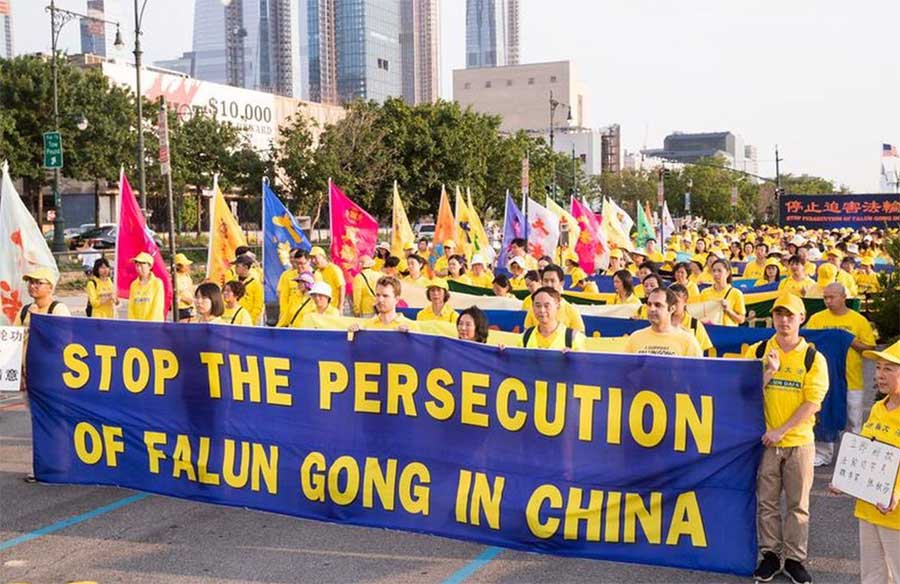
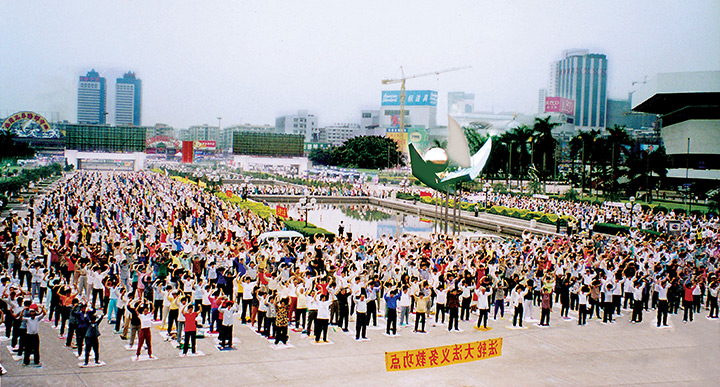
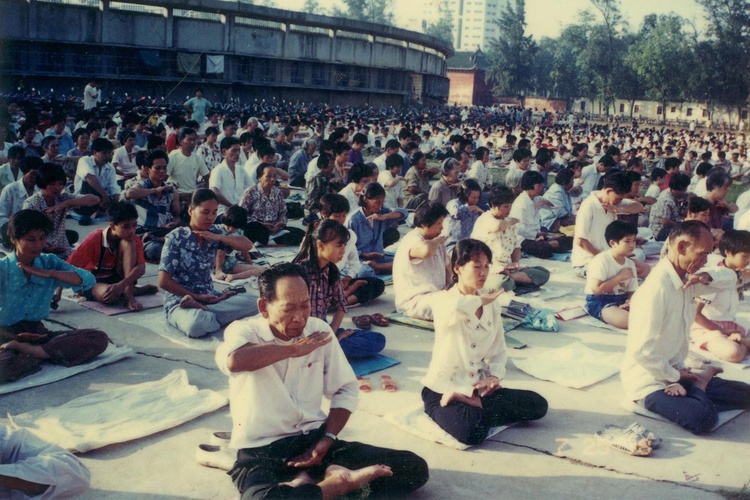
As for Falun Gong, when the persecution began in 1999… (He hesitates, a look of discomfort on his face). At that time, I was at the peak of my research career, about to enter the political arena. The information I had access to, like many others in the system, was primarily from official state media channels. The news reports, articles, and propaganda materials all portrayed Falun Gong as an “evil cult,” a reactionary political organization disguised as qigong, which endangered social stability and people’s health.
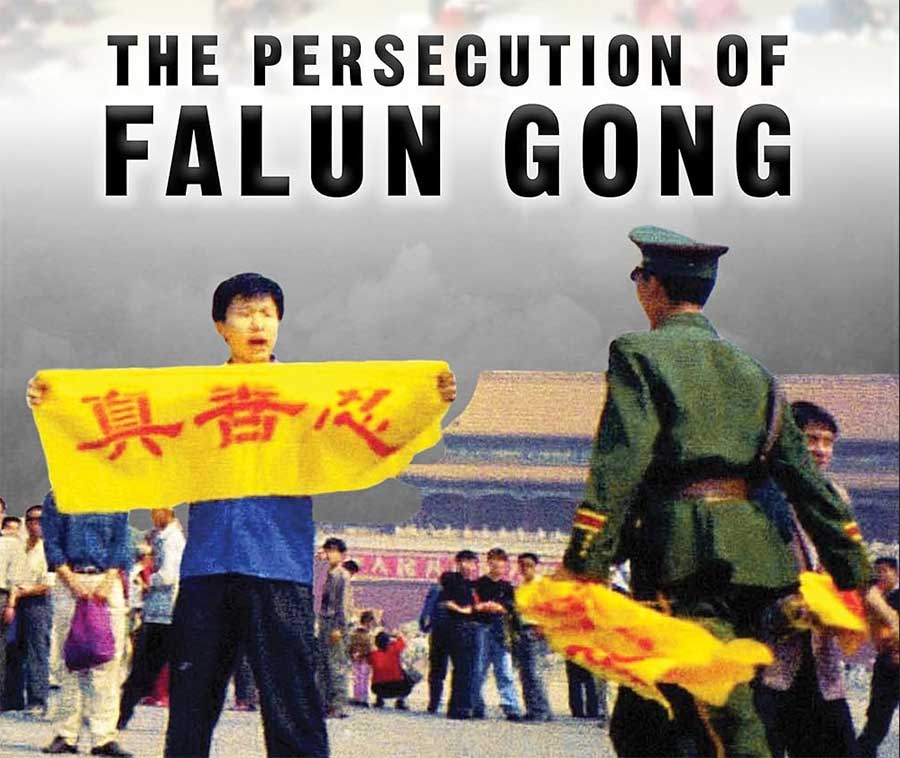
To be honest, I didn’t investigate it deeply at the time. I was busy with my own grand projects and plans. I passively accepted that information as an unverified truth. I also had the preconceived bias of a materialist, viewing those who pursued cultivation and believed in Gods and Buddhas as “superstitious” and “backward.” I thought to myself, if Falun Gong were truly good, why would the government crack down on it so harshly? There must be a reason.
(His voice carries a hint of remorse.)
When I was a provincial-level official, despite having a certain status, the information I received about the persecution was still one-sided. They were directives from the central government demanding to “strengthen the struggle,” “resolutely deal with it,” or reports from subordinates about “achievements” in “transforming” Falun Gong practitioners. I never had the opportunity, or perhaps I never took the initiative to seek the opportunity, to interact with practitioners, to listen to their side of the story.
My stance at the time, if any, was one of indifference, a tacit acceptance that “the government must have its reasons for doing this.” At most, I sometimes felt the measures were a bit too harsh, unnecessary, but then I would tell myself it was “the job of the specialized agencies.” I did not see, or did not want to see, the essence of the matter: that it was a brutal persecution targeting good, honest citizens simply because they had a different spiritual belief.
(He sighs, a deep regret evident in his eyes.)
That was a blindness, a reprehensible apathy, Ms. Bell. And I have paid a terrible price for that blindness. It wasn’t until the tragedy struck my own family, struck An Ran, that I was shocked into realizing how wrong I had been, how I had been deceived and had deceived myself.
Sophia Bell:
Are you saying that the information you received regarding the persecution of Falun Gong was all one-sided, and that as such a high-ranking official, you were not aware of the actual situation? Is it even possible that you had never heard anyone mention the crime of organ harvesting while you were in office?
Mr. Liu Siyuan:
(Hearing Sophia’s question, he nods slowly, his gaze lowered, filled with a sense of bitterness and shame.)
Yes, Ms. Bell. It’s exactly as you say. It sounds hard to believe, doesn’t it? That someone in my position, someone supposedly with access to many sources of information, could be so ignorant about a major event, a tragedy unfolding right within my own country.
(He looks up, directly at Sophia, his voice tinged with bitterness.)
“One-sided information”… that’s putting it mildly. The reality is, we lived in a tightly controlled information bubble. What we read in the newspapers, watched on television, heard in meetings… it was all filtered, directed according to a specific agenda. Reports sent up from lower levels were also often just “beautified” figures, embellished achievements to please superiors, or to hide pressing problems.
Even internally, discussions on “sensitive” issues like Falun Gong were very limited. People would usually avoid the topic, or just repeat the official rhetoric. Anyone who dared to ask questions, who dared to express doubt, could bring trouble upon themselves, be considered “ideologically problematic,” or having an “unstable stance.” Fear, though unspoken, permeated every corner.
I am not making excuses for my ignorance. I should have been more proactive in finding out, I should have been more responsible. But at the time, I was caught up in the whirlwind of work, of personal ambition, and perhaps, there was also a part of me that was complacent, thinking I knew enough, that my understanding was correct.
As for the crime of organ harvesting… (His voice drops, a look of revulsion and horror in his eyes). Ms. Bell, while I was in office, I had never once heard of this from any official channel, or even in internal whispers.
(He emphasizes each word.)
Perhaps it was kept secret at an even higher level, or limited to certain special departments. Or maybe, those who knew didn’t dare to breathe a word because of its horrific nature. I don’t know.
The first time I heard about this crime was after I had lost all my positions, after my daughter was arrested. Some Falun Gong practitioners approached me; they shared with me what they knew, the evidence they had collected. At first, honestly, I didn’t believe it. I couldn’t believe that a government, no matter how tyrannical, could do something so barbaric, so inhumane. I thought they were exaggerated accusations, a product of indignation. I still harbored some faint illusion about the “limit” of evil.
(The pain is once again visible on his face.)
It wasn’t until… it wasn’t until that unimaginable tragedy befell my own An Ran… only when a former subordinate, with all his remaining courage and compassion, secretly informed me of the truth behind her death… that I completely collapsed. Every illusion, no matter how small, vanished.
It was a truth so horrific, it surpassed anything I could have imagined as an “ideology official.” And it also showed me that the system I once served not only controls information, but it is also capable of concealing the most ghastly crimes behind a thick curtain of lies.
(He falls silent, the indignation and anguish seeming to render him speechless.)
Sophia Bell:
Yes, it sounds like a tragicomedy… I apologize if my words are a bit harsh… but surely after you awakened and looked back at your life, you must have recognized the tragicomic elements within it…
Mr. Liu Siyuan:
(Hearing Sophia’s comment, he shows no sign of offense or discomfort. Instead, a sad smile, almost a bitter smirk, appears on his lips. He nods slowly.)
“A tragicomedy…” (He repeats, his voice low and full of contemplation). No, Ms. Bell, your words are not harsh at all. On the contrary, they are very accurate. When I “awakened,” as you put it, and looked back at my entire life up to that point, I too saw it as nothing less than a play. A play in which I was both an actor and an audience member, and perhaps, one of the unwitting contributors to that tragicomic script.
(He pauses, his gaze distant, as if reviewing each scene of his life.)
The “comedy” part of it, perhaps, was my naivety, my illusion. A young man from a small town, with grand dreams of building the nation, poring over books, believing in lofty theories and beautiful promises. Then an intellectual, an official, thinking he held the truth, that he was planning the future for an entire people, intoxicated with plans, figures, and eloquent speeches. Considering himself an enlightener, a guide, without ever knowing that he was just a puppet on a string, or worse, a blind man leading other blind men into the darkness.
The bitter “humor” comes from realizing that the things I once considered noble, as ideals, could in fact be exploited, be distorted to serve dark purposes. My heartfelt writings were perhaps just bricks that helped build the castle of lies that would later crush my own family.
(His voice drops, the “tragedy” part becoming evident.)
As for the “tragedy”… that is the price paid for that illusion, for that blindness. It’s the shattering of my family, the wrongful death of An Ran. It’s the collapse of every belief, every value I had ever pursued. It’s the lateness of realizing the truth, when nothing could be saved.
The tragedy is that I, someone supposedly working in “ideology,” had such an empty and flawed ideology regarding the core issues of humanity and society. I, a father, could not protect my only daughter from the clutches of the very evil that I myself, albeit unintentionally, was a part of.
The tragedy is that when I tried to seek justice for my daughter, I realized that “justice” in that system is just a luxury, another farce.
(He sighs, a deep exhaustion on his face.)
You are right, it is a tragicomedy. And I was a character in it, a character that probably made many laugh at his foolishness, and also made many weep for his pain. When the velvet curtain of my life’s stage came down on an old chapter, and a new one opened here, on this land of freedom, I look back and see only sorrow and regret.
But perhaps, even in a tragicomedy, one can draw lessons, don’t you think, Ms. Bell? Lessons about truth, about conscience, and about the price of silence in the face of evil. That is what I am trying to do now, so that at least, the rest of my life will no longer be a joke of fate.
Sophia Bell:
Yes, the past is over and cannot be changed… But let’s suppose, yes, I emphasize the word “suppose,” suppose you were given the chance to go back about two or three years in the past and were allowed to change one thing, what would you do? For your daughter, for your wife… what would you do to help them? I’m not clear about your family background; if it’s not too sensitive and private, could you share a little about it?
Mr. Liu Siyuan:
(Hearing Sophia’s question, he is silent for a long moment, his eyes looking down, lost in deep thought. His hands clench slightly. This is a question that touches the deepest and most painful corners of his heart.)
“If I could go back in time… and change one thing…” (He repeats, his voice almost a whisper, then lets out a long, heavy sigh). That’s a question I’ve asked myself countless times, Sophia. During long, sleepless nights, in moments of solitude, images of the past keep returning, and that “what if” question torments my mind.
(He looks up, his gaze somewhat dazed, as if he were truly looking at a distant memory.)
If… if I could go back about two, three years… when An Ran was still there, when things hadn’t reached their worst… (His voice trembles slightly). I wouldn’t hesitate for a second.
The one thing I would want to change is not my career, not my status, but my attitude and actions towards my daughter, towards her belief.
I would… I would sit down and truly listen to An Ran. Listen to her talk about Falun Gong, about the wonderful things she felt, about the values of Truthfulness-Compassion-Forbearance that she pursued. I wouldn’t dismiss it, wouldn’t advise her in a domineering way that she must give it up “for her future,” for “fear of affecting the family.” I would cast aside all the prejudices, the irrational fears of someone who had been brainwashed by the system for too long.
I would learn about it with her. I would read the book “Zhuan Falun,” which I only had the good fortune to read later, far too late. I would try to understand why such a peaceful cultivation practice would frighten the authorities so much.
And most importantly, I would stand by her side. I would use everything I had, not to force her to give up her belief, but to protect her, to protect her legitimate right to freedom of belief. Even if it meant facing anything, even if it meant giving up everything I had built. Because nothing is more precious than the safety and happiness of one’s child.
(Tears roll down his cheeks again. He doesn’t wipe them away immediately.)
As for my wife… (His voice drops, another sadness, softer but no less deep, emerges). My wife, her name was Shuquan. A gentle woman, a dedicated elementary school teacher. She passed away more than ten years ago from cancer, when An Ran was only eleven.
(He smiles sadly.)
If I could go back to when she was alive… perhaps what I would want to do is spend more time with her, listen to her more, share more with her. Back then, I was too engrossed in my career, in my “grand ideals,” that I often neglected the simplest, closest things. Shuquan had a very pure soul, a very good intuition. Perhaps, if I had been more open with her, she could have given me wise advice, helped me see things in a more balanced way.
After she passed away, I tried to make up for it by giving all my love to An Ran. She was all I had. That’s why the pain of losing her became so unbearable.
(He looks at Sophia, his gaze sincere.)
As for my family background… there’s nothing too special or complicated, Ms. Bell. We were once a small, ordinary, loving family. My parents are in the countryside, they are simple farmers. I am an only child. After Shuquan passed away, it was just the two of us, father and daughter, relying on each other. An Ran was very understanding and well-behaved from a young age. She was an excellent student and got into a prestigious university in the capital. That was my greatest pride.
But it was the geographical distance, and perhaps the difference in perception at the time, that prevented me from understanding and protecting her in time when the storm hit.
(He sighs, a relentless regret.)
If only… if only I could do it over. But life has no “if onlys,” does it, Ms. Bell? We can only try to live better with what is left, and hope that our mistakes will be a lesson for others.
Sophia Bell:
So you mean that when you found out your daughter was practicing Falun Gong, you feel you missed the opportunity to understand her in time and had no specific plan to help her?
Do you think that if you hadn’t been a government official, if you didn’t have political rivals, your daughter might not have fallen into such a tragedy? My point is, it seems your daughter was, in a way, a victim of a power struggle that you didn’t recognize sooner?
Mr. Liu Siyuan:
(Listening to Sophia’s every word, his face hardens, the lines on it deepening. He nods slowly, a bitter acknowledgment.)
That’s right, Ms. Bell. When An Ran first shared with me that she was practicing Falun Gong, my reaction at the time… thinking back on it now, I feel truly ashamed and regretful. I didn’t listen with an open heart, but with the fear of an official, with prejudices that were deeply ingrained in my subconscious. I was worried about her “future,” feared it would “affect” my career, feared the vague things that the propaganda system had sown.
Instead of investigating, instead of trying to understand why a smart, knowledgeable girl like An Ran would choose that path, I rushed to advise against it, even in a somewhat imposing manner, though I tried to seem gentle. I missed the golden opportunity to walk alongside my child, to understand her. That is one of my biggest regrets. At that time, I had no “specific plan” to help her in the way she needed, because I myself didn’t understand what she needed, didn’t understand the nature of the issue. I only thought about how to keep her “safe” according to my own narrow view, which was to give up Falun Gong.
(He pauses, taking a deep breath. Sophia’s second question touches on another aspect, a cruel truth he also had to face.)
As for whether my daughter was a victim of the power struggle I was caught up in… (His voice drops, a choked-up indignation evident). This is something that I only painfully realized later, after everything had fallen apart, when a former subordinate risked everything to reveal the whole story to me.
Just as you said, perhaps An Ran, in some way, became a pawn, a weak point for my political rivals to exploit and deliver a decisive blow. When they learned I was being “groomed” for a higher position, they scrambled to find a way to take me down. And An Ran’s practice of Falun Gong, in the context of the fierce ongoing persecution, became the perfect pretext.
They deliberately blew the matter up, reported it to higher-ups, created pressure. The fact that An Ran was arrested so quickly and decisively, and then my expulsion from the Party and loss of all positions in such a short time, it was all part of a carefully calculated plan. Their goal was to eliminate me from the political scene, and they succeeded.
(He clenches his fists, indignation and helplessness clear in his eyes.)
At the time, I was too focused on my professional work, on my “ideals,” and was not sharp enough, not vigilant enough against the schemes and plots of officialdom. I didn’t realize that my advancement, my “non-factional” stance, was a thorn in the side of many people. I was too naive to think that as long as I worked well and dedicated myself, I would be recognized.
And An Ran… my innocent child… had to pay the price for her father’s lack of political astuteness, for his naivety. If I hadn’t been an “official,” if I hadn’t been in their “sights,” perhaps… perhaps An Ran wouldn’t have been noticed like that, wouldn’t have become a target so quickly and brutally. Although the persecution of Falun Gong was a reality, and any practitioner could be in danger, her case was clearly accelerated, made more severe by the political factor targeting me.
(He sighs, a boundless sorrow.)
That is a bitter truth, a burden of guilt that I will have to carry for the rest of my life. I not only failed to protect my daughter from the evil of the regime, but I also unintentionally pushed her into the vortex of dirty power struggles.
It’s true that I didn’t realize it sooner, Ms. Bell. And by the time I did, it was all too late.
Sophia Bell:
Yes, I’m aware that the situation with the persecution of Falun Gong has been going on for over 20 years, but from what I’ve observed, not 100% of practitioners are arrested by the police, although nearly 100% of them are monitored. It seems they only target certain key cases, for example, practitioners who play important roles, or those they consider “stubborn,” or other special cases like your daughter…
Mr. Liu Siyuan:
(Listening to Sophia’s analysis, he nods slowly, his expression thoughtful.)
You have a point, Sophia. Your observation is very close to the reality that I only had the chance to learn about and realize later. The persecution of Falun Gong, though comprehensive and brutal, is carried out with certain “tactics” and “focal points.”
It’s true that not 100% of practitioners are arrested immediately. But as you said, nearly 100% of them are subject to monitoring, control, and harassment at various levels. From being frequently “visited” by local police, to being pressured at work, having their travel restricted, to having their books and materials confiscated, and their relatives threatened… It’s a tense, suffocating atmosphere they have to live in every day.
As for arrests, it’s true that they often target “key cases” as you analyzed:
First, those who play important roles: These are the people they consider “coordinators” or “persons in charge” of local practitioner groups. By arresting them, they aim to disband the cultivation groups, cut off communication, and create fear among the rest.
Second, the “stubborn” ones: These are practitioners who are steadfast in their belief, who refuse to be “transformed” (i.e., to renounce their practice and write pledges, even to slander Falun Gong) despite being tortured, enticed, or threatened. They are considered “diehard elements” who must be severely punished to serve as an example. Many of them receive very long prison sentences or are sent to forced labor camps and “brainwashing” centers for extended periods.
Third, those who dare to speak out, to expose the truth: These are the brave practitioners who collect evidence of the persecution, of torture and abuse, and then try to send it overseas or disseminate it within the country. They are the ones the authorities particularly hate and try every means to silence.
And fourth, other “special cases”: Like the case of my daughter, An Ran. She was not a “coordinator” or someone with a prominent role in the practitioner community. But she was the daughter of an official who was in the “sights.” Arresting An Ran served multiple purposes: it was a warning to other practitioners, a direct blow to me, and an “achievement” for those seeking to curry favor with their superiors to report.
(He sighs, a clear bitterness on his face.)
They have a huge and sophisticated surveillance and monitoring apparatus. They create lists, classify practitioners. They have “quotas” to meet for “transformation” or arrests. Sometimes, arrests are also random, either to “fill a quota” or during high-profile “campaigns.”
In a system where the law is merely a tool and there is no independent oversight, arbitrariness and brutality can happen at any time, to anyone they deem “problematic.”
My daughter, An Ran, probably fell into that “special case” category. An outstanding student, the daughter of an official (albeit one who had partially fallen from grace), who was firm in her belief. She became too “perfect” a target for those who wanted to claim credit and for those who wanted to eliminate me.
(He falls silent for a moment, gazing out the window, his eyes distant and pained.)
It is an unequal fight, Ms. Bell. On one side is an entire colossal state apparatus, with police, secret agents, prisons, media… while on the other side are just ordinary people, unarmed, with only their belief in Truthfulness-Compassion-Forbearance. And in that fight, people like An Ran became victims.
(…..)
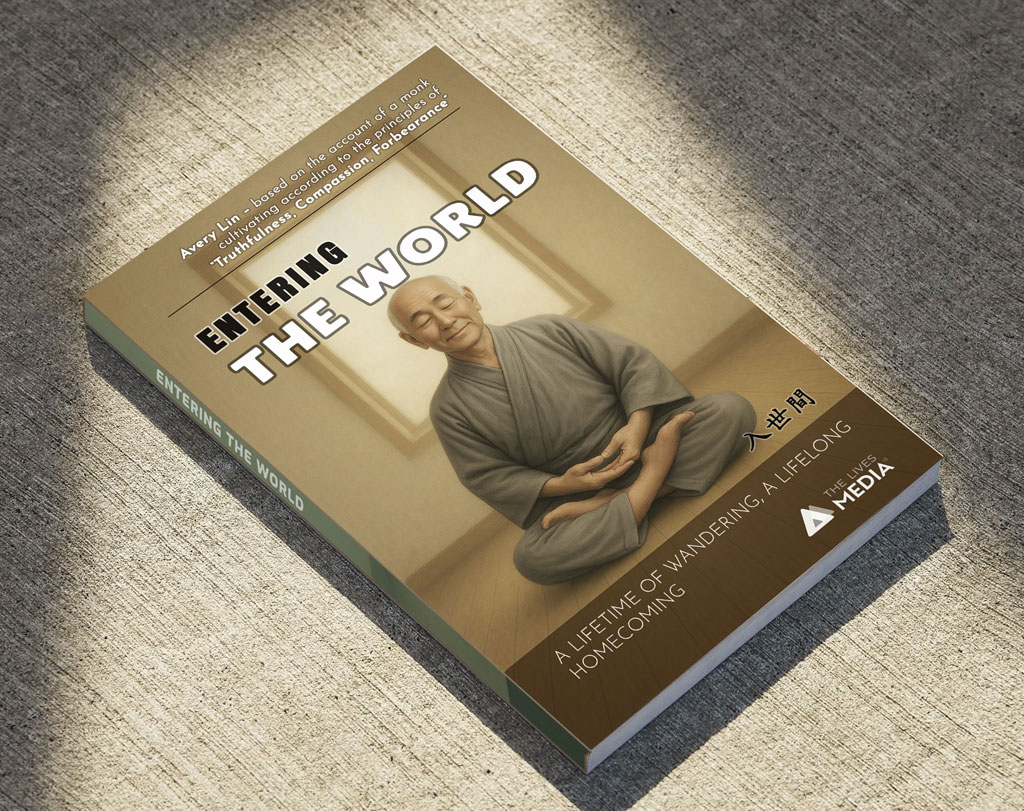
This article is an excerpt from the book “THE RED VEIL” – a series of exclusive interviews by journalist Sophia Bell with a former official in the Chinese Communist government.
If you wish to experience the full journey of thought and the unpublished insights of the work, please click the button below to own the complete book.
To explore more works from THE LIVES MEDIA, visit our book collection.