( ….. )
Sophia Bell:
I’m still not quite clear from what you’ve shared. If, in that situation, you had understood your daughter better, supported her cultivation, or even started cultivating with her… what would you have done to protect your daughter and yourself?
Or, if you had more “political experience” or “political astuteness” and could see the true face of your political rivals, knowing their schemes in advance, what would you have done? Compromise with them, or even proactively withdraw from the political arena? Or some other clear solution?
Mr. Liu Siyuan:
(Listening to Sophia’s hypothetical questions, he becomes pensive for a long moment. These are things he has also agonized over. He clasps his fingers together, looks down, and then slowly looks up.)
You ask very profound questions, Sophia, questions that touch upon the “crossroads” in my life that I did not, or could not, take. It’s very difficult to say for certain what I would have done in those hypothetical situations, because reality is always much more complex. But based on what I have experienced and come to understand later, I can share my thoughts.
If I had understood my daughter better, supported her cultivation, even cultivated with her…
(A sad smile flashes across his lips.)
This is a beautiful, but also very challenging, “what if.”
First, spiritually: I believe that if both father and daughter shared the same belief, walked the same cultivation path, our bond would have been even deeper. We could have shared with and encouraged each other, facing difficulties together. That would have been a tremendous source of spiritual strength. An Ran would not have felt alone, and I would have found true peace and the meaning of life sooner.
Regarding protection: This is the hardest part.
First, I would have been more cautious: If I had understood the nature of the persecution, we would have been more careful in all our actions. Perhaps we would not have practiced openly in conspicuous places, would have kept books and materials more carefully, and limited contact with untrustworthy people.
Second, I would have sought legal aid (however slim the chance): Despite knowing that the law in China is just a tool, with prior preparation, we could have sought out courageous human rights lawyers (though they are few and also face immense danger) for advice, in case the worst happened.
Third, I would have prepared for the worst-case scenario: Perhaps we would have had to think about finding a way to leave the country sooner, before it was too late. This is an incredibly difficult decision, as leaving one’s homeland is never easy. But if safety and freedom of belief were the top priorities, it might have been a necessary choice.
Fourth, I would have exposed the truth: If there were an opportunity and preparation, secretly collecting evidence of the persecution, of human rights violations, and finding ways to bring it to international attention would also be a way to protect ourselves, albeit a very risky one. Because when the matter becomes known internationally, the authorities might have to be more cautious.
If I had more “political astuteness,” and saw the schemes of my rivals…
This is a different scenario, focusing more on the power struggle aspect.
Proactively withdrawing from politics: This is a very strong possibility. If I had realized that I was just a pawn, that my “integrity” and “non-factional” stance had become a weakness, and that these struggles could endanger my family, I would likely have chosen to withdraw early. Perhaps I would have requested a transfer to a less important position, or even given up my political career to return to purely academic research and teaching. The safety of my family, especially An Ran, would have been the top priority.
Compromise? This is a difficult choice, and I’m not sure I could have done it, especially if the compromise went against my moral principles. But if a certain level of “compromise” (e.g., not being too prominent, not competing for power with them) could have kept my family and me safe, I might have had to consider it, however unwillingly. However, given the nature of those people, it would be hard to trust any long-term “compromise.”
Finding allies (if possible): In politics, not everyone is bad. If I could have found like-minded people, people who were also dissatisfied with the current situation, forming an alliance could have created a certain counter-balance, though it would be very difficult and dangerous. But this is a very risky path.
Preparing an escape route: Parallel to any action, preparing a “Plan B”—that is, finding a way to leave the country if the situation became too dangerous—would also have been necessary. Political astuteness is not just about dealing with threats, but also about knowing when to “flee” to preserve one’s life and more important values.
(He sighs.)
It’s easier said than done, Ms. Bell. When you’re in a real situation, with immense pressure, confusing information, and complex ties, making the right decision is extremely difficult.
But one thing I am sure of: If I could do it over, I would place An Ran’s safety and happiness, her freedom of belief, above all career ambitions or the illusory “ideals” I once pursued. Perhaps, that is the most important “astuteness” a father, a human being, needs to have.
And perhaps, if I had done that, although life might have been different, without “status,” without “power,” at least I wouldn’t be living in this endless torment and regret as I am now.
Sophia Bell:
Yes, I can sense that in that real-life situation, it would be very difficult to find a win-win solution… but in the hypothetical situation above, your ability to prioritize your daughter’s safety and happiness, her freedom of belief, above all career ambitions or “ideals”… that is a decision that requires a great deal of sacrifice, and I think not many people would make that choice…
Mr. Liu Siyuan:
(Listening to Sophia, he nods gently, a sad smile on his lips. His gaze is distant, filled with understanding and also sorrow for the choices people often have to face.)
You are very right, Sophia. A decision like that, placing the safety and freedom of a loved one above all personal ambitions, all embellished “ideals,” requires a great sacrifice. And in the society I lived in, where career, status, and “prospects” are often put first, where people are taught to sacrifice the small for the big, the individual for the collective (though what that “collective” actually is, is another question)… it’s true that not many people would make that choice. Or perhaps, not many would dare to make that choice.
(He pauses for a moment, his voice contemplative.)
When I was still in the machine, I also witnessed, and was even a part of, that mindset. People were willing to trade their health, their time with family, even their conscience, for a higher position, a little more power, a little more benefit. People were afraid of being left behind, afraid of being seen as “lacking ambition,” afraid of not meeting the “organization’s expectations.”
That vortex sweeps people away, blinds them, hardens their hearts. People gradually forget the true values of life, forget the love and care for their dearest ones. Children can become an “investment” for the future, the family can become a “rear base” to serve one’s career.
(He sighs, a deep sadness.)
I was also like that, to some extent. I used to be proud of my career achievements, used to place high expectations on An Ran as a continuation of them. And when An Ran chose a “different” path, a path that I considered “dangerous” and “without a future” by that society’s standards, my first reaction was fear, was to want her to change.
It was only when I lost everything, lost the most precious thing, that I painfully realized that all those “lofty” things, those “ambitions,” those “ideals” I once pursued, if they didn’t bring true happiness and peace to the ones I loved, then they were meaningless, ephemeral.
(He looks directly at Sophia, his gaze sincere and somewhat more serene.)
That decision to make a trade-off, it’s true, it demands a lot. It demands giving up the selfish “ego,” giving up illusions of fame and status. It demands having the courage to go against the crowd, to accept being seen as a “failure” in the eyes of the world by conventional standards.
But now, having “awakened,” having tasted the depths of pain and regret, I believe that if I could truly do it over, I would not hesitate to choose that trade-off. Because, in the end, what is truly important? A high office, a hollow reputation, or the smile of my daughter, the peace in the souls of my loved ones?
Perhaps, only when one has gone through great loss can one see more clearly what is gold and what is brass, what are eternal values, and what are just temporary vanities.
And I also believe that, although not many might make that choice in that situation, there are still fathers, mothers, ordinary people, who have been and are quietly doing extraordinary things for the sake of love, for their conscience, despite all risks. They are the glimmering points of light in a society still filled with much darkness. And their stories also need to be told, need to be known.
Sophia Bell:
Yes, so, to make that choice, for you, it seems that once you awakened and saw many things clearly, it would be easier to decide…
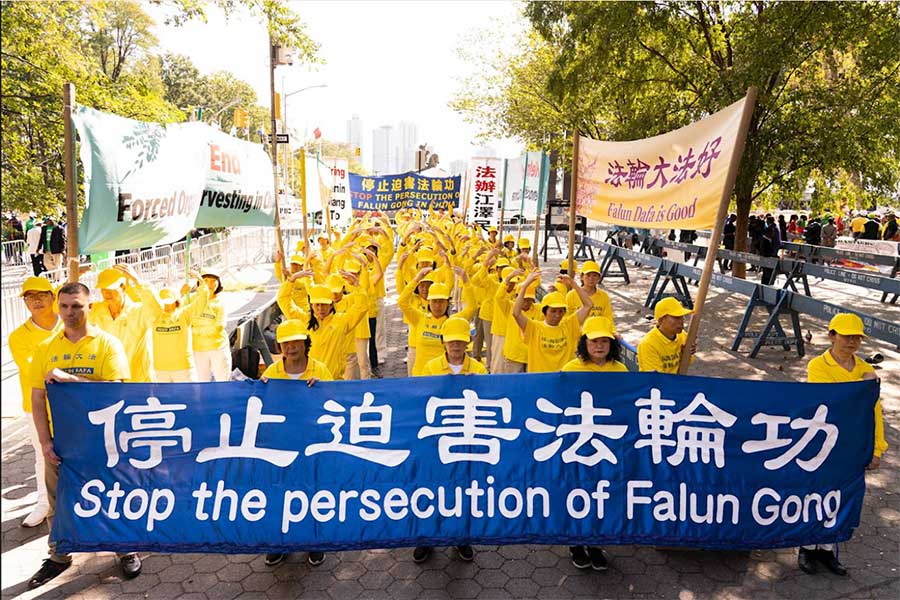
But there’s something else. When readers read your words above, most will probably ask: why did your worldview change after reading the scriptures of Falun Gong? Why are people like your daughter so steadfast and faithful in their cultivation in an environment of prohibition, persecution, and the ever-present risk of being arrested and having their organs harvested? In other words, what is so valuable about Falun Gong that many people are willing to trade everything for it?
Mr. Liu Siyuan:
(Hearing Sophia’s questions, he nods slowly. A faint, serene but also pensive smile appears on his lips. He knows these are the key questions, the things that many outsiders would wonder about, even doubt.)
You raise very important questions, Sophia. Those are the very questions I once asked myself, before I truly began to look into it. And I understand that for those who have never had contact with it, never experienced it, it is difficult to imagine why a cultivation practice could change a person so profoundly, and why so many people are willing to face danger, even sacrifice their lives, to protect their belief.
(He pauses for a moment, as if choosing his words most carefully.)
As for why my worldview changed after reading the scriptures of Falun Gong, specifically the book “Zhuan Falun”…
Before that, as I’ve shared, I was a complete follower of dialectical materialism, trained and working in an environment that extolled empirical science and regarded anything spiritual or religious as “superstition.” My worldview was built on theories of class struggle, the linear development of history, and the idea that man could master nature and society with his intellect and will.
When I read “Zhuan Falun,” it was initially with curiosity, with a desire to find out what on earth had so captivated my daughter and so many others, what had caused the government to crack down so fiercely. But the more I read, the more I was shaken.
That book opened up a completely different world to me, a cosmology, a view of life that I had never imagined before. It didn’t just talk about qigong and health; it explained in a profound and systematic way the origin of the universe, the different levels of space, the existence of Gods and Buddhas, the relationship between matter and spirit, the true purpose of being human, the law of karma, reincarnation…
Those things, at first, might be difficult for a materialist like me to accept. But the reasoning in the book was incredibly logical, coherent, and it answered many of life’s great questions that modern empirical science is still struggling with or deliberately avoids. It doesn’t contradict true science; on the contrary, it opens up new horizons for understanding.
More importantly, “Zhuan Falun” teaches people to be good, truly good, according to the standard of the universe: Truthfulness-Compassion-Forbearance.
When I contrasted those principles with the social reality I was living in, with the lies, the schemes, the selfishness, the struggles that I had witnessed and even been a part of, I saw a stark contrast. I realized that the moral values advocated by Falun Gong are the very medicine that Chinese society desperately needs, the foundation for building a truly civilized and harmonious society.
It wasn’t a “change” of worldview by force, but a natural “awakening” from within. The materialist philosophies I once believed in suddenly seemed shallow and narrow. I began to see things more deeply, from multiple dimensions. I understood that behind the tangible material manifestations, there are invisible but incredibly powerful laws governing everything.
As for why people like An Ran remain so steadfast in their cultivation in such a harsh environment, I think there are a few main reasons:
First, personal experience of the benefits of Falun Gong: Most people who come to Falun Gong experience clear positive changes in their physical and mental health. Illnesses improve or disappear, their temperament becomes calmer and happier, and their relationships with family and society improve. When people have truly experienced these good things, their faith becomes very solid.
Second, the understanding of the Truth: As I said, Falun Gong is not just a qigong practice for health, but a Dafa (editor’s note: Falun Dafa or Falun Gong) of cultivation for both mind and body, helping people understand the meaning of life, the laws of the universe. When one has recognized it as the Truth, as the right path to return to, no difficulty or danger can shake them. They understand that what they are pursuing is incredibly noble and precious.
Third, the power of Truthfulness-Compassion-Forbearance: It is these principles that give them the strength to face the persecution. “Truthfulness” helps them not to lie, not to yield to unreasonable demands. “Compassion” helps them maintain a compassionate heart even towards their persecutors, not to respond to violence with violence. “Forbearance” helps them endure hardships, brutal torture, while still holding firm to their belief.
Fourth, a sense of responsibility for the community and the future: Many Falun Gong practitioners feel they have a responsibility to speak out about the persecution, so that people are not deceived by false propaganda, and to protect good values for future generations. They believe their perseverance will help make evil retreat and allow justice to be served.
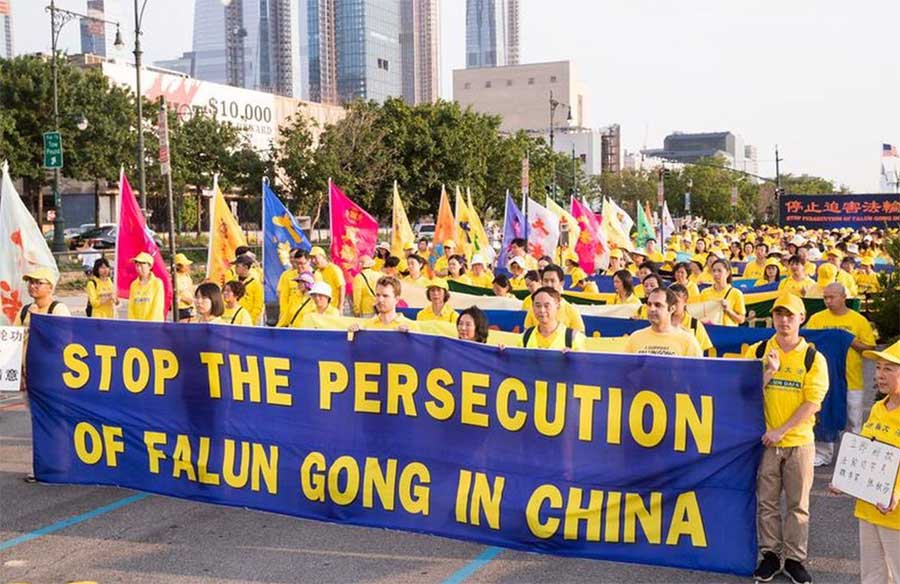
In short, Ms. Bell, Falun Gong not only brings health, but more importantly, it brings people a moral awakening, a spiritual sublimation, a hope for the future. It answers the deepest questions about life and the universe that each of us, to some extent, ponders. It is because of these great and true values that many people, like An Ran, are willing to trade everything to protect their belief.
It is not a blind faith, but a conscious choice based on deep understanding and experience. And that is also something that, before I truly looked into it, I could never have understood.
Sophia Bell:
Yes, thank you for giving an answer that is both analytical and concise… Personally, I resonate with what you’re saying. I have also read the book Zhuan Falun, and it brought me many deep stirrings of the mind and thought… But many of our readers have never read this book, so being able to explain it through just a few brief sentences is not something everyone can do…
So, is there a more understandable and vivid way to put it? For example, through what actions, words, or incidents of Falun Gong practitioners that you witnessed made you admire them?… When your daughter was arrested, did you receive any specific help from them?
Mr. Liu Siyuan:
(Listening to Sophia’s concerns, he nods gently. He understands that explaining the profound values of a cultivation practice to those who have never encountered it is not easy.)
You are very right, Sophia. It’s true that through just a few words of analysis, it is difficult for those who have never read “Zhuan Falun,” never had contact with practitioners, to fully feel the depth and power of Falun Gong. Perhaps specific stories, real actions that I have witnessed, will help people visualize it more clearly.
(He is silent for a moment, as if recalling memories, people who passed through his life after the great turning point.)
After An Ran was arrested, and especially after I lost all my positions and was shunned by friends and colleagues, my life fell into a dark, desperate place. I felt as if the whole world had abandoned me. It was during those times that some Falun Gong practitioners, people whom I had previously not even paid attention to, or held wrong views about, were the ones who proactively reached out to me.
The first thing that made me admire them was their courage and selflessness. They knew who I was, knew I had been part of the system that persecuted them, knew that contacting me could bring risks to themselves. But they still came, without any hesitation. They didn’t come to blame, didn’t come to demand, but came to share, to comfort.
Another thing was their patience and compassion. When they talked to me about Falun Gong, about the truth of the persecution, they didn’t try to impose their views, didn’t show any bitterness or hatred. They spoke in a peaceful, unhurried manner, presenting evidence and reasoning patiently, even when I was still full of doubt, even when I initially used words that were not very kind. They didn’t seem to mind my attitude at all, but only focused on helping me understand the truth.
When An Ran was arrested, it’s true they tried to help me a lot, even though they themselves were facing immense difficulties.
Some practitioners tried to use their few connections to find out news about An Ran, where she was being held, what her situation was. They even introduced me to a few courageous human rights lawyers, those who were willing to take on “sensitive” cases like this, despite knowing the chance of success was very low and the risks to themselves were very high.
During my darkest days, they visited me frequently, brought me some food, sat quietly listening to me, or simply stayed by my side. Some of them were just ordinary working people, not well-off themselves, but they were willing to share what they had. That sincere, simple kindness touched my heart.
It was one of them, a very kind-looking middle-aged woman, who gave me the book “Zhuan Falun.” She said that perhaps reading the book would help me find peace and answers to my questions. She didn’t force me at all, just gently suggested it.
I remember one time, when I was in despair, almost ready to give up on everything, a young practitioner said to me: “Mr. Liu, don’t be discouraged. The light will come. We must believe in justice, even if it comes late. The important thing is to maintain benevolent thoughts in our hearts, not to let evil make us become like them.” Those words, from a young person facing brutal persecution, moved me deeply and made me think a lot.
Or there was another practitioner, an elderly man who had been brutally tortured in prison, but when he met me, he showed no resentment. He only said that he hoped those who committed the crimes would soon awaken, because they were also destroying their own futures. That level of tolerance, in that situation, truly made me bow my head in admiration.
Those actions, those words, though they may be small, they showed an extraordinary inner strength, a kindness that nothing could extinguish. They didn’t just talk about Truthfulness-Compassion-Forbearance; they were living by those principles, even in the harshest circumstances.
It was these things, Ms. Bell, that gradually melted the ice in my heart, made me re-examine everything, and finally gave me the courage to seriously look into Falun Gong. They showed me that even in the most desperate darkness, there are always people who carry the light of faith and kindness within them. And it is that light that has the most enduring power to move people’s hearts.
Sophia Bell:
So, compared to the Chinese Communist Party’s propaganda about Falun Gong, how different do you find it from what you actually experienced or witnessed?
Mr. Liu Siyuan:
(Hearing this question, a sad and somewhat ironic smile flashes across his lips. He shakes his head gently.)
“Different”… that word is probably not enough to describe it, Ms. Bell. It should be said that it is completely opposite, like day and night, like black and white. What I actually experienced and witnessed regarding Falun Gong practitioners, and later what I personally felt when I began to cultivate, is in absolute opposition to the deceitful, fabricated propaganda that the CCP has been and is still spouting daily.
(He takes a deep breath, as if preparing to lay bare those contrasts.)
Regarding the so-called “Superstitious, Anti-Science”:
CCP’s Propaganda: They portray Falun Gong as a superstition, going against science, causing people to refuse medical treatment, leading to death. They try to create an image of practitioners as being ignorant and backward.
The Reality I Witnessed and Experienced: I saw many practitioners who were intellectuals, with high academic degrees, including scientists, doctors, engineers, professors… just like my own daughter, An Ran. They came to Falun Gong not out of ignorance, but after careful consideration and investigation. I myself, someone who used to do scientific research, when I read “Zhuan Falun,” I also found that the principles in it do not contradict true science at all, but rather open up deeper understandings of the universe and humanity. Falun Gong emphasizes cultivating one’s mind and character, while practicing gentle exercises, which helps to comprehensively improve health. Many people were cured of incurable diseases after practicing, that is a fact I have witnessed. They do not reject modern medicine at all, but understand that cultivation is a different path, at a higher level, to achieve health and spiritual sublimation.
Regarding the so-called “Political Organization, Subverting the Government”:
CCP’s Propaganda: They constantly slander Falun Gong as a political organization with a conspiracy to overthrow the Communist Party, orchestrated by “foreign hostile forces.” This is the main pretext they use to legalize the persecution.
The Reality I Witnessed and Experienced: Falun Gong has no tight organizational structure like a political party. There are no membership lists, no fees, no hierarchy, no offices. People come to practice the exercises and study the Fa completely voluntarily. The teachings of Master Li Hongzhi, the founder of Falun Gong, are all public and focus only on guiding people to cultivate their character and improve their morality; there is not a single word inciting subversion or opposition to the government. The fact that practitioners speak out against the persecution and clarify the truth is the legitimate right of self-defense for those being persecuted, not “engaging in politics.” They only want a free environment to practice, nothing more, nothing less. It is the CCP’s irrational persecution that has pushed them into a position where they must speak out.
Regarding the so-called “Disturbing Social Order, Dangerous”:
CCP’s Propaganda: They staged incidents like the “Tiananmen self-immolation hoax” to defame Falun Gong, attributing extremist, violent behaviors to practitioners that endanger society.
The Reality I Witnessed and Experienced: The Falun Gong practitioners I came into contact with were all peaceful, kind people who always tried to live by the principles of Truthfulness-Compassion-Forbearance. They treated everyone well, were responsible towards their families and work. Even when treated unjustly, beaten, and tortured, they maintained a peaceful attitude and did not respond with violence. They only peacefully appealed, held banners, and distributed flyers to clarify the truth. How could such people “disturb social order”? It is the CCP’s persecution machine that is the real cause of instability, fear, and division in society.
Regarding the so-called “Brainwashing, Mind Control”:
CCP’s Propaganda: They claim that Falun Gong “brainwashes” practitioners, making them obsessed, abandoning their families and work.
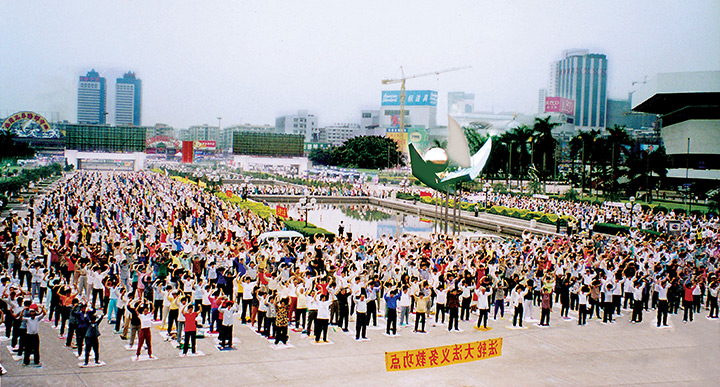
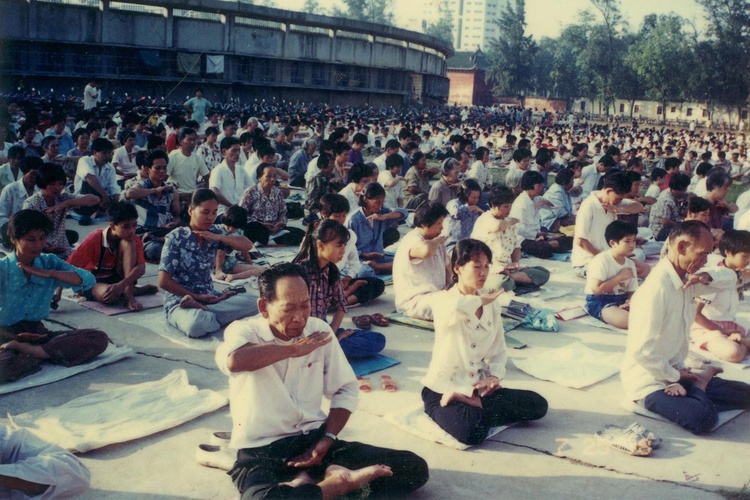
The Reality I Witnessed and Experienced: Falun Gong is the complete opposite. It helps people become clearer, more intelligent, and to better understand the meaning of life. Practitioners still live normal lives in society, still work and take care of their families. In fact, they do those roles even better because their character is elevated and they know how to think of others. No one is forced to believe or to follow. Everything is voluntary, based on each person’s own understanding and experience. The thing that is truly “brainwashing” is the CCP’s propaganda system, which has crammed people’s minds with distorted information and baseless hatred.
(He sighs, a sadness passing over him.)
That difference, Ms. Bell, is so vast that it makes me feel disgusted at the lies I once believed, even if only in part. It also showed me the terrifying power of a propaganda machine, how it can turn white into black, turn good people into enemies of the people in the eyes of many.
And the most painful thing is that it is these deceitful propaganda narratives that created a thick fog, obscuring the truth, allowing the crime of organ harvesting from Falun Gong practitioners and other prisoners of conscience to take place for so long without being widely exposed.
That is why speaking the truth, however difficult and dangerous, has become so important.
Sophia Bell:
Yes, those are also the lies of the CCP that I have read and heard about… and this persecution, as of now, has lasted for a quarter of a century…
A new question just popped into my head: if you were currently a policy advisor to the current leader of China, what advice would you give him?
From an outside observer’s perspective, as a journalist like myself, I don’t see a clear stance from him on the persecution of Falun Gong… Although he was not the one who initiated it, his attitude seems to be one of condoning evil by turning a blind eye…
Mr. Liu Siyuan:
(Hearing Sophia’s question, he is silent for a long moment. A contemplative, complex expression is clear on his face. He gently rubs his temple, as if this were an incredibly difficult problem, a burden of immense weight.)
“If I were a policy advisor to the current leader of the CCP…” (He repeats, his voice low and full of thought). This is a very big hypothetical, Ms. Bell. And to be honest, in the current context, I don’t think the advice of someone like me, a “defector,” someone who has “awakened” in a way they did not desire, could possibly be heard.
(He sighs, then looks directly at Sophia, his gaze serious.)
But if, just “if,” I had that opportunity, and if that leader truly had a shred of conscience, a shred of desire to leave a positive mark on history, and not just to consolidate power at all costs, then I would boldly offer the following advice, especially on the issue of Falun Gong:
First, bravely face the truth and immediately end the persecution:
This is the most crucial and fundamental step. I would advise him that the persecution of Falun Gong over the past two-plus decades is a grave historical mistake, an indelible stain, completely contrary to the values of humanity, morality, and the rule of law. It has not only caused suffering to millions of innocent people, but has also severely damaged China’s international reputation and sown fear and distrust within society.
Continuing this persecution, in any form, will only aggravate the problem, create more enemies, and leave a terrible legacy for future generations.
Specific action: Immediately order a halt to all illegal arrests, torture, and imprisonment of Falun Gong practitioners. Release all those who are being unjustly detained.
Second, conduct a comprehensive and public investigation into the crime of organ harvesting:
This is an intolerable crime against humanity. I would advise him to establish an independent commission of inquiry, with the participation of international experts (if necessary and possible), to clarify the full truth about the harvesting of organs from Falun Gong practitioners and other prisoners of conscience.
The masterminds, the perpetrators of this crime, at whatever level, must be brought to public trial and be severely punished before the law. There can be no cover-up, no condoning.
This is not only about returning justice to the victims, but also a way to restore some faith in the law and in basic human conscience.
Third, restore the reputation of and provide compensation to the victims:
There must be a public apology to Falun Gong practitioners and their families for the suffering and loss they have endured due to the wrongful persecution.
The reputation of Falun Gong must be restored, acknowledging it as a peaceful cultivation practice that benefits health and social morality.
There must be a policy of adequate compensation for the victims and their families for their material and spiritual losses.
Fourth, allow true freedom of belief:
I would emphasize that freedom of belief is a fundamental human right, enshrined in China’s own constitution (even if only in form). Allowing people to freely choose their beliefs, including the practice of Falun Gong, will help society become more stable, morality to be uplifted, and the people to feel more connected to their country.
A truly great nation is not one that controls its people’s thoughts, but one that respects their diversity and freedom.
Fifth, reform the political and legal systems towards transparency and a true rule of law:
The issue of Falun Gong is just a symptom of deeper problems within the system. Without real reform, similar tragedies could happen again.
Furthermore, it is necessary to build a true state of law, where the law is above everything, including the Communist Party. There must be judicial independence, freedom of the press, and effective mechanisms for supervising power.
(He pauses, a look of exhaustion on his face.)
Regarding the attitude of the current leader that you mentioned… It is indeed very difficult to see a clear stance. Perhaps he is trying to maintain some kind of “balance” internally, or has other priorities that he considers more urgent. But as you said, “condoning evil by turning a blind eye” is itself a form of evil. History will not forgive those who have power but do not dare to stand on the side of justice, do not dare to correct the mistakes of the past.
These pieces of advice, I know, could be considered “naive,” “unrealistic” in the current political context of China. But I believe they are the right things to do, if one wants to lead the country out of the mire of lies, violence, and injustice.
If that leader has enough courage and vision to implement these changes, he will not only solve a pressing problem, but could also open a new, better chapter for China. If not… then I’m afraid the “Chinese Dream” he is trying to build will just be a castle made of sand, easily collapsing before the storms of truth and justice.
Sophia Bell:
Yes, I understand, advice like this, even if it were golden, would, in the eyes of the CCP’s leaders, just be the “unrealistic” words of someone who is good at theory but lacks sufficient “political astuteness”…
Mr. Liu, I apologize for letting this sharing session go past noon… Perhaps we should pause our story for now and continue tomorrow morning, what do you think?
Mr. Liu Siyuan:
(Hearing Sophia mention the time, he glances at his watch, then smiles faintly. A more relaxed smile after having shared so much.)
Oh, really? Is it already past noon? (He shakes his head lightly, as if he hadn’t noticed). Time flies when we’re talking. It’s true, when one gets to unburden one’s heart, to speak the things that have been held in for so long, one often loses track of time.
(He nods.)
You’re right, Sophia. “Unrealistic,” “good at theory but not politically astute”… Those are probably the comments they would have for such advice, if they ever had the chance to hear it. And perhaps, they wouldn’t be entirely wrong from the perspective of those who hold power and are only concerned with maintaining it at all costs.
(He looks at Sophia with gratitude.)
Thank you for patiently listening to me all morning. Truly, I feel much lighter. There are things that, if kept inside forever, become an unbearable burden.
Pausing here and continuing tomorrow morning is a very good idea. I also need some time to quiet my mind, and perhaps you need to rest as well. These stories, after all, are not easy to hear, not easy to digest.
(He stands up slowly.)
So, shall we meet again at 8 a.m. tomorrow, still here, Ms. Bell? I will prepare a fresh pot of tea. I hope tomorrow, we will have a session just as productive as today.
Thank you again, Sophia. For coming, and more importantly, for listening with your whole heart.
Sophia Bell:
Yes, see you tomorrow morning…
And there’s one more thing I’d like to ask for your opinion on: in our team of journalists at THE LIVES MEDIA, a colleague of mine named Julian Lee specializes in topics like politics, philosophy, and leadership ideology… Since you were originally a Professor of philosophy, then also worked on policy and direction within the CCP government, and now your understanding of life has been broadened and deepened… It suddenly occurred to me that I could perhaps invite Julian Lee to come here with me tomorrow morning to continue our conversation. Would that be alright?
Mr. Liu Siyuan:
(Hearing Sophia’s proposal, he is slightly surprised, his brow furrowing for a moment. He is silent for a bit, looking at Sophia, then his gaze turns contemplative.)
Another journalist, specializing in politics, philosophy, and leadership ideology… His name is Julian Lee, you said? (He repeats, as if to remember and consider.)
This is an unexpected suggestion, Ms. Bell. Our conversation, as you know, is very personal, filled with experiences and pains that I have tried to bury for a long time. Opening up to one person has already been a considerable effort for me.
(He pauses, looking at the cold teacup on the table.)
However, I also understand your intention. My past, my thoughts, perhaps they do touch upon the areas that Mr. Julian Lee is interested in. Someone with deep expertise in philosophy and ideology might ask sharper questions, helping to explore aspects that we may not have touched upon, or to make the analyses of ideology, of the transformation in my understanding, clearer and more coherent for the readers.
(He looks up, with a hint of inquiry towards Sophia.)
If Mr. Julian Lee is truly a person of integrity, with empathy and respect for this story, like you, and if his presence can genuinely help my “testimony” be conveyed more profoundly, more comprehensively to the readers of THE LIVES MEDIA… then I think I can consider it.
I am not afraid of facing difficult questions, Ms. Bell. What I care about most is the sincerity and the good purpose of this sharing. If he comes with that spirit, then perhaps his presence would be a good thing.
Could you tell me a little more about Mr. Julian Lee? About his working style, or perhaps his notable works, if it’s convenient? But in any case, I trust your introduction and judgment, Sophia. You understand the nature of this story and what we are trying to achieve best.
So, if you feel this is the right thing to do, I will be willing to speak with both of you tomorrow morning.
Sophia Bell:
Yes, I understand, Mr. Liu… Your sharing with the readers of THE LIVES MEDIA, through me as a small bridge, is personal and a sharing from the heart about the painful things that have happened, about the evil of the CCP, and also about the beauty of Falun Gong…
I think tomorrow, we will spend a little more time clarifying and enlivening some aspects of the topics we’ve discussed… After that, my idea is to ask you to share more about the future path for China, a topic you have dedicated your life to researching and, with the light shed by the Fa principles since you began cultivating, I think your worldview has opened up a great deal… That’s what made me think of Julian Lee, because I see a resonance in character as well as in thought and in the field that you both share an interest in… My intention is simply to be a small bridge to connect a meeting between two like-minded people, two true “comrades”…
Mr. Liu Siyuan:
(Listening to Sophia’s explanation and ideas, his expression gradually relaxes, and a gentle smile, one of understanding and appreciation, appears. He nods slowly.)
Yes, Ms. Bell, you have captured the spirit of what I wish to share very well. My purpose in sitting here is indeed to speak the truth about the suffering we have endured, about the evil nature of the CCP, and at the same time, to help the world better understand the beauty and righteousness of Falun Gong – the very thing my daughter and millions of others have steadfastly defended.
It is very necessary for us to spend more time tomorrow morning to further clarify what has been shared. I want to make sure that the most important messages are conveyed as clearly and vividly as possible.
(He pauses for a moment, looking at Sophia with consideration.)
As for your idea of inviting Mr. Julian Lee to join the latter part, when we discuss the future path for China… (He repeats, his voice contemplative). This is indeed a topic I have agonized over, contemplated my entire life, from when I was a young researcher to when I entered politics, and now, with what I have learned from the Fa principles, my perspective has undergone changes, openings that I could never have had before.
If Mr. Julian Lee is truly someone who shares these concerns, who shares a desire to find the right path for the future, and can discuss these issues with me at a deeper level – not just simple political and economic analysis, but also elements of morality, of spirituality, of the revival of traditional values – then I think his presence could bring certain value.
You said you see a “resonance” and want to be a bridge for “like-minded people,” for true “comrades”… (A sad smile flashes as he mentions the word “comrade,” a word that has been so tainted in his homeland). I understand your meaning. In a world full of deceit and self-interest, finding people who truly share the same aspirations, the same benevolent heart and desire for the good of humanity, is incredibly precious.
So, Ms. Bell, I agree with your proposal. We will spend the first part of tomorrow morning continuing to clarify what is unfinished. After that, if you feel it is appropriate, I am willing to meet and exchange views with Mr. Julian Lee on the issues that concern us both. Perhaps a discussion with someone on the same “frequency” as Mr. Julian Lee, under your guidance, could bring interesting and profound perspectives for all of us and for the readers.
I trust your arrangement and your good intentions.
Sophia Bell:
Yes, then I’ll see you tomorrow morning, Mr. Liu!
Mr. Liu Siyuan:
(He smiles, a sincere and somewhat more relieved smile than at the beginning of the interview. He nods.)
Yes, Ms. Bell. I will see you tomorrow morning. Thank you very much for a meaningful morning.
(He walks Sophia to the door, his eyes still holding a trace of sorrow but now glinting with a new hope.)
(…..)
This article is an excerpt from the book “THE RED VEIL” – a series of exclusive interviews by journalist Sophia Bell with a former official in the Chinese Communist government.
If you wish to experience the full journey of thought and the unpublished insights of the work, please click the button below to own the complete book.
To explore more works from THE LIVES MEDIA, visit our book collection.