DAY ONE
Henry Lowell:
Good morning, Professor Solomon!
As we arranged on our flight from Paris to New York, I’ve come today to hear you share more specifically about past civilizations from archaeological, scientific, and spiritual perspectives…
Professor Solomon:
(Smiling warmly, he gives a gentle nod, his gestures unhurried. His study is filled with books, small artifacts, and ancient maps, creating an atmosphere that is both scholarly and slightly mysterious.)
Good morning, Henry. It’s a pleasure to have you here. That flight was quite a serendipitous encounter, wasn’t it? I was also very impressed by your passion and deep understanding of the topics we discussed.
Please, make yourself comfortable. I am more than willing to share what I have accumulated and contemplated over many years. You know, my path in archaeology has sometimes led me to conclusions that don’t quite align with what is presented in mainstream texts. But I believe that the history and past of humanity hold many deeper layers than we imagine.
(He pauses for a moment, gazing out the window as if gathering his thoughts.)
In this process, as I may have briefly mentioned, I sometimes have an additional, rather special source of reference from my daughter, Laura. She has an ability to sense, or “see,” things beyond ordinary perception, what the ancients often called the “Celestial Eye.” Of course, this is not an omnipotent or always clear ability. What she perceives can sometimes be very detailed, and at other times vague and suggestive. And I am always careful to cross-reference her insights with archaeological evidence, historical records, and more universal principles.
I share this with you from the outset so you can better understand my multidimensional approach, where science and intuition can sometimes complement each other, revealing aspects that a single method could hardly touch.
Well, Henry, where shall we begin today? You may ask any question that interests you most.
Henry Lowell:
Yes, I’ve also heard that you are not only an archaeologist but also a practitioner of the Buddha Law… This must give you a more multidimensional perspective in your archaeological and historical research…
Professor Solomon:
(He nods gently, his eyes filled with a contemplative yet open expression.)
Yes, Henry, you are quite right. My fortunate encounter with and practice of a path of spiritual cultivation—what you call the Buddha Law, or more broadly, a cultivation path following ancient principles of self-perfection—has indeed given me a different perspective, a new depth in my view of history and archaeology.
You see, traditional archaeology often focuses on excavating and classifying artifacts, and determining their age using existing scientific methods. These are incredibly important tasks, the foundation of it all. But when we stop there, we sometimes miss the deeper messages, the profound meanings that ancient sites and civilizations wish to convey.
(He pauses, picks up an old book from his desk, and gently flips through a few pages with reverence.)
The path of cultivation helps me understand that history is not just a series of random events, or a simple, linear process of “evolution.” It may operate according to larger laws, cycles that ancient cultures have long spoken of. It helps me see the rise and fall of civilizations not only from a material perspective, but also from a moral and spiritual one.
When I stand before an ancient site, I don’t just see stones and pottery shards; I try to feel the “spirit” of the place, its vicissitudes, the stories it wants to tell. Cultivation helps to quiet my mind, which perhaps also makes it easier for me to connect with the subtle “information,” the imprints left in space and time.
However, I am always very careful not to let subjective perceptions overwhelm scientific evidence. They are two complementary aspects, shedding light on each other. The insights from my cultivation path help me to ask new questions, to view archaeological evidence from a broader perspective, and sometimes, they help to explain things where pure science is still at a dead end.
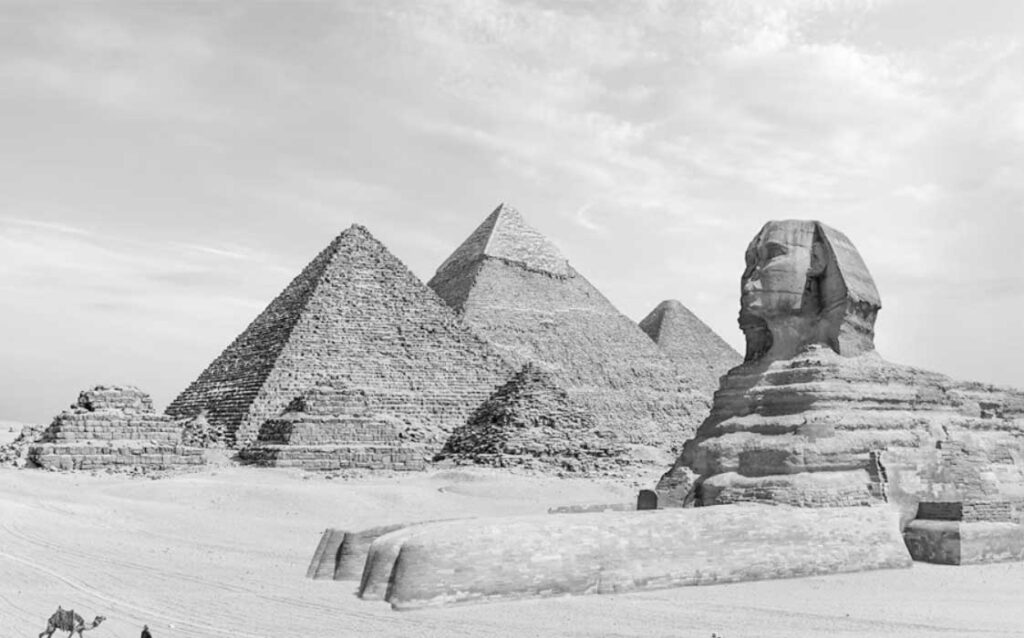
For instance, when we talk about great structures like the Giza Pyramids, if we rely solely on the accepted technical level of the ancient Egyptians, we encounter many unanswerable questions. But if we broaden our perspective to consider that there may have been preceding civilizations with far superior development, or that there was intervention or guidance from forces we do not yet fully understand, then things begin to make more sense.
And as I mentioned, Laura’s “insights,” though they need to be verified and are not absolute proof, are sometimes an interesting piece in this overall puzzle. Her ability was awakened quite early, around the age of ten, but it became most pronounced when we were in Egypt, at the Giza Pyramid complex, when she was about twelve. It seemed there was a powerful “revelation” at that very sacred place. Her descriptions of the pyramid’s construction process at that time were truly vivid and detailed, forcing me to think deeply. Of course, at other sites, her perceptions might not be as clear, sometimes consisting only of emotions or fleeting images.
I always remind her and myself that what one “sees” can also be limited by one’s level of perception, or that there are things the Divine may only reveal in part, as the time is not yet right to know the full details. This is the principle of not casually “divulging heavenly secrets,” which those with some understanding of spirituality must adhere to.
Henry, this is quite a profound topic. Is there a specific aspect you would like me to elaborate on?
Henry Lowell:
Yes, as I mentioned during our conversation on the flight, I am also very interested in reading the scriptures of various religions… For a person to be able to see from a religious perspective, they must first acknowledge the existence of the Divine and also accept that human beings can possess certain supernatural abilities beyond the explanation of dialectical science, such as in the case of your daughter, Laura…
But for the readers of THE LIVES MEDIA to gradually approach this, perhaps you could start by sharing from an archaeological and scientific perspective first…
To begin, as you just mentioned the Giza Pyramids, what is your explanation for their origin?
Professor Solomon:
(Listening intently, he nods in agreement.)
Henry, you’ve touched upon a very core point. Indeed, to truly understand the deeper layers of history, we sometimes need a certain openness to concepts like “the Divine” or abilities that transcend empirical science. But I completely agree with you; to make this accessible to a broader readership, we should start with more familiar ground: archaeology and scientific analysis.
Regarding the Giza Pyramids, they are truly a structure that constantly challenges our understanding. The most common theory—that they are the tombs of the Fourth Dynasty pharaohs, built over a period of about 20 years with human labor and primitive tools—truly runs into too many contradictions when we delve into the details.
(He stands up, walks to a bookshelf, and takes out an old-looking folder filled with images and diagrams of the Pyramids.)
First, let’s talk about the dating. The mainstream view holds that they were built around 2589–2566 BC. However, there is some very compelling astronomical evidence. For instance, the near-perfect alignment of the three great pyramids at Giza with the three stars of Orion’s Belt. This alignment only reaches its highest degree of accuracy around the year 10,500 BC. This is a figure that makes mainstream archaeologists hesitate, as it pushes the age of this structure far beyond their accepted timeframe.
Second, the construction techniques. We’re talking about millions of stone blocks, each weighing from 2.5 tons to over 80 tons, cut with astonishing precision and fitted together with almost no gaps. With the tools supposedly available to the Egyptians of that era—mainly copper and flint—how could they have quarried, transported, and lifted these colossal blocks to heights of hundreds of meters? The reliefs depicting thousands of slaves pulling stones are merely a hypothesis, and there is, in fact, no archaeological evidence to suggest that such a massive workforce ever existed and worked at Giza for an extended period.
Third, the mathematical and astronomical knowledge embedded in the Great Pyramid. Its ratio to the Earth: if you take the perimeter of the Great Pyramid’s base and multiply it by 43,200, you get the equatorial circumference of the Earth. If you take its height and multiply it by 43,200, you get the polar radius of the Earth. This number, 43,200, is not random; it relates to the precession of the equinoxes. How could a nascent civilization know these precise figures? The values of Pi and the Golden Ratio (Phi) are also found in the pyramid’s proportions with incredible accuracy.
(He pauses, looks at Henry, his voice becoming more solemn.)
So, if it wasn’t the pharaonic Egyptians who built them, or at least they were not the primary builders, then who did? This is the very question that opens up possibilities of previous civilizational cycles.
And this is where Laura’s “insights,” though only a reference, offer some fascinating clues. When we were at Giza, as I told you, she was about twelve. She described “seeing” builders who were of a larger stature than us today, over 5 meters tall. On the surface, it appeared they were using sheer human strength to move the stone blocks, but behind it, they were empowered by a divine force that granted them additional strength. Furthermore, Laura spoke of them using a form of energy, possibly sound or some technology unknown to us, to make the stones lighter or to move them with ease. She also saw tools that emitted light, allowing them to work day and night, and a very solemn, sacred atmosphere pervading the construction site, not the misery of slaves.
Of course, these are descriptions from a child, but the consistency and detail in what she recounted, combined with the physical evidence we’ve just discussed, make it impossible for me not to ponder. It suggests that the Giza Pyramids may be the legacy of a much more advanced civilization that existed long before the Egyptian pharaohs. The later Egyptians might have been merely inheritors, who reused or attempted to imitate these great structures.
So, Henry, from this analysis, do you not find that the mainstream historical view of the Pyramids needs to be seriously reconsidered?
Henry Lowell:
Many ancient structures that survive today are not as simple as they appear on the surface… Regarding the number you just mentioned, I vaguely recall reading somewhere that 12 hours × 60 minutes × 60 seconds = 43,200 seconds. Could this be a coincidence?
And is the location chosen for the Pyramids also closely related to a specific longitude and latitude?
And if we look from a spiritual perspective, what your daughter Laura saw, if those images are real, what specific things would they tell us?
Professor Solomon:
(Nodding, his eyes lit up with interest at Henry’s sharp questions.)
Henry, you’ve asked some very good questions, touching upon the deeper layers of the Pyramid’s mystery.
Regarding the number 43,200, your connection to the number of seconds in 12 hours is a very keen observation. Is it a coincidence? In research, especially when faced with structures containing such superior wisdom as the Pyramids, I tend to be skeptical of pure “coincidence,” particularly when numbers repeat and hold meaning across different systems. This number, as I mentioned, is closely related to the cycle of the Earth’s precession (about 25,920 years, and 43,200 is 1/600 of this number if calculated using an ancient time unit system, or 2 x 21,600, with 2160 being the number of years the Earth passes through one zodiacal sign in the precessional cycle). The fact that it also corresponds to the number of seconds in half a day could be an intentional synchronization, a way for the ancient builders to encode their knowledge into familiar units of time, or it could demonstrate a profound understanding of cosmic cycles and how they reflect each other at different scales.
Now, regarding the geographical location of the Giza Pyramids. This is an extremely astonishing point.
As you may already know, the Giza complex is situated almost exactly at the center of the Earth’s entire landmass. If we were to draw lines of longitude and latitude that evenly divide the continents, their intersection would fall very close to Giza. This is unlikely to be a coincidence. It requires a comprehensive knowledge of global geography, something that the ancient Egyptian civilization, as conventionally understood, could not have possessed.
And there is another fascinating detail that many researchers have pointed out: the latitude of the Great Pyramid is 29.9792458° North. This number almost perfectly matches the speed of light in a vacuum, which is 299,792,458 meters per second. Of course, many would argue that the units “meter” and “second” are modern inventions and that the ancients could not have known them. This is a reasonable argument. However, this coincidence, when placed alongside the other extraordinary mathematical and astronomical knowledge of the Pyramids, still forces us to ask questions. Could it be that ancient units of measurement, which we have not yet discovered, had some connection to these universal constants? Or, could this be an encoded message, waiting for a future civilization (like ours) with sufficient knowledge to decipher it?
Next, regarding the precise orientation of the Great Pyramid to the four cardinal directions. The deviation is only about 0.05 degrees. This is a level of precision that is not easily achieved even with modern technology. It shows that the builders not only had profound astronomical knowledge but also possessed extremely sophisticated surveying tools and techniques. How could they determine true north (not magnetic north) with such accuracy without an advanced compass and sophisticated methods of astronomical observation?
(He pauses, his gaze distant, as if visualizing what Laura had described.)
Now, if we look from a spiritual perspective, and assume that what Laura “saw” were genuine images of the construction process, what do they tell us?
First, a superior level of civilization: The fact that the builders were of a larger stature, using energy (sound, light, or other types) to move and craft stone, indicates they belonged to a civilization with a level of scientific-technological and perhaps even spiritual ability far beyond what we imagine for the ancient world. They were not slave laborers, but craftsmen, engineers, and artisans with extraordinary knowledge and power.
Second, a sacred purpose: The solemn, sacred atmosphere that Laura perceived suggests the Pyramids were not just an engineering feat but also held a deep spiritual meaning. They may have been built for a higher purpose than being a tomb for a king. Perhaps they were an observatory, an energy center, a place for important rituals, or a “marker” carrying a message across time.
Third, intervention or guidance from higher beings: If these builders possessed such abilities and knowledge, were they human like us, or another race, or were they guided and assisted by “Gods” or beings from higher realms? Laura’s description of “light-emitting tools” or “stones becoming lighter” hints at technologies or abilities we would typically classify as “supernatural” or “extraterrestrial.”
These “insights,” when combined with archaeological and scientific evidence, further strengthen the hypothesis that the Giza Pyramids are not the product of a singular Egyptian civilization, but the legacy of a more glorious era, an “echo” from a very distant past, perhaps from a forgotten prehistoric civilizational cycle. It is like a sealed message, waiting for us to have enough wisdom and openness to decipher it.
So, Henry, what do you think of these connections? Do they seem too far-fetched, or are they gradually revealing a much more complex and magnificent picture of history?
Henry Lowell:
Yes, with the evidence you’ve mentioned, it’s almost certain that the ancient Egyptians could not have possessed such advanced technology and knowledge of geography, space, the cosmos, time, and higher mathematics… And I notice that the number 43,200 is the number of seconds in 12 hours, and the ancient Chinese divided a day into exactly 12 “shichen” or divine hours… So, could there be an invisible thread connecting different spaces and eras?
Professor Solomon:
(Smiling, he nods slowly.)
An exceptionally sharp observation, Henry! You’ve touched upon a point I often ponder myself. The similarity between the number 43,200, which is embedded in the Great Pyramid’s ratio to the Earth, and the ancient Chinese practice of dividing a day into 12 shichen (where each shichen is equivalent to two modern hours, and a full day is 24 hours or 12 “divine hours” as you put it) is indeed remarkable.
If we go a little deeper, in the East Asian system of Stems and Branches, a “yuan” (a great cycle) is calculated as 129,600 years. This number is 3 x 43,200. Or in ancient Indian scriptures, a Maha Yuga (Great Eon) lasts 4,320,000 years, divided into four smaller Yugas of specific proportions, and the number 432 is a fundamental element within it.
(He pauses, looking at Henry with a thoughtful expression.)
So, could there be an invisible thread connecting different civilizations, different systems of knowledge across space and time? I believe there is.
This suggests a few possibilities:
First, a common source of knowledge: There may have been a mother civilization, some “Atlantis” or “Lemuria” in the distant past, which possessed a comprehensive system of cosmic knowledge. After this civilization declined or vanished, its fragments of knowledge were received and interpreted in their own ways by succeeding civilizations like Egypt, Mesopotamia, India, China, the Maya… This could be why we find similar motifs, numbers, and symbols in cultures that seem unrelated.
Second, the dissemination of knowledge: It’s also possible that there were sages, holders of ancient wisdom, who traveled the world, sowing the seeds of this understanding in different lands. History records migrations and cultural exchanges, but perhaps there were also more subtle, underground currents of knowledge that we are not fully aware of.
Third, simultaneous revelation: Another possibility, a more spiritual one, is that this knowledge was “revealed” to special individuals or groups in different cultures at opportune times. If the universe operates according to certain laws, then it is understandable that different civilizations, through observation, contemplation, or spiritual practices, could all discover those same laws. It’s like how multiple scientists in different places can simultaneously discover a physical law.
Personally, I lean towards a combination of these factors. Perhaps there was an ancient source of knowledge, and its keepers tried to preserve and pass it down, while at the same time, enlightened individuals in later eras could also “rediscover” or be “revealed” these same truths.
The number 432 and its multiples appear repeatedly in sacred architecture (like the Pyramids), in cosmic cycles (precession, the Yugas), in ancient systems of timekeeping, and even in music (the frequency A=432Hz is said to be more in harmony with nature than the current A=440Hz standard). This cannot be coincidental. It indicates a profound understanding of harmony, of the fundamental vibrational frequencies of the universe, and how humanity can synchronize with those rhythms.
The invisible thread you speak of is perhaps the immutable laws of the universe, the truths that ancient civilizations, in one way or another, managed to touch. And our task, as those who come after, is to try to find and reconnect these scattered pieces to get a more complete picture of humanity’s intellectual heritage.
You see, when we begin to view history not just through a material lens, but also through cultural connections and symbolic numbers, a new world, full of wonders, opens up before us. It challenges the old notions of the “primitiveness” of the ancients and forces us to be more humble before what they achieved.
Henry Lowell:
If we accept the mystical spiritual perspective not as superstition, but as a highly practical possibility, then many things can be explained…
If we consider the Giza Pyramids to be a legacy product from a distant civilization, then when does it date from? Was the area around the Pyramids covered in sand as it is today? Who decided to build this Pyramid, a king, priests, or the scientists of that era? How did people live back then?… These questions are quite specific and born of curiosity… but could what your daughter saw shed any more light on them?
Professor Solomon:
(Nodding, his voice becomes contemplative, as if searching through a treasury of memories and deep reflections.)
Henry, you have asked some incredibly important questions, questions that anyone who yearns to understand the true origin of the Pyramids has pondered. And as you say, if we dare to be open to a perspective that includes elements that current science calls “mystical”—but which may in fact be natural laws we have not yet discovered—then the picture of history becomes much clearer.
Regarding the dating of the Pyramids, if we accept that they are the legacy of a prehistoric civilization, then the figure of 10,500 BC that I mentioned—based on the alignment of the pyramids with the Orion constellation and some geological evidence—might only be the nearest milestone we can provisionally identify. It could be the time of a significant reconstruction event, or the era of a successor civilization that reused or “activated” structures that had existed for a very long time before.
But according to Laura, they were built a very long time ago, perhaps around 70 or 80 million years ago… This is truly an ancient number…
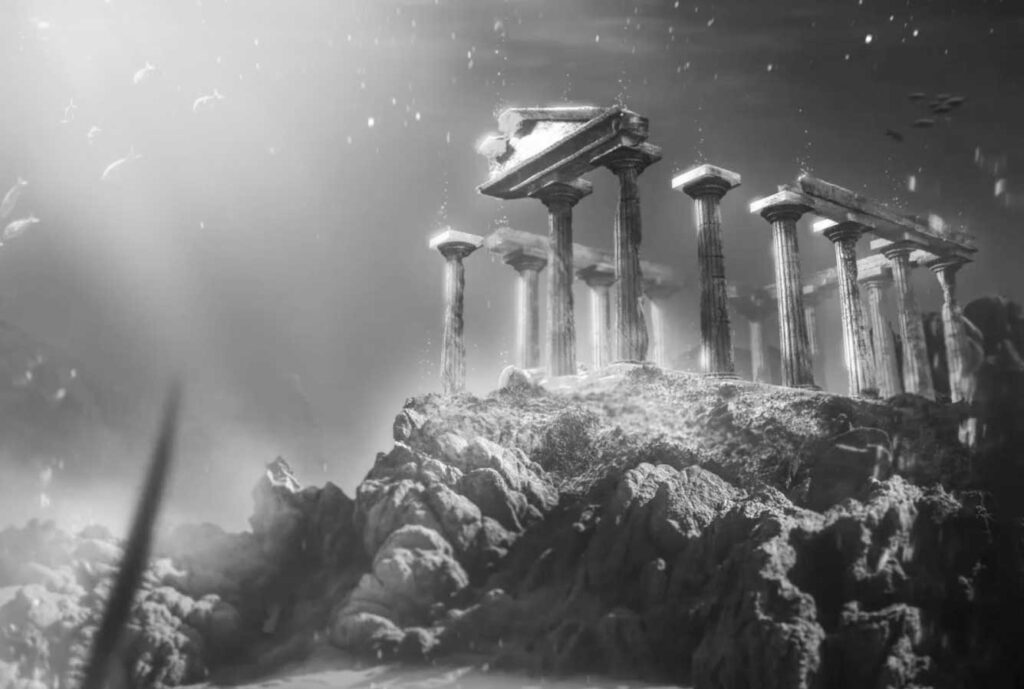
As you also suggested, and this resonates with a deeper hypothesis among researchers, it’s possible that the Pyramids have survived multiple cycles of major geological upheaval, even having been submerged deep under the sea and then re-emerging. If that is true, then their actual age must be pushed back much further, possibly hundreds of thousands, or even millions of years. This is a timescale that far exceeds what mainstream history accepts, yet it aligns perfectly with the concept of long-lasting civilizational cycles and the grand movements of the Earth’s crust.
At that time, whether it was 10,500 BC, 80 million years ago, or even further back, the area around the Pyramids was very likely not covered by sand as it is today. Many paleoclimatology studies indicate that North Africa once went through much wetter periods, with rich grasslands and rivers. The Sahara Desert as we know it today is a relatively “young” phenomenon in geological history. Therefore, the Pyramids could have been built on a plateau overlooking a much more fertile and green land.
Now, for your more specific questions, and whether what my daughter, Laura, “saw” can shed any light…
Regarding questions like: Who decided to build the Pyramids?
What Laura “saw” and recounted after our trip to Giza was truly special. She described that the initiative to build the largest Pyramid seemed to come from a young king, a person who possessed not only worldly power but also profound wisdom and a deep spiritual connection. According to the images Laura saw, the construction of these pyramids also involved the guidance of his younger sister, a princess who embodied similar qualities, who succeeded him and continued the mission, presiding over the construction of the second adjacent pyramid.
This suggests the decision to build was not just from an individual, but perhaps a mission of an entire lineage, people entrusted with the responsibility of spiritual guidance and the preservation of knowledge for posterity. They did not build for personal fame in a worldly sense, but for a higher purpose, perhaps to create “energy anchors,” tools to connect with the universe, or repositories to store knowledge through cycles of upheaval.
How did people live in that era?
From Laura’s perceptions, those who participated in the construction were not forced laborers. They were skilled, knowledgeable people who worked with a spirit of dedication and solemnity. She perceived an orderly society where people lived in close harmony with nature and held a deep reverence for the laws of the universe.
In particular, regarding how they performed seemingly impossible tasks like transporting and assembling the giant stone blocks, what Laura perceived further strengthened my skepticism of explanations based on primitive tools. She saw that they used a kind of special ability. One can imagine it as something like the “supernatural ability of transportation” that is sometimes mentioned in cultivation circles—the ability to move heavy objects by will, by sound energy, or by other forms of subtle energy that our science has yet to grasp. Laura described “sound that made the stones vibrate and become lighter,” or “tools that emitted light” not just for illumination but also to affect matter.
This indicates that people of that era may have mastered forms of energy and mental abilities that we today would consider “supernatural.” Their lives were perhaps less dependent on complex mechanical machinery and more on harmony with nature and the development of humanity’s innate potential.
(He pauses, his eyes looking at Henry with deep meaning.)
Henry, these “insights” from Laura, though very difficult to prove with current scientific methods, open up a fascinating window into the past. They are not meant to replace archaeological research, but to supplement it, to suggest new directions, so that we dare to ask questions that go beyond pre-established frameworks.
The Pyramids, with all their mystery and grandeur, seem to be whispering to us about a lost history, a history of extraordinary people and profound knowledge. And perhaps, only when we listen with both our minds and our hearts can we begin to understand those “echoes.”
Henry Lowell:
You just said they didn’t build the Pyramids for personal purposes, meaning not as tombs, but for a higher purpose… So what is that “higher purpose”?
Professor Solomon:
(Looking at Henry, a flicker of surprise gives way to understanding, and he smiles gently.)
Henry, you’ve asked an incredibly profound question, one that strikes at the very heart of the Pyramid’s mystery. Yes, from what we’ve discussed, it seems the builders’ motives far transcended personal ambitions or common worldly purposes like constructing a tomb.
And when you ask what that “higher purpose” is…
(The Professor pauses for a moment, his gaze distant. His voice deepens, carrying a hint of awe and emotion.)
To be honest, when I first heard Laura, my daughter, recount what she “saw” regarding the true purpose of the Pyramids—especially some of the scenes and images she witnessed when we were at Giza, things I had never even imagined—I was truly shaken. Those things were so grand, so profound, far beyond any speculation I had as a conventional archaeologist.
(He takes a deep breath, then looks directly at Henry.)
That is a story I very much want to share with you in detail. However, I think perhaps we should set this question aside for a moment. Because, in my opinion, to truly feel and understand the scope of that purpose, we first need to clarify a fundamental point, a truth that mainstream science is still reluctant to admit: that the Giza Pyramids, along with many other magnificent ancient structures around the world, are very likely not products of our current civilizational cycle. They are legacies left behind from much more ancient eras, from civilizations that history has forgotten.
If we don’t place the Pyramids in their proper temporal context, then discussing their sacred, timeless purpose becomes less persuasive. Do you agree with me on this point? Let’s first examine the evidence for the extraordinary antiquity of these structures, and then, I promise, I will return and share with you what Laura “saw” about their true purpose, a purpose that made me re-evaluate my entire understanding of history and the human condition.
Henry Lowell:
Then we will return to this question later…
If this earth has indeed gone through many civilizational cycles, besides the Pyramids, do you have any other archaeological evidence?
I remember a detail from a very famous book I once read called Zhuan Falun, in which the author mentions a shoe print on a trilobite fossil dating back hundreds of millions of years, or an image of a person observing celestial bodies carved on a small stone in Peru, dated to about 30,000 years ago… What are your thoughts on this archaeological evidence?
Professor Solomon:
(Nodding, his eyes lit with interest.)
Yes, Henry, that’s a very timely question. If we accept the possibility of civilizational cycles, then the Giza Pyramids cannot be an isolated case. And indeed, there are quite a few archaeological discoveries, artifacts often called “ooparts”—out-of-place artifacts—that are like scattered puzzle pieces, challenging the historical timeline we are familiar with.
You’ve mentioned some very famous and truly controversial examples within the scientific community, things you read in the book you mentioned.
First, regarding the shoe print on the trilobite fossil: This discovery, if authenticated absolutely, is indeed a shock. Trilobites were creatures that lived in the Cambrian period, from 540 to 485 million years ago. A shoe print, implying the existence of humans or a humanoid being capable of making and using footwear, appearing in the same era as trilobites, would push the existence of intelligent life on Earth back to an unimaginably distant past. Mainstream science is often skeptical, suggesting it could be a natural coincidence that formed a shape resembling a shoe print, a mistake in dating, or even a hoax. However, if the specimen is real, and the mark was indeed made by a human, our entire understanding of the history of life would have to be rewritten.
Second, regarding the engraved stones of Ica, Peru: These stones, said to have been collected by Dr. Javier Cabrera, depict astonishing scenes: humans coexisting with dinosaurs, performing complex surgeries (like heart and brain transplants), using telescopes to observe galaxies, and many other images showing a superior level of medical and astronomical knowledge. If these carvings are ancient, as some claim they are tens of thousands of years old or more (the 30,000-year date you mentioned could be one of the estimates), then they are completely inconsistent with the developmental level of humans of that period according to the mainstream view. However, the authenticity of the Ica stones is also a subject of great controversy, with many believing them to be modern forgeries.
(He pauses for a moment, looking at Henry.)
Personally, I believe we should not hastily dismiss all these “out-of-place” discoveries just because they don’t fit the current theory. Each case needs to be considered carefully, with an open mind but also with scientific sobriety.
Besides the two examples you raised, there are many other artifacts worth pondering:
First, the Klerksdorp spheres: These are metallic spheres with parallel grooves around their circumference, found in South Africa in Precambrian rock layers estimated to be about 2.8 billion years old. They look artificially made, but their age is far too ancient.
Second, the Oklo natural nuclear reactor: In Gabon, Africa, traces of natural nuclear reactors that were active about 1.7 to 2 billion years ago were discovered. Although science explains this as a rare natural phenomenon, its existence, requiring incredibly complex conditions to occur, still makes us marvel at what the Earth has gone through.
Third, the London Hammer: An iron hammer with a partially fossilized wooden handle, found completely embedded within a sandstone concretion in London, Texas, in 1936. The rock layer is said to date from the Ordovician period (over 400 million years ago) or the Cretaceous period (over 65 million years ago). The quality of the hammer’s alloy is also very special.
(The Professor leans back in his chair, his voice contemplative.)
Each of these artifacts, if considered individually, can be explained away or refuted in various ways. But when we look at them as a collection, along with great structures like the Giza Pyramids, they begin to reveal a possibility: that our history is not a simple, linear evolution from low to high. But that there may have been many civilizational cycles, some of which reached a very high level of development, and then, for some reason, declined and vanished, leaving only vague traces, faint “echoes” that we are now trying to decipher.
These artifacts, though controversial, are reminders that we need to be more humble before the past and be willing to question even the “truths” that seem to have been established. They are faint glimmers of light, suggesting a historical picture that is much larger and more complex than what we are taught in textbooks.
Henry Lowell:
I know of a rather famous site in England, the stone circle of Stonehenge. Have you studied it, Professor? Does it also contain some numbers or details that are difficult to explain? And is it also a product of an ancient civilization?
Professor Solomon:
(Nodding, a knowing smile plays on his lips.)
Stonehenge! Yes, that is one of Europe’s most mysterious and captivating structures, and certainly a fascinating subject of study. I have spent time learning about it, and indeed, Stonehenge also contains elements that make us question its true origin and purpose.
At a glance, Stonehenge may seem more “modest” than the Giza Pyramids in terms of scale and the finesse of its stonework. However, when we delve into the details, we find astonishing things.
Regarding its age and builders:
According to mainstream archaeology, Stonehenge was built in several phases, starting from around 3000 BC and completed around 1600 BC. The builders are believed to be Neolithic and Bronze Age tribes in Britain. This is a very long period, and the structure underwent many changes.
The unexplainable and hints of an older civilization:
First, the transportation of the “Bluestones”: One of the greatest mysteries is the transport of the smaller bluestones, each weighing from 2 to 5 tons. They originate from the Preseli Hills in Wales, over 240 miles (nearly 400 km) to the west of Stonehenge. How could Neolithic people, with primitive tools, transport these stones over such a long distance and complex terrain? The hypothesis of pulling them on wooden rollers or transporting them on rafts down rivers still has many unconvincing points. This suggests a level of technology or a method of transportation that we do not yet fully understand.
Second, the astronomical knowledge: Stonehenge is not a random circle of stones. It is arranged with high precision to mark important astronomical events.
It is found to be related to the solstices: The main axis of the structure aligns with the direction of the sunrise on the Summer Solstice (the longest day of the year) and the sunset on the Winter Solstice (the shortest day of the year). The famous Heel Stone is located in this position.
It is also related to the Lunar Cycle: Some researchers believe that the Aubrey Holes and other standing stones could have been used to predict the complex cycles of the Moon, including lunar eclipses. This would require continuous astronomical observation over many generations and a sophisticated system of recording and calculation.
And the precision in construction: Although not reaching the absolute precision of the Giza Pyramids, the processing and assembly of the giant sarsen stones—the largest of which weigh up to 50 tons—was also a feat. The horizontal lintels were placed on top of the standing stones using mortise and tenon joints, a technique more commonly seen in carpentry than in stone construction. This shows a remarkable sophistication and understanding of structure.
Regarding its true purpose: Why go to such great lengths and spend so much time building a structure like Stonehenge? The most common hypotheses are that it was an astronomical observatory, a place of religious ceremony, or a healing center. But is that all?
Some researchers, like Gerald Hawkins, have pointed out that Stonehenge could be an ancient “astronomical computer.”
There are also local legends, though not scientifically recognized, that tell of Stonehenge being built by wizards or giants, and that it possesses special powers.
Could it be the product of an older civilization?
This is a very difficult question to answer definitively based solely on the available archaeological evidence. However, factors like the transport of bluestones from a great distance, the complex astronomical knowledge that seems to exceed the level of nomadic or early agricultural tribes, and the persistent legends, have led some researchers to hypothesize that:
Perhaps the builders of Stonehenge inherited knowledge from a previous, more sophisticated, and forgotten civilization.
Or, perhaps there was “guidance” or “assistance” from people who possessed higher knowledge, similar to how we speculate about the Giza Pyramids.
Compared to the Pyramids, the evidence for an extremely ancient date (tens of thousands of years or more) at Stonehenge is not as clear. However, its complexity and mysteries are still enough to show that its creators had an understanding of the cosmos and construction skills far beyond what we typically imagine for people of that era.
It may not be as loud and clear an “echo” as the Pyramids, but Stonehenge is still a mysterious whisper from the past, reminding us that history may not be as simple as we think. It is also an example that shows that knowledge of astronomy, of the cycles of nature, seemed to be an important part of the spiritual and social life of many ancient cultures, whether they were in Egypt, Britain, or Peru.
What do you think of this, Henry? Does it further strengthen the hypothesis of civilizational cycles?
(…..)
This article is an excerpt from the book “ECHOES BEFORE TIME,” recording a profound dialogue between journalist Henry and Professor Solomon, an archaeologist.
If you wish to experience the full journey of thought and the unpublished insights of the work, please click the button below to own the complete book.
To explore more works from THE LIVES MEDIA, visit our book collection.