I entered the familiar room. The atmosphere today felt different. Heavier. As if we were about to step into the eye of a storm of secrets the world rarely gets to know.
Julian Lee:
Good day, sir.
As we arranged, today I would like to hear you share about global geopolitics, and America’s true relationship with the major powers.
The Former President:
(He nodded, his gaze no longer distant, but sharp and focused.)
Hello, young man. I am glad you have returned.
And kept your promise like a confidant of the truth.
Today, we will speak of a topic that is very real.
Very dangerous.
And also very… hidden behind polite speeches, handshakes, and beautiful photos in the media.
Global geopolitics, and the true nature of America’s foreign relations.
(He paused for a moment, as if to let me prepare myself.)
The modern geopolitical game is no longer about ‘who is stronger.’
It is about ‘who controls the perception of others.’
Many people think geopolitics is about trade negotiations, military treaties, or sanctions.
But that is only the tip of the iceberg.
The submerged part is a covert battle to control collective psychology, to shape global rules, and to create the image of an enemy.
Whoever controls fear, hope, and the narrative that people believe in, controls the world.
Look at the relationship between the U.S. and China.
In the papers, they are rivals.
But behind the curtain, they are silent partners.
And sometimes… “reluctant accomplices.”
I have read reports, never to be published, showing that many American tech corporations have research and development centers in China, secretly sharing technology in exchange for low production costs and user data.
Some American politicians publicly criticize China, but their campaign finance funds contain money that has been routed through multinational corporations with mainland origins.
They need each other. China needs the American market, and America needs the manufacturing market… and it needs an “adversary” to maintain its own righteous role.
A controlled enemy is a powerful tool. A real enemy, no one can control.
Then there is Russia.
They are called the ‘betrayer of the Western order.’
But Russia is also the excuse for NATO’s continued survival.
After the Cold War, NATO should have disbanded.
But the existence of Russia as an “aggressive buffoon” is the reason for America to continue maintaining its military influence in Europe.
What the public doesn’t see is that before the Ukraine conflict erupted, there were opportunities for secret negotiations to bring Ukraine into a neutral state, to avoid a war.
But some interest groups in the defense industry did not want the ‘game’ to end.
War is sometimes not about ideals.
It’s about justifying budgets.
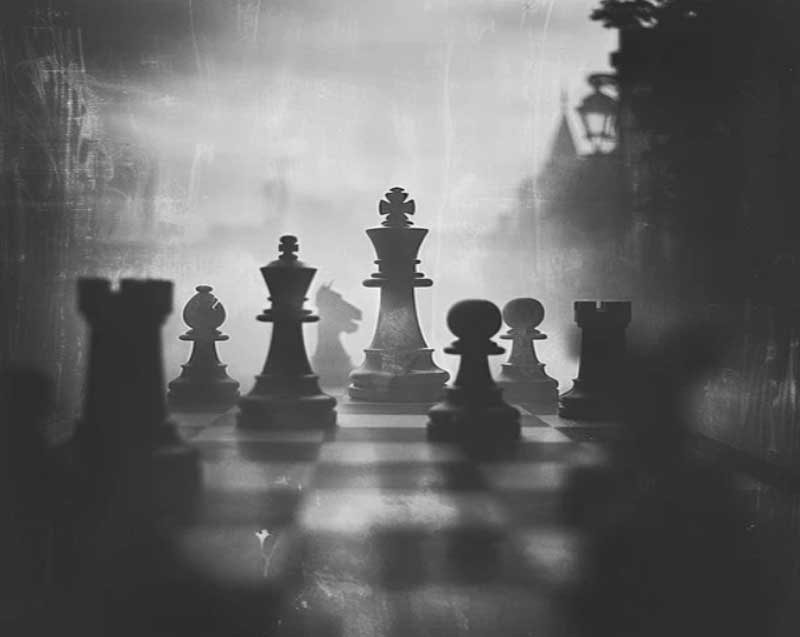
And so, the chessboard expands to the Middle East, seen as a ‘power forge’ and a place of promises never kept.
Today’s allies can be tomorrow’s enemies.
“Dictatorial” regimes are still supported, as long as they keep oil prices stable.
I still remember vividly the words a general once whispered to me:
“We are not bringing democracy to the Middle East. We are bringing control wrapped in the language of democracy.”
And what about Africa and Southeast Asia?
They are the backyards being fought over.
China pours money through its “Belt and Road” initiative.
America responds with scholarships, with human rights grants, but all with hidden political conditions.
Neither is entirely selfless.
And the people in those countries are the only party never truly invited to the negotiating table.
(He looked me straight in the eye, as if about to reach a final conclusion.)
So what does America really want in this game?
I once asked this question directly in a closed-door meeting with strategic experts:
“Are we protecting democracy, or are we just protecting the power structure we are at the head of?”
No one answered.
Only one person, after taking a cigar from his mouth, said:
“Democracy is a commodity for export.
But inside, we just want an order where we don’t have to share the throne.”
Foreign policy is a play.
And the scriptwriter is not always the president.
But the people behind the scenes: finance, industry, and sometimes, the media.
The ones who decide what you are allowed to hear.
Julian Lee:
Thank you for that overview, sir.
Now, let’s move on to a more specific topic.
You mentioned NATO and the Russia-Ukraine war.
What is the real cause of this war?
What are the perspectives of the parties involved?
And is there any way out to end this conflict?
Finally, for the sake of long-term peace, should NATO be dissolved, or does it need some kind of adjustment?
The Former President:
(He was silent for a moment, taking a deep breath.)
You have just asked one of the most painful and thorny questions of our time.
And I will answer it directly, from a perspective no longer bound by my role, my flag, or my party.
The real cause of the Russia-Ukraine war is not simply a territorial conflict.
It is the result of a long chain of provocations, misunderstandings, and strategic calculations from multiple sides.
Let’s start with Russia’s perspective.
They summarize it in one sentence:
“We are being encircled, and we are defending ourselves.”
They see NATO’s eastward expansion after the Cold War as an act of betrayal. They view the 2014 Maidan event as a “color revolution” orchestrated by the West. And they consider a pro-Western Ukraine a direct security threat. For them, this is not an invasion. It is a “preventive war.”
Even though, in reality, their military action has violated international law and caused terrible suffering to the people.
Next, is Ukraine’s perspective.
It is also very clear:
“We are an independent nation, no one has the right to decide for us.”
They want to join NATO and the EU to escape Russia’s influence, to seek security guarantees. They see Russia as an aggressor, denying their sovereignty and threatening their national existence. For them, this war is a struggle for survival, not just for territory, but for the identity of an entire nation.
And finally, is the perspective of NATO and the U.S.
The public statement is:
“We support Ukraine for the sake of justice and international order.”
But what is the reality?
The U.S. and NATO are using Ukraine as a “proxy front” to weaken Russia without sacrificing a single one of their own soldiers. We sell weapons, we restore NATO’s role, which was fading. Deep down, the more isolated and depleted Russia becomes, the more the U.S. solidifies its role as the “leader of the global democratic order.”
In summary, this is not just a war between two countries.
It is a confrontation between two completely different worldviews.
And the most painful thing…
is that the Ukrainian people are paying the price with their blood and their stolen time.
(His voice lowered.)
So is there a way out?
Very difficult.
But in theory, there could be a short-term solution. A ceasefire based on the current territorial status. Ukraine would not join NATO immediately, but could receive security guarantees from a third country. And Russia would withdraw its troops from a part of the territory, in exchange for a gradual lifting of sanctions.
But all of this cannot happen without “political will.” A thing that is being swallowed up by public pressure, by financial interests from the war, and by the geopolitical egos of those in power.
So what about NATO? Should it be dissolved or adjusted?
It cannot be dissolved immediately. But it certainly needs to be restructured.
NATO today is no longer a purely defensive alliance, but has become a strategic tool of the U.S. And if it continues to expand, under the banner of “protecting democracy,” the world will forever be trapped in a bipolar confrontation.
NATO needs a new definition of security. Not “who has the stronger weapons,” but “who makes the world more stable.”
Long-term peace for humanity cannot be achieved through military alliances.
It can only come from a moral alliance.
When nations no longer view each other with suspicion.
When strength is no longer in missiles, but in the ability to empathize between cultures.
And when the truth is no longer distorted by biased media.
Only then, will peace truly exist.
Julian Lee:
Regarding the Russia-Ukraine war, I still don’t see you mentioning any viable way out.
Or is there a way out, even if only under a hypothetical condition?
The Former President:
(He nodded, an acknowledging nod.)
You are right.
What I have shared so far is only a diagnosis.
I have not yet prescribed the medicine.
Because to talk about a viable way out for this war, we need to temporarily suspend conventional geopolitical logic, and dare to set conditions that currently seem impossible.
But that is the real way out, if humanity wants to exist in the long term.
(He paused, his gaze sharpening, as if drawing a peace map on an invisible table.)
Let’s imagine a solution like this:
“The neutralization of Ukraine, in exchange for peace and a restructuring of NATO.”
First, Ukraine would become a neutral state, permanently non-aligned with NATO.
But in return, it would receive security commitments from major powers like the U.S., China, Turkey, and Germany, who would co-sign a treaty guaranteeing Ukraine’s sovereignty. UN peacekeeping forces, not from NATO or Russia, would be temporarily deployed at the disputed borders.
Then, Ukraine would no longer be a “Western outpost,” nor a “Russian backyard,” but a neutral buffer zone.
Second, Russia would withdraw its troops from most of the occupied territory.
In return, Crimea would be recognized as a “frozen disputed area,” placed under special UN supervision, like West Berlin during the Cold War. Russia would have some sanctions lifted, especially in the health and agriculture sectors, but this would be accompanied by an obligation to withdraw nuclear weapons from the region.
Third, NATO would have to freeze its eastward expansion for twenty years.
They would not admit any new members from the former Soviet Union, but would open up mechanisms for cooperation on humanitarian and environmental issues. Part of NATO’s function would be transformed into a non-military security mechanism, to deal with disasters, pandemics, or food crises.
That is, to transform NATO from a military alliance into a “global risk management institution.”
And finally, something extremely important:
The Western media must end its tactic of “demonizing” Russia.
No more calling Putin a “monster,” no more calling the Russian people “barbarians.”
And conversely, the Russian media must also end its propaganda of ethnic hatred.
An independent international committee on “media conduct in conflict” needs to be established, with the power to warn and heavily fine any media outlet that crosses ethical lines.
(He looked at me, as if to emphasize the difficulty of this plan.)
For this solution to become a reality, it would require almost impossible conditions.
Both the U.S. and Russia would need a new generation of leaders, no longer trapped in the legacy of the Cold War.
The Western public would have to learn to see Russia as a different culture, not an “instinctive villain.”
And Ukraine would have to accept sacrificing an illusion, in exchange for a sustainable reality.
What if we don’t take this path?
Russia will be bogged down for a long time, leading to domestic discontent and the risk of chaos.
Ukraine will continue to be a depleted land, with a generation deeply scarred.
The U.S. and Europe will continue to pour money into the war, leading to internal divisions and economic decline.
And most importantly…
China will just have to sit back and wait.
(He concluded with a contemplative voice.)
War never ends with a winner.
It only ends with those who are calm enough to take their hands off the trigger.
And if the world does not soon find a rational stopping point, then history will be written in blood.
Once again.
(…..)
This article is an excerpt from the book “AFTER POWER: THE LEGACY” – which includes the complete exclusive interview by journalist Julian Lee with a former US President.
If you wish to experience the full journey of thought and the unpublished insights of the work, please click the button below to own the complete book.
To explore more works from THE LIVES MEDIA, visit our book collection.