( ….. )
DAY THREE
Sophia Bell:
Good morning, Mr. Liu! Have a good day! Julian and I have come again today to continue listening to your sharing. The last two sessions have truly given us much to reflect on.
Julian Lee:
Good morning, Mr. Liu. Thank you for continuing to make time for us. Sir, as Sophia said, your stories and analyses have opened up many valuable perspectives. I am also very grateful that you agreed to look over the manuscript of my book, “AFTER POWER: THE LEGACY.”
Mr. Liu Siyuan:
(Smiling gently, he nods)
Good morning, Ms. Sophia, Mr. Julian. Thank you both for coming. Yes, I did spend some time quickly reading the manuscript of “AFTER POWER: THE LEGACY” by Mr. Julian. Although I only skimmed through it, what I perceived has left a truly deep impression. I was quite surprised and also very appreciative that a former President, a man who was at the pinnacle of power, would have such frank reflections and self-examinations about the nature of the system, the limits of power, and especially the return to core moral values. There are many points in the book that made me think and feel a sense of resonance, especially when he emphasized the importance of “taking virtue as the foundation” for a nation, a society. That reminded me of so many teachings of the Eastern ancients that I had previously overlooked…
Sophia Bell:
It’s interesting that you mention that, Mr. Liu. In the last two sessions, we have delved deep into your personal experiences, the nature of the persecution of Falun Gong, and the crimes of the Chinese Communist Party. Today, perhaps we can look back together at the values, the ancient philosophies of both the East and the West on the art of governing, on a better society…
Mr. Liu, after all that you have been through, and especially after you began practicing Falun Gong in the past year or so, do you have any new interpretations of the teachings of the ancients, for example, the saying “When those above are not righteous, those below will be in chaos,” when reflecting on the current state of China?
Mr. Liu Siyuan:
(Nodding, his eyes showing a look of deep contemplation)
Ms. Sophia, your question touches upon something I have agonized over a great deal, especially in this past year. Before, when I was a researcher, an official, I had also read the teachings of the ancients like “When those above are not righteous, those below will be in chaos.” But to be honest, at that time, I only saw them as historical summaries, lessons from experience… I hadn’t truly grasped the universal law hidden behind them. I was too focused on economic models, on political institutions, and forgot that the root of a nation, the prosperity or decline of a society, lies in the morality of its rulers, and more broadly, the morality of the entire people.
It wasn’t until I witnessed with my own eyes the ultimate brutality and deceit of the Chinese Communist Party in its persecution of Falun Gong, and later, when I was fortunate enough to encounter the Dafa and read Zhuan Falun, that my worldview completely changed. It was as if I had woken up from a long dream. “When those above are not righteous, those below will be in chaos” was no longer just an empty saying; it manifested painfully and clearly in every corner of Chinese society today. When the “above” – those who hold the highest power – have completely gone against the universal values of humanity, trampling on conscience, how can the “below” – that is, the entire society – not fall into “chaos”? It is an inevitable thing, an unavoidable karmic consequence.
Julian Lee:
(Listening intently, he then adds)
I completely agree with Mr. Liu’s initial remarks. From the perspective of political science and the history of nations, a clear pattern can be seen: any system, no matter how superior it may seem in its design, if it lacks the moral foundation of those who operate it, will sooner or later fall into decline or become a tool of oppression. The saying “When those above are not righteous, those below will be in chaos” is not only true for Eastern culture; it also has similar manifestations in Western history. When the ruling elite loses its integrity, pursues personal and factional interests, public trust will erode, social division will increase, and instability is hard to avoid. Reflecting on these ancient philosophies in a modern context, especially with what is happening in China, is extremely necessary for us to understand the root of the problem.
Sophia Bell:
Thank you for the very profound general sharing, Mr. Liu and Julian. Mr. Liu, could you analyze more specifically, from what you have witnessed and experienced, how the “unrighteousness” of the “above” in China manifests, and how it has led to “chaos” in society, especially in the context of the persecution of Falun Gong?
Mr. Liu Siyuan:
(Nodding gently, his voice becomes deeper, filled with emotion.)
Ms. Sophia, the “unrighteousness” of the “above” in China, that is, of the Communist Party, is not just isolated wrongdoings, but a rottenness from its very nature, from its core ideology.
First, it is the complete denial of Gods and Buddhas and traditional moral values. Since seizing power, the CCP has systematized the destruction of traditional culture, replacing it with Marxism-Leninism, a doctrine based on class struggle, violence, and atheism. They sow into the minds of the people, especially the younger generation, that there are no Gods or Buddhas, no karmic retribution, that man is the master of nature and can do anything to achieve his goals. When the root of morality, the reverence for Heaven, Earth, Gods, and Buddhas is gone, what limit is there for evil?
Second, it is systematic deceit and trickery, which has become the nature of the regime. From the initial promises of a just and free society, to the embellished economic growth figures, to the covering up of heinous crimes… all are lies. They build a giant “red curtain” of propaganda to deceive the people and the world. When the leaders, an entire system, live by lies, how can they ask the “below” to be honest?
Third, it is the worship of violence and absolute power. “Political power grows out of the barrel of a gun” – this saying has become their guiding principle. Anyone, any group of people with different ideas, with the potential to shake the Party’s monopoly on power, is considered an enemy and must be eliminated. They do not use virtue to win people’s hearts, but use police, military, prisons, and re-education camps to suppress.
It is from this root “unrighteousness” that it has led to comprehensive “chaos” in society.
Corruption has become a national plague, from the biggest tigers in the Politburo to the small flies at the village level, all trying to plunder, to enrich themselves on the sweat and tears of the people. Because when there is no morality, no belief in karma, greed has no end.
Social morality has severely degenerated. People deceive each other for profit; contaminated food and fake goods are rampant. Indifference and selfishness have seeped into every family, every relationship. Because when the “above” has set a bad example, has trampled on all moral values, how can the “below” maintain their kindness?
And the peak of that “chaos,” nothing is clearer than the persecution of Falun Gong.
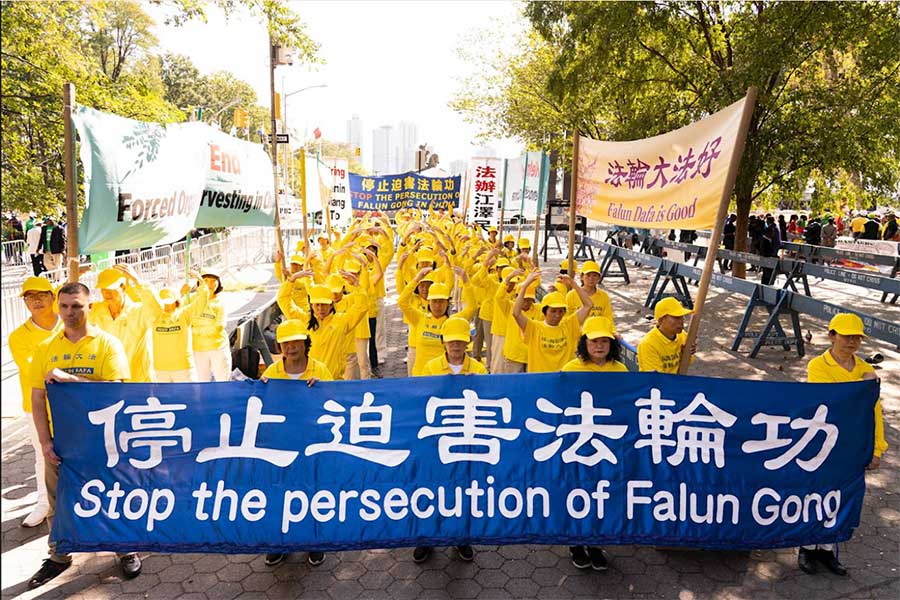
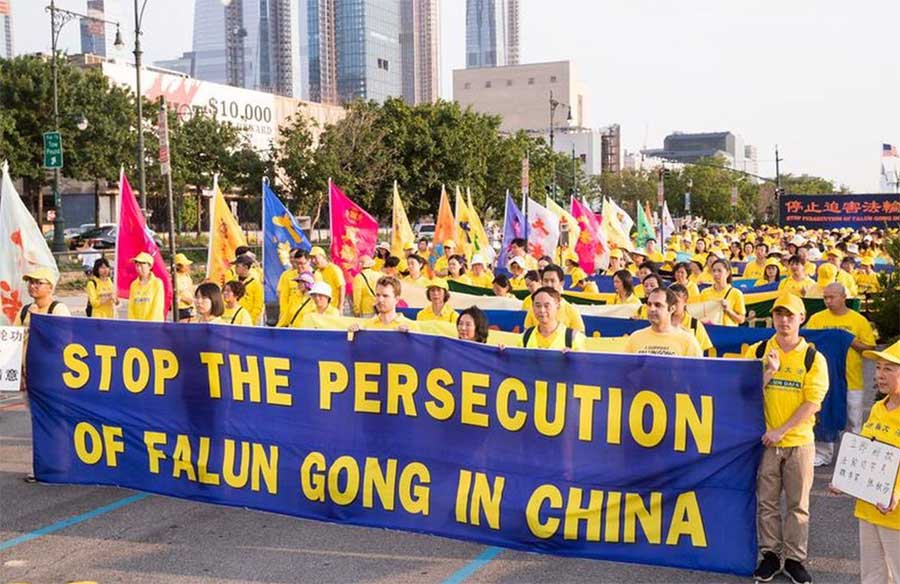
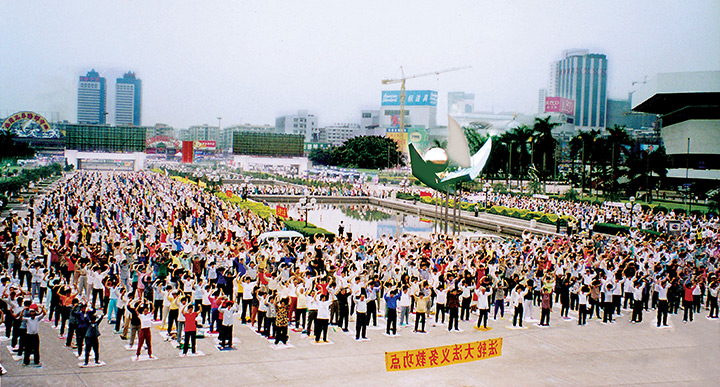
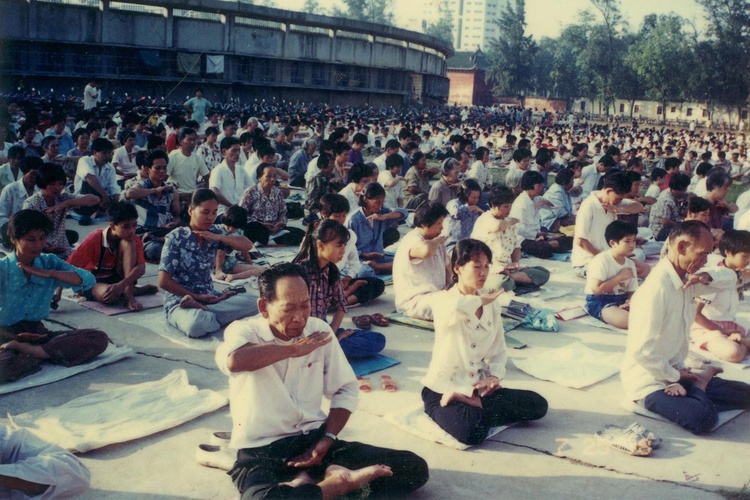
Falun Gong teaches people to live according to Truthfulness-Compassion-Forbearance, guiding people back to the best moral values. Such a peaceful practice, simply because the number of practitioners was too large, exceeding the number of Party members, made the CCP leaders, especially Jiang Zemin, feel their power was threatened. Unreasonable jealousy and fear turned into the most brutal persecution campaign in modern history. They fabricated, slandered, used the entire media machine to defame Falun Gong, turning gentle practitioners into “enemies of the state.” Millions were arrested, brutally tortured, sent to labor camps, had their organs harvested while alive… This is not just “chaos” anymore, this is a crime against humanity, the clearest manifestation of the evil nature of a regime that has completely lost its humanity.
Julian Lee:
(Listening intently, he then adds)
Mr. Liu’s analysis of the CCP’s “unrighteousness” and the resulting “chaos” is extremely pertinent. I just want to add one aspect, which is that this “unrighteousness” is also manifested in the fact that the CCP has deliberately cut off the Chinese people from the very source of their great culture. A nation no longer connected to its traditions, to the moral values that have been forged over thousands of years, will become easily manipulated, easily led by foreign and extremist ideologies. When people no longer know to revere Heaven and Earth, no longer understand karma, it becomes much easier for them to do evil things, or to condone evil. The Cultural Revolution is a classic example of the uprooting of traditional culture, and its consequences still linger today, creating the conditions for persecutions like the one against Falun Gong to occur.
Mr. Liu Siyuan:
Mr. Julian is very right. They fear traditional culture because the values of Truthfulness-Compassion-Forbearance, the principles of Benevolence, Righteousness, Propriety, Wisdom, and Faith that the ancients extolled, are completely opposite to their deceitful and violent nature. A person imbued with traditional culture would find it difficult to accept the rule of such an atheistic and immoral party.
Sophia Bell:
Yes, I’m beginning to understand that the art of governing needs to be rooted in “virtue”… not just in the ancient feudal models, but also true for today’s Communist and Capitalist models. It seems that for any model or institution, if the leadership and the people do not take virtue as the root, society will sooner or later fall into chaos and then decline…
But could a “good model” make that decay happen more slowly, Mr. Liu, Mr. Julian? And when speaking of “taking virtue as the root,” what suggestions can the Taoist ideas like “The Imperial Way of non-action (wu wei)” or “The Kingly Way of establishing virtue” offer us today?
Mr. Liu Siyuan:
Ms. Sophia raises a very profound issue. It’s true that the “model” or “institution” also has its role. A well-designed institution, with checks on power, with transparency, may be able to curb the decay to some extent when the general morality of society declines, or at least make the process slower and less painful. However, I still believe that is only treating the symptoms. If the “root of virtue” is shaken, then even the best model will eventually be penetrated, exploited by the unvirtuous. History has shown that many republics, many seemingly stable democratic institutions have also declined when the elite and the populace lost their foundational moral values.
As for the Taoist ideas you mentioned, like “The Imperial Way of non-action” or “The Kingly Way of establishing virtue,” these are precisely the philosophies of governance that I have come to appreciate deeply after I began to cultivate.
“The Imperial Way of non-action (wu wei)” does not mean doing nothing at all, but that the ruler follows the Way of Heaven, follows the laws of nature, and does not interfere crudely, imposing his subjective will on the people. To let the people live freely, develop freely, with the government only playing a role of gentle regulation and guidance, like water flowing naturally.
“The Kingly Way of establishing virtue” emphasizes that the leader must prioritize cultivating his own virtue, using his moral character to inspire and set an example for the people. When those above have virtue, the people will naturally follow suit, and society will be peaceful, without the need for harsh punishments or complicated laws.
Let’s try to reflect on the Chinese Communist Party, they have done the complete opposite. They are not “wu wei” but extremely “you wei” (proactive interference), interfering in every aspect of the people’s lives, from thought and belief to livelihood. They do not “establish virtue” but “establish might” through violence, through deceitful propaganda. And what is the result? A society full of conflicts, tension, where people live in fear and have lost their faith. The persecution of Falun Gong is a classic example of that “you wei” and “lack of virtue.” A practice that teaches people to cultivate their hearts towards goodness, to live by Truthfulness-Compassion-Forbearance, was seen by them as a threat and they tried every means to eliminate it. They have gone against the Dafa, against the will of Heaven and the hearts of the people.
Julian Lee:
I very much agree with Mr. Liu’s analysis. The Taoist concept of “wu wei,” if viewed from the perspective of Western political philosophy, has interesting similarities with ideas of “limited government” or classical liberalism, where the role of the state is limited to protecting basic freedoms and maintaining order, leaving the rest for society to self-regulate. However, the core difference and also the profundity of Taoism, as Mr. Liu has pointed out, is that it is founded on the “Tao” (the Way) and “De” (Virtue). A “wu wei” government is not just one that doesn’t interfere, but one that doesn’t interfere because the leader has reached a certain moral realm, understands the laws of the universe, and believes in the self-regulating ability of society when people live morally.
As for “The Kingly Way of establishing virtue,” it emphasizes something that many modern democracies sometimes overlook, which is the personal moral quality of the leader. We can have very democratic election processes, complex oversight mechanisms, but if the person elected lacks virtue, they can still find ways to manipulate the system to serve personal or factional interests. Conversely, a truly virtuous leader, even in an imperfect system, can still bring stability and prosperity to the nation. Ancient Chinese history has many sagacious kings like Yao, Shun, King Wen, and King Wu; they ruled not by cunning or harsh laws, but by their own virtue, which won the allegiance of the world.
Mr. Liu Siyuan:
Exactly, Mr. Julian. The sage-kings of ancient times, they didn’t need massive propaganda machines, they didn’t need large police forces to control the people. They only needed to live in accordance with the Way, cultivate themselves, and be an example for the common people. At that time, as Laozi said: “I take no action and the people are transformed of themselves; I prefer stillness and the people are rectified of themselves; I am not meddlesome and the people enrich themselves; I have no desires and the people are simple and honest of themselves.” That is the highest realm of the art of governing.
Sophia Bell:
If “virtue” must be the root, then the greater the virtue of the highest leader, the more beneficial it is for the people and the country. Is my understanding correct, Mr. Liu, Mr. Julian?
If so, then another question arises: how can we select a person of sufficient talent and virtue?…
In ancient Chinese history, there was the practice of “passing the throne to the worthy” during the time of Emperors Yao and Shun, while today, most countries follow the form of elections… Do these forms truly guarantee finding the most worthy person? And what suggestions does the Confucian philosophy of “Cultivate oneself, regulate the family, govern the state, bring peace to the world” offer us about the necessary qualities of a leader?
Mr. Liu Siyuan:
(Nodding, his face showing agreement)
Ms. Sophia, you understand my meaning very well. The higher the virtue of the leader, the greater the blessing for the nation and the people. Because when the leader has virtue, they will know how to love the people as their own children, will know to place the nation’s interests above personal interests, will know to use wise and talented people, and will not do things that go against the Way of Heaven and righteousness.
Regarding the question of how to select a person of sufficient talent and virtue, it is indeed a difficult problem from ancient times to the present, in any system. The practice of “passing the throne to the worthy” in the time of Yao and Shun was an ideal model, where the successor was chosen based on proven virtue and talent, not bloodline or faction. That was the pinnacle of impartiality and being for the people. However, that model requires the current ruler to be a true sage, without selfish thoughts, and the society at that time must also have a very high moral foundation.
Today, elections are the common form in many democratic countries. In theory, it gives power to the people to choose their representatives. But in reality, as we can see, elections also have many problems. They are easily influenced by money, by the media, by glamorous but unrealistic promises, and by the fleeting emotions of the crowd. Sometimes, those who are good at public speaking, good at lobbying, win the election, not necessarily those who truly have virtue, talent, and a heart for the people. In China, there is no real election for the top leadership position at all. It is entirely a power struggle and arrangement within the Party.
As for the Confucian philosophy of “Cultivate oneself, regulate the family, govern the state, bring peace to the world,” this is an extremely important guide on the path and qualities of a leader, a gentleman. It points out a very logical sequence: to do great things for the world, one must first start by cultivating one’s own moral character (“cultivate oneself”). When one has virtue and wisdom, one can then manage one’s own family well (“regulate the family”). If the family is harmonious and well-ordered, one can then govern a state well (“govern the state”). And when the state is stable and prosperous, one can then think of bringing peace and stability to the whole world (“bring peace to the world”).
The Chinese Communist Party has gone completely against this sequence. Their leaders, how many of them truly “cultivate themselves”? Or do they only care about enriching themselves, their families, their factions? The families of many high-ranking officials are full of scandals, their children living luxuriously abroad with the people’s money. A person who cannot “cultivate oneself,” cannot “regulate the family,” how can they “govern the state” well? Their persecution of Falun Gong, a practice that teaches people to “cultivate oneself” according to Truthfulness-Compassion-Forbearance, is the clearest proof that they fear people with morality, fear values that could shake the foundation of their rule, which is based on lies and violence.
Julian Lee:
(Continuing)
The problem of selecting a virtuous and talented leader that Ms. Sophia raised, and Mr. Liu’s analysis of “passing to the worthy” as well as “elections,” is truly a perennial challenge. Even in Western democracies with multi-party election systems, finding and promoting truly worthy leaders is still very difficult. As Mr. Liu said, money and media have too much influence. Sometimes, the public is swayed by constructed images, carefully calculated messages, rather than looking at the true character and competence of the candidates.
The Confucian philosophy of “Cultivate oneself, regulate the family, govern the state, bring peace to the world,” though originating from the East, has universal values. It emphasizes that leadership ability is not just management skills or professional knowledge, but must originate from personal character. A leader cannot separate their private self from their public role. Dishonesty in private life, greed, or other personal moral issues will sooner or later affect their decisions and behavior when in power.
And I think, another important point in “cultivating oneself” is the ability to self-reflect, self-correct, and listen. A leader, no matter how talented, if they do not know how to “cultivate themselves,” do not know how to look at themselves, is very likely to become despotic and detached from reality.
Mr. Liu Siyuan:
Mr. Julian’s point is very well-taken. “Cultivating oneself” is not just about maintaining morality, but also a continuous process of learning and correcting oneself. The ancients said, “no man is perfect,” everyone has shortcomings. The important thing is whether one dares to recognize and correct them. The leaders of the CCP, they consider themselves the “pinnacle of wisdom,” the “representatives of the people’s interests,” so they never admit their mistakes, never “cultivate themselves” in that sense. All mistakes are blamed on “hostile forces” or objective factors. That is another manifestation of their “unrighteousness.”
Sophia Bell:
But for modern people today, what is glamorous on the outside, what is easy to see, is more convincing… While ancient, invisible, and abstract ideas are difficult for people to perceive… That is why China’s explosive economic development over the past 40 years has been like a dazzling “diamond” that attracts the support of its people and international friends…
Speaking of which, I am reminded of a work trip to Vietnam in 2018. While on a trans-Vietnam train from south to north, the train sometimes passed through rural areas and hills… At that time, looking out the train window at the distant green hills, I suddenly exclaimed to another passenger next to me, “You Vietnamese people have a very good sense of forest protection”… Do you know what that passenger replied to me then?..
He replied: “Hey, beautiful American journalist, the green scenery you see is not as good as you think!”…
I didn’t quite understand what he meant and asked again: “What do you mean?!”
He explained: “You see, those distant green forests are eucalyptus forests, the ‘achievement’ of deforestation to plant industrial trees… Eucalyptus is a fast-growing tree, very suitable as a raw material for the paper industry. But you know what, people don’t realize that eucalyptus is a tree that destroys soil fertility terribly! Not only is it unable to retain moisture for the soil, but it also kills other shrubs with the poison in its leaves and roots… And after about 10 years of planting this tree, the hills will be eroded and become barren, and the shrubs and microorganisms cannot survive… From a distance, it looks very beautiful, but when you get close and look down at the ground, you will see that the ground of the hills has become as desolate as a desert…”
This image shocked me…
And later I associated the image of the eucalyptus forest in Vietnam with the Communist regime in China… With its skyscrapers, modern cities, impressive economic growth figures… could it be that it is also concealing a desolation, an internal destruction of morality, of culture, of human rights, Mr. Liu, Mr. Julian? And could it be that this is precisely the manifestation of a “Hegemon’s Way (Ba Dao)” that the ancients warned against, a rule based only on superficial strength without a sustainable moral foundation?
Mr. Liu Siyuan:
(Remains silent for a moment after hearing Sophia’s story, his face showing deep thought and empathy.)
Ms. Sophia, your story and your association are truly profound, very visual. “Eucalyptus forest”… it gives me the shivers. It’s not just an image; it is the naked truth about the so-called “miraculous rise” of China under the rule of the Communist Party.
Just as you said, the skyscrapers, the sea-crossing bridges, the dizzying GDP growth figures… those are the glamorous things, easy to see, easy to convince those who only look at the surface, or those who deliberately do not want to see the truth. But what is behind that “lush green”?
It is the irreversible environmental destruction, the air so polluted that people dare not breathe, the water sources depleted and poisoned.
It is the ultimate moral decay, where people are willing to do anything for money, regardless of conscience, regardless of the health and lives of their fellow human beings.
It is the trampling of human rights, of freedom of belief, where millions of innocent people, Falun Gong practitioners, Uyghurs, Tibetans, are suppressed, deprived of the most basic human rights.
It is the erosion, the desertification of the beautiful traditional culture of thousands of years, replaced by a foreign, struggle-based, atheistic ideology.
And your connection to the “Hegemon’s Way (Ba Dao)” is completely accurate. The ancients distinguished very clearly between the “Kingly Way (Wang Dao)” and the “Hegemon’s Way (Ba Dao).” The “Kingly Way” is to use benevolence and virtue to win the hearts of the people, making the world submit naturally. The “Hegemon’s Way” is to use force, cunning, and oppression to rule, making people obey out of fear, not out of respect.
The Chinese Communist Party is precisely following the typical “Hegemon’s Way.” They use economic power to bribe, to influence other countries. They use a huge propaganda machine to paint a pretty picture, to cover up crimes. They use the military and police to suppress dissenting voices at home. They may temporarily achieve some superficial “successes,” may make some people praise them, but it is a false prosperity, a “green color” of a eucalyptus forest, without sustainable roots. Because it is built on lies, on fear, and on the destruction of core human values. Once that “Hegemon’s Way” is no longer strong enough to oppress, or when the people have become too tired, too pained, then collapse is inevitable.
Julian Lee:
Ms. Sophia’s “eucalyptus forest” imagery is truly powerful. It shows a universal law: what grows too fast, focusing only on the outside while neglecting the inner foundation, often hides potential destructive risks. In economics, people also talk about unsustainable “overheated growth.” In politics, a regime that relies only on coercive force without genuine consent from the people will sooner or later face a crisis.
The “Hegemon’s Way” that Mr. Liu just analyzed is not limited to the CCP’s domestic rule. We also see clear manifestations of it in their foreign policy. The “One Belt, One Road” ambition was initially promoted as a win-win cooperation, but in many places, it has turned into a “debt trap,” a tool for China to increase its geopolitical influence, even to interfere in the sovereignty of other countries. That is using economic power to impose its will, a form of the “Hegemon’s Way” in international relations. This is completely contrary to the “Kingly Way” that truly visionary and virtuous leaders of the past pursued, where influence was built on the basis of mutual respect and common interests.
Mr. Liu Siyuan:
Mr. Julian is right. That “Hegemon’s Way” spreads to the outside as well. They want the whole world to recognize them, to acknowledge their “China model.” But they forget that true respect does not come from material strength or imposition, but must come from morality, from the humanistic values that the nation contributes to humanity. So far, what the CCP has “contributed” to the world seems to be only instability, unfair competition, and the spread of a toxic ideology.
(…..)
This article is an excerpt from the book “THE RED VEIL” – a series of exclusive interviews by journalist Sophia Bell with a former official in the Chinese Communist government.
If you wish to experience the full journey of thought and the unpublished insights of the work, please click the button below to own the complete book.
To explore more works from THE LIVES MEDIA, visit our book collection.