( ….. )
Sophia Bell:
The “achievements” of modern China, most notably the high-speed rail system spanning the country, were built in an extremely short period of about 15 years! As an objective observer from the other side of the Pacific, I am truly impressed!…
This achievement is something that very easily wins the hearts of the people… I remember a few weeks ago, when I was at Harvard University for a short documentary, I met a female Chinese student studying there. I talked with her for a while, listened to her talk about China, about her family’s life back home. Her grandfather is a veteran revolutionary Party member, and her father is a successful businessman. Once during dinner, her grandfather and her father clashed over political views… I still remember she told me that her grandfather scolded her father, saying: “If it weren’t for the Party, would you have a fancy house and car to enjoy now?! You don’t know how to be grateful to the Party and yet you still speak the rotten words of those reactionary capitalists?!”
This student’s story made me think a lot about the complexity of Chinese society. On one hand, there are undeniable material achievements, but on the other hand, there are trade-offs, ideological imposition, and perhaps a lack of a moderate path, a “Doctrine of the Mean” that Confucianism once extolled, isn’t that right, Mr. Liu, Mr. Julian? Could it be that the absence of the “Mean” has led to such conflicts and extremism in both the thinking and actions of the government and a part of the populace?
Mr. Liu Siyuan:
(Listening intently to Sophia’s story, he then nods gently, a trace of sadness flashing across his face.)
The story Ms. Sophia tells is very typical of many families in China today, especially those with multiple generations living together. The conflict between the older generation, those who lived through the revolutionary period, were “brainwashed” and deeply imbued with the Party’s ideology, and the younger generation, who have had the opportunity to be exposed to the outside world and have different perceptions, is not uncommon.
The grandfather’s scolding in the story: “If it weren’t for the Party, would you have a fancy house and car to enjoy now?!” – that is precisely a rhetoric that the Communist Party has very successfully crammed into people’s heads. They deliberately equate economic development, material achievements, with the existence and “great” role of the Party. They want people to believe that everything good they have is granted by the Party, and therefore they must “be grateful to the Party,” must be absolutely loyal to the Party.
But they have deliberately ignored a truth: that economic development was achieved through the sweat, tears, and even the lives of millions of working people, through the belated opening up to acquire science and technology from the world, and also through the trade-off of the environment, of morality, of human rights. The “fancy house and car” may be real, but what is the price paid for it? Is it freedom of thought, human dignity, a just and humane society?
And you are very right to connect this to the absence of the “Doctrine of the Mean” of Confucianism. The “Mean” does not mean being a fence-sitter, having no opinion, but maintaining harmony, balance, not going to extremes, not being biased. It is the path of moderation, reason, and virtue.
The Chinese Communist Party, since its establishment, has always followed an extreme path. Either far-left with the Cultural Revolution, destroying everything, brutally denouncing people. Or far-right in developing the economy at all costs, regardless of morality and the environment. They have no “Mean.” They only have “struggle,” “annihilation,” “imposition.”
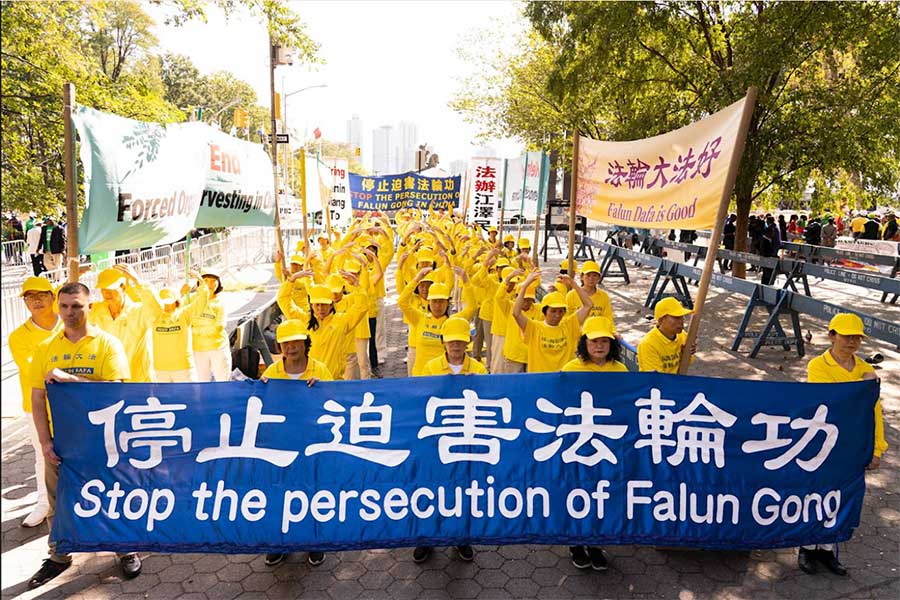
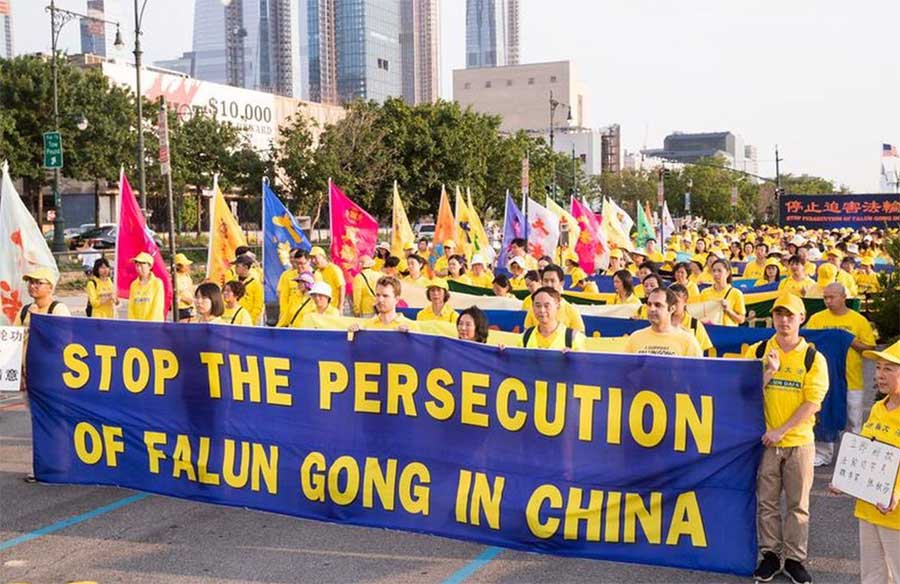
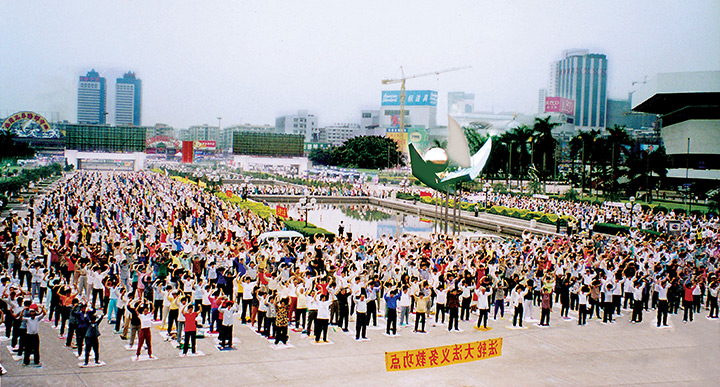
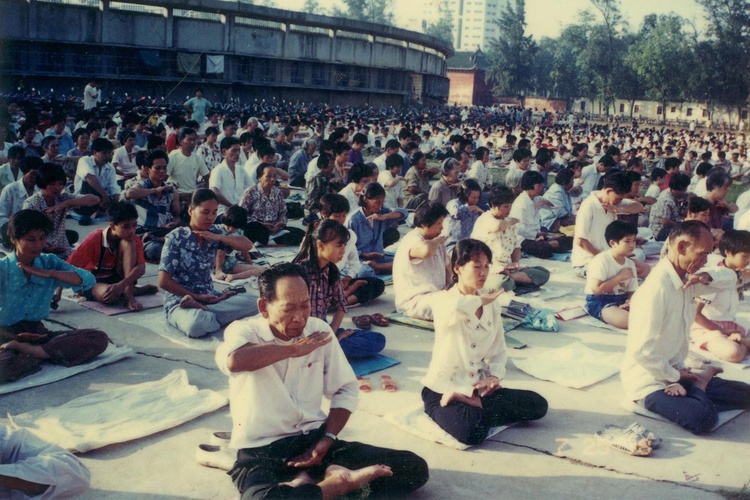
That lack of the “Mean” is clearly shown in how they treat people with different opinions, people with beliefs. Instead of dialogue, instead of seeking harmony, they only know how to use violence to suppress, as they did with Falun Gong. They do not accept the existence of anything outside their control and their ideology. It is this extremism, this lack of the “Mean” in thought and action that has created countless tragedies and instability for Chinese society.
Julian Lee:
Ms. Sophia’s story and Mr. Liu’s analysis of the “Doctrine of the Mean” are very thought-provoking. Extremism in thought, as Mr. Liu said, is a prominent feature of many totalitarian regimes, not just China. When one ideology is considered the only correct one, all dissenting opinions are considered “reactionary,” “hostile,” then there is no room for moderation, for seeking common ground.
The “Doctrine of the Mean” of Confucianism, if understood correctly, is a very profound philosophy about self-control and inner balance, which then leads to harmony in social relations and the stability of the nation. It requires one to “be sincere in thought, rectify the heart, cultivate the person” before thinking of great deeds. When a person cannot maintain the “Mean” in their heart, is easily swayed by greed, anger, ignorance, by immediate benefits, then their actions will easily go to extremes.
In the context of the grandfather and father in Ms. Sophia’s story, we clearly see the absence of a space for dialogue based on respect and reason. The grandfather is trapped in slogans, in indoctrinated prejudices. The father, though he may have different perceptions, finds it difficult to express them in a moderate way. This polarization is a great wound in many societies, and it often stems from a lack of cultivation of the “Mean” at both the individual and national governance levels. A society without the “Mean” will be easily incited, easily divided, and will resort to extreme actions, harming itself.
Mr. Liu Siyuan:
Exactly. “The Mean” also means knowing the “time,” knowing the “place,” knowing what is appropriate in each situation, not being rigid, not being dogmatic. The CCP always imposes one model, one single will on the entire society, regardless of reality, regardless of the people’s aspirations. That is a complete violation of the spirit of the “Mean.”
Sophia Bell:
I’d like to ask Julian this: Through your interactions and interviews with many former presidents or high-ranking officials in Western countries, what noteworthy viewpoints have you observed? Is there any resonance with the ancient Chinese thoughts we’ve just discussed, for example, the importance of a leader’s morality, or the necessity of a moderate, balanced path in national governance?
Julian Lee:
(Smiling, he nods)
That’s a very interesting question, Sophia. Indeed, through many conversations with leaders and policymakers in the West, especially those who have left office and have had time to reflect, I have noticed some very thought-provoking commonalities, and sometimes, surprising similarities with the ancient wisdom of the East, though expressed in a different language and frame of reference.
First, one thing that many former leaders often emphasize after being free from the pressures of power is their disappointment with excessive pragmatism and the erosion of morality in modern politics. They realize that policy decisions are often dominated by short-term interests, by lobbying groups, by the pressure of re-election, rather than by universal moral principles or the long-term interests of the nation. This, in a way, also reflects the lack of the “root of virtue” that Mr. Liu and the Eastern philosophers have spoken of. When leaders no longer prioritize morality, then no matter how democratic the institution may seem, it can still be manipulated.
Second, there is a concern about the growing polarization in society and the difficulty in finding a common voice, a consensus. Many admit that the media, social networks, and even political tactics have contributed to deepening the division, rather than promoting dialogue and mutual understanding. This reminds me of the importance of the “Doctrine of the Mean” that we just discussed. A society that lacks moderation, that lacks respect for different viewpoints, will find it very difficult to maintain stability and sustainable development.
Third, a very noteworthy point is the growing awareness of the role of the “silent citizens,” ordinary individuals who uphold core moral values in their communities. Like the former President in the book “AFTER POWER: THE LEGACY” that Mr. Liu has read, he also emphasizes that the future of a nation lies not only in the hands of politicians or the elite, but also depends heavily on the moral strength of ordinary people. This has a certain resonance with the Confucian view that social morality is built from the foundation of the family and the community.
And finally, although not all, some former leaders also begin to return to deeper philosophical and spiritual questions about the meaning of life, about the true legacy they leave behind. They realize that power and fame will eventually pass, what remains are humanistic values, the contribution to a better world. Perhaps this is a belated form of “self-cultivation,” but it is still very valuable.
Of course, Western culture has its own traditions of thought, from ancient Greek philosophers like Plato and Aristotle with their concepts of justice and virtue, to the Enlightenment thinkers with their ideas of natural rights, social contract, and the republic. In those thoughts, the role of reason, law, and institutions is often emphasized. However, if we look deeper, we still see threads connecting to Eastern thought, which is the aspiration for a just society, where people can live with dignity, and the leader must have a moral responsibility to the people. The difference may lie in the method and the emphasis, but I believe the goal of a good society based on universal values is where they meet.
Mr. Liu Siyuan:
(Listening to Julian, he nods in agreement.)
Mr. Julian’s sharing is very interesting. It shows that, whether in the East or the West, whether in different political systems, the concerns about morality, about the role of the leader, about a better society, seem to be perennial questions of humanity. Perhaps, when people reach the end of theories, of models, they return to the most core values, the things that belong to the original, innate kindness of human beings that the Dafa often mentions.
Sophia Bell:
We have discussed some of the governing philosophies of ancient China, and some of Julian’s sharing from a Western perspective… What about from a religious perspective? Mr. Liu is a Falun Gong practitioner, and Julian, as I know, has also passionately read many scriptures of different religions…
Could you both share more about the concept of Good and Evil, about morality in governance, or what universal principles major religions often mention when speaking of an ideal society and the role of a leader?
Mr. Liu Siyuan:
(His gaze becomes calmer, his voice slow.)
Ms. Sophia, when viewed from the perspective of a practitioner, especially after being enlightened by Dafa, I see that all major righteous religions in the world, despite having different forms of expression and specific doctrines, ultimately all teach people to be good, to believe in Gods and Buddhas, to believe in the law of karma, and to uphold universal moral values.
Regarding the concept of Good and Evil, all righteous religions define it very clearly. Good is to follow the Heavenly principles, to be compassionate, to be tolerant, to be truthful, to be patient. Evil is to go against the Heavenly principles, to be selfish, to be cruel, to be deceitful, to be contentious. If a society wants to be peaceful and prosperous, it must take Goodness as its foundation and eliminate Evil. The leader, more than anyone else, must be at the forefront of practicing Goodness, using their virtue to guide the people. If a leader’s mind is full of evil thoughts, and they act according to Evil, then that nation will surely be in ruins, and its people will suffer. The Chinese Communist Party’s persecution of Falun Gong is the ultimate expression of Evil, when a regime uses violence to eliminate practitioners who follow Truthfulness-Compassion-Forbearance.
Major religions also all talk about the law of Karma. You reap what you sow. An individual who does evil will suffer retribution, and a regime that commits crimes cannot escape the punishment of Heaven and Earth. This may not come immediately, but it is an infallible cosmic law. When I was still in the machine, I didn’t believe in this. But now, I believe in it absolutely. The crimes that the CCP has committed, especially the crime of harvesting organs from living Falun Gong practitioners, will sooner or later be exposed, and the masterminds will have to pay for their crimes.
Regarding the art of governing, righteous religions usually do not offer a specific model like political doctrines, but they all emphasize that a leader must have reverence for the Divine, must love the people, and rule with benevolence, not with violence. They must be the protector of true faith, creating conditions for the people to cultivate their morality. History has shown that in dynasties and nations where the leader respected Gods and Buddhas, valued wise and talented people, and cared for the moral life of the populace, that nation was often peaceful and prosperous for a long time. Conversely, tyrants and regimes that suppress faith will sooner or later be eliminated.
Julian Lee:
(Nodding, he continues after Mr. Liu.)
What Mr. Liu has shared is very profound and accurately reflects the core spirit of many major religions. From the perspective of someone who has studied many scriptures, from the Bible of Judaism and Christianity, to the Quran of Islam, or the Upanishads and Bhagavad Gita of Hinduism, I have noticed a very clear common denominator: the existence of a sacred order, a Supreme Being, and that human beings have a responsibility to live in accordance with the will of that Supreme Being, that is, to live according to morality and justice.
In the Bible, the kings of Israel are reminded to fear God, to keep His laws, and to rule the people with justice. When they did so, the country prospered. When they fell into sin, worshiped false gods, and oppressed the people, disaster struck. The concept of “Divine Justice” is an important foundation.
In Islam, the leader (Caliph) is considered the successor to the prophet to implement Sharia law, with the goal of ensuring justice (Adl) and the common good (Maslaha) for the community. Piety (Taqwa) and integrity are important qualities.
In Hinduism, the concept of “Dharma” (the Way, duty, cosmic order) plays a central role. The leader (Raja) has a “Rajadharma” – the duty of a ruler – which is to protect Dharma, maintain social order, and ensure the prosperity of his subjects. If one goes against Dharma, which is Adharma, it will lead to chaos.
Although the expressions are different, they all point in one direction: a good society must be built on a moral foundation, the leader must be a model of virtue, and there must be reverence for sacred, transcendent values. When people, especially those in power, lose this connection to their spiritual roots and only pursue worldly power and material things, that is when Evil has the opportunity to rise and society falls into decline.
Mr. Liu Siyuan:
Mr. Julian has summarized it very well. Whether in the East or the West, whatever the religion, the root is still to teach people to be good, to revere the Divine, and to believe in retribution. That is the rope that holds humanity’s morality. When that rope is cut, as the CCP has done, people will have no anchor, and society will fall into chaos.
Sophia Bell:
Yes, regarding “reaping what you sow,” regarding “retribution,” I have also read some concepts like “karmic retribution” in Buddhism, or the old Chinese saying “Good is rewarded with good, evil is met with evil; it’s not that there is no retribution, the time has just not yet come”… If these things are real, and people, from the highest leader to the common folk, all know to revere Heaven and Earth, Gods and Buddhas, and fear “retribution,” then wouldn’t the overall morality of society be elevated?
And isn’t it true that “virtue” is the very root foundation of prosperity and decline? Abundant virtue leads to a peaceful and prosperous nation, while thin virtue and great karma lead to the nation’s decline, social chaos, and the people’s suffering…
Speaking of the “root” and the “branches”… Is it that many governments today, especially the Chinese regime, only know to take “rule by law” as the root, but in fact, “rule by law” without a moral foundation is just the branches, even a tool to cover up the “lack of virtue” of those in power, Mr. Liu, Mr. Julian?
Mr. Liu Siyuan:
(Nodding vigorously, his face showing deep agreement.)
Ms. Sophia, what you have just said has truly touched the very essence of the matter. Absolutely correct!
If people, from the monarch to the commoner, all understood and believed in the law of Karma, knowing that all their actions, whether good or evil, whether secret or public, will have corresponding consequences, then social morality would surely be maintained and elevated. When there is reverence for Heaven and Earth, Gods and Buddhas, and fear of karmic retribution, people will not dare to do evil, will not dare to be greedy, will not dare to deceive. At that point, without the need for harsh laws, society would naturally become stable and harmonious.
“Virtue” is the very root of a nation, the foundation of its prosperity or decline. Thousands of years of history in China and the world have proven this. Dynasties where the king was wise and the ministers were virtuous, where all from top to bottom cultivated morality, the country was peaceful and the people were happy. Conversely, when morality declined, when kings were debauched and unvirtuous, and officials were corrupt, then no matter how powerful the nation once was, it would quickly fall into decline, chaos, and the people would suffer. “Abundant virtue leads to a peaceful and prosperous nation, while thin virtue and great karma lead to the nation’s decline” – that is an undeniable truth.
As for the “rule by law” you mentioned, I completely agree. The law is necessary to maintain social order, to deter evil. But it can only be the “branches,” a supplementary tool for the “rule by virtue.” If a government relies only on law, on punishment, while ignoring moral education and not building a foundation of faith for the people, then that is a failure.
Especially in China today, the Communist Party always preaches about the “socialist rule of law,” but in reality, their law is just a tool to protect the Party’s power, to suppress dissidents, to legitimize their own wrongdoings. They use “rule by law” to cover up the “lack of virtue” of an entire system. When the law enforcers have no morality, when the law itself is created by the unvirtuous, then that “rule by law” is even more dangerous than lawlessness, because it wears the false cloak of “justice” to deceive the people and the world. The persecution of Falun Gong is a clear example: they created vague laws, imposed absurd charges to arrest and sentence peaceful practitioners. That is not “rule by law”; that is trampling on the law, on human justice.
For a society to be truly stable and develop sustainably, “rule by virtue” must be the root, “rule by propriety” (education through rites and culture) must be the trunk, and “rule by law” should only be the branches and leaves, the last resort when morality is no longer enough to deter.
Julian Lee:
(Nodding in agreement.)
Mr. Liu’s analysis of the relationship between “rule by virtue” and “rule by law” is extremely profound. In Western political thought, there are also similar debates, for example, between the school of natural law, which holds that law must be based on universal moral principles, and the school of legal positivism, which only values the formal process of enacting law.
However, more and more thinkers are realizing that a legal system, no matter how rigorous, cannot in itself guarantee justice and stability without the moral foundation of society and of those who implement it. The law can punish wrongful acts, but it cannot sow the seeds of kindness. The law can prevent crime to some extent, but it cannot create a society where people voluntarily do good.
As Ms. Sophia and Mr. Liu have said, if people have faith in transcendent values, in karmic retribution, then the “law in the heart” will be even stronger than the law on paper. At that point, “rule by law” will become gentler, and will only play the role of a tool to regulate individual cases, not the main means of governance.
The fact that the CCP emphasizes “rule by law” while suppressing faith and destroying traditional morality is, in fact, a self-contradiction and they are digging their own grave. Because a “rule by law” without “virtue” as its foundation will only be a castle built on sand, which will sooner or later collapse before the storms of history and the judgment of conscience.
Mr. Liu Siyuan:
Exactly. Without virtue, nothing can be sustainable. That is something I have only come to deeply understand after so many ups and downs.
Sophia Bell:
I just recalled a saying, I don’t remember where I read it, but it goes something like this: “For one with thin virtue to hold a high position, for one with meager wisdom to make grand plans, it is rare that they do not bring disaster…” Perhaps this is the main spirit of what we are talking about in our sharing today…
The Chinese Communist Party, with its thin virtue, has brought disaster to the Chinese people, culminating in the persecution of kind Falun Gong practitioners… and perhaps one day, as you both have said, the “retribution” will come, and it will have to pay for what it has done…
Do you both agree?
Mr. Liu Siyuan:
(Nodding slowly, his gaze firm and somewhat solemn)
Ms. Sophia, that saying, although you don’t remember the source, contains a great truth, a law of the universe that no one can escape. “For one with thin virtue to hold a high position, for one with meager wisdom to make grand plans”… that is precisely the portrait of the current leaders of the Chinese Communist Party, and also of those who initiated the persecution of Falun Gong.
They have no faith in Gods or Buddhas, no moral foundation, only a boundless ambition for power and the fear of losing that power. They use cunning schemes, cruel tactics to maintain their rule, to suppress good people. They consider themselves “great, glorious, and correct,” but in reality, their wisdom is limited to vying for benefits, to deceiving and controlling.
The burden they are trying to carry – the fate of an entire nation, the stability of an entire region – but with such thin virtue and meager wisdom, how can they bear it? Disaster is inevitable, not only for themselves, but also for the nation they rule.
The persecution of Falun Gong is the pinnacle of that “lack of virtue” and “lack of wisdom.” To persecute people who live by Truthfulness-Compassion-Forbearance, people who are bringing good moral values to society, is not just a crime, but also an act of self-destruction of one’s own nation’s moral foundation.
And as you said, the law of Karma is unerring. “Good is rewarded with good, evil is met with evil.” What they have sown, they will surely reap. The day “retribution” comes may not be tomorrow or the day after, but it will surely come. History has proven that no tyranny can last forever, especially a tyranny that has committed heinous crimes against its own people and against the universal values of humanity. I believe in that completely.
Julian Lee:
(Pensively)
The saying that Ms. Sophia quoted, though it may be expressed differently in various cultures, its core meaning is universal. It is a warning about not exceeding one’s own limits, especially the limits of morality and wisdom when holding great responsibilities.
From a historical and political perspective, we see many empires, many powerful leaders collapse not because of external enemies, but precisely because of mistakes stemming from arrogance, a lack of understanding of natural and social laws, and most importantly, an internal erosion of morality.
The Chinese Communist Party may have achieved certain material accomplishments, may have built a sophisticated control apparatus. But if the “virtue” of its leaders does not match the power they hold, if their “grand plans” go against the interests and dignity of human beings, then sooner or later, those accomplishments will become meaningless, and that apparatus will collapse under the weight of the very crimes and mistakes it has committed.
The persecution of Falun Gong is not just a human rights issue; it is a sign of the regime’s deep moral crisis. And just as Mr. Liu and Ms. Sophia have said, such actions cannot go without consequences. “Retribution” can be understood in many ways, from the judgment of history, the punishment of the law (though it may be late), to the laws of cause and effect that we may not yet fully comprehend. But one thing is certain: no evil can exist forever without paying a price.
Sophia Bell:
Yes, thank you both… We have shared perspectives on good and evil, on some ancient governing philosophies rooted in virtue, on karma and retribution… Our session is also drawing to a close, so I think we should conclude the third interview here…
Along with the content of the previous two sessions, we have heard Mr. Liu share his story, about the evil of the Chinese Communist Party through the persecution of Falun Gong, about the crime of live organ harvesting…. The messages you have shared are all pressing issues of our time and require each of us, including the readers of THE LIVES MEDIA, to look straight at the truth and choose to act according to justice and conscience…
Mr. Liu, if you were to say a few short but sincere words to the readers of THE LIVES MEDIA, as a farewell for today’s session, what would you say?
Mr. Liu Siyuan:
(Looking at Sophia and Julian with grateful eyes, then his gaze turns distant, his voice calm but filled with a powerful belief.)
Ms. Sophia, Mr. Julian, and through you both, I would like to send a message to the esteemed readers of THE LIVES MEDIA.
If there is anything I want to convey after all that I have been through, it is this:
Please hold firm to your belief in truth and conscience, no matter how dark the shadows may be. Because the light of Truthfulness-Compassion-Forbearance is eternal, and justice will ultimately triumph over evil.
Every truth that is spread, every voice that is raised for justice, is an invaluable contribution to making this world a better place. Thank you all very much.
Sophia Bell:
Thank you sincerely, Mr. Liu, for your incredibly profound and courageous sharing throughout these past three interviews. Thank you, Julian, for joining us and contributing your valuable analyses. We will do our best to convey these messages fully to our readers.
Julian Lee:
Thank you, Mr. Liu, for your trust and for sharing. Your stories and insights are truly an inspiration and a powerful reminder for all of us.
Mr. Liu Siyuan:
I would also like to thank Ms. Sophia and Mr. Julian for patiently listening and for creating the conditions for me to be able to say these things.
* * *
This article is an excerpt from the book “THE RED VEIL” – a series of exclusive interviews by journalist Sophia Bell with a former official in the Chinese Communist government.
If you wish to experience the full journey of thought and the unpublished insights of the work, please click the button below to own the complete book.
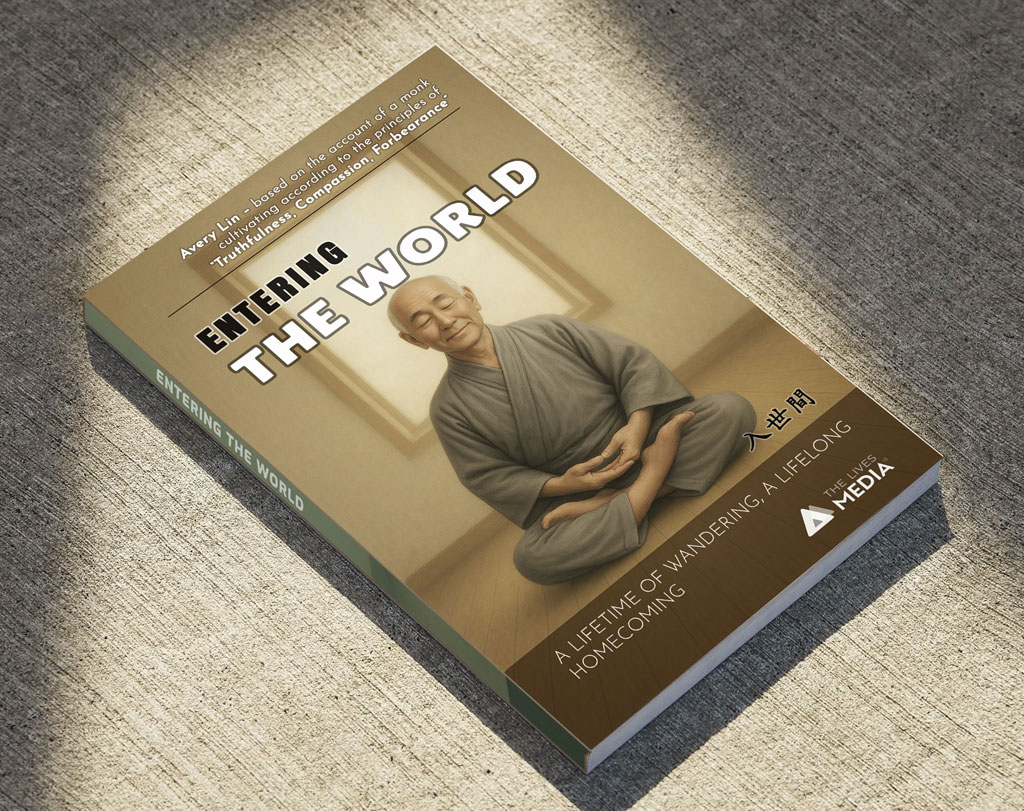
To explore more works from THE LIVES MEDIA, visit our book collection.