Our journey began with a simple question at the edge of the cosmic map: “What came before the Big Bang?” That question led us through the limits of the scientific method, to the discovery of other maps of reality, and finally, to a re-examination of the greatest mysteries through a completely new lens. Now, standing at a different vantage point, it is time to look back at the path we have traveled and ask: where do we go from here?
1. The Unanswered Questions on the Old Map
Throughout this book, we have repeatedly encountered “blind spots,” questions that the map of modern science, despite its detail, cannot fully answer. Let’s summarize them:
- The Question of Origin: What created the singularity and provided the energy for the Big Bang? Why is our universe so perfectly fine-tuned to allow for the existence of life?
- The Question of Structure: Why do galaxies rotate in an absurd manner, seemingly defying the law of gravity? What are “dark matter” and “dark energy” really, or are they just other names for our own ignorance?
- The Question of Consciousness: Where does consciousness come from? Why can a thought control matter? Are profound human experiences like dreams, inspiration, or extraordinary abilities merely illusions of the brain?
Faced with these questions, science seems to have reached a crossroads. One path is to continue building bigger “nets,” more powerful particle accelerators, and more distant telescopes, in the hope that the answers still lie somewhere in the material world. The other is to bravely admit that perhaps the problem is not the size of the net, but the nature of the net itself. Perhaps we are trying to catch the water molecules of the ocean with a fishing net.
2. Returning to a Forgotten Path
If the arguments in this book hold a measure of truth—that consciousness and matter are inseparable, that the universe is multi-layered and born from an Idea—then it does not require us to “invent” a whole new science. Instead, it invites us to look back and rediscover a forgotten path.
Modern science, which we can call the “science of matter,” has achieved phenomenal success. Its foundation is objectivity, measurement, and the removal of the observer from the equation. It views consciousness as merely a byproduct, a “ghost in the machine.”
But this is not the only path to understanding reality. Throughout history, there has existed a “science of consciousness.” The cultivation cultures of East Asia, the esoteric schools of ancient Greece and Egypt, all followed this path. They did not call it “science” as we define it today, but their goal was the same: to understand the nature of the universe and humanity’s place within it.
This path does not see consciousness as a byproduct but acknowledges it as a fundamental variable of reality. In this worldview, consciousness is not something to be “explained” by matter, but a tool that can be trained and used to directly perceive and explore the deep levels of the universe. It is not the ghost, but may well be the driver of the machine.
3. The Tools of the Introspective Path
This path of exploring inner consciousness does not necessarily mean abandoning external physical tools. Telescopes and particle detectors still have their own value. But alongside them, wisdom traditions throughout history often refer to other tools of perception, instruments that come from within.
- On Cultivating Character: These systems often prioritize the active observation and transformation of one’s inner self—eliminating hatred and jealousy, and nurturing compassion, truthfulness, and forbearance. They hold that this is not just a moral exercise, but a process that can directly change one’s being, thereby allowing a person to perceive more subtle levels of reality.
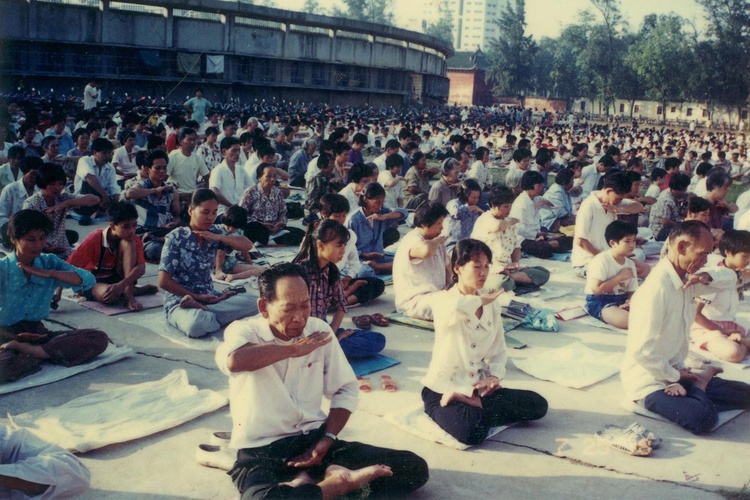
- On Meditation: In many practices, meditation is seen as a supportive technique. It is described as a method to “quiet the noise” of chaotic thoughts, creating a state of tranquility necessary for deep introspection. It can be likened to cooling a highly sensitive detector so it can register the faintest signals. While not all cultivation paths emphasize meditation, the inner stillness it brings seems to be a very useful condition.
- On Latent Abilities: These wisdom systems also speak of the ability to unlock innate human potentials. Among them, the Celestial Eye is often considered a fundamental tool of perception. When opened, this tool can bring forth various abilities such as clairvoyance, seeing into other dimensions, or perceiving the past and future. They are described as the “microscopes” and “telescopes” of the inner world. The more one can unlock these abilities, the more one is able to personally observe and verify the true nature of the body, matter, consciousness, and the universe, instead of relying solely on inference or belief.
The integration of the objective methods of the West and the introspective wisdom of the East could create a more complete picture. In that future, there might not only be scientists in laboratories, but also “psychonauts,” explorers who use their own cultivated consciousness as a vehicle to explore the cosmos.
4. The Next Frontier: Is It Inner Space?
In the 20th century, humanity looked outward, conquering the skies and setting foot on the Moon. We believed that the next great frontier of exploration lay among the stars, in distant galaxies.
But perhaps there is another direction of exploration that we have not truly begun.
The perspective of a science of consciousness suggests that the greatest and most challenging frontier for humanity might not be outer space, but inner space.
Could it be that the journey deep into the micro-levels of matter, and the journey deep into the realms of consciousness, are just two descriptions of the same path? The fractal universe we discussed also seems to suggest that within every atom, within each of us, lies the map of the entire cosmos.
If so, instead of spending trillions of dollars to send a few people to Mars, perhaps an equally wise direction would be to guide billions of people on how to enter stillness and explore the realms of the universe right from within their own cognitive space.
5. Each of Us Can Be a Scientist
Perhaps the most beautiful thing about this perspective is that it no longer views discovery as the exclusive privilege of an elite group of experts. It opens up the possibility for everyone to participate in that journey.
If consciousness is a tool, then each of us possesses that tool. If the inner universe is a land to be explored, then each of us can be an explorer.
In that case, every individual, through self-observation of their thoughts, through the cultivation of their character to elevate their realm of consciousness, or through the practice of meditation to listen to the stillness, can be seen as conducting a scientific experiment at the most personal and practical level.
The journey to discover the nature of Good and Evil may not require a particle accelerator. The feeling of interconnectedness among all things may not need a space telescope. With the perspective of a science of consciousness, the life of each of us becomes the laboratory. The most important, most mysterious, and most worthy subject of study is the deep levels of perception and the inner realms of your own self.
This article is an excerpt from the book “The Universe Beyond the Big Bang” – a journey to explore the origin and profound meaning of the cosmos.
- Continue reading other chapters from the same work:
- Chapter 1: THE GREAT QUESTION ON THE FRINGES OF SCIENCE – THE NET AND THE SILENCE OF THE OCEAN
- Chapter 2: CONSCIOUSNESS AND MATTER – A TWO-WAY RELATIONSHIP
- Chapter 3: THE IMPLICATE ORDER AND THE QUANTUM UNIVERSE
- Chapter 4: THE MAP OF STRUCTURE – THE PERIODIC TABLE OF ELEMENTS
- Chapter 5: THE MAP OF FLOW – THE FIVE ELEMENTS AND ENERGY
- Chapter 6: THE MAP OF TRANSFORMATION – THE WORLDVIEW OF SPIRITUAL CULTIVATION
- Chapter 7: THE MULTIDIMENSIONAL MAP – FROM STRING THEORY TO THE BERMUDA TRIANGLE
- Chapter 8: THE REALMS OF EXISTENCE
- Chapter 9: DREAMS – GATEWAYS TO OTHER REALITIES
- Chapter 10: INSPIRATION – ECHOES FROM OTHER REALITIES
- Chapter 11: SPIRIT POSSESSION – WHEN CONSCIOUSNESSES FIGHT FOR THE SAME BODY
- Chapter 12: SUPERNORMAL ABILITIES – WHEN CONSCIOUSNESS BENDS THE LAWS OF PHYSICS
- Chapter 13: EXTRATERRESTRIAL LIFE: A MULTIDIMENSIONAL PERSPECTIVE
- Chapter 14: THE BIG BANG – A BUBBLE BURSTING ON THE OCEAN?!
- Chapter 15: THE GALAXY – A LIVING CIRCUIT OF THE UNIVERSE
- Chapter 16: BLACK HOLES, DARK MATTER, AND DARK ENERGY – A REINTERPRETATION
- Chapter 17: FRACTAL ARCHITECTURE – FROM THE MICROCOSM TO THE MACROCOSM
- Chapter 18: TRANSCENDING THE BOUNDARY OF OBSERVATION
- Chapter 19: THE UNIVERSE IS A MIRROR – WHAT IS YOUR MEANING?
If you wish to experience the full journey of thought and the unpublished insights of the work, please click the button below to own the complete book.
To explore more works from THE LIVES MEDIA, visit our book collection.