1. The “Car and Driver” Metaphor: The Ultimate Proof
Of all the phenomena that challenge the materialistic worldview, perhaps none is as direct and shocking as “spirit possession.” It directly attacks our most fundamental assumption: that consciousness and the body are one, that “I” am this brain and this physical form. But if another “driver” can step in and take control of your “car,” then that assumption collapses.
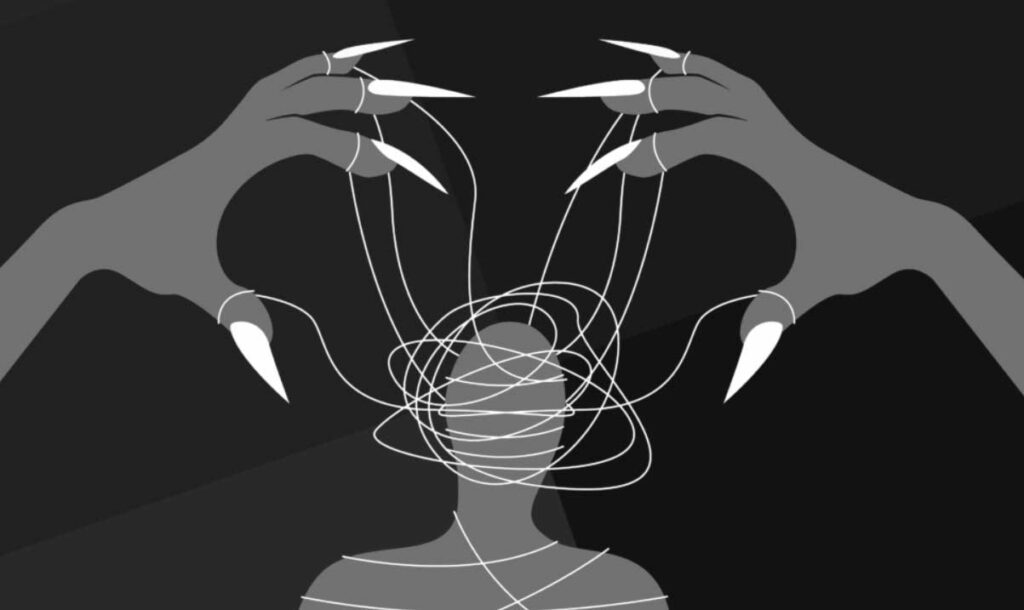
Let’s delve deeper into the metaphor we touched upon in the previous chapter. Our physical body is like an incredibly sophisticated car. It has an engine (the heart), a fuel system (the digestive system), an electrical system (the nervous system), and a central processing unit (the brain). The Main Primordial Spirit, our primary consciousness, is the familiar driver, the one who has been with this car since it “rolled off the assembly line.”
Most of the time, the driver and the car operate as such a unified whole that we forget the driver’s existence. We think it’s the car itself deciding to turn left or right.
The phenomenon of “spirit possession,” in all its variations, is the moment another “driver” temporarily or permanently takes the wheel. The familiar driver might be pushed into the back seat, tied up, or even completely thrown out of the car. At that point, the car is still the same car—same voice, same face—but its behavior, memories, and personality suddenly change dramatically.
This phenomenon, though considered superstition or a mental illness by modern science, is the ultimate living proof of the separation between consciousness and the body. It shows that the body is merely a vehicle, and consciousness is the one who uses it. By observing these “driver changes,” we can uncover the deepest secrets about the nature of existence.
2. Consensual Possession: An Invitation for a Guest
Not all “driver changes” are hostile. In many cultures around the world, there are rituals deliberately designed to invite another consciousness to temporarily use a body. This is possession by agreement, with the consent of the primary “driver.”
The phenomenon of shamanistic or trance possession in East Asian folk beliefs is a prime example. A person (often called a “medium” or “shaman”) will perform rituals in a formal space. Through music, dance, and mental focus, they gradually enter a trance state. At that moment, their Main Primordial Spirit will temporarily “step back,” ceding control of the body to a deity, an ancestral spirit, or a spiritual entity that has been invited to descend.
When that entity “enters,” astounding changes can occur. The medium’s voice, gestures, and demeanor can change completely, becoming majestic, powerful, or taking on the specific characteristics of the invisible guest. They may say things the medium themselves does not know, give prophecies, heal the sick, or bestow blessings. After the ceremony ends and the guest “ascends,” the medium usually returns to their normal state, with little to no memory of what happened, feeling as if they have just awoken from a deep sleep.
In this case, the Main Primordial Spirit has voluntarily opened the car door and invited a special “guest” to take the wheel for a specific period. This is a temporary pact, based on belief and a specific purpose. It shows that, under certain conditions, our consciousness has the ability to voluntarily relinquish control.
3. Hostile Possession: When a Stranger Hijacks the Car (Demonic Possession)
In complete contrast to the consensual agreement are cases of hostile possession, commonly known as “demonic possession.” This is a terrifying scenario, where a wandering spirit from the outside, with malicious intent or strong attachments, seeks to hijack someone else’s “car.”
This attack usually targets “drivers” who are in a weakened state. Just as a car thief would target a car with unlocked doors and a distracted driver, these spirits often target people whose Main Primordial Spirit is weak. The causes of this weakness can include:
- Mental Breakdown: Experiencing a major shock, prolonged depression, or being immersed in negative emotions like hatred and fear.
- Substance Abuse: Addiction to drugs or alcohol can cloud the will of the Main Primordial Spirit, creating “loopholes” in one’s spiritual defenses.
- Heavy Karma: Debts from past lives can create a negative connection, allowing “creditors” from the invisible realm to come and collect their debts through harassment or possession.
When possessed, the victim may exhibit abnormal behaviors: a sudden increase in physical strength, speaking in foreign languages they have never learned, having memories that do not belong to them, and displaying a completely alien personality, often aggressive and negative.
This is not “inviting a guest,” but a blatant carjacking. The primary “driver” is subdued or driven out, and a stranger is manically driving the car. Exorcism stories, therefore, can be understood as the efforts of capable individuals (like priests or monks) to expel the “hijacker” and help the rightful “driver” regain control of their vehicle.
4. The Internal Struggle: The Rebellion of the “Passengers”
The world of consciousness is even more complex. Sometimes, the struggle for control comes not from an external force, but from within. Let’s return to the model of the car, the driver (Main Primordial Spirit), and the silent passengers (Assistant Primordial Spirits).
In an ideal state, these “passengers” play a special role: they are silent guardians. Although they don’t directly drive, they have the important task of warning the driver when the car is about to go off course, reminding the driver when they are about to violate moral traffic rules. The voice of conscience, the intuitions that tell us to stop before doing something wrong, are often signals from them.
However, not all “passengers” always fulfill this protective role, and the “driver” is not always lucid enough to maintain a firm grip on the wheel.
What happens when the driver is severely traumatized, for example, by experiencing a horrific childhood trauma that causes them to faint or become too weak to control the vehicle? The car loses control. In this critical situation, the “passengers” in the back are forced to—or take the opportunity to—scramble for the steering wheel.
This is a chaotic “civil war” inside the car. The Assistant Primordial Spirits, not being the official drivers, take turns seizing control in a patchy manner. At this point, the car (the body) will exhibit bizarre behaviors externally: a person might suddenly act as naive as a child, then in a flash become old and cynical, or intensely fearful.
Each of these “personalities” is not a ghost from the outside, but an Assistant Primordial Spirit temporarily at the wheel. They share the same underlying memory bank of the car, but have completely different personalities, preferences, and ways of handling situations. This chaos is the surface manifestation of what medicine calls “multiple personality disorder.”
5. Reinterpreting “Multiple Personalities”: One Diagnosis, Two Incidents?
Modern psychology has a diagnosis for cases where a person exhibits multiple personalities: Dissociative Identity Disorder (DID), commonly known as “multiple personality disorder.” This diagnosis posits that due to unbearable psychological trauma, the patient’s mind has “fragmented” into different personalities as a defense mechanism.
This is a useful model and can explain many cases. But if we look through our multidimensional lens, an important question must be asked: Is the diagnosis of DID inadvertently lumping at least two completely different incidents into the same basket?
Let’s return to our car metaphor:
- “The Internal Rebellion”: This is the case where the “passengers” (Assistant Primordial Spirits) in the car fight for the wheel when the primary “driver” (Main Primordial Spirit) is too weak. All the manifesting “personalities” are part of the same original being, all in the same car from the beginning. This scenario most closely matches the description of DID.
- “The Hijacking from Outside”: This is the case where one or more “strangers” (external spirits) break in and hijack the car. The manifesting “personalities” are completely foreign entities, not originating from the car’s owner. This is the phenomenon of “demonic possession.”
The approach of modern medicine, which does not acknowledge the existence of “passengers” or “carjackers,” would be unable to distinguish between these two incidents. They would only observe the surface symptom—the car suddenly changing its driving style—and give the same diagnosis.
This does not mean that psychology is wrong. It only means that its map may not be detailed enough. Arguing that some cases diagnosed as DID might actually be a “hijacking” is not to deny science, but to suggest that reality may be more complex than our current tools can measure.
Understanding this difference could open up entirely new approaches to healing. One case requires psychotherapy to “reconcile” the rebellious passengers and help the primary driver regain control. The other case requires a “security” intervention to expel the hijackers and protect the rightful owner. Confusing the two is like teaching traffic laws to a carjacker—completely the wrong tool for a problem of a different nature.
This article is an excerpt from the book “The Universe Beyond the Big Bang” – a journey to explore the origin and profound meaning of the cosmos.
- Continue reading other chapters from the same work:
- Chapter 1: THE GREAT QUESTION ON THE FRINGES OF SCIENCE – THE NET AND THE SILENCE OF THE OCEAN
- Chapter 2: CONSCIOUSNESS AND MATTER – A TWO-WAY RELATIONSHIP
- Chapter 3: THE IMPLICATE ORDER AND THE QUANTUM UNIVERSE
- Chapter 4: THE MAP OF STRUCTURE – THE PERIODIC TABLE OF ELEMENTS
- Chapter 5: THE MAP OF FLOW – THE FIVE ELEMENTS AND ENERGY
- Chapter 6: THE MAP OF TRANSFORMATION – THE WORLDVIEW OF SPIRITUAL CULTIVATION
- Chapter 7: THE MULTIDIMENSIONAL MAP – FROM STRING THEORY TO THE BERMUDA TRIANGLE
- Chapter 8: THE REALMS OF EXISTENCE
- Chapter 9: DREAMS – GATEWAYS TO OTHER REALITIES
- Chapter 10: INSPIRATION – ECHOES FROM OTHER REALITIES
- Chapter 11: SPIRIT POSSESSION – WHEN CONSCIOUSNESSES FIGHT FOR THE SAME BODY
- Chapter 12: SUPERNORMAL ABILITIES – WHEN CONSCIOUSNESS BENDS THE LAWS OF PHYSICS
- Chapter 13: EXTRATERRESTRIAL LIFE: A MULTIDIMENSIONAL PERSPECTIVE
- Chapter 14: THE BIG BANG – A BUBBLE BURSTING ON THE OCEAN?!
- Chapter 15: THE GALAXY – A LIVING CIRCUIT OF THE UNIVERSE
- Chapter 16: BLACK HOLES, DARK MATTER, AND DARK ENERGY – A REINTERPRETATION
- Chapter 17: FRACTAL ARCHITECTURE – FROM THE MICROCOSM TO THE MACROCOSM
- Chapter 18: TRANSCENDING THE BOUNDARY OF OBSERVATION
- Chapter 19: THE UNIVERSE IS A MIRROR – WHAT IS YOUR MEANING?
If you wish to experience the full journey of thought and the unpublished insights of the work, please click the button below to own the complete book.
To explore more works from THE LIVES MEDIA, visit our book collection.